
Andy Serkis Says AI Cannot Replicate an 'Authored Performance' as Hunt for Gollum Begins Filming

Share this post:
Andy Serkis Says AI Cannot Replicate an 'Authored Performance' as Hunt for Gollum Begins Filming
The Lord of the Rings: The Hunt for Gollum began principal photography in New Zealand on July 17, 2026. Andy Serkis is directing and reprising the role of Gollum. Warner Bros. is targeting a theatrical release before the end of 2027.
On the same morning, Serkis gave Variety his most precise public statement on AI and motion capture. He said AI "can't — at least not yet — replicate the sort of 'authored performance'" that motion capture records. Serkis frames it as a craft argument rather than a complaint. The question it raises has gone unanswered for 25 years. Who authors a performance when technology is part of how it is created and delivered?
What an Authored Performance Is
When Serkis performed as Gollum in Peter Jackson's original trilogy, he wore a motion capture suit in a physical space with other actors. He made choices about how Gollum moved, how he breathed, how his hands reached for the One Ring. Those choices came from the same place all acting choices come from. They were made by a human being with a body and a creative intelligence inhabiting a specific character under specific dramatic circumstances.
Motion capture recorded those choices. The computer rendered them as Gollum's digital form. The authorship of the performance, the interpretive decisions, the physical intelligence, the emotional presence, belonged to Serkis before any computer touched it.
AI can generate motion. Given the right training data, AI tools can produce movement that resembles human action. What they cannot produce is the prior creative act, a performer's specific interpretation of a specific character in a specific story. That is what Serkis means by "authored." The author is the performer. The technology records and renders what the author created.
The distinction matters because it determines where credit should go. A recording device does not author music. A camera does not direct a film. A motion capture rig does not author the performance it records. The technology is a transmission medium. The creative intelligence sits somewhere else, and in Gollum's case, it was in Serkis's body and mind on set with Ian McKellen and Elijah Wood starting in 2001.
What makes the AI comparison direct is that both AI generated movement and motion capture recorded movement arrive at the same place: a digital character on screen. The difference is authorship at the source. Motion capture records a human making creative decisions in real time. AI generates plausible output from training data. One has an author. The other does not yet.
Motion Capture and the Oscar Problem
Serkis's AI statement is inseparable from his argument about Oscar recognition. Motion capture work is "long overdue being embraced for creating characters just as much as any other form of acting," he told Variety. He is arguing for the main performance categories, not a technical achievement award.
The Academy's treatment of Gollum has been consistent since 2001. Gollum is classified as a computer generated character. The performance that produced him was treated as a technology contribution rather than an acting credit. Serkis has disagreed with that classification for the full length of his career.
The Academy's informal position rests on a specific assumption. If the computer generates the character, the performer's contribution is instrumental rather than artistic. Serkis's counter is that the computer generates the image of the character. The character itself, its personality, its movement vocabulary, its emotional range, was generated by the performer's creative decisions before any rendering happened.
The AI debate has made the argument harder to win. When voters perceive technology as the creative agent rather than the human performer, the acting credit migrates away from the human. That logic applies to motion capture and to AI equally. The technology becomes the author in the industry's accounting, and the performer becomes a data source.
A parallel exists with early CGI performance. The industry took decades to develop vocabulary for distinguishing between visual effects that enhance a performance and visual effects that replace the performer. Motion capture sits in the same ambiguity, and AI has sharpened both sides of the debate without resolving it.
Serkis's performance as Caesar in Rise of the Planet of the Apes (2011) received substantial critical praise but no Oscar nomination. The Academy's reluctance to nominate motion capture performances in the lead actor category despite critical consensus that those performances merit consideration is the recurring evidence he cites. Gollum is the founding case, but Caesar made the pattern undeniable.
The AI Debate and the Oscar Debate Are One Argument
Peter Jackson named this connection explicitly at Cannes 2026. His position, stated in a festival masterclass, was that the AI controversy is "why Andy Serkis won't win an Oscar for Gollum." The perception that technology mediates a performance leads voters to credit the technology rather than the human. Jackson identified it as the same dismissal applied twice across two decades.
Jackson's own AI position at Cannes was measured. "I don't dislike AI in film," he told journalists at the masterclass. He was not asking the industry to reject the technology. He was asking it to keep authorship attribution where it belongs, with the human who makes the decisions that the technology then records, generates, or renders.
Both men are defending the same principle: technology is a tool, and the human who uses the tool is the author of the result. The academy has not applied that principle to Gollum in 25 years of eligibility cycles. The rise of AI has given the same institutional resistance a new vocabulary and a larger audience.
.jpg)
Joe Ross from Lansing, Michigan, CC BY-SA 2.0, via Wikimedia Commons
*The Hunt for Gollum* is filming in New Zealand, where Jackson shot the original trilogy. Serkis is directing as well as playing the title role, returning to a character he first developed in 2001 through workshop performance with Jackson before principal photography began.
Jackson handed the project to Serkis rather than directing it himself, a decision announced at the Cannes masterclass in May 2026. Their collaborative relationship on Gollum spans the full 25 years of the character's existence as a film presence, beginning with the preproduction performance workshops that shaped Gollum's physical vocabulary before a camera rolled.
Why Jackson Chose Serkis to Direct
The handoff of The Hunt for Gollum to Serkis was not routine franchise succession. Jackson described it at Cannes as giving Serkis directorial control over a character that Serkis created in a very real sense. The physical and psychological vocabulary of Gollum comes from Serkis's performance work over a quarter century.
Placing a performer in the director's chair for a franchise film they built as a performer is unusual. The precedent that prepared Serkis for it is his work at Imaginarium Studios on Mowgli: Legend of the Jungle (2018) and Animal Farm (2023), both of which he directed using performance capture systems. Those productions gave him an established practice as a director who works with the specific demands of performance capture.
The decision also reflects the commercial logic of the franchise at this point. Serkis is the reason Gollum exists as a character audiences respond to. Placing him in the director's chair as well as the performance rig is an argument about character continuity that Warner Bros. and the Tolkien estate presumably found compelling.
Serkis and Jackson also developed Gollum through a method that produced more than a performance: they produced a working theory of how motion capture could support narrative storytelling. That theory now has 25 years of production history behind it. The Hunt for Gollum is in some sense the argument for that theory directed by the person who helped invent it.
Using AI Minimally in the Production
Serkis plans to use AI in The Hunt for Gollum, describing the scope as minimal. The plan is deliberate. AI will be a tool in service of the production, not the creative engine of it.
That is consistent with his argument. If the concern is that AI cannot author a performance, the answer is not to exclude AI from the production but to keep authorship where it belongs. Serkis makes the performance choices. Motion capture records them. AI assists in whatever rendering or effects work the production requires. The authorship chain stays intact.
Gollum's physical form in the new film will be the product of Serkis's performance choices. Whatever AI contributes to the visual output, the authored performance that is its source will be his. The minimal approach also reflects franchise continuity requirements. The Gollum audiences have recognized for 25 years has a specific movement signature and emotional register that comes from Serkis, and AI as a primary creative tool carries the risk of diverging from that established character.
The "minimal" framing also positions the production clearly relative to the industry conversation. Serkis is not making a film that will be cited as a test case for AI generated performance. He is making a film that will be cited as a test case for what motion capture acting, directed by the person who invented it as a narrative medium, can produce.
New Zealand's production infrastructure, built around the original Lord of the Rings productions and maintained through subsequent films, gives The Hunt for Gollum access to locations, crew, and technical resources that reduce the need for AI to fill gaps. The conditions for traditional production are present. The minimal AI use is a choice rather than a constraint.
Imaginarium Studios and 25 Years of Production History
Serkis founded Imaginarium Studios in London to develop performance capture as a production tool outside major franchise contexts. The studio has produced work that demonstrates what motion capture acting can achieve in narrative and animated features at a scale accessible to projects working outside the resources of a major studio production.
Mowgli: Legend of the Jungle (2018) gave Serkis the directorial platform to demonstrate the full workflow from development through delivery. The film's cast included Cate Blanchett, Christian Bale, Benedict Cumberbatch, Andy Serkis himself, and Rohan Chand. Every performance was delivered through performance capture. Netflix acquired the film, which placed it in front of a global audience without theatrical release constraints.
Animal Farm (2023) extended the Imaginarium method into literary adaptation, with Seth Rogen, Glenn Close, Kieran Culkin, and Woody Harrelson delivering performances through the system. Neither the content of the film nor its political reception changes what each production adds to the argument: major performers, making serious choices, working through a system that the industry still struggles to credit correctly.
Each Imaginarium production also serves as a demonstration for the point Serkis makes about AI. When a BAFTA or Oscar winning actor delivers a performance through motion capture and the result is classified as a visual effects contribution rather than an acting credit, the question of what constitutes a performance is answered incorrectly. Serkis has spent 25 years building the evidence base for a different answer.
Animal Farm Opens the Same Week
Animal Farm opened in the United Kingdom and Ireland on July 24, 2026, one week after The Hunt for Gollum began filming. The two productions running in the same calendar window placed Serkis simultaneously at two different points in the filmmaking cycle.
The voice cast for Animal Farm includes Seth Rogen, Glenn Close, Kieran Culkin, and Woody Harrelson. Their performances are delivered through performance capture and voice recording. The film's commercial release gives the industry a live data point for what Imaginarium's system produces, at the same moment Serkis is making his AI and Oscar arguments in the press.
Animal Farm has drawn criticism over its perceived political framing, a response Serkis addressed but did not allow to reframe the production. What the July 2026 opening adds to the broader picture is evidence of audience engagement: the film exists, it is being evaluated, and the performances it contains are credited in ways that Serkis argues should be handled differently by the Academy.
SAG-AFTRA 2026 and What the Union Already Settled
SAG-AFTRA's 2026 agreements with studios included provisions on AI generated performance and digital likeness use without consent. Those protections are built on the recognition that AI can generate something resembling a performance without requiring the performer's active creative participation.
The union's framework addresses a specific problem. An AI system trained on a performer's voice, movement, and likeness can generate new material without that performer being present, compensated, or credited. SAG-AFTRA's 2026 contracts require consent and compensation for this use. The union has treated it as a labor rights issue and negotiated accordingly.
Serkis is making a parallel argument from a different angle. His concern is not AI replicating his likeness without consent, though that use is covered by the union framework. His concern is that AI replacing the need for human performance at all misunderstands what human performance is and what it contributes to a work. The two arguments reinforce each other. The union protects the right of a performer to control their likeness. Serkis is defending the right of a performance to be recognized as a human creative act.
The practical difference between the two arguments is temporal. The union's protections apply now, in the 2026 contracts. Serkis's argument about Oscar recognition has been pending since 2001 and has not yet produced a policy change. The AI debate has done more to make the Oscar argument legible to a general audience than two and a half decades of advocacy did before it.
What the Broader Industry Owes This Argument
25 years of motion capture work demonstrate what a human authored digital performance looks like and what it can achieve dramatically. The case Serkis makes for Oscar recognition is the same case he makes about AI. In both instances, the human behind the technology deserves the credit the technology tends to absorb.
The film industry's answer to that question over the next several years will determine how both debates resolve. If the industry accepts that human authorship exists inside a technology mediated performance, the path opens for both Oscar recognition of motion capture work and for a framework where AI assisted performance preserves the credit of the human artist behind it.
Serkis has been making that argument since 2001. The AI debate has given it new urgency and a larger audience than any award cycle ever did. Whether the Academy responds before The Hunt for Gollum completes production and reaches the 2028 eligibility window is the industry's most concrete test case for how it intends to answer the question.
He has also continued making this argument throughout 2026 at industry events on AI's responsibility in storytelling, framing it consistently as a question of who holds creative responsibility rather than whether AI is acceptable. The July 17 Variety statement sharpens that framing with a specific craft claim rather than a general principle.
The argument Serkis has been making since 2001 now has the attention of an industry actively debating AI authorship at every level, from union contracts to festival eligibility rules. That attention does not guarantee the outcome he has been working toward. But it creates conditions where the question can finally be answered rather than deferred.
Every Imaginarium production, every public statement on AI, and now the directorial and performance return to Gollum in The Hunt for Gollum is part of the same body of evidence. If the Academy eventually creates a recognition pathway for performance capture acting, it will be in part because Serkis spent 25 years making the case unavoidable.
The open source tooling that underpins modern digital performance work has simultaneously moved toward greater accessibility. Google Research's GNM Head provides a complete 3D parametric head model with 383 expression blend shapes and full internal anatomy under Apache 2.0. The parametric foundation that major studio facial capture pipelines depend on is now available to independent productions without a licensing agreement. The authorship question Serkis raises is still unresolved. The technical infrastructure for AI generated digital humans is no longer gated.
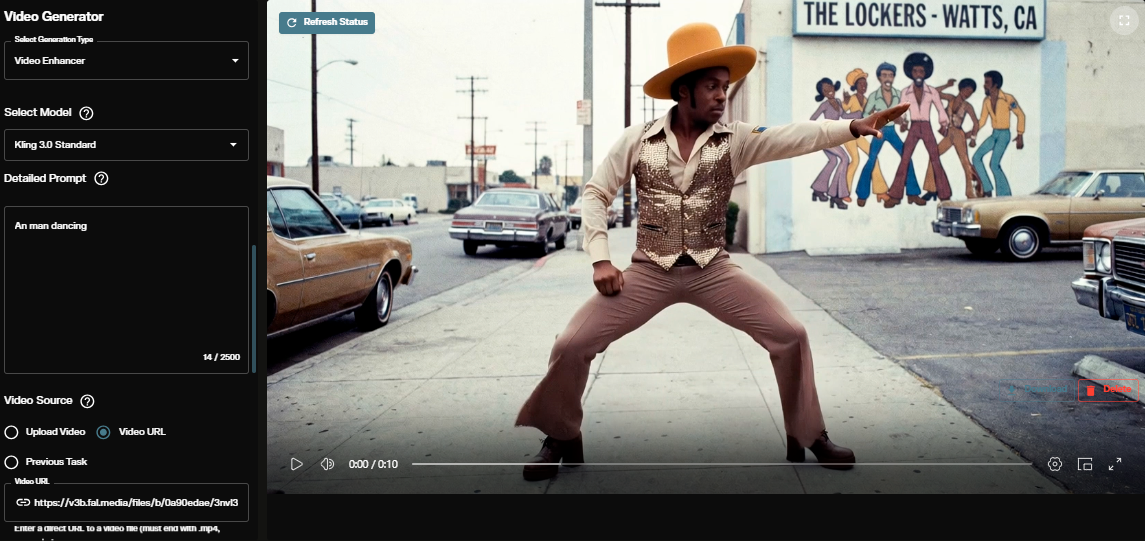
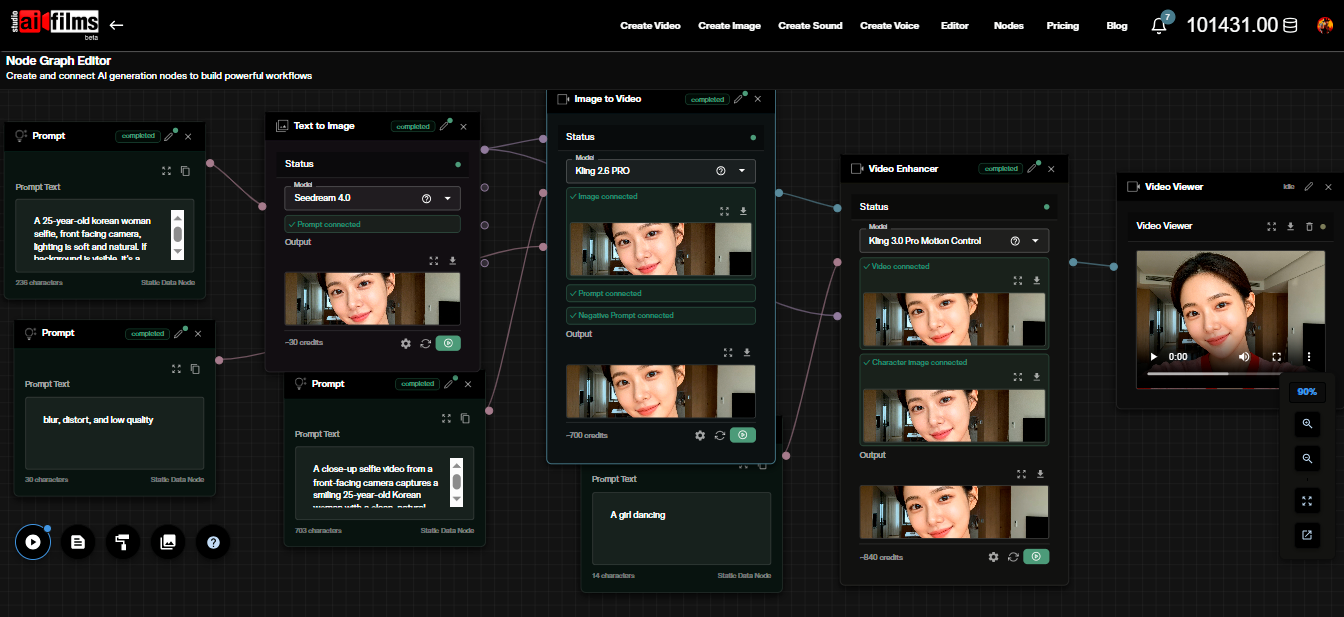
Filmmakers working with AI as a creative tool can generate text-to-video and image-to-video content at AI FILMS Studio, with the filmmaker's vision directing the output.
Sources
Variety | Deadline | Hollywood Reporter
Continue Reading
.jpg?w=3840)


.jpg)
Video & LipSync
- Video Generator
- Text to Video
- Image to Video
- Start-End Frame to Video
- Draw to Video
- Motion Control
- Video Enhancer
- Video Upscaler
- Video Extend
- Video to Video LipSync
- Audio to Video LipSync
- Image to Video LipSync
- Video FaceSwap
- Seedance 2.5
- WAN 3.0
- Seedance 2
- FLUX 3
- Minimax H3
- Vidu Q3 Pro
- Grok Imagine Video 1.5
- Gemini Omni
- Google Veo 3.1
- Kling 3.0 Pro
- Luma Ray 3.2
- LTX 2.3
- Happy Horse 1.1
- Kling 3.0 Motion
- ByteDance Upscaler
- InfiniteTalk
- InsightFace
Image & Edit
- AI Character
- AI Actor
- Art Generator
- Text to Image
- Image to Image
- LoRA Image to Image
- Draw to Edit
- Image LoRA Training
- Remove Background
- Image Enhancer
- MidJourney 8.0
- Krea 2
- OpenAI GPT Image 2.0
- Nano Banana Pro Ultra
- Nano Banana 2 Lite
- Nano Banana Pro
- Minimax Image
- Clarity Pro
- Z-Image Turbo LoRA
- Krea 2 Turbo LoRA
- Z-Image LoRA Trainer
- Qwen Image LoRA Trainer
- Background Erase Network 2 (BEN2)