
Venice Immersive 2026: Margot Robbie, Andy Serkis, Daisy Ridley Lead AI and XR Lineup

Share this post:
Venice Immersive 2026: Margot Robbie, Andy Serkis, Daisy Ridley Lead AI and XR Lineup
Venice Immersive, the XR sidebar of the Venice Film Festival, announced its 2026 lineup on July 17 with 68 projects from 26 countries. The section is in its tenth year. Thirty projects compete for prizes, 35 screen out of competition, and three appear as special events.
The names attached to the lineup span every tier of international cinema. Margot Robbie voices an immersive conservation documentary. Andy Serkis directs an XR piece and Daisy Ridley voices it alongside Kathleen Turner. Mark Ruffalo narrates a film about climate refugees. Omar Sy voices and produces a work by Mauritanian director Abderrahmane Sissako. Isabelle Huppert and A.R. Rahman are also attached to projects in the 2026 selection.
What the lineup makes visible is a shift in who chooses immersive storytelling and why. These are not projects made by filmmakers who lacked access to traditional production. They are projects made by people who had every other option and chose XR for what it can do that cinema cannot.
That voluntary quality changes how the medium gets evaluated. When filmmakers who have earned the right to work in any format choose immersive storytelling, it is a creative decision made for specific narrative or experiential reasons rather than a proof of concept for the technology. The Galapagos archipelago cannot be visited by most people and changes when you can place an audience inside it rather than in front of it. Climate refugee stories gain something from first person spatial proximity that a conventional documentary frame cannot provide. An AI entity asking you about your past in a virtual environment is a different experience from watching a documentary about AI. Each project in the 2026 lineup is answering the question of why this format rather than film, and the answers are all different.
A Lineup Built on Major Voice Talent
Nevatars, directed by Andy Serkis, explores AI generated digital avatars and questions of identity. Daisy Ridley and Kathleen Turner provide the voices. Serkis has spent more than two decades as the industry's most precise practitioner of performance in digital forms, moving from Gollum in The Lord of the Rings through Caesar in the Planet of the Apes series, and his direction of Nevatars extends that inquiry into interactive XR.
Galapagos: The Last Eden is an immersive conservation documentary directed by Anthony Geffen, voiced by Margot Robbie. Geffen's previous work includes Darwin's Lost Paradise, also a conservation project, and Game of Thrones: The Story So Far. The Galapagos project frames one of the world's most biodiverse archipelagos as a subject for immersive cinema rather than broadcast nature documentary. Spatial audio and panoramic presentation place audiences inside ecosystems rather than in front of them.
Abderrahmane Sissako's Artou is voiced by Omar Sy, who also serves as producer on the project. Sissako directed Timbuktu, Mauritania's first film to compete for the Palme d'Or at Cannes, and won the César Award for best director in 2015. His presence in the Venice Immersive lineup is a significant marker. A filmmaker of that standing making an XR work in 2026 is evidence that the section's programming has matured to a point where artists with substantial traditional film careers choose it as a primary creative vehicle, not a side project.
Sy's producing role on Artou is also notable. When major stars take producing credits on immersive projects rather than voice acting engagements, it signals creative investment rather than a contracted appearance. Sy has a financial and creative stake in the project reaching its audience and performing at the festival.
Solwata is an immersive documentary about climate refugees, narrated by Mark Ruffalo. The project uses first person XR perspectives on displacement as its central formal strategy, placing viewers inside the conditions its subjects describe rather than showing those conditions from a conventional documentary distance.
The choice of Ruffalo for narration reflects a specific approach to immersive documentary that has become common in the section: attaching recognizable voices to projects as a way of drawing audiences into unfamiliar formats. Ruffalo has been an active voice on climate issues for years, making the pairing functional rather than merely promotional. The narrator's existing credibility on the subject transfers to the experience before the participant has put on the glasses.
Isabelle Huppert and A.R. Rahman are also attached to projects in the 2026 selection, confirmed in the announcement without full production details. Both work from positions in their careers where no format choice is made for lack of alternatives. Their presence in the lineup alongside Robbie, Serkis, and Ruffalo confirms that the talent roster assembling around Venice Immersive 2026 is not the result of a single recruiting effort. It is a pattern.
The geographic scale of the 2026 selection reinforces that observation. The section's 68 projects from 26 countries reflect a decade in which production tools for XR storytelling became accessible enough to reach filmmakers who are not based in the major centers of the technology industry. Sissako working in Mauritanian and French production contexts, Sy producing from a French industry base, and Geffen working in British documentary circles are all contributing to the same section as North American and East Asian projects. Venice Immersive's tenth anniversary lineup is as geographically distributed as any section at the main festival.
That distribution reflects how much the section has changed from its early years, when XR production remained concentrated in North America, Japan, and Western Europe because the tools for it were concentrated there. A decade of accessible production software has produced a genuinely international section, selecting projects from production contexts that were not represented in the section's first years.
Tulpamancer: AI as Memory Architecture
The project generating the most discussion in the announcement is Tulpamancer, an interactive installation that uses open source AI tools to reconstruct users' memories and dreams inside a virtual reality environment. The experience begins with a conversation. An AI entity asks participants about their memories and their past, then builds an environment from those answers that participants enter and inhabit.
The name draws on the Tibetan Buddhist concept of a tulpa, an autonomous entity produced through sustained mental concentration. Tulpamancer inverts that concept: the AI generates the mental environment and the human supplies the source material from their own past. As a statement about what open source AI tools can do inside an immersive context, it is the most formally ambitious project in the 2026 lineup.
The interactive structure also distinguishes Tulpamancer from the other AI oriented projects in the section. Where Nevatars raises questions about AI avatars through narrative, and Bowie: Unseen Unheard uses spatial presentation to make archival material newly accessible, Tulpamancer asks participants to generate the AI's source material themselves. The result is a space built from the participant's own past.
The project operates on an experiential logic that is easier to understand through participation than through description. Describing Tulpamancer is describing a conversation you have not had yet. That quality, where the experience resists summarization, is a mark of work that uses AI as a creative instrument.
For filmmakers working with AI as a storytelling tool rather than a production efficiency tool, Tulpamancer is the most directly instructive project in the 2026 selection. It demonstrates AI as an instrument for shaping audience experience, generating environments from personal data rather than from a prompt about what a scene should look like. The distinction is not incidental to what Venice Immersive selects for: the section has consistently been interested in what new formats make experientially possible, and Tulpamancer is the clearest example of that question in the 2026 lineup.
The Shift to Smart Glass Devices
All 68 projects at Venice Immersive 2026 are experienced through next generation smart glass devices, a deliberate departure from the VR headsets the section used in prior years. Headsets are isolating by design. They cut off peripheral vision, eliminate the user's physical environment, and produce a complete sensory break from the room and the people in it. Smart glasses layer content over the environment the wearer already occupies, maintaining spatial awareness and social presence.
For immersive documentary content in particular, that distinction matters. Solwata's climate refugee perspectives land differently when the viewer remains present in physical space rather than sealed inside a headset. Galapagos: The Last Eden places ecosystem content into the viewer's existing visual field rather than replacing it. The medium shapes the argument the work is making.
The shift also has practical implications for how Venice Immersive functions as a social space. Lazzaretto Vecchio, where the section screens, was designed since 2016 as a place where audiences move between installations and encounter each other between experiences. Smart glasses are more compatible with that communal, ambient environment than full headsets.
The move to smart glasses also makes a statement about where the industry believes XR is going. Headsets were the defining format of immersive's first decade partly because they were what was commercially available and partly because full isolation seemed necessary to achieve immersion. The 2026 Venice Immersive lineup's device choice reflects a different theory: that immersion is a quality of the experience, not a function of how completely you can seal the viewer away from the room.
The broader industry question embedded in that device choice is whether immersive storytelling needed isolation to work, or whether isolation was simply a technical artifact of what was available in 2016 when the section launched. Venice Immersive 2026 is, among other things, a test of that hypothesis running toward a conclusion after ten years, with 68 projects and some of the most prominent names in international cinema attached to the answer.
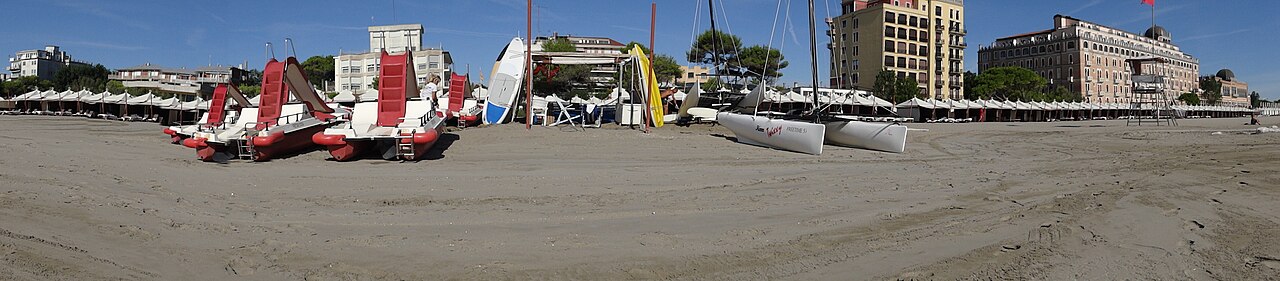
Носков А. С., CC BY-SA 4.0, via Wikimedia Commons
Venice Immersive takes place on Lazzaretto Vecchio, a former quarantine island in the Venice lagoon and a short boat ride from the main Lido venue. The island setting, which keeps the section physically separate from the rest of the festival, has become one of the most distinctive program environments in world cinema.
The Venice Film Festival main competition runs on the Lido from September 2 to 12, 2026. Venice Immersive runs concurrently on Lazzaretto Vecchio throughout those dates. Getting to the section requires the kind of deliberate navigation that shapes what audience the work reaches, separating it from festival foot traffic and producing an audience that specifically sought out the section.
Paul Raphaël and the 2026 Jury
Paul Raphaël, Emmy winning artist and cofounder of Felix and Paul Studios, serves as jury president for the 2026 Venice Immersive competition. Felix and Paul Studios produced some of the most widely distributed XR work of the previous decade, including immersive pieces created alongside NASA, the NBA, and international political leaders, building one of the longest track records in nonfiction XR production.
Raphaël's selection as jury president reflects a decade of Venice Immersive programming that has progressively moved toward filmmakers and artists with deep domain expertise rather than technology demonstration backgrounds. He arrives knowing the full scope of what the section has produced since 2016, which gives the jury a president who can evaluate the 2026 work against the section's entire arc.
Iranian filmmaker Négar Motevalymeidanshah and Belgian director Kate Voet complete the jury panel. The three jurors will award prizes across the 30 projects in competition, which span interactive installation, immersive documentary, narrative XR, and experimental work. They evaluate the work on Lazzaretto Vecchio across the nine days of the festival before announcing the results. A Venice Immersive prize carries commercial weight for the projects that receive it, shaping distribution conversations and festival circuit momentum in ways that have become more significant as the section's credibility has grown over its ten years.
Alberto Barbera on AI and Film Production
Festival Director Alberto Barbera addressed AI directly at a roundtable earlier this year. "It is quite clear that AI will change the rules of film production. It is an extremely innovative tool, and it could be very useful to improve the way we write, shoot and post-produce a film, but there are a lot of concerns." The Venice Immersive lineup, which includes projects using open source AI tools for audience interaction and AI generated avatar creation, reflects a practical approach of integration rather than exclusion.
Venice has not announced a competition restriction equivalent to Cannes 2026's ban on generative AI tools in Palme d'Or eligibility. The jury Maggie Gyllenhaal will lead in the main competition is operating under a different editorial framework, with no stated AI rule, while the immersive sidebar moves forward with AI as a production tool and subject across multiple selected projects.
Barbera's statement is precise in a way that most institutional positions on AI are not. He names AI as genuinely useful for writing, shooting, and postproduction while acknowledging concerns. That is a description of what the festival is choosing to observe rather than rule on, at least for now, and the Venice Immersive lineup is the clearest expression of that position in practice.
The approach distinguishes Venice from Cannes 2026, which announced an explicit ban on generative AI tools in Palme d'Or eligibility before its lineup was selected. Venice's choice to evaluate rather than exclude produces a different kind of signal. Whatever the jury awards in September will carry more interpretive weight than any statement the festival administration could make in advance. A Golden Lion going to a work that used AI tools, or conspicuously not going to one, becomes the festival's actual position on the question.
For Venice Immersive specifically, that question arrived several years before the main competition had to face it. The section has been evaluating AI assisted and AI adjacent work since before the current generation of tools existed. The 2026 lineup is the outcome of a decade of that evaluation: a section that chose integration over restriction and now has Margot Robbie and Andy Serkis in its program as a result.
The Bowie Project and the Archival Case
Bowie: Unseen Unheard is created from photographs of David Bowie taken by his official photographer Denis O'Regan that have never before been released publicly, timed to mark the tenth anniversary of Bowie's death. O'Regan traveled with Bowie extensively during the 1980s, documenting tours, studio sessions, and personal moments that were considered part of the working archive rather than material intended for public release. The project makes the case that immersive spatial presentation is the format those photographs were waiting for. The project makes a different argument for what immersive formats can do. The primary creative tool here is not AI generation but spatial presentation: a format that can make archival material newly accessible by placing audiences inside it rather than in front of it.
Its presence in the lineup alongside Tulpamancer is editorially interesting because it shows two separate rationales for immersive storytelling arriving at the same program. Tulpamancer uses AI to generate an environment out of personal memory. Bowie: Unseen Unheard uses spatial format to give new life to photographs that exist but have not been seen. Both projects assume that inhabiting content is a different experience from viewing it.
Taken together, the archival project and the AI memory reconstruction project represent the two ends of what immersive storytelling can do with material that already exists. One takes photographs that were made by a human photographer and were never shown. The other takes memories that are already in the participant's head and gives them spatial form. The common thread is that neither experience is achievable through conventional cinema.
Ten Years of Immersive Storytelling at Venice
Venice Immersive launched in 2016 as one of the first major film festivals to create a dedicated section for XR work. In its first years the section primarily attracted emerging artists and technology companies demonstrating headset hardware alongside experimental pieces from artists exploring the format's edges. Those early years established the infrastructure: a dedicated island venue, a competition structure, and a curatorial identity separate from the main festival.
The shift toward established directors, international talent, and complex narrative and interactive works happened gradually. Production tools became more accessible after 2020. The cost of entry dropped enough to attract filmmakers who were not primarily interested in technology but found the format solved specific creative problems they had in other media. By the section's tenth year, the roster of attached talent reads like a mainstream festival lineup that happens to be screening on a former quarantine island in a lagoon.
A section that attracted technology demonstrators in its early years now attracts filmmakers who already have BAFTA wins, César Awards, and Palme d'Or nominations on their records. The evolution was not a marketing strategy. It was what happened when the format matured enough to attract people who had something specific to say with it, and when the tools became accessible enough to say it without a hardware laboratory backing the production.
A decade later it is selecting work directed by filmmakers who are simultaneously operating at the highest levels of mainstream cinema.
Andy Serkis is the clearest example. He is directing both Nevatars for Venice Immersive and The Lord of the Rings: The Hunt for Gollum for Warner Bros., and has also spoken at length about AI and its responsibilities in storytelling throughout 2026. His Venice Immersive project is a continuation of an active public engagement with the question rather than a one-off experiment. It is the work of a filmmaker who has thought carefully about what digital performance can do and who has found the format worth his time while directing the most anticipated fantasy film in years.
Abderrahmane Sissako choosing XR for his 2026 work is a different kind of signal. He is a filmmaker with major festival credentials and no particular commercial pressure to explore new formats. His presence in Venice Immersive's tenth year selection, voiced by Omar Sy and produced in collaboration with him, reflects the section's gradual accumulation of credibility among filmmakers who have earned the right to work in whatever format they choose.
The tenth anniversary of Venice Immersive coincides with a moment when the formats the section has long championed, interactive narrative, spatial audio, AI generated environments, have moved from specialty programming into the mainstream creative conversation. The 2026 lineup is what that shift looks like in practice.
The Venice Film Festival's main competition lineup for the 83rd edition will be announced July 23, 2026, seven weeks before the first competition screening on September 2.
Running in the same September window, TIFF 51's Innovation Hub programs eight XR and VR world premieres from nine countries inside TIFF: The Market, alongside a roundtable titled "The World Through the 'Eye' of the Robot Camera: AI, (Post-)Humans & Cinema." Where Venice Immersive operates as a competitive section with prizes, TIFF's Hub runs as market inventory for direct acquisition. The two approaches will be evaluated simultaneously by the same buyers and press moving between Venice and Toronto in September 2026.
The ten years from 2016 to 2026 also span the emergence of AI as a production and interactive tool in visual media. Venice Immersive began before the current generation of AI tools existed in their current form. The 2026 lineup includes projects using AI for audience interaction, AI generated avatar content, and immersive reconstruction of personal memory. That arc, from headset showcases to AI generated personal environments, is one of the most compressed format evolutions in the history of any film festival section.
It took ten years. The artists who drove that shift were not primarily technology advocates. They were filmmakers who found that certain stories required a format that did not exist in traditional cinema, and they built their work inside the constraints of a medium that most of their peers had not yet tried. The 2026 Venice Immersive roster is not a sign that immersive storytelling has arrived at a finish line. It is a sign that it has attracted filmmakers who do not particularly care whether the format has arrived. They have work to make and the format is the right one for it.
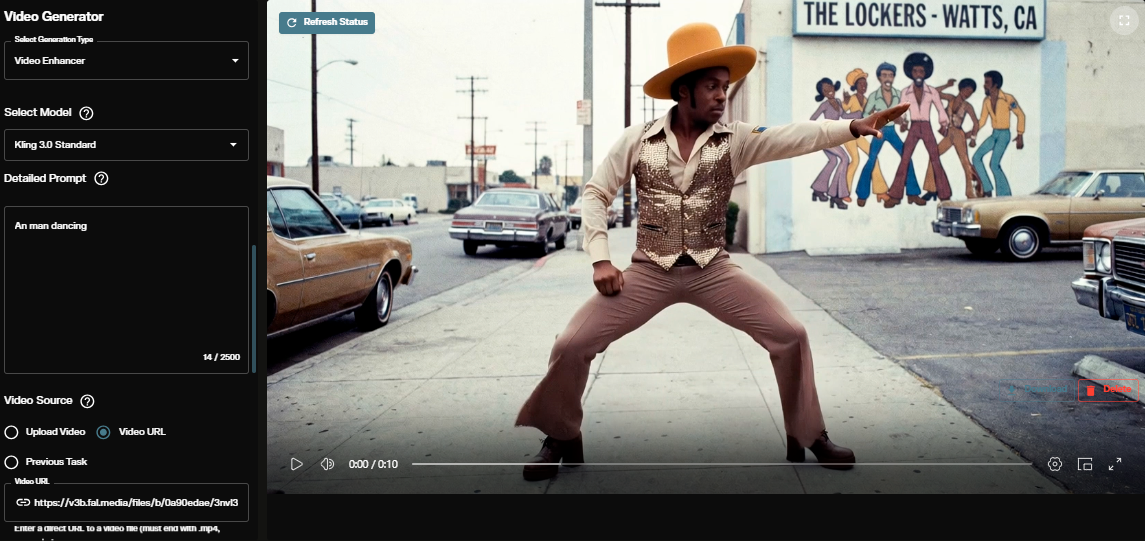
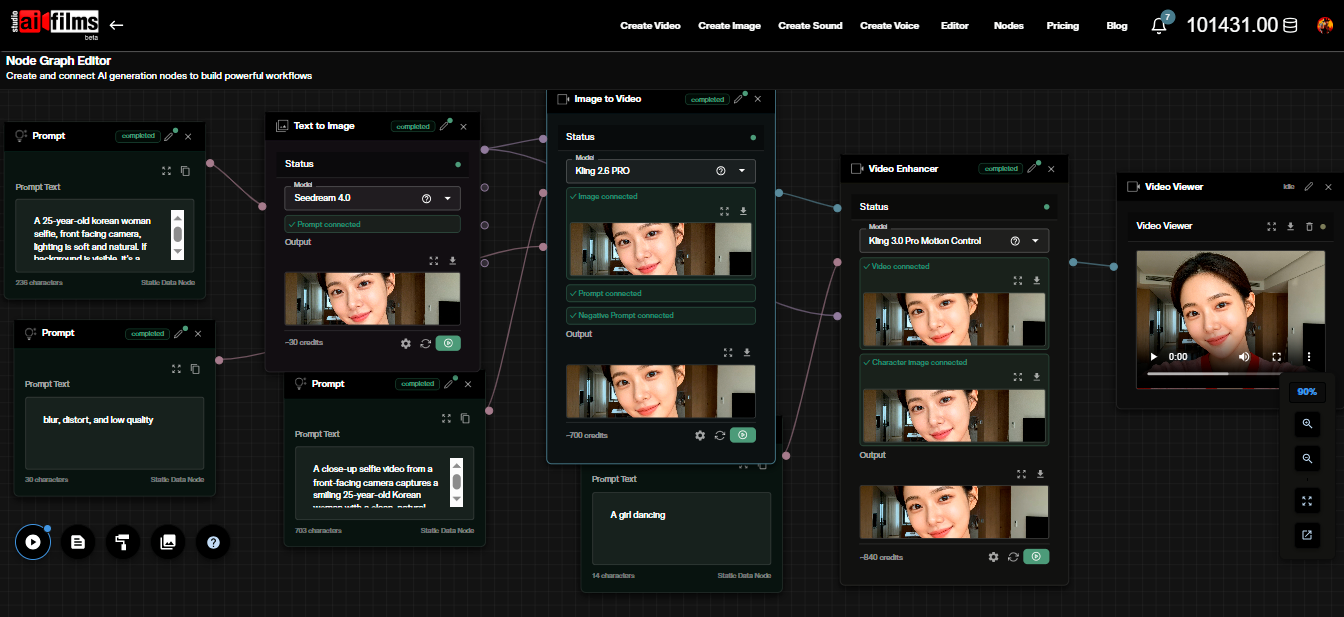
Filmmakers creating immersive and interactive content can generate visual source material for XR projects through AI FILMS Studio.
Venice Critics' Week, operating as an independent sidebar from the main competition, expanded the festival's AI footprint further when it selected a Colombian AI assisted fiction documentary hybrid for its 2026 competition lineup. The Critics' Week program accepts only debut and sophomore features, and its 2026 selection marks the first time the section has included an AI assisted debut in official competition.
Sources
Variety | Deadline | Hollywood Reporter | Screen Daily
Continue Reading
.jpg?w=3840)


Video & LipSync
- Video Generator
- Text to Video
- Image to Video
- Start-End Frame to Video
- Draw to Video
- Motion Control
- Video Enhancer
- Video Upscaler
- Video Extend
- Video to Video LipSync
- Audio to Video LipSync
- Image to Video LipSync
- Video FaceSwap
- Seedance 2.5
- WAN 3.0
- Seedance 2
- FLUX 3
- Minimax H3
- Vidu Q3 Pro
- Grok Imagine Video 1.5
- Gemini Omni
- Google Veo 3.1
- Kling 3.0 Pro
- Luma Ray 3.2
- LTX 2.3
- Happy Horse 1.1
- Kling 3.0 Motion
- ByteDance Upscaler
- InfiniteTalk
- InsightFace
Image & Edit
- AI Character
- AI Actor
- Art Generator
- Text to Image
- Image to Image
- LoRA Image to Image
- Draw to Edit
- Image LoRA Training
- Remove Background
- Image Enhancer
- MidJourney 8.0
- Krea 2
- OpenAI GPT Image 2.0
- Nano Banana Pro Ultra
- Nano Banana 2 Lite
- Nano Banana Pro
- Minimax Image
- Clarity Pro
- Z-Image Turbo LoRA
- Krea 2 Turbo LoRA
- Z-Image LoRA Trainer
- Qwen Image LoRA Trainer
- Background Erase Network 2 (BEN2)