
Yeon Sang-ho's Colony at Cannes: Zombies as an AI Metaphor
Share this post:
Yeon Sang-ho's Colony at Cannes: Zombies as an AI Metaphor
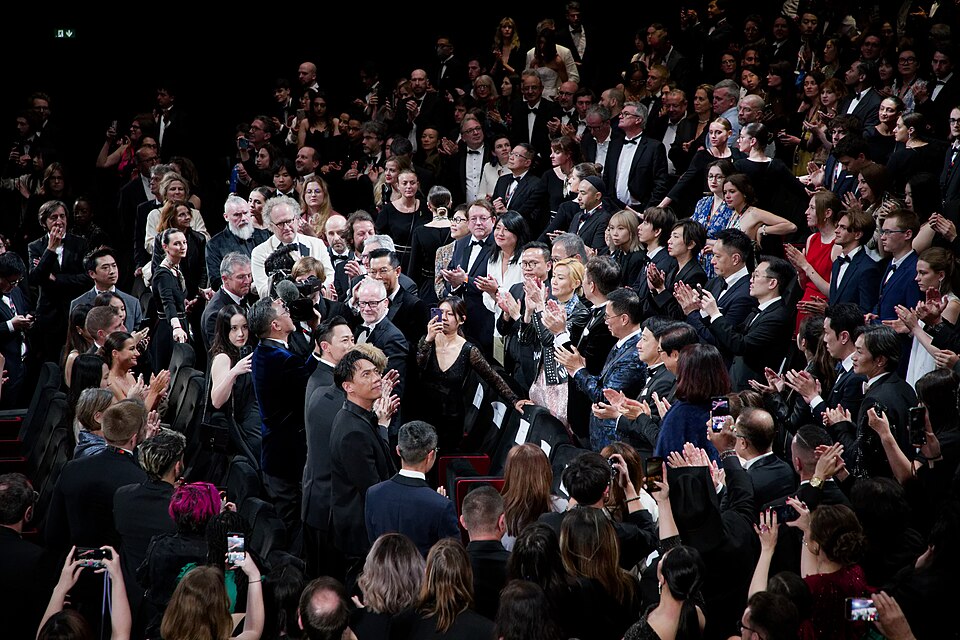
Yeon Sang-ho's zombie thriller Colony premiered at the 79th Cannes Film Festival's Midnight Screenings on May 15, 2026, already sold to more than 120 territories by distributor Showbox. The Train to Busan director returned to the genre that established his international reputation, this time using collective zombie intelligence as a direct metaphor for AI's tendency to erase individual thought.
The film stars Gianna Jun, Koo Kyo-hwan, Ji Chang-wook, Kim Shin-rok, Shin Hyun-been, and Go Soo. A US theatrical release is set for August 28, with a New York Asian Film Festival screening before wide release.
Train to Busan as the Foundation
Train to Busan premiered at Cannes' Midnight Screenings in 2016 and became one of the most commercially successful Korean films internationally until Parasite. It was a film about social fragmentation, class anxiety, and the collapse of trust between strangers, expressed through a zombie outbreak on a moving train. Colony is Yeon's return to the same genre after a decade.
The thematic continuity is deliberate. Train to Busan used the zombie convention to examine what happens when social institutions collapse under pressure. Colony uses the same convention to examine what happens to individual thought when a collective intelligence system achieves total dominance. The two films are ten years apart and use the same genre to ask structurally similar questions.
The Cast: Gianna Jun and Koo Kyo-hwan
Gianna Jun is one of the most internationally recognized Korean actors, best known for My Love from the Star and The Berlin File. Her casting brings commercial reach to the film in East Asian markets. Koo Kyo-hwan appeared in Bong Joon Ho's Oscar-winning Parasite and the military series D.P., giving Colony a connection to two of the most high-profile Korean productions of the last decade.
Ji Chang-wook is a lead in Korean drama with significant following across Asia. The ensemble reflects the commercial ambition of a production designed for both domestic theatrical and international streaming, not exclusively one market.
120 Territories at Midnight Screenings
Showbox pre-sold Colony to more than 120 territories before the film screened in competition. Midnight Screenings at Cannes are specifically curated for genre cinema, attracting international distributors who buy genre titles for theatrical release rather than festival circuit placement.
A 120-territory pre-sale before the first public screening is a commercial claim about the director's international track record, not a judgment about the film itself. Distributors in 120 territories agreed to take the film based on Yeon's name, the cast, and the concept. The Cannes premiere was a confirmation for buyers already committed, not an audition.
The AI Metaphor at the Core
In Colony, a rapidly mutating virus traps survivors in a sealed high rise building. The infected share cognitive abilities through biological reactions, evolving to act as a single intelligent entity that hunts survivors collectively. The metaphor is deliberate.
"Of course, it's an artificial intelligence and it's the sum of all that is universal," Yeon told Variety. He continued: "The most important thing is to protect the minority in front of the universality." For Yeon, the horror of both AI and his zombies is identical: collective consensus consuming individual thought.
The Cognitive Homogenization Argument in Full
Yeon's precise claim is that a virus causing survivors to share cognitive abilities mirrors how AI processes training data to produce statistically average outputs. Individual thought is not eliminated by force but by the structural tendency of collective systems toward consensus.
This argument goes further than Tilda Swinton's version of the same concern. Swinton, speaking at a masterclass the same week, argued that AI produces formulaic work. Yeon's argument is that AI is an active force toward uniformity, not just a tendency toward mediocrity. The zombie metaphor makes the argument visceral: what looks like a swarm is actually a single mind, and joining it means losing everything that made you distinct.
How Yeon Actually Used AI
Despite the film's AI themed horror, Yeon used the technology sparingly in production. "I only wanted to use it at the end to create the greatest number of zombies," he told Deadline.

Photo by Arthur Petron / WikiPortraits
The decision reveals the gap between his philosophical critique and his technical practice. The director who fears AI's homogenizing effect used it once, at the margins, to generate crowd background. The central performances, the spatial horror of the building, and the character arcs were made the conventional way.
Yeon's position is consistent with the practice of most Korean directors who have spoken about AI in 2026: candid about limited use, critical of the broader tendency toward homogenization. The acknowledgment of AI crowd generation is notable in itself. It places him among the directors who disclose rather than conceal AI's role in production.
Korean Cinema at Cannes 2026
Colony arrived during a Cannes with a strong Korean presence. Showbox's sales to more than 120 territories before the film even screened reflected confidence in Yeon's international track record.
Colony is his return to the genre that premiered at Midnight Screenings a decade earlier. The film's distribution scope covered North America, the UK, Europe, and Asia, marking it as a mainstream international release rather than a festival circuit title. For more on Korean cinema's relationship with AI production tools, see I'm Popo, the first South Korean film produced entirely with AI.
Korean Cinema's Relationship With AI Disclosure
Korean directors have been more willing than their Hollywood counterparts to discuss AI use publicly while also maintaining a critical position on the technology. Yeon's acknowledged use of AI for crowd generation in a film that critiques AI as a force for cognitive uniformity is characteristic of that candor.
The Korean industry has not established a formal AI policy framework equivalent to the WGA or SAG-AFTRA agreements. What it has produced instead is a culture of director disclosure that runs ahead of guild requirements. Yeon's Deadline interview is one example. Bong Joon Ho, Park Chan-wook, and Hong Sang-soo have all made public statements about AI in 2025 and 2026 without being required to by a collective bargaining agreement.
The Argument Colony Is Making
Yeon's position sits alongside a broader conversation at Cannes 2026. At a masterclass the same week, Tilda Swinton argued that formulaic AI content cannot compete with adventurous human cinema. Two filmmakers from different traditions arrived at the same conclusion: the threat AI poses is not to cinema itself but to the filmmakers who stop taking risks.
The difference is in emphasis. Swinton frames originality as the defence. Yeon has built a film around what disappears when that defence fails.
Seth Rogen made a third version of the same argument at the same festival: that using AI to write scripts disqualifies the activity from being writing. Three filmmakers, three different traditions, the same festival week, and structurally the same claim about what AI costs in creative terms. Colony is the argument Yeon made in the form of a 120-territory genre film rather than a press conference answer.
The August 28 US Release
Wells Release secured US theatrical rights for Colony. An August 28 release places the film at the end of summer, before the major fall festival window but after the heaviest blockbuster competition of June and July. The New York Asian Film Festival screening before wide release is a targeting decision: Korean cinema's most engaged US audience is in New York, and an NYAFF premiere builds that audience before the broader theatrical run.
The comparison for this release window is Train to Busan's US run in 2016, which earned significant critical attention and built Yeon's reputation in the US market. Colony's commercial ambitions are larger: a wider cast, a bigger production, and a presale record that suggests distributor confidence.
What Comes Next for Yeon
Yeon has three projects in various stages. "Revelations", a Netflix thriller with Alfonso Cuarón as producer, is in development. "Human Vapor", a Netflix Japan series, launched July 2, 2026. "Paradise Lost" is in post production.
"Human Vapor" is a Japanese remake of a 1960 Inoshiro Honda science fiction film about a man who can transform into gas. The Netflix Japan commission is part of the platform's strategy of hiring Korean directors for Japanese content, which reflects the geographic overlap in Korean and Japanese streaming audiences. Yeon directing a Japanese language production is the latest evidence of how Korean filmmakers have moved beyond the Korean language market in the last five years.
The Alfonso Cuarón producer credit on Revelations positions it as a significant international production. Cuarón directed Gravity, Children of Men, and Roma. A Yeon-directed thriller with Cuarón producing and Netflix distributing would be the largest international platform Yeon has had since Train to Busan.
The breadth of the slate, spanning Korean theatrical, US streaming, and Japanese streaming, reflects the international reach a director builds through a decade of consistent genre work. Colony is both a theatrical release and the moment at which Yeon's international reputation becomes the basis for larger platform commissions. The Cuarón collaboration and the Netflix Japan series are the commercial expression of what the Cannes Midnight Screenings placement signals.
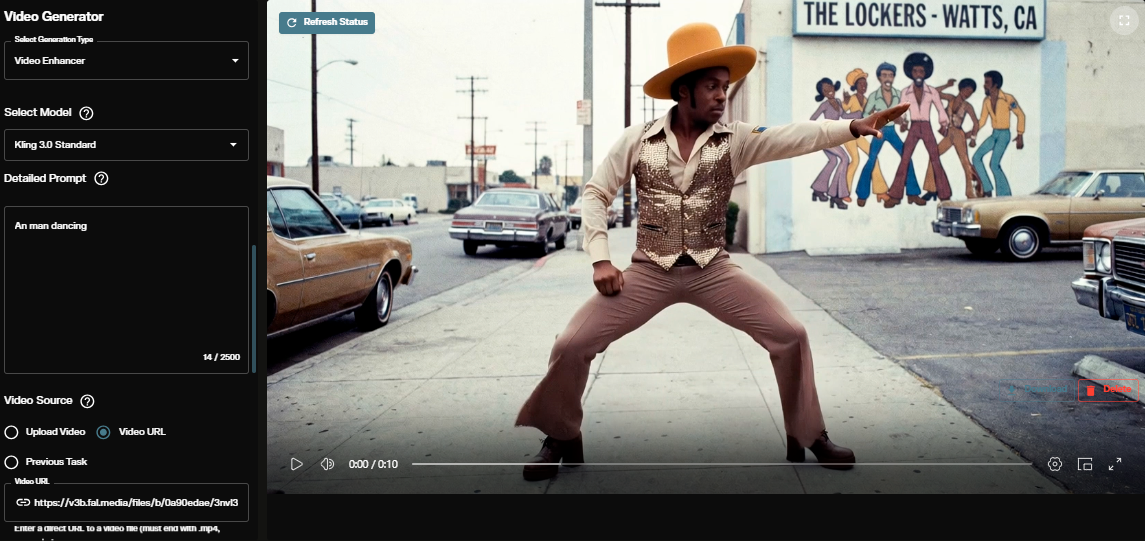
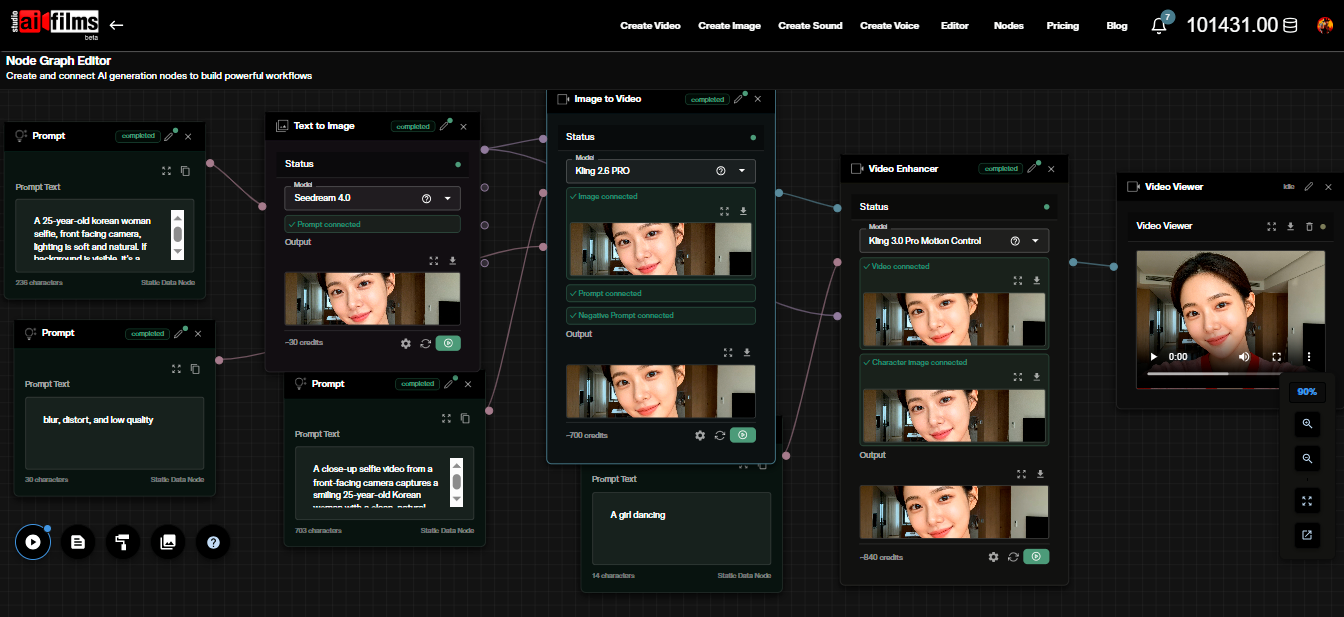
Filmmakers building genre projects can test AI video generation for crowd sequences and environmental effects in the video workspace.
The Zombie Genre and What It Has Always Been
Zombie cinema has been the genre most consistently used to process collective anxieties since George Romero's Night of the Living Dead in 1968. The genre's core image, individuals subsumed into a mindless mass, has been applied to consumerism (Dawn of the Dead, 1978), class anxiety (Train to Busan, 2016), and now AI. Each iteration uses the same formal vocabulary to address the dominant fear of its moment.
Yeon's decision to use the genre for an AI critique is not a stretch. It is the genre's natural direction in 2026. What Colony adds to that tradition is specificity: the metaphor is not AI in general but AI's effect on the particular quality that distinguishes human thought from machine output. Collective intelligence that hunts individuals is the most vivid available image for what it looks like when statistical consensus replaces individual judgment.
What the 120-Territory Presale Says About Korean Genre Cinema
Pre-selling to 120 territories before the first screening is an unusual commercial position for a genre film. It reflects accumulated trust in the Korean genre production model built over the last decade by Bong Joon Ho, Park Chan-wook, and Yeon himself.
The buyers in those 120 territories are not buying Colony because they have seen it. They are buying it because the combination of director, cast, and distributor meets the threshold they use for commercial genre acquisitions. That threshold was set by Train to Busan, Parasite, and Decision to Leave, among others. Colony is the beneficiary of a decade of Korean cinema building credibility with international distributors.
The Cannes Midnight Screenings Circuit as Distribution Infrastructure
Midnight Screenings at Cannes is the festival's genre programming track. It serves as a pre-sales market for international distributors buying commercial films that need theatrical runs in multiple territories simultaneously. Colony's placement there was not only a curatorial decision. It was a commercial mechanism.
The Tribeca 2026 AI programming used a different model, integrating AI-generated work into general programming without a genre-specific track. Cannes Midnight Screenings is a more direct path to international distribution for genre films. Both tracks exist as infrastructure for films that would not have had a comparable pathway five years ago.
AI in Yeon's Production: What Limited Use Actually Means
Yeon's statement about using AI "only at the end" for crowd generation is technically specific. Crowd generation in action and horror films has traditionally required either large numbers of background performers or VFX compositing of repeated elements. AI generation can produce large crowd footage from text or image prompts without either approach.
The technical limitation Yeon would have encountered is consistency: AI-generated crowd footage must match the look, lighting, and spatial logic of the rest of the film. That integration work is the craft layer on top of the generation. It is where the AI-generated material is made to cohere with the production's visual language. That Yeon used AI for this one application while building the rest of the film conventionally suggests the tool solved a specific logistical problem without displacing the production's core creative approach.
Sources
Variety | Deadline | IndieWire | Screen Daily | Korea Times
Continue Reading
.jpg?w=3840)


Video & LipSync
- Video Generator
- Text to Video
- Image to Video
- Start-End Frame to Video
- Draw to Video
- Motion Control
- Video Enhancer
- Video Upscaler
- Video Extend
- Video to Video LipSync
- Audio to Video LipSync
- Image to Video LipSync
- Video FaceSwap
- Seedance 2.5
- WAN 3.0
- Seedance 2
- FLUX 3
- Minimax H3
- Vidu Q3 Pro
- Grok Imagine Video 1.5
- Gemini Omni
- Google Veo 3.1
- Kling 3.0 Pro
- Luma Ray 3.2
- LTX 2.3
- Happy Horse 1.1
- Kling 3.0 Motion
- ByteDance Upscaler
- InfiniteTalk
- InsightFace
Image & Edit
- AI Character
- AI Actor
- Art Generator
- Text to Image
- Image to Image
- LoRA Image to Image
- Draw to Edit
- Image LoRA Training
- Remove Background
- Image Enhancer
- MidJourney 8.0
- Krea 2
- OpenAI GPT Image 2.0
- Nano Banana Pro Ultra
- Nano Banana 2 Lite
- Nano Banana Pro
- Minimax Image
- Clarity Pro
- Z-Image Turbo LoRA
- Krea 2 Turbo LoRA
- Z-Image LoRA Trainer
- Qwen Image LoRA Trainer
- Background Erase Network 2 (BEN2)