
Tilda Swinton: AI Has No Chance Against Adventurous Cinema
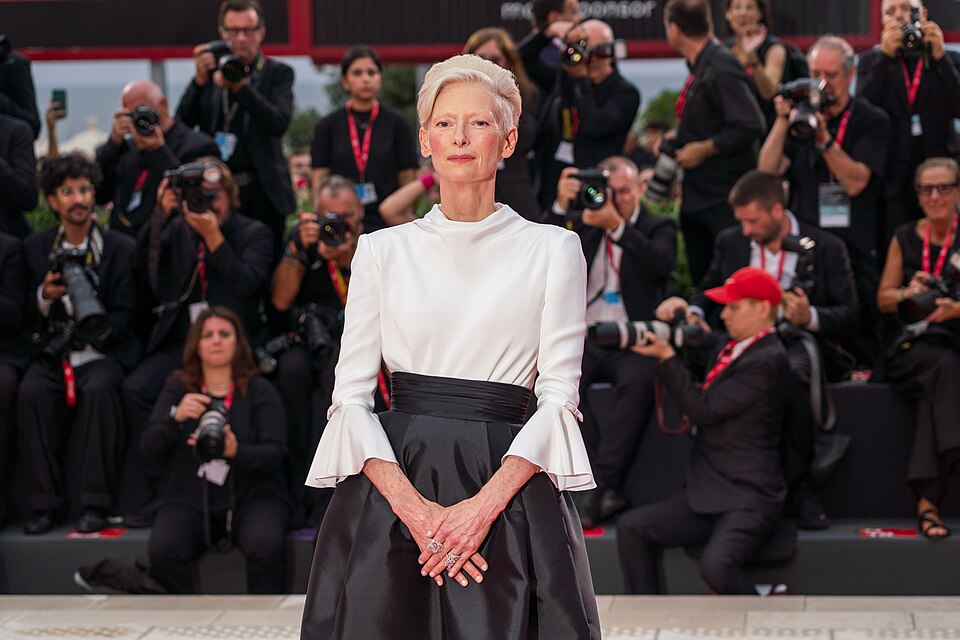
Share this post:
Tilda Swinton: AI Has No Chance Against Adventurous Cinema
Tilda Swinton told a packed career retrospective at the 79th Cannes Film Festival that formulaic AI content poses no real threat to cinema that stays unpredictable. "I believe as long as what we're not producing is formulaic and in some way tiring for the audience, AI doesn't have a chance", she said.
The masterclass, moderated by Didier Allouch and introduced by Cannes artistic director Thierry Frémaux, ran for over an hour and a half on May 21, 2026.
The 90-Minute Masterclass Format
A standard Cannes masterclass runs 45 to 60 minutes. A 90-minute career retrospective is reserved for figures the festival considers foundational to its own history. Past recipients of that extended format include Pedro Almodóvar and Jane Fonda.
Frémaux's introduction placed Swinton explicitly in that tier. The extended length is not a courtesy. It is a curatorial signal about whose thinking on cinema the festival believes requires more than a keynote format to explore properly.
The May 21 date placed the masterclass in the middle of the festival's second week, when distribution deals are closing and the jury is in deliberations. The audience in the Salle Buñuel included the same programmers, distributors, and critics who would be evaluating the competition titles. Swinton's argument about adventurous cinema landed in front of the people with the most direct ability to act on it.
The Case for Mess
The protection against AI, Swinton argued, is not a rule or a ban but a creative choice. "What we need to do is what only humans can do: make messy, adventurous experiences so that an audience does not know what's coming next".
She positioned originality as cinema's structural advantage over algorithmic output. If a film is predictable enough to be replaced by a machine, she implied, it has already failed at the job.
What "Formulaic" Actually Means in AI Output
AI image and video models are trained on large datasets to produce outputs that score well across a broad range of prompts. That optimization pushes toward the statistical center of aesthetic preferences: the output that offends no one and surprises no one.
Swinton's specific claim is that this tendency is structural. A model built to produce broadly acceptable images will not generate the formally radical visual choices that define the directors she works with, because those choices score below the statistical mean. Derek Jarman's The Garden would not be a likely output from any model optimized for general aesthetic approval.
That claim has a practical implication for AI film production. Productions that use AI tools at the level of narrative, character, and visual design are working with a system trained toward the center. The director's job becomes forcing it toward the margins, which requires knowing where those margins are and why they matter.
Derek Jarman and What She Built There
Swinton appeared in nine of Derek Jarman's films from 1986 to 1994, including The Last of England, Edward II, and The Garden. Jarman worked with almost no budget, often outside the permissions and production infrastructure of mainstream British cinema, building a visual language through constraint and improvisation.
The practice she developed during those years, committing to projects with no institutional support and no guarantee of distribution, is the direct foundation of the argument she made at Cannes. Her position on adventurous cinema is not theoretical. It describes what she did between her mid-twenties and mid-thirties in concrete terms.
Jarman died in 1994. The films they made together are now part of the British Film Institute archive and studied as examples of what formal risk produces when it carries no commercial obligation.
A Career as Evidence
Swinton has 20 Official Selection films at Cannes, built through collaborations that the industry would have found difficult to green light through conventional channels. She worked with Derek Jarman from 1985 to 1994, then built a body of work with Apichatpong Weerasethakul, Bong Joon Ho, Jim Jarmusch, Luca Guadagnino, and Joanna Hogg.
Each of those directors built careers on the kind of formal risk she describes. The argument she is making at Cannes 2026 is backed by the output she spent four decades producing.
Her 2024 Toronto International Film Festival appearances included Pedro Almodóvar's English language debut "The Room Next Door," which became the Spanish director's first film to win the Golden Lion at Venice. Swinton's presence in that film, as in the Jarman work decades earlier, reflects a consistent pattern: she selects projects on the basis of the director's vision, not the project's commercial prospects.
That selection pattern is what makes her Cannes argument credible to the directors and programmers in the room. She is not describing adventurous cinema from outside it. She is describing the practice she built her career through.
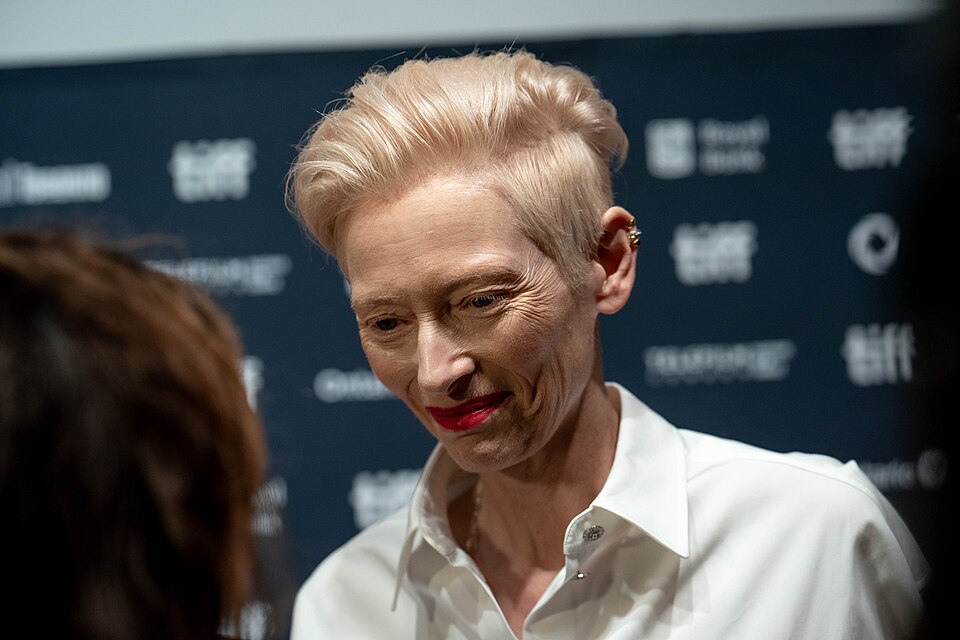
Jennifer 8. Lee, CC BY-SA 4.0, via Wikimedia Commons
Apichatpong Weerasethakul and the Aesthetic Argument
Swinton is currently developing "Jengira's Magnificent Dream" with Apichatpong Weerasethakul, with production set for Sri Lanka. Apichatpong's films, including Memoria, Uncle Boonmee Who Can Recall His Past Lives, and Tropical Malady, work with slowness, fragmented structure, and the logic of dreaming.
His aesthetic is among the furthest from the statistical center of generative AI output. His films are built around ambiguity, duration, and the sensory experience of watching rather than narrative momentum. A model trained to produce broadly satisfying content would not produce them.
The collaboration between Swinton and Apichatpong is itself an illustration of her Cannes argument. It requires a shared understanding of formal risk built across years, without commercial obligation to any particular outcome.
Memoria won the Jury Prize at Cannes 2021 and was released theatrically in the US without a streaming deal, playing in a single cinema and rotating to new cities each week. That distribution model was designed to preserve the film as a cinematic experience rather than a streaming title. The choice reflects a position on what cinema requires that aligns directly with what Swinton argued in 2026: some things need to be protected from the optimization systems that dominate distribution, not just from the ones that affect production.
The Cannes AI Divide
Swinton's masterclass took place during the most commercially AI dense Cannes on record. Screen Daily reported that the Marché du Film hosted more than 20 tech centric sessions in its final four days, with AI and virtual production companies replacing traditional film traders on the exhibition floor.
The contrast in positions across the festival was sharp. Todd Terrazas, organizer of the "AI on the Lot" conference, told The Wrap that attendance had grown from 600 to an expected 2,000, a metric that captures the speed of the industry's shift. From the technology side, Nikola Todorovic of Wonder Dynamics told The Hollywood Reporter: "We're not in the business of 'let's prompt a movie'".
Both positions confirm what Swinton was addressing: the question of AI in film production is no longer hypothetical at Cannes. It is the defining argument of the 2026 edition.
The masterclass itself took place physically inside this commercial event. The argument for adventurous human cinema was delivered in a venue where AI companies had, by the festival's final days, taken over significant portions of the Marché exhibition floor. That physical context gave the remarks a specific weight that a press conference or interview would not have produced.
Whether the Argument Holds Commercially
Swinton's claim is that adventurous human cinema can compete against AI output by being something AI output cannot be. The commercial question is whether that claim is supported by what audiences are actually choosing.
The 2025 and 2026 theatrical data is mixed. Films built on formal risk have continued to find audiences: The Room Next Door won the Golden Lion at Venice 2024 and reached international theatrical release. Payal Kapadia's All We Imagine as Light won the Grand Prix at Cannes 2024 and found distribution in 40 countries. Both were formally adventurous by mainstream standards and commercially successful by festival film standards.
What the data does not yet show is whether AI generated content at scale displaces that kind of film or occupies a separate category of audience attention. The argument Swinton is making assumes they compete for the same thing. The early evidence from streaming platforms suggests they may not: AI generated content appears most often in the high-volume, low-investment category, not in the slot occupied by Venice Golden Lion winners.
If that separation holds, the commercial case for adventurous human cinema is not threatened by AI. It is simply indifferent to it. That would be the most favorable version of the outcome Swinton is describing: the films she makes and advocates for are already in a different market from the ones AI is most likely to produce.
Two Films in Development
Swinton is currently working on "Jengira's Magnificent Dream" with director Apichatpong Weerasethakul, with production set for Sri Lanka. A second project with the same director is also in development.
Both projects follow the same model as the Jarman collaborations: a director and actor with shared aesthetic values, working outside the production structures that require commercial justification before a single scene is shot. The Sri Lanka setting continues a pattern in Apichatpong's recent work of situating narratives in Southeast Asian environments where the landscape itself becomes part of the film's logic.
Neither project has announced a production start date. The development stage for films of this kind often extends years, because the directors building them are not optimizing for speed or market windows. The films exist when they are ready, which is a production philosophy that sits at the furthest possible distance from AI generation's most advertised quality: the speed of output.
On the festival red carpet, she described the Cannes atmosphere with characteristic directness. "It's like a massive wedding, every other person is a bridesmaid and everybody gets to choose their own dress", she said. True glamour, she added, exists in the Grand Palais screening room with Saint-Saens's Carnival of the Animals playing overhead.
Bong Joon Ho and Luca Guadagnino
Two of Swinton's most prominent collaborators have taken notably different positions on AI in production. Luca Guadagnino directed Artificial, a film about the OpenAI leadership crisis that Neon acquired for awards campaigning. He engaged the subject directly through the work itself rather than a press conference.
Bong Joon Ho, whose films include Okja and Parasite, has kept his AI position largely private in 2025 and 2026. His public remarks have avoided the categorical statements that Swinton, Seth Rogen, and Yeon Sang-ho made at the same festival.
The range of positions among Swinton's collaborators reflects how unsettled the question remains even among directors who work in a similar register. Her own position is among the clearest: the defence against AI is formal risk, not refusal.
Guadagnino's choice to make a film about AI governance, rather than comment on it in interviews, is in some ways the most consistent position of the group. It uses the medium to address the question about the medium, which is the same logic Swinton applied at Cannes. The difference is in emphasis: she argues for cinema's advantage over AI, he examines AI's effect on the institutions that fund and organize it.
The Parallel with Korean Cinema
Swinton's argument has an unexpected echo in a film two blocks away at Cannes. At the Midnight Screenings, Train to Busan director Yeon Sang-ho was making a structurally identical point through his zombie thriller Colony: AI's tendency to universalize thought is the very horror his film depicts. Two filmmakers from different traditions, at the same festival, arriving at the same conclusion independently.
Seth Rogen made a third version of the same argument that week, saying that using AI to write scripts disqualifies the activity from being called writing. Three filmmakers from different backgrounds stated the same underlying claim through different frames in the same seven days.
For more on how directors at Cannes 2026 approached AI tools, see Peter Jackson's position that AI is simply another tool in the filmmaking arsenal, and Hirokazu Kore-eda's AI inspired Sheep In The Box.
Her closing ceremony remarks when presenting the Palme d'Or to "Fjord" sharpened the argument further.
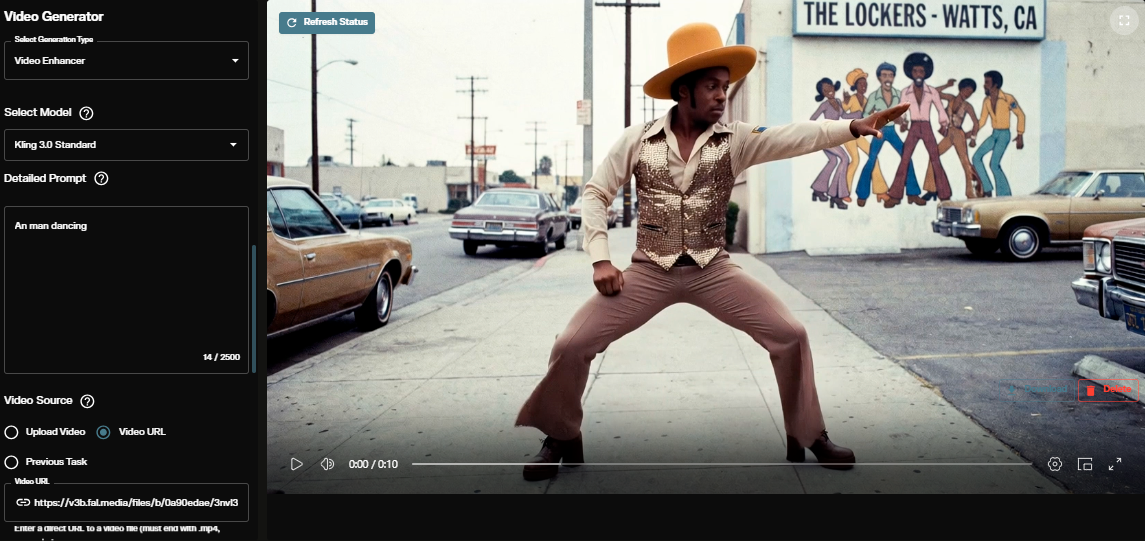
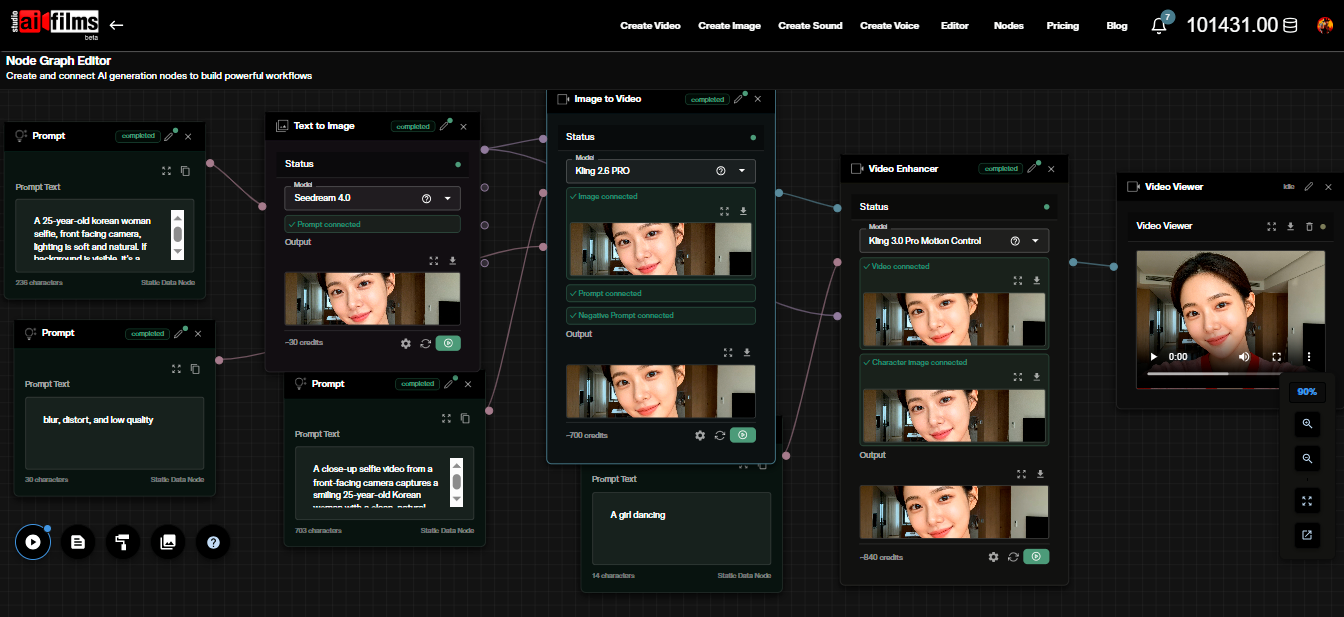
Filmmakers building their own visual language can prototype sequences and generate reference material in the video workspace before going to set.
Sources
Variety | Deadline | Screen Daily | The Wrap | The Hollywood Reporter | Festival de Cannes
Continue Reading
.jpg?w=3840)


Video & LipSync
- Video Generator
- Text to Video
- Image to Video
- Start-End Frame to Video
- Draw to Video
- Motion Control
- Video Enhancer
- Video Upscaler
- Video Extend
- Video to Video LipSync
- Audio to Video LipSync
- Image to Video LipSync
- Video FaceSwap
- Seedance 2.5
- WAN 3.0
- Seedance 2
- FLUX 3
- Minimax H3
- Vidu Q3 Pro
- Grok Imagine Video 1.5
- Gemini Omni
- Google Veo 3.1
- Kling 3.0 Pro
- Luma Ray 3.2
- LTX 2.3
- Happy Horse 1.1
- Kling 3.0 Motion
- ByteDance Upscaler
- InfiniteTalk
- InsightFace
Image & Edit
- AI Character
- AI Actor
- Art Generator
- Text to Image
- Image to Image
- LoRA Image to Image
- Draw to Edit
- Image LoRA Training
- Remove Background
- Image Enhancer
- MidJourney 8.0
- Krea 2
- OpenAI GPT Image 2.0
- Nano Banana Pro Ultra
- Nano Banana 2 Lite
- Nano Banana Pro
- Minimax Image
- Clarity Pro
- Z-Image Turbo LoRA
- Krea 2 Turbo LoRA
- Z-Image LoRA Trainer
- Qwen Image LoRA Trainer
- Background Erase Network 2 (BEN2)