
Peter Jackson at Cannes: 'AI Is Just a Special Effect'
Share this post:
Peter Jackson at Cannes: "AI Is Just a Special Effect"
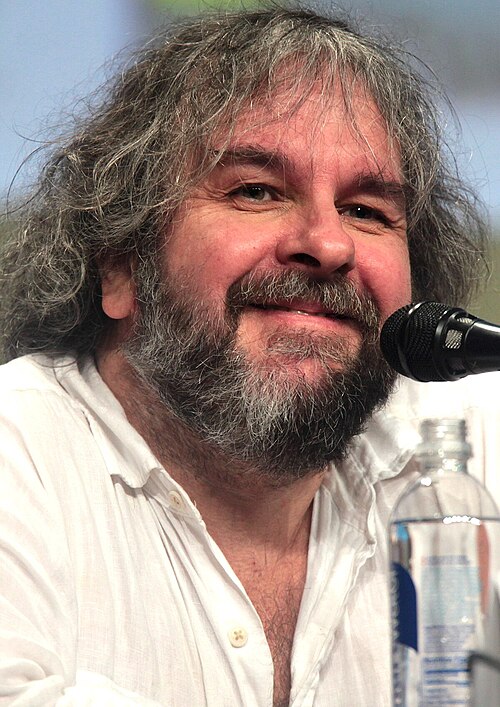
Peter Jackson accepted an Honorary Palme d'Or at the 79th Cannes Film Festival opening ceremony on May 12, 2026. The following day, at a masterclass hosted by the festival, he offered his most direct public position on artificial intelligence in filmmaking: "I don't dislike it at all".
"It's No Different from Other Special Effects"
Jackson placed AI alongside the long history of technical change in cinema. "To me, it's just a special effect. It's no different from other special effects", he said. He acknowledged the broader public fears about what AI could mean for humanity, but was clear that those concerns belong in a separate conversation from AI as a filmmaking tool.
Abxbay, CC0, via Wikimedia Commons
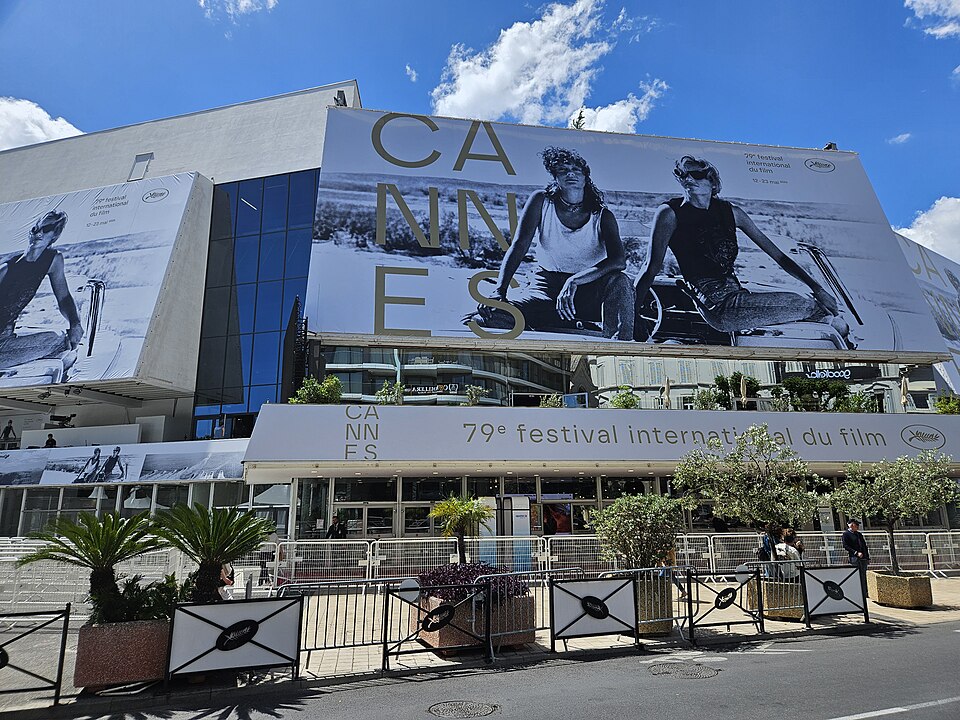
The comments arrived at a pointed moment at Cannes. The festival banned generative AI from its Official Competition in April, citing "human effort" as the condition for Palme d'Or eligibility. One day before Jackson spoke, General Delegate Thierry Frémaux was proposing certification labels for films made without AI, modeled on organic food standards. The festival that drew those lines then gave its highest honorary distinction to a director who declines to draw them.
Where He Draws the Line
Jackson did not argue for unrestricted use. On actor likeness rights, he was unambiguous: "It's absolutely critical" to protect performers. His framework is consent, not technology.
"If you're doing an AI duplicate of somebody, as long as you've licensed the rights off the person who you're showing, I don't see the issue", he said. "It's when people's likenesses get stolen and usurped".
Jury member Demi Moore made a parallel argument at the same festival, saying fighting AI entirely is a battle the industry will lose and calling instead for a framework that works alongside it. Both arrived at the same conclusion: the problem is misuse, not the technology.
The Andy Serkis Problem
Jackson also named a specific casualty of the AI debate: he believes it is the reason Andy Serkis has never received Oscar recognition for his motion capture performance as Gollum in the Lord of the Rings trilogy. The controversy over AI has colored how the Academy evaluates any performance mediated by technology, even work that predates generative AI by two decades. At APOS 2026 in Bali, Serkis addressed that same boundary in an address on AI's responsibility in creative storytelling, arguing for access expansion alongside greater creative accountability.
In July 2026, as principal photography began on The Hunt for Gollum in New Zealand, Serkis returned to the same argument in a Variety interview, stating that AI cannot yet replicate an 'authored performance' and that motion capture acting is long overdue for Oscar recognition in the main performance categories.
The Academy's current AI eligibility framework, clarified by CEO Bill Kramer in March 2026, centers on "human authorship". Applying that standard to motion capture has proven harder in practice than the principle suggests.
Wētā FX and the Beatles
Jackson is not speaking from outside the technology. Wētā FX, the visual effects company he founded in Wellington, New Zealand, has explored AI tools in production workflows for years. In 2021, his team built custom machine learning software called MAL to restore decades of degraded audio for The Beatles: Get Back documentary.
That work gave his studio direct experience with what AI tools can accomplish in a professional production context without displacing the people running it. His Cannes comments are his most direct public stance on generative AI to date.
Jackson's remarks came during the first Cannes where filmmakers openly admitted AI use, a shift Variety described as AI "coming out of the closet" at the Marché du Film.
Not all Cannes voices framed AI as neutral. Tilda Swinton told a masterclass at the same festival that formulaic AI content has no chance against adventurous human cinema, placing the burden on filmmakers to remain unpredictable rather than on regulators to restrict AI tools.
Gareth Edwards, director of The Creator and Rogue One: A Star Wars Story, has gone further than most. After nine months of personal experimentation with AI diffusion models, he told a panel he plans to make a hybrid AI film once the tools stabilize, calling the technology "a fucking genius at helping you".
The Honorary Palme d'Or Ceremony
The Honorary Palme d'Or is among the most significant recognitions Cannes bestows outside the competition. Past recipients include Jeanne Moreau, Jean-Paul Belmondo, and Agnès Varda. Jackson accepted the honor at the 79th edition's opening ceremony on May 12, 2026, the same evening the competition jury, which included Demi Moore, was introduced to the public.
The ceremony's timing made Jackson's masterclass statements the next day more pointed. He accepted cinema's highest honorary distinction from a festival that had just banned generative AI from competition, then told the audience that AI is just another special effect. The institutional message from Cannes and the personal position of its honoree ran in opposite directions.
The Cannes Contradiction Jackson Embodied
The contradictions assembled around Jackson's Cannes appearance were visible, and nobody on the festival's organizing side appeared to find them uncomfortable. He was an Honorary Palme d'Or recipient who regards AI as a normal special effect, speaking at a festival that had banned AI films from competition and announced a multiyear Meta AI partnership earlier in the same edition.
The festival's ban on AI in Official Competition applies to films seeking the Palme d'Or, not to every event that takes place during the two week run. Masterclasses, Marché panels, and satellite events operate under different standards than the competition. Jackson's presence made the festival's own position harder to hold as a coherent statement, which is perhaps why the masterclass generated more press coverage than the competition lineup.
Wētā FX's Commercial AI Work
Wētā FX has operated as an independent studio since Jackson sold it to Unity Technologies in 2021. The sale separated the creative production work Wētā had done for Jackson's films from the studio's commercial visual effects business. Wētā FX now serves productions across multiple studios, including several that are actively integrating AI tools into their VFX pipelines.
The MAL audio restoration tool used for The Beatles: Get Back was built for a specific problem. It recovered audio quality from recordings that had degraded over decades. It was a narrow, purpose built AI tool applied to a clearly defined task. The generative AI tools being deployed in VFX pipelines in 2026 operate at a much broader scope, generating or modifying image and video rather than restoring audio. Jackson's experience with MAL informed his position, but the tools he was defending at Cannes go beyond what that project used.
Andy Serkis at APOS 2026
Andy Serkis appeared at the Asia Pacific Screen Summit in Bali in June 2026, where he spoke specifically about AI's responsibility in creative storytelling. His position reflects the same framework Jackson described at Cannes. The technology is not the problem, but how it is used matters enormously.
Serkis's concern at APOS was not displacement but attribution. His motion capture work for Gollum, Caesar in the Planet of the Apes franchise, and other roles has been consistently denied Oscar recognition on the grounds that the performance was mediated by technology. Generative AI raises the same question at a larger scale. If AI can generate a performance from a text prompt, the attribution question that has followed Serkis throughout his career becomes an industry wide problem.
New Zealand's Film Industry and AI
New Zealand's screen production sector operates at the intersection of world class visual effects capacity, established government incentives, and a relatively small domestic market. Jackson's profile internationally gives New Zealand's film industry visibility that no government promotional campaign could match. His public position on AI carries practical weight for how international productions evaluate New Zealand as a partner.
The New Zealand Film Commission has not taken a detailed public position on AI production tools as of mid-2026. The government's broader AI policy framework is still developing. Jackson's Cannes remarks, which treat AI as a neutral tool subject to the same consent and labor considerations as any other technology, are broadly consistent with the practical approach that New Zealand's film incentive infrastructure would support.
The MAL Audio Tool and What It Actually Did
The MAL tool built for The Beatles: Get Back addressed a specific and narrow problem. Decades of recording had left the original audio with noise, frequency gaps, and signal degradation that made the material difficult to present at theatrical quality. MAL used machine learning to separate voices and instruments from background noise and restore frequency content that physical degradation had removed.
That is a restoration task, not a generative task. MAL was not generating new audio. It was recovering audio that existed in the original recordings. The distinction matters because Jackson's Cannes defense of AI tools was built on a practical example of AI doing something precise and bounded. His studio applied a specific tool to a clearly defined problem. The generative tools he was defending at Cannes operate at a different scope and carry different creative and ethical implications.
What Wētā's Independence From Jackson Means
Unity Technologies acquired Wētā FX from Jackson in November 2021 for $1.625 billion. The sale transferred ownership of the studio's technology platform and commercial visual effects business to Unity. Wētā FX now serves productions across multiple studios as an independent vendor. Jackson retains Wētā Workshop, the physical effects and creature fabrication company, separately.
The independence matters for interpreting Jackson's Cannes statements. He was speaking about AI tools in filmmaking while Wētā FX, the studio he founded, operates commercially for clients across the industry. His personal position on AI as a neutral tool is now expressed through institutional separation rather than direct ownership. The tools Wētā FX uses on client productions are its own decisions, not Jackson's.
The Cannes AI Certification Proposal Jackson Was Reacting To
One day before Jackson spoke at his masterclass, festival General Delegate Thierry Frémaux proposed a certification system that would label films made without AI, modeled on organic food standards. The proposal positioned AI free production as a premium designation rather than a standard. Films bearing the certification would signal to audiences that no generative tools were used.
Jackson did not address the proposal directly, but his framing of AI as a neutral special effect ran counter to the logic behind certification. The organic food model treats the absence of something as a quality signal. Jackson's position treats the technology as no different from prior generations of effects tools, none of which produced certification systems based on not using them. His masterclass audience heard both positions in the same 24-hour period.
Demi Moore's Parallel Position at the Same Festival
Jury member Demi Moore made a similar argument to Jackson's during the same Cannes edition. She told a press conference that fighting AI entirely is a battle the film industry will lose and that the more productive approach is building frameworks that allow filmmakers to work alongside the technology on acceptable terms. Her position as a jury member for the competition that had just banned AI from its Official Selection made her remarks structurally parallel to Jackson's. Both arrived at Cannes carrying institutional roles and both publicly declined to hold the festival's stated position on AI.
Moore and Jackson are not natural allies on most filmmaking questions. Their agreement on the framing of AI, a technology that neither of them has publicly used, reflects how far the conversation has moved from a simple for/against binary. The Cannes edition that banned AI from competition featured two of its most prominent guests arguing that the ban misidentifies the problem.
What Jackson's Cannes Appearance Accomplished
Jackson's presence at Cannes served two purposes simultaneously. For the festival, it put one of cinema's most commercially successful directors in front of a masterclass audience, generating coverage and attendance that reflected well on the 79th edition. For Jackson, it gave him a platform to state a position on AI that his guild role does not allow him to make contractually explicit while serving as DGA president.
A director and DGA president cannot negotiate AI provisions in guild contracts and simultaneously make public arguments that weaken those negotiations. A director attending Cannes as an honorary recipient, giving a personal masterclass, can say AI is just a special effect and have it covered as personal opinion rather than guild policy. The Cannes context gave him a way to say what he apparently believes in a venue where it could not be weaponized in a negotiating context.
What the MAL Comparison Teaches About AI in Production
Jackson's reference point for his own AI use is a restoration tool applied to a specific archival problem. That is a different category of AI application from the generative tools he was defending in principle at Cannes. The distinction matters for understanding his credibility. He has direct experience with narrow AI built for one task and applied to a clearly defined production problem. He does not have direct experience with generative video or image tools.
His defense of those tools is therefore theoretical rather than experiential, grounded in his reading of technology history rather than in production practice with the tools themselves.
That does not make his argument wrong. The history of special effects technology supports his framing. But it does mean his position is a principled extrapolation from adjacent experience rather than testimony from direct use.
The most credible version of Jackson's argument will come when he has used generative AI on a production and can describe the specific ways it did or did not behave like previous generations of special effects tools. His track record with MAL and the LORD OF THE RINGS trilogy's technical innovations suggests he would engage with generative tools with the same methodical rigor he brought to those earlier challenges.
Explore text-to-video generation in AI FILMS Studio to work with the same class of tools Jackson is describing.

Update (August 19, 2026): Brad Pitt made a narrower version of the same tool argument in August 2026, naming visual effects and a $40 million to $90 million budget band. Full story here.
Sources
Variety
Continue Reading
.jpg?w=3840)


Video & LipSync
- Video Generator
- Text to Video
- Image to Video
- Start-End Frame to Video
- Draw to Video
- Motion Control
- Video Enhancer
- Video Upscaler
- Video Extend
- Video to Video LipSync
- Audio to Video LipSync
- Image to Video LipSync
- Video FaceSwap
- Seedance 2.5
- WAN 3.0
- Seedance 2
- FLUX 3
- Minimax H3
- Vidu Q3 Pro
- Grok Imagine Video 1.5
- Gemini Omni
- Google Veo 3.1
- Kling 3.0 Pro
- Luma Ray 3.2
- LTX 2.3
- Happy Horse 1.1
- Kling 3.0 Motion
- ByteDance Upscaler
- InfiniteTalk
- InsightFace
Image & Edit
- AI Character
- AI Actor
- Art Generator
- Text to Image
- Image to Image
- LoRA Image to Image
- Draw to Edit
- Image LoRA Training
- Remove Background
- Image Enhancer
- MidJourney 8.0
- Krea 2
- OpenAI GPT Image 2.0
- Nano Banana Pro Ultra
- Nano Banana 2 Lite
- Nano Banana Pro
- Minimax Image
- Clarity Pro
- Z-Image Turbo LoRA
- Krea 2 Turbo LoRA
- Z-Image LoRA Trainer
- Qwen Image LoRA Trainer
- Background Erase Network 2 (BEN2)