
Andy Serkis at APOS 2026: AI Brings New Responsibility to Storytelling

Share this post:
Andy Serkis at APOS 2026: AI Brings New Responsibility to Storytelling
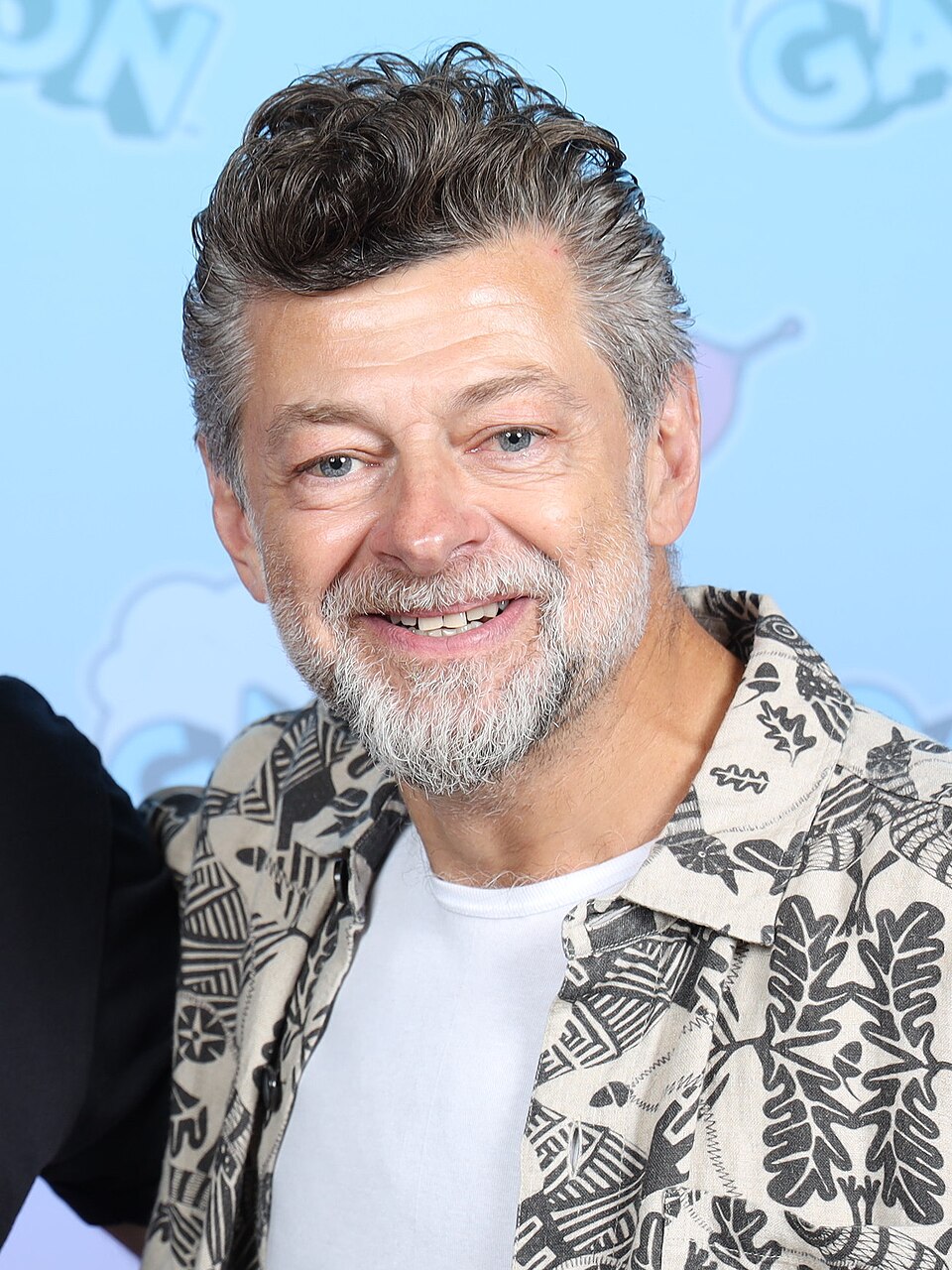
Andy Serkis joined APOS 2026 via video link from New Zealand on June 17, calling in from active principal photography on The Lord of the Rings: The Hunt for Gollum, a film he is directing and in which he will again play the title role. The summit, held in Bali and organized by Media Partners Asia, is Asia Pacific's leading annual conference on the media, streaming, and entertainment industry, attracting executives from Netflix, Amazon, Disney, Warner Bros. Discovery, and the region's major broadcasters and studios.
Serkis appeared on a panel titled "The New Creative Pipeline: AI, IP & Human Craft" alongside Google's VP of Entertainment Content and Platforms Jon Zepp and filmmaker Josh Nelson Youssef. Thomas Tull, TWG Global cochairman and former CEO of Legendary Entertainment, gave a separate keynote. Gautam Saxena of ING Group APAC addressed the financial infrastructure behind the AI build.
| Speaker | Role | Key Point |
|---|---|---|
| Andy Serkis | Director, Imaginarium Studios | "As the creative landscape expands, so does our responsibility" |
| Thomas Tull | TWG Global cochairman | Predicted "the largest transfer of wealth in human history" |
| Gautam Saxena | ING Group APAC | AI hyperscalers are financing infrastructure through debt |
| Jon Zepp | Google Entertainment VP | Audiences will expect transparency about AI origins |
| Josh Nelson Youssef | Filmmaker | "The question is not simply what these tools can do, but why we are using them" |
APOS draws senior decision makers rather than technologists. The summit's focus on content strategy, distribution rights, and platform economics makes the AI discussion there more grounded in business consequences than in capability demonstrations.
The 2026 edition drew particular attention to AI's role in reshaping how Asian studios compete globally. Four of the five featured speakers addressed AI directly, a concentration that would have been unusual at any previous APOS edition.
The keynote and panel format separated Tull's investment thesis from the creative conversation Serkis led. Both strands covered AI from different sides of the same question: what happens to the media industry's value chain as generation costs fall toward zero.
AI Expands the Creative Field, Responsibility Expands With It
Serkis led with the access argument. "One of the most exciting things I'm looking forward to is seeing young creative minds tell stories in compelling, exciting new ways, regardless of their means, their social class or their access to equipment and money", he told the panel.
That framing positions AI tools as a leveling mechanism. The cost and technical skill required to produce professionally viable film and video work have historically filtered out a large share of global storytelling talent. Serkis sees AI reducing those barriers at a pace that exceeds what consumer cameras accomplished in the early 2000s.
The optimism comes directly alongside acknowledgment of risk. "As the creative landscape expands, so does our responsibility", Serkis said. "As with any technology, it's about how responsible we are". The downside, in his framing, is AI used to exploit, deceive, or direct audiences toward harmful content. He did not call for specific regulatory responses, placing accountability on creators rather than platforms.
The responsibility framing is consistent across major filmmakers who have engaged directly with AI tools in 2026. It does not argue for limiting access to the technology. It argues that expanded access requires expanded attention to how and why the tools are applied.
"The world is changing fast. But human creativity will evolve alongside it". That statement closed his contribution to the panel and summarized the session's overall conclusion: AI expands the scope of what is possible, but no speaker argued it replaces the judgment of the person making the creative decisions.
Gollum, Performance Capture, and Where the Line Falls
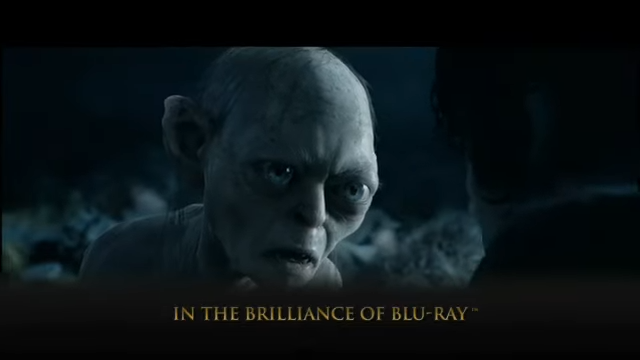
Serkis spent two decades establishing that performance capture is acting, not visual effects. The Gollum he created across the Lord of the Rings and Hobbit trilogies is a fully human performance, recorded on set, processed through Weta Digital's rendering pipeline, and expressed through his voice, body, and facial movement. The digital look is the output of the technology. The performance behind it is his.
Peter Jackson addressed the distinction directly at his Cannes masterclass in May 2026. "It's not an AI-generated performance, it's a human-generated performance 100% of the way", he said. The clarification matters because the AI conversation in film frequently conflates motion capture with generative AI, treating both as forms of machine substitution for human work. They are not the same thing.
Serkis founded Imaginarium Studios in 2011 to protect and advance the human element in digital character creation. The studio has worked on productions including The Hobbit, Avengers: Age of Ultron, Black Panther, and Mowgli: Legend of the Jungle. Its model keeps performer physicality at the center of the digital character and explicitly positions the work in opposition to approaches that generate synthetic performances without a human source.
His APOS remarks, delivered from the New Zealand set of Hunt for Gollum, reflect 25 years of lived experience on the human side of that boundary. The timing makes his position on AI both more credible and more specific than most industry commentary.
The Hunt for Gollum reunites much of the original cast. Principal photography began in June 2026, with the film scheduled for theatrical release on December 17, 2027.
| Character | Actor |
|---|---|
| Gollum / Sméagol | Andy Serkis |
| Gandalf | Ian McKellen |
| Frodo Baggins | Elijah Wood |
| Thranduil | Lee Pace |
| Aragorn | Jamie Dornan |
Jackson suggested at Cannes that the AI controversy is the primary reason Serkis has never received Oscar recognition for Gollum, despite the performance predating generative AI by two decades. The Academy's resistance to honoring motion capture work, in his view, stems from confusion between performance capture and AI generation. The film discussion between Serkis and Peter Jackson at the Cannes masterclass covered exactly this ground.
Thomas Tull: The Largest Transfer of Wealth in Human History
Thomas Tull delivered the summit's most expansive economic prediction. "I think you'll see the largest transfer of wealth in human history" as a result of AI adoption, he told the APOS audience. The statement positioned AI disruption at a scale beyond any individual industry, comparable to the industrial revolution in its effect on how economic power is distributed.
Tull's credentials give the prediction weight beyond conference speculation. He built Legendary Entertainment into the production company behind The Dark Knight trilogy, Inception, Interstellar, and Pacific Rim before the company's sale to Wanda Group for $3.5 billion in 2016. He is now a technology and defense investor through TWG Global. His remarks combined operator experience in large-scale entertainment with active investment in AI adjacent technology.
The prediction was not isolated to media. Tull framed it as a statement about all industries simultaneously, with companies that move early to integrate AI at their core capturing a disproportionate share of the resulting wealth, and those that do not falling behind permanently.
His framing treats AI as a structural shift in where value is created, not a tool that improves individual operations. Companies that understand this early, in his analysis, stop competing on efficiency and start competing on capability categories that did not exist before.
For Asia Pacific entertainment companies specifically, the wealth transfer framing carries particular urgency. The region's content market is already under pressure from global platform expansion. Tull's argument is that the current competitive disadvantage compounds dramatically if companies in the region delay internal AI transformation.
Companies That Treat AI as an Add On Will Be Left Behind
Tull drew a direct line between a company's internal posture on AI and its survival. Organizations treating AI as a feature layered on top of existing workflows, rather than rebuilding their core operations around it, face elimination. "Some of the largest companies in media and entertainment" could become "irrelevant in the next three to five years" if that transformation does not happen from within, he predicted.
The framing inverts the common approach to AI adoption, where companies integrate AI tools into existing departments and processes without changing how those departments operate. Tull's argument is that this approach produces a small efficiency gain while leaving the company's fundamental competitive position unchanged. The advantage goes to organizations that rebuild around AI from the ground up.
The three to five year timeline puts that reckoning in the 2029 to 2031 window. For entertainment companies in the Asia Pacific region, where streaming competition with global platforms is already intense, the urgency Tull described maps directly onto an existing pressure.
Tull did not identify specific companies facing this risk. The implied warning applies most directly to mid tier studios with significant sunk costs in legacy workflows and insufficient capital to rebuild them rapidly.
Financing the Infrastructure and Sovereignty Questions
Gautam Saxena introduced a structural complication to the summit's general optimism about AI. He identified "AI hyperscalers", the largest cloud and infrastructure providers expanding computing capacity, as financing that build through debt rather than cash reserves. The implication is that infrastructure investment is running ahead of demonstrable revenue, creating financial risk if AI return timelines extend.
Saxena also flagged "AI Sovereignty" as a specific concern for the Asia Pacific region. Cross border restrictions on AI model access, combined with data residency requirements that vary by country, are creating a situation where what a studio can access in one market may be unavailable in another. Content companies operating across the region face technology uncertainty at the platform level before any creative decisions are made.
For smaller production companies in the region, the sovereignty issue is more than a compliance matter. It shapes which generation tools are available, which training data can be used legally, and which distribution platforms can carry AI assisted content across borders.
Google's Jon Zepp, whose team oversees entertainment partnerships for the platform globally, described AI as "a major new dimension of storytelling". On audience expectations, he noted that "in most cases, audiences will want to understand the source of origin". Transparency about AI's role in a finished work emerged as a shared expectation across the panel: not a regulatory requirement yet, but an emerging audience norm.
The Human Element at the Center of the Creative Act
Filmmaker Josh Nelson Youssef, who focuses on immersive experience work, offered the session's sharpest statement on purpose: "The question is not simply what these tools can do, but why we are using them". All five speakers converged on the same conclusion from different professional perspectives. The tools expand what is technically achievable. The decisions about what is worth making remain with the people making them.
That consensus echoes what Gareth Edwards described in May after nine months of direct testing with AI diffusion models: the technology amplifies directorial intent but does not substitute for it. Serkis's APOS remarks are part of a wider pattern in the first half of 2026, in which major filmmakers have shifted from commenting on AI abstractly to reporting on it from active production work.
The distinction matters for how the industry understands AI's role. Serkis is not a skeptic being forced to engage with a disruptive tool. He is a practitioner who has spent his career navigating the boundary between technology and human performance, and who arrived at APOS with specific views shaped by that experience. The business side of the same summit told a complementary story: APOS 2026 declared AI operational across Asian streaming, with JioHotstar reporting 60% of users already preferring AI voice discovery over text search.
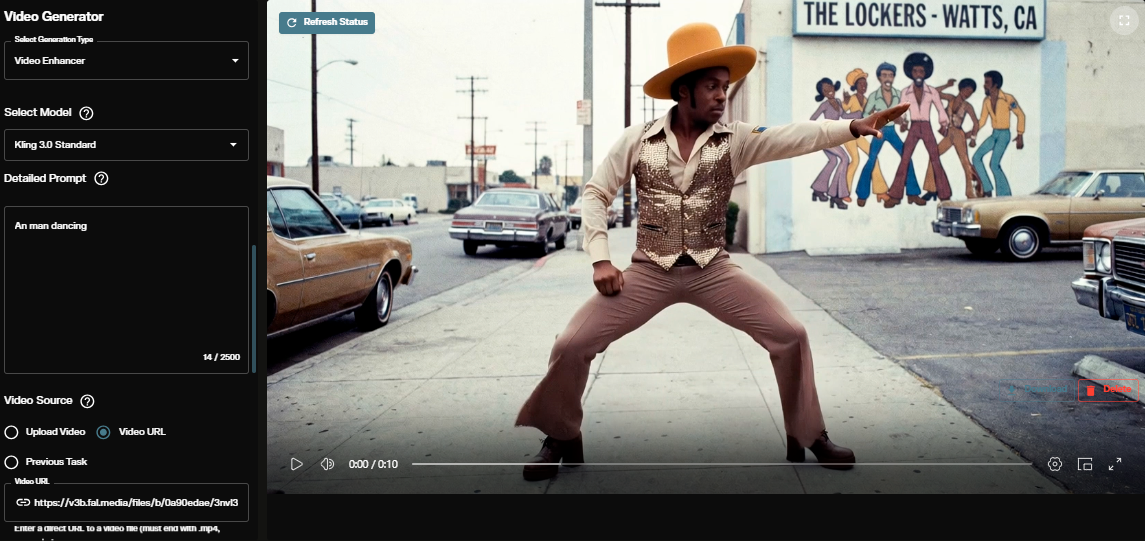
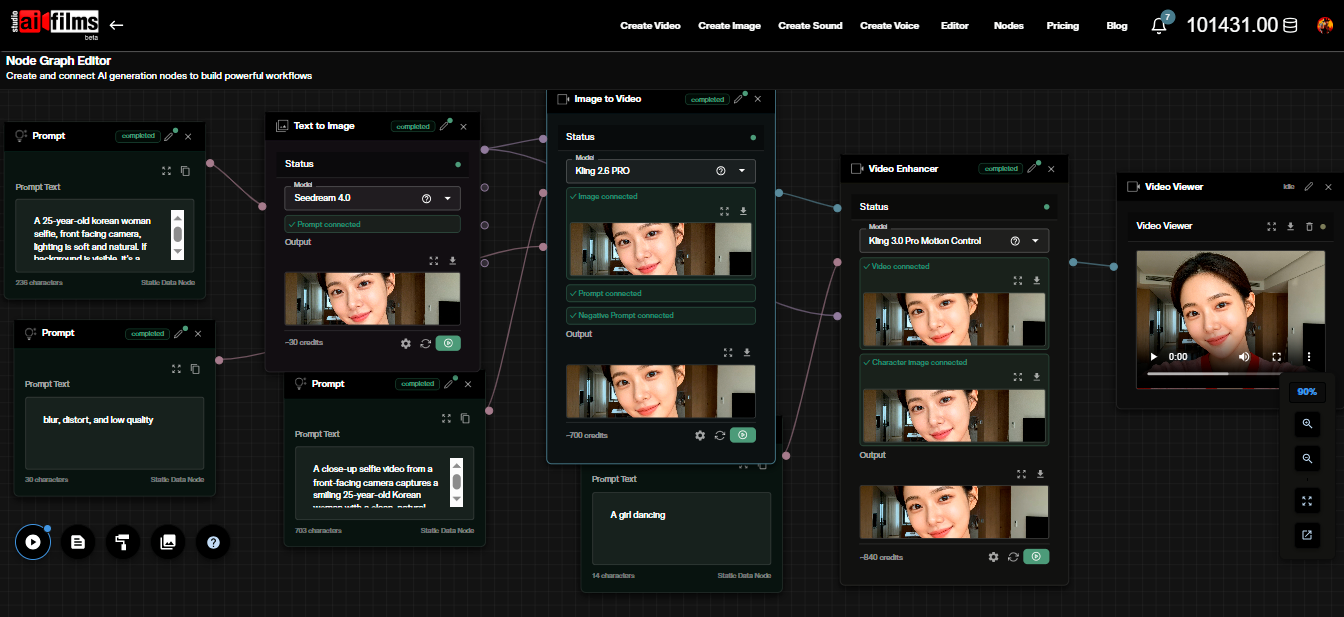
The access expansion Serkis described is already available. Filmmakers who want to generate text-to-video and image-to-video content without professional production infrastructure can do so through the AI FILMS Studio video workspace, using the same category of models the industry is debating at summits like APOS.
Serkis's specific observation, that barriers of class and resource have limited who can tell stories globally, maps onto what browser based generation addresses: no GPU, no local software stack, no institutional access required.
Tom Holland offered a parallel view the same week, arguing on Spain's El Hormiguero that creativity is safe from AI because it "has to do with the human experience".
Sources
Variety | Deadline | The Hollywood Reporter
Continue Reading
.jpg?w=3840)


Video & LipSync
- Video Generator
- Text to Video
- Image to Video
- Start-End Frame to Video
- Draw to Video
- Motion Control
- Video Enhancer
- Video Upscaler
- Video to Video LipSync
- Audio to Video LipSync
- Image to Video LipSync
- Video FaceSwap
- Seedance 2.5
- WAN 3.0
- Seedance 2
- FLUX 3
- Minimax H3
- Vidu Q3 Pro
- Grok Imagine Video 1.5
- Gemini Omni
- Google Veo 3.1
- Kling 3.0 Pro
- Luma Ray 3.2
- LTX 2.3
- Happy Horse 1.1
- Kling 3.0 Motion
- ByteDance Upscaler
- InfiniteTalk
- InsightFace
Image & Edit
- AI Character
- AI Actor
- Art Generator
- Text to Image
- Image to Image
- LoRA Image to Image
- Draw to Edit
- Image LoRA Training
- Remove Background
- Image Enhancer
- MidJourney 8.0
- Krea 2
- OpenAI GPT Image 2.0
- Nano Banana Pro Ultra
- Nano Banana 2 Lite
- Nano Banana Pro
- Minimax Image
- Clarity Pro
- Z-Image Turbo LoRA
- Krea 2 Turbo LoRA
- Z-Image LoRA Trainer
- Qwen Image LoRA Trainer
- Background Erase Network 2 (BEN2)