
'Artificial' Opens NYFF Main Slate October 5 and Screens at London Film Festival October 11
.jpg?w=3840&q=90)
Share this post:
'Artificial' Opens NYFF Main Slate October 5 and Screens at London Film Festival October 11
Luca Guadagnino's Artificial will world premiere in the New York Film Festival Main Slate on October 5, 2026, at Alice Tully Hall, Lincoln Center. A second major festival appearance follows at the BFI London Film Festival on October 11. The film stars Andrew Garfield as OpenAI CEO Sam Altman and dramatizes the five days in November 2023 when the OpenAI board dismissed and then reinstated him.
The NYFF Main Slate selection is the first confirmed public screening date for the film. Guadagnino, Garfield, and the full cast are expected to attend the Alice Tully Hall premiere.
.jpg)
Ajay Suresh from New York, NY, USA, CC BY 2.0, via Wikimedia Commons
World Premiere at NYFF Main Slate
The New York Film Festival Main Slate is a selective program that runs at Lincoln Center each fall and has historically served films with serious awards ambitions. Past Main Slate selections include Guadagnino's own work: Bones and All screened at the 2022 festival.
Artificial will open the Main Slate, the most prominent slot in the program. Alice Tully Hall holds approximately 1,100 seats. A world premiere in that room, with the director and cast in attendance, is one of the strongest possible launches for a fall Oscar campaign.
NYFF announces its Main Slate with a level of editorial deliberateness that other festivals do not replicate. The festival's programmers choose films that they believe represent the best work of the year rather than optimizing for industry attendance or commercial alignment. An opening night selection at NYFF carries that editorial signal clearly: the programmers believe this is among the most significant films of the season.
The BFI London Film Festival Gala slot, confirmed for October 11, extends the international launch across the Atlantic in the same week as the New York premiere. London Film Festival Gala selections represent a comparable level of curatorial emphasis and place the film in front of European press and industry before a wider release. The two consecutive festival appearances give Neon two major press moments in one week.
BAFTA eligibility is structured differently from Academy eligibility, but a London Film Festival Gala appearance directly precedes the BAFTA qualifying window. If the film performs well critically, a BAFTA campaign alongside the Oscar campaign is a realistic addition to Neon's strategy. European press coverage from London also shapes the international conversation that eventually feeds back into Academy member awareness in the weeks before voting opens.
The Cast
Andrew Garfield plays Sam Altman. The full ensemble includes Monica Barbaro, Yura Borisov, Ike Barinholtz, Cooper Hoffman, Jason Schwartzman, and Chris O'Dowd. Guadagnino directed from a screenplay by Simon Rich.
Garfield spoke publicly about the role for the first time in late July 2026, describing Neon as "a daring studio doing daring films." He expressed a desire to meet Sam Altman before the film reaches audiences. That meeting has not been publicly confirmed as of September 1, 2026.
The ensemble reflects Guadagnino's pattern of assembling casts that generate individual attention at the performance level alongside the film as a whole. Barbaro, Borisov, and Schwartzman each bring distinct critical profiles to a project already positioned for multiple acting category campaigns.
Barbaro received widespread critical attention for her performance in A Complete Unknown in 2025. Borisov has a strong European art film reputation from his work in Compartment No. 6 and Anora. Schwartzman's career spans comedy, drama, and art house work across more than two decades. The combination of these performers in a Guadagnino film, behind an Oscar level lead performance from Garfield, gives the campaign a wide range of potential acting category nominations beyond Best Actor alone.
Cooper Hoffman and Ike Barinholtz extend the cast into registers that press coverage of the film has not yet addressed in detail. Their roles in the drama's five day span remain undisclosed in the press materials released to date. That deliberate withholding of character information is itself a marketing choice: it preserves the film's specific dramatic revelations for the October 5 premiere.
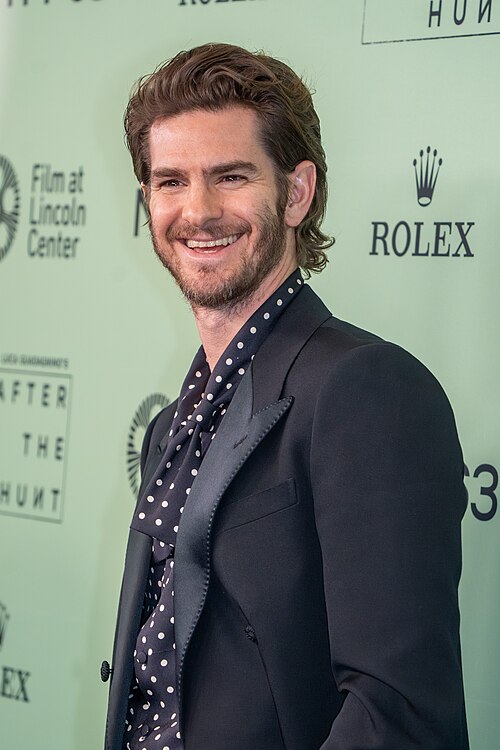
Bryan Berlin, CC BY-SA 4.0, via Wikimedia Commons
Garfield has two previous Academy Award nominations, for The Social Network in 2011 and for Tick, Tick... Boom! in 2022. The NYFF premiere positions him at the center of awards season conversation at the earliest moment that matters for Oscar voters: October.
Guadagnino received the Silver Lion at Venice 2022 for Bones and All and opened Venice competition in 2024 with Queer. He has not won the Academy Award but has a consistent record of directing performances that receive nominations. A full Oscar campaign for Best Director is already part of Neon's publicly stated strategy.
The combination of a lead performance with genuine Oscar prospects and a director with a strong Academy track record gives the campaign two separate anchor categories to build around, rather than depending on a single nomination path.
From Amazon to Neon
Amazon MGM Studios dropped Artificial in June 2026 after the studio finalized a major cloud and AI partnership with OpenAI in February 2026. That financial relationship made the film's subject matter commercially untenable for the studio. Amazon exited a film it had financed and seen through production, a situation without clear precedent at this scale in the studio system.
The exit came after principal photography was already complete. Amazon's financial interest in OpenAI did not exist when it financed the film. The conflict of interest arrived after the film was made, not before. That sequence is important: no creative decision on set contributed to the exit. A separate business transaction, closed months after production wrapped, retroactively made the film impossible for Amazon to release.
Neon acquired worldwide distribution rights and committed to an Oscar campaign. Neon CEO Tom Quinn received premiere offers from Venice, Telluride, and Toronto, and declined all of them. The NYFF Main Slate slot is the premiere Neon chose instead: a New York launch for a New York awards market, timed to the start of Academy voting season.
Neon's history with politically or institutionally complicated biographical subjects is directly relevant. The distributor released The Apprentice, Titane, and Parasite, each of which required a different kind of market positioning than a conventional prestige release. Artificial fits the same pattern.
The path from a major studio exit to one of the most prominent festival slots of the fall took approximately three months. Neon's acquisition moved quickly, and the studio's relationship with NYFF programmers appears to have made the Main Slate opening position available. The result is a stronger launch position than any of the festivals that initially offered berths.
Five Days in November 2023
Artificial dramatizes a specific and documented event: the five day period in November 2023 when the OpenAI board dismissed Sam Altman as chief executive, then reversed the decision and reinstated him after a mass employee revolt and a reported attempt by Microsoft to hire the dismissed CEO.
The film does not cover Altman's career in full. It is contained to those five days. Guadagnino and Simon Rich built the narrative around a real sequence of events that unfolded almost entirely in public, through posts, statements, and media coverage as events happened, before ending with Altman's return.
That choice of a contained timeline is both an artistic decision and a practical one. Dramatizing all of Altman's career would require speculating about events that were either private or are still unfolding. The five days of November 2023 are documented to an unusual degree. They were covered live as they happened by every major media organization, and they produced public statements from the OpenAI board, from Microsoft, from employees, and from Altman himself. A dramatist can work from a record that is closer to a transcript than to memory.
The script reportedly depicts Altman as a pathological liar, according to people familiar with its contents. Garfield's role is to make that characterization specific and human across five days rather than a general judgment. Every scene he plays draws on a window of events that are close enough in time that audiences who lived through them may remember them directly.
Altman has not responded publicly to the film or to Garfield's stated desire to meet him. The premiere on October 5 provides the first opportunity for any such response to emerge in a context where the film is actually being seen and reviewed. His silence through production, acquisition, and the announcement of the NYFF premiere is itself a notable choice for a person who communicates publicly very frequently.
Whether that silence is a legal strategy, a communications strategy, or simply a decision to wait until the film exists in reviewable form is not publicly known. The question will not have an obvious answer until after the October 5 premiere, when the range of public responses to the film forces a decision about whether and how to respond.
Awards Trajectory
Neon has built its awards campaigns around films that reach audiences through a combination of critical response and controversy. The Apprentice, Ali Abbasi's film about Donald Trump, followed a comparable path: major studios passed, Neon acquired, Sebastian Stan received a Best Actor Oscar nomination. The same template applies to Artificial.
Tom Quinn's decision to decline Venice, Telluride, and Toronto in favor of NYFF is the most significant strategic signal in the entire production and distribution history of the film. Quinn has run awards campaigns at Neon long enough to know what each festival gives a film and what each one costs. Telluride is widely understood as the strongest launch a single weekend can provide for films with serious Best Picture ambitions. Quinn declined it. That is either a very confident bet on NYFF as a more targeted launch, or a signal that the film performs differently in a New York critical context than it would in the Telluride mountain town atmosphere.
The NYFF Main Slate premiere on October 5 is the opening move. London on October 11 extends the response internationally. A wide North American release will follow in time for Academy voting. Neon has publicly confirmed campaigns for Best Actor for Garfield, Best Director for Guadagnino, and Best Picture.
The Best Picture campaign is the most ambitious element of the strategy. Neon has won Best International Feature Film with Parasite, but has not won Best Picture. Artificial is the clearest shot the distributor has taken at a Best Picture win, with a director who has been consistently nominated adjacent to Best Picture and a lead performance that is already generating awards season discussion before the film has been seen publicly.
Supporting acting nominations for one or more ensemble members would strengthen the campaign further. Garfield's best chance at winning, rather than just being nominated, depends on whether the film generates the kind of broader Academy enthusiasm that produces a Best Picture win. Individual performance wins often follow Best Picture wins in years when a single film dominates the season. Neon's strategy appears to be built around exactly that kind of dominant campaign.
The NYFF choice over Venice signals a specific calculation about where the Academy Awards conversation begins and where it has the most impact. Venice would have given the film a European launch and the potential for a Golden Lion. Neon chose to start the conversation in New York instead, which is where the majority of the Academy's film journalists and awards consultants are based.
NYFF Main Slate selections do not guarantee awards results, but they place a film immediately inside the conversation that shapes the first round of critics' awards in November. The New York Film Critics Circle and the Gotham Awards both operate in the same window. A strong response on October 5 in Alice Tully Hall starts a chain that can carry a film through the season. A weak response is equally decisive.
Guadagnino's prior NYFF relationship matters here. The festival selected Bones and All for its 2022 Main Slate, and the film received strong critical attention even though its subject matter, survival cannibalism, was commercially difficult. That precedent suggests the festival's programmers are confident in Guadagnino's ability to produce work that rewards serious critical attention regardless of its controversial dimensions. Artificial's subject matter is commercially complicated in a different way: not through content, but through the business relationships of the institutions that would otherwise have released it.
The AI debate that reached Cannes 2026's Official Selection earlier this year continues into NYFF and London with the premiere of Artificial. This film does not use AI tools in its production. It is a film about the person most publicly associated with AI's expansion into mainstream culture. The reception it receives from both the film community and the technology sector will add a new dimension to a conversation that has been running at every major festival in 2026.
The Technology Sector Response
Sam Altman remains the chief executive of OpenAI. He was still in that role through the acquisition by Neon, the NYFF announcement, and the preparation of this film's press campaign. A film depicting him as a pathological liar is premiering at one of the most prestigious film festivals in the world while he continues to run one of the most prominent technology companies in the world.
That simultaneous reality is unusual. Biographical films about living subjects often release after the subject has retired or stepped back from public life, or during a period when their prominence has declined. Altman's prominence has not declined. OpenAI's products and financial relationships are more embedded in mainstream culture in September 2026 than they were when the November 2023 events that the film dramatizes occurred.
The technology sector's response to the film has not been publicly organized. Individuals at OpenAI and in adjacent companies have presumably seen coverage of the film's existence and the Garfield interview. No public statement has addressed the film's content directly. Altman's social media presence has not referenced the film.
That absence of response may change after October 5. A world premiere at Lincoln Center, with full press access and a major critical response published simultaneously, is the kind of event that produces public statements. Whether Altman responds, and what he says, will be one of the more reported stories in the weeks after the premiere.
The NYFF audience on October 5 will include film critics, industry professionals, and a press corps that covers both the film industry and the technology sector. The overlap of those two audiences around a single film in a single room is part of what makes the NYFF Main Slate the right launch for this particular project.
Review embargoes will lift at or near the premiere date. The initial batch of critical responses published in the hours following the Alice Tully Hall screening will determine the shape of the conversation for weeks. Films that receive strong NYFF responses often carry that momentum through the full awards season without significant disruption. Films that receive mixed or negative NYFF responses face a harder path, even with strong distribution support.
The London screening on October 11 adds a second critical response cycle within the same week. If the New York and London responses align, the first two weeks of October will establish Artificial as a consistent awards presence before the traditional October 15 start of the Academy's activity window. If the responses diverge, the October 11 London reviews will become part of a more complicated narrative that Neon and the filmmakers will need to manage through the rest of the fall.
North American theatrical release dates have not been announced as of September 1, 2026. Neon typically announces wide release dates in the weeks following a major festival premiere.
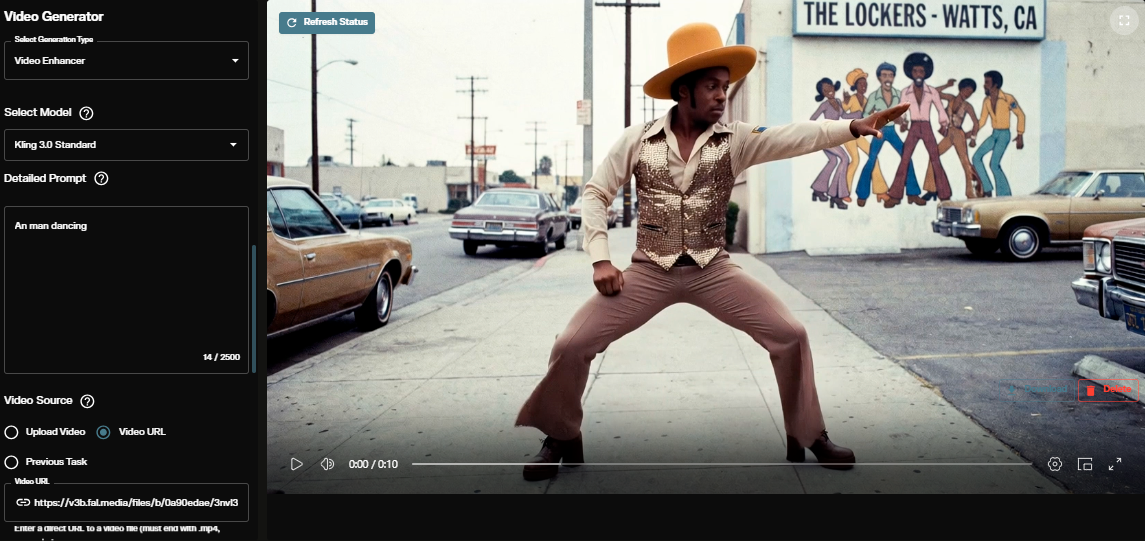
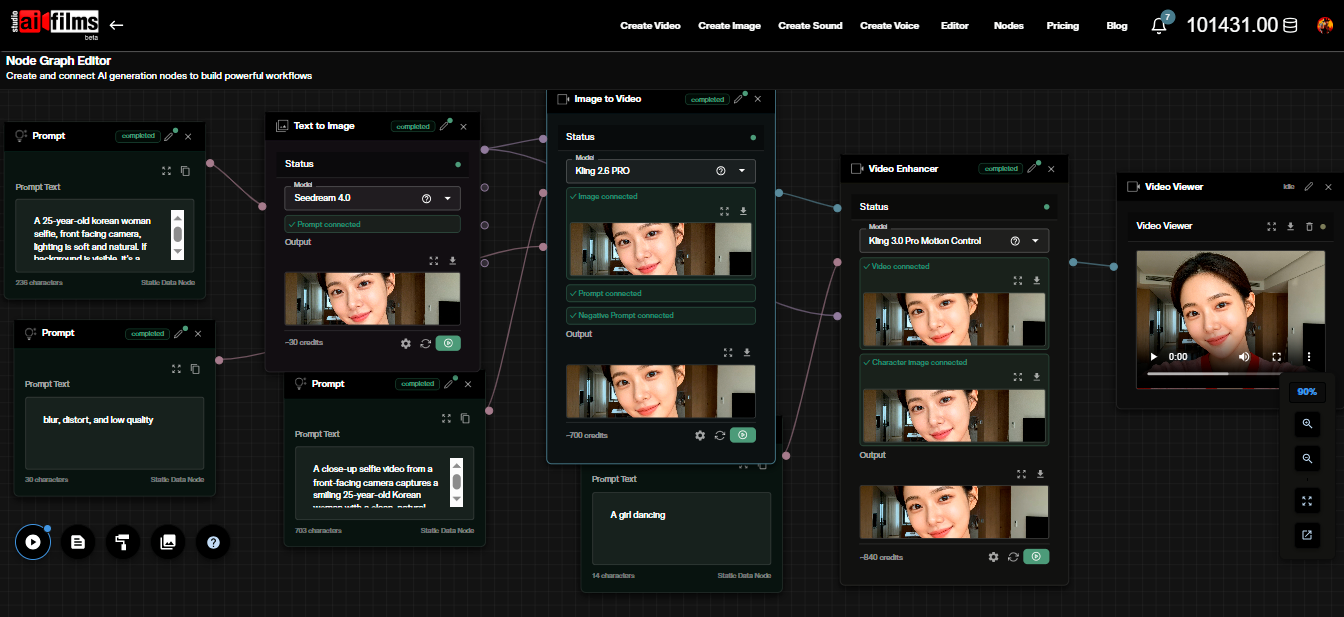
Filmmakers who want to work with AI tools for their own productions can access text-to-video and image-to-video generation through AI FILMS Studio's video workspace.
Sources
Variety | IndieWire | The Hollywood Reporter | The Wrap | Deadline | ThePlaylist
Continue Reading


.jpg?w=3840)
Video & LipSync
- Video Generator
- Text to Video
- Image to Video
- Start-End Frame to Video
- Draw to Video
- Motion Control
- Video Enhancer
- Video Upscaler
- Video Extend
- Video to Video LipSync
- Audio to Video LipSync
- Image to Video LipSync
- Video FaceSwap
- Seedance 2.5
- WAN 3.0
- Seedance 2
- FLUX 3
- Minimax H3
- Vidu Q3 Pro
- Grok Imagine Video 1.5
- Gemini Omni
- Google Veo 3.1
- Kling 3.0 Pro
- Luma Ray 3.2
- LTX 2.3
- Happy Horse 1.1
- Kling 3.0 Motion
- ByteDance Upscaler
- InfiniteTalk
- InsightFace
Image & Edit
- AI Character
- AI Actor
- Art Generator
- Text to Image
- Image to Image
- LoRA Image to Image
- Draw to Edit
- Image LoRA Training
- Remove Background
- Image Enhancer
- MidJourney 8.0
- Krea 2
- OpenAI GPT Image 2.0
- Nano Banana Pro Ultra
- Nano Banana 2 Lite
- Nano Banana Pro
- Minimax Image
- Clarity Pro
- Z-Image Turbo LoRA
- Krea 2 Turbo LoRA
- Z-Image LoRA Trainer
- Qwen Image LoRA Trainer
- Background Erase Network 2 (BEN2)