
Cannes 2026 Bans Generative AI from Official Competition

Share this post:
Cannes 2026 Bans Generative AI from Official Competition
The 79th Festival de Cannes formally drew a line between human cinema and generative AI on April 9, 2026. Films where generative AI drives scripting, visual generation, or principal performance synthesis are ineligible for the Palme d'Or and the Official Competition. The announcement came at the official press conference unveiling the 2026 Official Selection.
The "Back to Basics" Policy
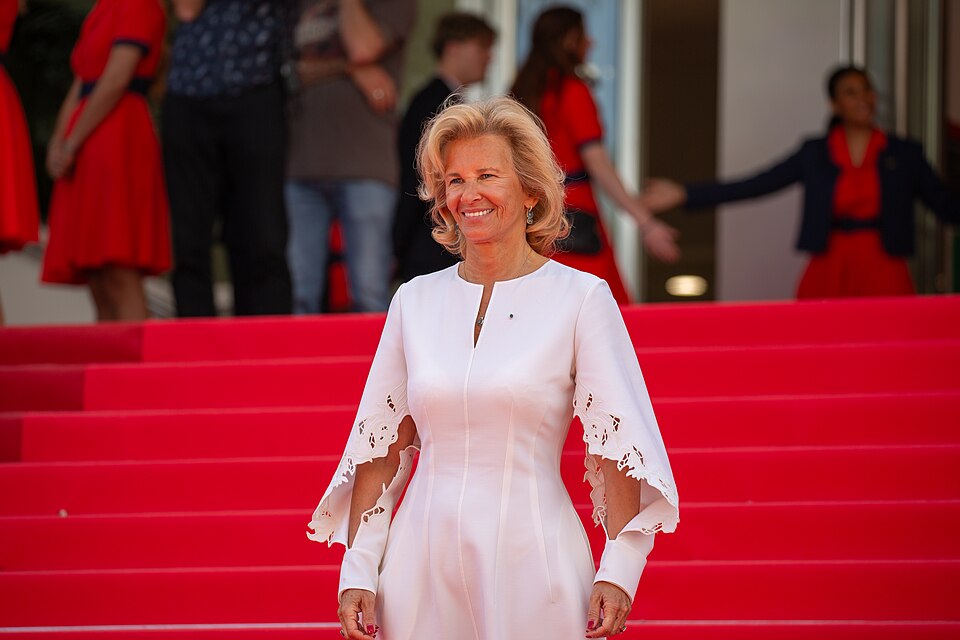
Festival President Iris Knobloch and General Delegate Thierry Frémaux framed the decision as a return to Cannes' founding identity. Knobloch stated that "a film is not an assembly of data; it is a personal vision." The mandate prioritizes auteur roots and what the festival calls "human effort" as the irreducible condition for Official Selection eligibility.
The selection committee reviewed 1,541 feature films for the 2026 competition. The resulting lineup favors independent, human centric narratives and shows a marked reduction in studio backed, technology heavy productions. General Delegate Frémaux described the curated slate as a deliberate statement about what Cannes believes cinema to be.
One day after the Cannes announcement, MPA Chairman Charles Rivkin took the opposite position at CinemaCon, arguing AI can "bolster the art of storytelling" when deployed responsibly and within copyright law.
What the Ban Covers
The restriction targets AI functioning as a "creator" or "visionary." Films that rely on generative models to produce scripts, synthesize performances, or generate primary visual content are excluded from competition. The festival is explicit that the disqualification applies when AI is the originating creative force, not a post production instrument.
Technical AI remains permitted. Sound restoration, image cleaning, and standard VFX pipeline tools that process or refine footage already shot by human crews are not affected. The distinction maps almost exactly onto what directors like Steven Soderbergh have publicly described as acceptable use. Soderbergh told the Sands International Film Festival earlier this month that his AI deployment is entirely enhancement based, not generative. Cannes drew the same line at the institutional level in its 2026 Official Selection rules.
A Parallel Structure for AI Cinema
Cannes has not ignored AI production. It has separated it from the artistic competition entirely.
The World AI Film Festival (WAIFF) runs April 21 to 22, 2026, at the Palais des Festivals in Cannes. The event functions as a dedicated space for hybrid and AI integrated works that fall outside the main competition's eligibility criteria. WAIFF operates independently but uses the festival's physical infrastructure. The 2026 edition drew nearly 5,500 submissions from over 80 countries, a fivefold increase from the inaugural Nice edition.

The commercial arm of the festival takes a different approach. The Marché du Film's Cannes Next program, running May 12 to 20, 2026, hosts the "AI for Talent" summit and "Creator Economy" sessions. The focus is business operations, virtual production, and workflow efficiency. Cannes has drawn a hard boundary: creative competition stays human, commercial programming engages with AI on its own terms.
Despite the ban in its competition, Cannes 2026 became the first festival where filmmakers openly admitted AI use across the market. A synthesis of the week shows that as major Hollywood names stayed home, a new wave of directors stepped into the gap. The 2026 competition's own selection reinforces this contrast: Hirokazu Kore-eda's competition entry "Sheep in the Box" places a humanoid AI at the center of a family drama, making AI the subject of official competition while the ban keeps it out of the production toolkit.
The Palme d'Or Standard
The festival's position is that AI can imitate but cannot replicate the human suffering or doubt that Cannes considers essential to the cinema it honors. The statement is also a financial calculation. The "auteur" designation carries commercial value in distribution, awards circuits, and critical legitimacy. Cannes is protecting that value by keeping its competition bracket free of generative AI.
The enforcement mechanism relies on declaration rather than technical verification. Films submit a statutory declaration from the director and producers asserting compliance with the eligibility rules. Cannes has no forensic tool to detect generative AI in footage after the fact. The policy works as a reputational and contractual deterrent, not as a technical screening process.
That enforcement gap is not unique to Cannes. Every film institution that has made AI policy declarations faces the same verification problem: tools to authoritatively detect generative AI content in completed film do not currently exist. A director who chose to submit a generative AI film and declare otherwise would face no technical barrier, only a contractual and professional one. The ban is credible because the industry believes it, not because it can be proven.
How Other Major Festivals Responded
Cannes' categorical ban did not become the universal institutional standard. Venice 2026, opening in late August, maintained no equivalent AI restriction on its competition lineup. Artistic Director Alberto Barbera has emphasized individual film evaluation over category rules, positioning Venice as a formal counterpoint to Cannes' approach.
Locarno 79, opening August 5, 2026, took the most philosophically distinct position of the three major European festivals. Rather than banning AI tools or remaining formally neutral, the festival identified the human programmer as "the counter-algorithm", the curatorial entity that exists to provide what recommendation systems cannot. The StepIn think tank running alongside the festival focuses its 2026 theme on "Power, People, Data and the Future of Film." It is a philosophical response, not a regulatory one.
The three European festival positions map the range of institutional responses now available. Cannes chose prohibition within competition. Venice chose evaluation without categorical exclusion. Locarno chose to name human curation itself as the response to algorithmic culture. All three are answering the same underlying question about creative authority in an AI era, and none reached the same conclusion.
North American festivals have been slower to commit to categorical AI positions. TIFF 2026 runs an AI Innovation Hub alongside its main programming, funding projects that use AI tools while maintaining no formal restriction on its competition. Sundance and Tribeca have both screened AI films in 2026 without announcing eligibility criteria changes.
The European festival divide between Cannes' restriction and Venice and Locarno's openness has not yet produced a clear North American analogue. TIFF's approach, funding AI projects through dedicated programming while keeping the main competition neutral, may reflect the model that North American institutions find most practical. A categorical ban requires enforcement through declaration. A dedicated track requires only a curatorial decision about where AI productions belong in the program.
The question Cannes put on the table in April 2026, whether generative AI authorship changes what a film is, is one that film institutions will keep answering individually for the foreseeable future. The range of responses already visible across a single festival season suggests the industry will not converge on one answer quickly, if at all.
The commercial pressure behind that divergence is real. Festivals compete for acquisitions buyers, world premiere rights, and critical attention. A festival that bans AI productions is narrowing its potential selection pool. A festival that takes no position is signaling openness to all comers. The institutional choice between Cannes' restriction and Venice and Locarno's alternatives is also a choice about which filmmakers and which films the festival intends to attract in a market where generative tools are already standard in many production pipelines.
What Cannes established in 2026 is less a permanent rule than a benchmark. Other institutions will continue to define their positions in relation to it, either endorsing the categorical approach, adapting it, or explicitly rejecting it as Venice and Locarno did. The benchmark itself, the first categorical AI ban at a major film festival, is now part of the industry record regardless of how long the specific rule holds.
The 2027 edition of Cannes will be the first test of whether the ban holds, expands, or is quietly renegotiated to reflect where the industry has moved in twelve months.
Other major institutions have arrived at similar frameworks through different routes. Academy CEO Bill Kramer told The Guardian in March 2026 that AI is a tool, not a creator, and that human authorship remains the Oscar standard. The Academy allows AI across production pipelines as long as human contribution remains dominant. Cannes has taken the stricter position: human origin is not just dominant, it is mandatory for the primary creative functions. Academy President Janet Yang made a parallel case at Sundance, calling for guardrails before generative AI becomes embedded in production workflows.
DGA President Christopher Nolan has positioned the guild's upcoming contract negotiations around the same principle. Directors must retain creative authority over AI deployment on their projects. Cannes' ban gives institutional weight to that argument ahead of the June 2026 DGA talks.
When the festival opened on May 12, Frémaux went further, proposing that films could one day carry "organic" certification labels to signal they were made without AI. Honorary Palme d'Or recipient Peter Jackson pushed back in the opposite direction the following day, calling AI in filmmaking "just a special effect, no different from other special effects" at his Cannes masterclass.
The festival's position has also shaped how filmmakers talk about their own tools. Several directors whose films appeared in the 2026 Official Selection made public statements in the week after the ban announcement clarifying that their AI use, if any, was technical rather than generative. The declaration requirement created a public conversation about production practice that would not have occurred under a neutral policy.
Whether that transparency is the ban's most durable effect, regardless of how festivals eventually rule on generative AI, is a question the industry will answer over the next several years. No festival before Cannes 2026 had required directors to declare their AI practices. The declaration standard, rather than the prohibition itself, may prove to be the more widely adopted legacy of the April 9 announcement.
Generate video for your own projects through AI FILMS Studio's video workspace while the institutional debate over AI's place in cinema continues:
Guadagnino's Artificial will bring the AI-in-cinema conversation to the NYFF Main Slate when it world premieres at Alice Tully Hall, Lincoln Center, on October 5.
Sources
Festival de Cannes: Official 2026 Selection Announcement Palais des Festivals: World Artificial Intelligence Film Festival Schedule World AI Film Festival: WAIFF 2026 Official Site Marché du Film: Cannes Next Innovation Programming
Continue Reading
.jpg?w=3840)


Video & LipSync
- Video Generator
- Text to Video
- Image to Video
- Start-End Frame to Video
- Draw to Video
- Motion Control
- Video Enhancer
- Video Upscaler
- Video Extend
- Video to Video LipSync
- Audio to Video LipSync
- Image to Video LipSync
- Video FaceSwap
- Seedance 2.5
- WAN 3.0
- Seedance 2
- FLUX 3
- Minimax H3
- Vidu Q3 Pro
- Grok Imagine Video 1.5
- Gemini Omni
- Google Veo 3.1
- Kling 3.0 Pro
- Luma Ray 3.2
- LTX 2.3
- Happy Horse 1.1
- Kling 3.0 Motion
- ByteDance Upscaler
- InfiniteTalk
- InsightFace
Image & Edit
- AI Character
- AI Actor
- Art Generator
- Text to Image
- Image to Image
- LoRA Image to Image
- Draw to Edit
- Image LoRA Training
- Remove Background
- Image Enhancer
- MidJourney 8.0
- Krea 2
- OpenAI GPT Image 2.0
- Nano Banana Pro Ultra
- Nano Banana 2 Lite
- Nano Banana Pro
- Minimax Image
- Clarity Pro
- Z-Image Turbo LoRA
- Krea 2 Turbo LoRA
- Z-Image LoRA Trainer
- Qwen Image LoRA Trainer
- Background Erase Network 2 (BEN2)