
Nicola Coughlan, Hugh Bonneville and 80-Plus UK Performers Back 'Save Our Voices Now' Petition for AI Voice Protection

Share this post:
Nicola Coughlan, Hugh Bonneville and 80-Plus UK Performers Back 'Save Our Voices Now' Petition for AI Voice Protection
More than 80 UK performers have signed a parliamentary petition and open letter demanding that the British government give citizens a statutory right over their own voices. The campaign, Save Our Voices Now, was founded by actor Peter Caulfield and has drawn signatories from across British film, television, and music. Nicola Coughlan, Hugh Bonneville, Matt Lucas, Luke Evans, Siobhán McSweeney, Jen Brister, Pearl Mackie, and singer Sandi Thom are among those who have publicly backed the petition as of August 28, 2026.
The petition calls on Prime Minister Andy Burnham to introduce legislation making voice a protected statutory right equivalent to name or image under UK law. Current UK law does not provide that protection. The campaign argues that the gap leaves performers legally exposed at a moment when the technology for voice cloning is widely available and commercially deployed.
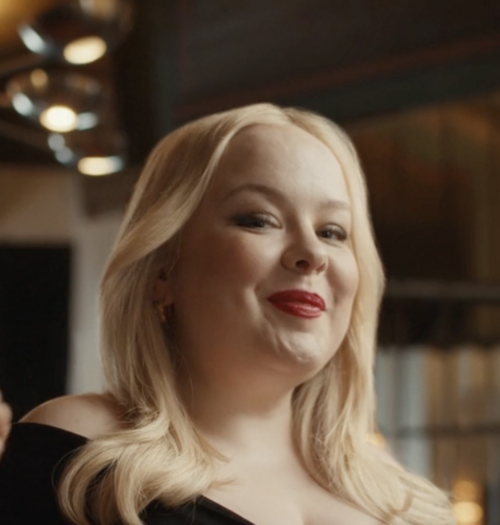
Tyler Sgueglia, CC BY 3.0, via Wikimedia Commons
The Campaign and Its Founders
Peter Caulfield, the founding campaigner, has described the core technical risk in precise terms. In three seconds, with the right AI system, a voice can be cloned, stolen, and reinterpreted without the knowledge or consent of the person it belongs to. That three second threshold is not a theoretical future scenario. It describes the current state of commercially available voice synthesis tools.
Save Our Voices Now is asking the UK government to treat voice as a legally protected identity right. The campaign's framing positions voice alongside name and image as a fundamental part of a person's identity rather than as an optional creative byproduct. The petition targets Parliament directly and requests a statutory remedy rather than voluntary industry codes.
The campaign was publicly announced on August 28, 2026, with simultaneous coverage in Variety, ITV News, the Irish Times, and other outlets. The broad media reach of the launch reflects the celebrity profile of the initial signatories.
The Signatories
Nicola Coughlan is the most prominent name on the initial list. She is known internationally for Bridgerton and Derry Girls, and her backing gives the campaign immediate access to audience communities that extend well beyond the UK film industry. Siobhán McSweeney, her Derry Girls cast colleague, is also a signatory, and Irish press coverage has highlighted both names.
Hugh Bonneville, known globally for Downton Abbey and the Paddington films, brings a different audience dimension to the coalition. Matt Lucas, Luke Evans, Pearl Mackie, and Sandi Thom extend the signatory list across comedy, fantasy film, science fiction television, and music.
The coalition spans multiple guilds and media. Actors and musicians are both represented, which is significant for the campaign's parliamentary credibility. A petition that speaks only for one performing arts sector is easier for legislators to categorize as a narrow industry interest. A coalition spanning multiple media is harder to dismiss.
The signatory list also includes performers at different career stages and from different professional contexts. Coughlan represents major international streaming productions. Bonneville represents a prestige television series that ran for six seasons. Matt Lucas has worked across comedy, children's television, and film. Pearl Mackie is best known for a lead role spanning one season of Doctor Who. That range matters for the campaign's political messaging: this is not a petition signed only by the most commercially established performers, but one that reflects the full spectrum of professional voice work.
The 80-plus figure is the starting point. Caulfield and the Save Our Voices Now organizers have not set a specific target, but campaigns of this type typically grow substantially after the initial media cycle, as performers who were not part of the founding announcement see the coverage and add their names. The number at September 1, 2026 is the floor, not the ceiling.
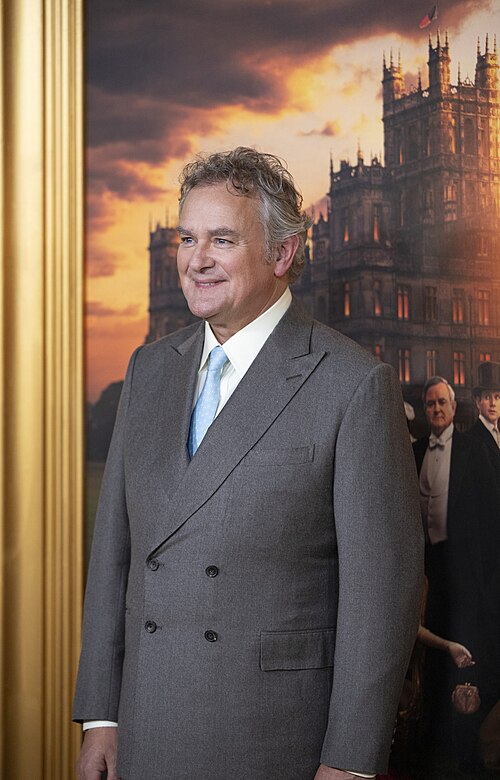
Vbrunophotog, CC BY-SA 4.0, via Wikimedia Commons
The Save Our Voices Now coalition also includes performers who have worked primarily in audio drama, voiceover, and music. Those constituencies have the most direct commercial exposure to AI voice cloning, since their professional output consists entirely of the audio that can be replicated without a screen presence to complicate the attribution.
The 80-plus figure represents the initial launch total. The petition remains open. Campaign supporters expect the list to grow as media coverage reaches performers who were not part of the founding announcement.
The Legal Gap
UK law does not currently provide a standalone right over a person's voice. Existing protections cover name and image in specific commercial contexts, but voice falls into a gap that the campaign argues has become legally urgent as AI voice synthesis has matured.
The Save Our Voices Now petition cites a statistic about the broader public impact of the technology gap. The campaign claims that 28% of UK adults have been targeted by a voice cloning scam. That figure, if accurate, suggests that the legal absence is not primarily a performer protection issue. It is a public safety issue that affects the general population. The campaign is using that statistic to argue that voice protection legislation has a broader constituency than the performing arts industry alone.
MLex, a UK legal analysis service, reported on the regulatory context of the campaign. The gap in current UK law is not a minor oversight. It reflects the fact that voice protection was not a legislative priority before AI synthesis tools made cloning fast, cheap, and accessible. The campaign is asking Parliament to catch up to a technology that has moved considerably faster than the legal framework.
Why Statutory Protection
The practical difficulty for individual performers without statutory protection is significant. A performer who discovers their voice has been used without consent must currently prove harm under existing tort law or negotiate a remedy through contract. Neither path is accessible to most working performers, particularly those without the resources to fund litigation. A statutory right would create a cleaner basis for enforcement that does not depend on financial resources or bargaining position.
A statutory right also removes the negotiation asymmetry that currently exists between individual performers and production companies or technology platforms. A working actor negotiating a voice contract with a streaming platform is in a structurally weaker position than the platform. A statutory right converts that negotiation into a legal baseline that both parties must observe regardless of their relative commercial strength.
Voice synthesis technology has developed in a period when the law has not kept pace. The gap between what the technology can do and what the law can address is the specific space that Save Our Voices Now is attempting to close. The campaign's request is for Parliament to define the right before the harm scales further, rather than after cases have accumulated.
The 28% figure the campaign uses for scam targeting is not sourced to a government or academic study in the coverage released to date. If the campaign can substantiate that figure with verified research, it will strengthen the legislative case considerably. A public safety claim of that scale, affecting more than one in four UK adults, is the kind of statistic that moves parliamentary attention from the performing arts to the general population. That movement is exactly what the campaign's framing is designed to achieve.
Harvey Keitel and Karlovy Vary
Save Our Voices Now arrives shortly after a period of public statements from established performers about AI voice risk. Harvey Keitel spoke about the threat of AI voice replication at the Karlovy Vary International Film Festival, and his comments drew wide coverage from performers who shared similar concerns. Weeks after Keitel's remarks, 80-plus UK performers including Nicola Coughlan backed a parliamentary petition echoing that concern.
The Save Our Voices Now petition gives those concerns a specific legislative outlet. Keitel's statements were about the nature of the risk. Caulfield's campaign is about the legal mechanism for addressing it. Together they represent the two stages of a public advocacy strategy: raise awareness, then direct that awareness toward a specific institutional target.
UK and International Context
The Save Our Voices Now petition is the first campaign in the UK to target the government directly with a statutory voice right. It follows and extends earlier UK industry efforts. Equity and PACT reached a negotiation breakthrough in January 2026 over AI protections for performers, including provisions around digital scanning and biometric data. That agreement covered the immediate industrial relationship between performers and production companies. It did not create a statutory right in law.
The Hasbro and Peppa Pig child actor case earlier in 2026 established a prior UK example of AI voice rights in a specific contract context. Save Our Voices Now is attempting to move that protection from the contract layer to the statutory layer, so that it applies regardless of whether a performer has the bargaining position to negotiate it individually.
In the United States, the NO FAKES Act passed through the Senate Judiciary Committee in June 2026, proposing a federal right of publicity that would cover AI-generated likenesses and voices. The Save Our Voices Now campaign is asking the UK government to move in the same direction independently. The legal gap the campaign describes is not unique to the UK, but the specific statutory mechanism it is requesting is tailored to British parliamentary law.
What the Campaign Is Asking For
The open letter to Prime Minister Burnham asks for three things. First, a statutory right over voice that operates independently of existing name and image protections. Second, legal remedies that are accessible to individual performers rather than requiring collective union action. Third, a recognition that voice protection is not solely a performing arts issue but a public safety matter that affects UK citizens broadly.
The campaign's framing deliberately avoids a simple anti-AI position. Peter Caulfield and the signatories have been consistent in stating that the campaign is about legal clarity, not stopping the technology. AI voice synthesis is commercially deployed. The campaign accepts that reality. What it is asking for is a legal framework that requires consent and compensation when a specific person's voice is used as the basis for synthetic audio.
That distinction matters for how the petition is received by legislators who are also managing the UK's relationship with the AI industry. A campaign that asks only for legal clarity on consent is a different legislative ask than one that demands prohibition. Parliament is more likely to receive the first kind of ask as addressable within existing regulatory frameworks.
The campaign's careful framing also reflects a practical reality about the legislative timeline. Prohibition of a technology that is already commercially deployed is a lengthy legislative project. A consent and compensation framework can be introduced more quickly because it does not require the government to take a position on whether the technology itself is acceptable. It only requires the government to define what permission looks like.
That approach is consistent with how the UK has handled other emerging technology rights in recent years. It does not foreclose further regulation. It creates a baseline that performers and the public can build on as the technology continues to develop.
The petition is directed at Prime Minister Andy Burnham. Burnham's previous public positions on AI have not been detailed in the campaign coverage released to date. The campaign has not named a specific MP or parliamentary bill as its vehicle. It is building public and media pressure as the first stage of a legislative approach rather than attaching itself to existing legislation.
Vocal AI tools with very low latency voice cloning capability are already available commercially. Campaigns like Save Our Voices Now are responding to capabilities that exist and are in use. Dots.tts can clone a voice at under 54 milliseconds of latency from a short sample, which is the kind of specific technical capability the campaign's three second threshold is describing in public terms.
The gap between Peter Caulfield's three second figure and the actual technical threshold is the difference between what a campaign message aimed at the general public communicates and what the technology can do. The campaign is describing a threshold that audiences can understand. The actual technical threshold is faster. Either way, the point holds: voice replication from a short sample is current commercial capability, not a future risk.
The Industry's Technical Baseline
The Save Our Voices Now campaign is responding to a specific technical capability. Voice cloning without consent is not a projected risk. It is a current operational reality in the audio production market. Producers who want to use a performer's voice without paying residuals or requesting permission have the technical means to do so. The legal framework has not kept pace with that technical capability.
Platform terms of service address some of the most direct commercial uses, but terms of service are enforced by platforms rather than by law. A performer whose voice is cloned and used on a platform that prohibits the practice can report the violation to the platform. A performer whose voice is cloned and used in a context that falls outside a specific platform's scope has no equivalent enforcement route available to them at present without statutory protection.
The petition is open. The campaign has not announced a target signature count or a parliamentary timeline as of September 1, 2026.
The campaign does not ask Parliament to restrict the technology. It asks Parliament to define the legal conditions under which the technology may use a specific person's voice. That distinction is the basis for the legislative approach. The campaign's public materials have been consistent on this point since the August 28 launch.
Whether Parliament responds in the current term depends partly on how much public attention the campaign sustains beyond the initial launch cycle. The celebrity signatory list gives the campaign a media reach that most petition efforts do not have. Sustaining that attention through the period needed for a parliamentary response is the next challenge for Save Our Voices Now.
UK parliamentary petitions that reach a threshold of 100,000 signatures are considered for a debate. The campaign has not announced whether it is targeting that number or using the petition primarily as a media and pressure tool rather than a direct route to a parliamentary debate. The two approaches are not mutually exclusive.
The question of whether voice protection legislation moves faster in the UK or in the United States is significant.
Both parliaments are considering similar frameworks at the same time. If the NO FAKES Act is signed into law before UK legislation is introduced, UK performers working on US productions will have statutory protection on one side of the Atlantic but not the other. That asymmetry creates a competitive disadvantage for UK production that the campaign could use as an additional argument to Parliament. Legislative timing is not abstract; it affects the terms on which UK performers can work internationally.
The timing of the August 28 launch also matters. Parliamentary activity in the UK is structured around recess periods, and autumn is when legislative attention returns after the summer break. A campaign that launches in late August and builds through September arrives at the start of a parliamentary period when legislators are available and active. That timing is deliberate. Caulfield and the Save Our Voices Now organizers chose to launch at a moment when the people they are addressing are preparing to return to work.
Performers and creators who want to work with AI voice tools in a consented production context can access voice synthesis through AI FILMS Studio's voice workspace.
Sources
Variety | ITV News | Irish Times | Digital Music News | MLex | The Journal
Continue Reading
.jpg?w=3840)

.jpg?w=3840)
Video & LipSync
- Video Generator
- Text to Video
- Image to Video
- Start-End Frame to Video
- Draw to Video
- Motion Control
- Video Enhancer
- Video Upscaler
- Video Extend
- Video to Video LipSync
- Audio to Video LipSync
- Image to Video LipSync
- Video FaceSwap
- Seedance 2.5
- WAN 3.0
- Seedance 2
- FLUX 3
- Minimax H3
- Vidu Q3 Pro
- Grok Imagine Video 1.5
- Gemini Omni
- Google Veo 3.1
- Kling 3.0 Pro
- Luma Ray 3.2
- LTX 2.3
- Happy Horse 1.1
- Kling 3.0 Motion
- ByteDance Upscaler
- InfiniteTalk
- InsightFace
Image & Edit
- AI Character
- AI Actor
- Art Generator
- Text to Image
- Image to Image
- LoRA Image to Image
- Draw to Edit
- Image LoRA Training
- Remove Background
- Image Enhancer
- MidJourney 8.0
- Krea 2
- OpenAI GPT Image 2.0
- Nano Banana Pro Ultra
- Nano Banana 2 Lite
- Nano Banana Pro
- Minimax Image
- Clarity Pro
- Z-Image Turbo LoRA
- Krea 2 Turbo LoRA
- Z-Image LoRA Trainer
- Qwen Image LoRA Trainer
- Background Erase Network 2 (BEN2)