
Amazon MGM Drops Guadagnino's 'Artificial' After $50 Billion OpenAI Deal

Share this post:
Amazon MGM Drops Guadagnino's 'Artificial' After $50 Billion OpenAI Deal
Amazon MGM Studios has dropped Artificial, Luca Guadagnino's dramatization of the 2023 OpenAI leadership crisis, after committing up to $50 billion to an AI and cloud partnership with OpenAI in February 2026. The film had finished principal photography in October 2025 and was in final post production when Amazon exited the project.
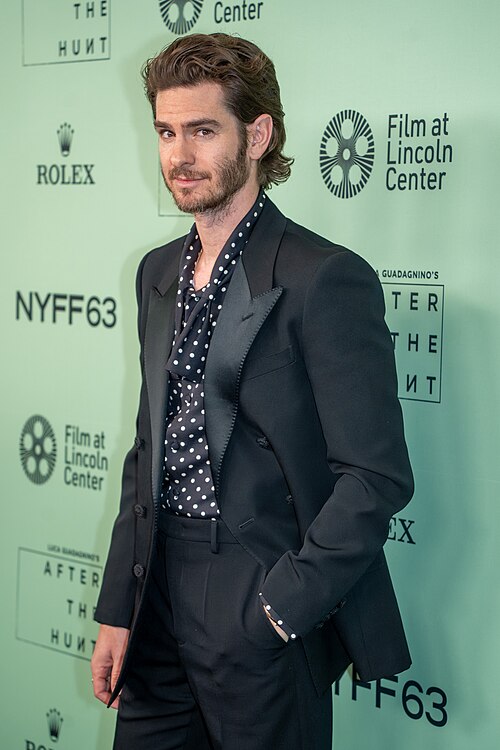
Andrew Garfield stars as Sam Altman. Monica Barbaro plays Mira Murati, OpenAI's former chief technology officer. The film screened for other studios on June 19 and is now being shopped to new buyers.
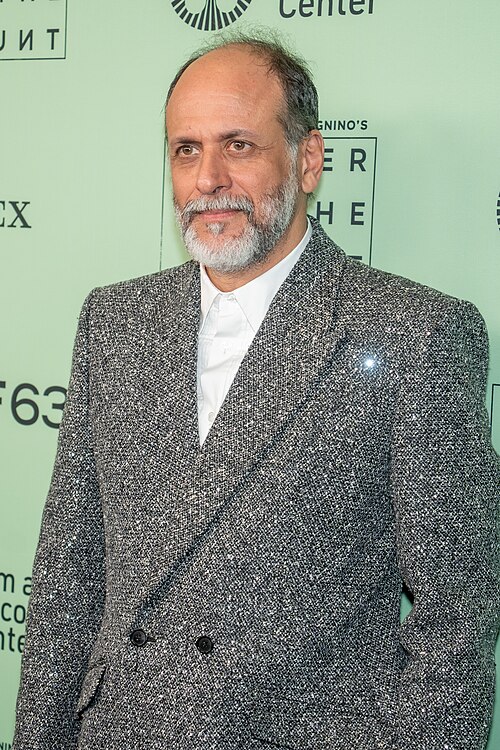
A Film About OpenAI's Most Turbulent Week
Artificial dramatizes the five days in November 2023 when OpenAI's board dismissed Sam Altman, watched the company revolt, and reinstated him within a week. Simon Rich, an SNL alumnus and novelist, wrote the script. Guadagnino, whose recent films include Challengers and Queer, directed.
The casting is precise. Garfield plays Altman. Barbaro takes the role of Murati, who served briefly as interim CEO during the crisis. Yura Borisov plays Ilya Sutskever, the former chief scientist whose public statement that he "deeply regretted" supporting the board's firing decision became the turning point in Altman's reinstatement. Ike Barinholtz plays Elon Musk.
Guadagnino has described the film as a portrait of a specific cultural rupture: the first time the world watched a major AI company come apart from within, on a five day timeline that played out in public on social media.
The Partnership That Ended It
Amazon announced its expanded partnership with OpenAI on February 27, 2026. The initial commitment was $15 billion, with the potential for an additional $35 billion, subject to conditions, for a total possible investment of $50 billion. At that scale, it is the largest single AI infrastructure commitment Amazon has publicly announced. The deal deepens OpenAI's use of Amazon Web Services and gives Amazon a structural stake in the company's continued growth.
Distributing a film that portrays OpenAI's most chaotic internal week, one driven by board dysfunction and a near collapse of the company's leadership, became commercially untenable once that investment was in place. Amazon issued no official statement attributing its exit from Artificial to the OpenAI deal.
Amazon MGM had already built one of Hollywood's more active internal AI programs before the partnership arrived. Its AI Studio unit, led by Chief Digital Officer Albert Cheng, ran a closed beta of proprietary production tools in early 2026, targeting character consistency, pre production acceleration, and visual effects pipelines. The February 2026 OpenAI deal extends Amazon's AI infrastructure stake well beyond internal tooling.
A Film Made Before the Partnership Existed
The sequence of events matters. Production on Artificial wrapped in October 2025. The Amazon OpenAI deal closed in February 2026. The film had already received positive test screenings before any commercial conflict between Amazon and the film's subject existed.
Amazon's exit came from a shift in business circumstances that happened after the creative work was done. The studio committed to Artificial before becoming OpenAI's partner, and that change made continued involvement commercially complicated. The film did not fail in development or fall apart in production. It was finished, screened, and ready for release.
Disney's $1 billion investment in OpenAI and its Sora licensing deal and OpenAI's broader cultivation of Hollywood partnerships show how deeply these financial ties now run through the industry. Every major studio with a significant AI investment carries some version of this exposure: a creative project about that partner's history can become complicated by a deal made after it was shot.
Where Artificial Goes Now
The film's prospects with other buyers are strong. Artificial arrives on the market with Guadagnino's name attached at a moment when his commercial and critical standing is among the highest in contemporary cinema.
The November 2023 OpenAI crisis, from Altman's dismissal through the employee revolt to his reinstatement five days later, was one of the most covered business stories of the decade. The internal dynamics of that boardroom have never been publicly explained in full. A Guadagnino film offering its own interpretation of those events, with Garfield, Barbaro, Borisov, and Barinholtz, gives any distributor a film with built in cultural resonance and unresolved questions at its center.
Test screenings were positive. In the days that followed, Netflix, A24, Focus Features, and Warner Bros.' Clockwork all reviewed and passed on the film, leaving MUBI as the leading potential buyer. Independent filmmakers navigating their own relationships with AI companies can develop and generate content through AI FILMS Studio's video workspace without the institutional dependencies that left this particular film without a distributor.
What This Precedent Means for Hollywood
The Amazon exit from Artificial is not simply a business dispute between a studio and a production. It is the first documented case where a major studio's AI investment compelled it to abandon a finished film about that AI partner. The precedent is structural and will outlast this specific production.
Every studio that has signed a significant AI infrastructure deal now carries the same potential exposure. A film in development today, about an event that has not yet happened, might become commercially awkward once an investment is announced. The timeline of Artificial shows how quickly that calculus can shift: Amazon committed to the film, the OpenAI partnership closed months later, and the studio exited before the film reached audiences.
The production timeline also matters. Artificial wrapped principal photography in October 2025. The Amazon OpenAI deal closed in February 2026. The film was already finished when the conflict of interest materialized. That sequence means the standard development risk calculation, in which a studio knows its business relationships before deciding which projects to finance, did not apply here. The conflict arrived after the creative work was done.
The Amazon case raises a question the industry has not previously had to answer: who bears responsibility when a studio's business decision, made after a film wraps, renders that studio unable to distribute a finished work? The producers did not change the film. The film did not fail. The conflict was created by a deal the studio entered into independently of the production. That distinction will matter if producers and studios start writing contract language that addresses this scenario going forward.
The Film's Position After Amazon's Exit
The positive test screenings are the most commercially significant fact about Artificial as an acquisition target. Test audience responses are among the most reliable predictors of awards season performance for prestige films. A film that tests well with audiences and arrives from a director of Guadagnino's standing is a strong acquisition, regardless of the subject matter's political complications.
Amazon's exit from the film left the distribution rights with the producers. Guadagnino, Heyman, Rich, Clifford, and Fox control a finished, tested film with no distributor attached and a cast that includes Garfield, Barbaro, Rylance, and Barinholtz. That is an unusually strong commercial position for independent producers navigating a distribution market where the major studios have made themselves unavailable.
Producer David Heyman's involvement also signals the film's ambitions. Heyman produced the Harry Potter series, the Paddington films, and Gravity, making him one of the most commercially proven producers working in prestige and event cinema. His attachment to Artificial alongside Guadagnino is not a niche arthouse combination: it is a pairing of a director known for critical success and a producer known for scale.
The chain of events concluded in late June 2026, when Neon acquired worldwide distribution rights and committed to an Oscar campaign. The distributor, which previously handled The Apprentice and Parasite for North American release, confirmed it will compete Artificial for this year's Academy Awards. The film is now fully financed, complete, and distributed. Its awards season begins with the fall festival cycle.
How the Cast Navigates a Subject Still in the News
The November 2023 OpenAI crisis involved people who are still active public figures. Sam Altman continues to run OpenAI. Ilya Sutskever left the company in May 2024 and founded his own AI research organization. Mira Murati departed OpenAI in September 2024 and is building a new company. Elon Musk filed a lawsuit against OpenAI in early 2024, which he later withdrew before refiling.
The ongoing public lives of the film's subjects create a specific challenge for a biographical drama. Events continue to happen. The people depicted continue to speak publicly and to generate news. A scene that accurately represents what a character knew or believed in November 2023 may read very differently to an audience in late 2026, after years of subsequent developments have changed how those figures are perceived.
Guadagnino and Rich made the creative decision to dramatize a specific five day window rather than construct an arc across the full period since 2023. That contained timeline is both a practical choice and an artistic one: it limits the film's exposure to the moving target problem while giving it a dramatic structure that has a clear beginning, middle, and end.
Garfield's role as Altman requires performing a public figure who is actively visible and whose behavior can be compared to the performance in real time. Altman gives media interviews, posts on X, and appears at major industry events continuously. That ongoing public presence means audiences will be watching the film with fresh, current impressions of the man Garfield is playing.
In late July 2026, Garfield broke his public silence on the film, describing Amazon as "nothing but supportive" during production and expressing a desire to meet Altman before the film is released. His account confirms that the studio's exit had nothing to do with the creative work itself.
Rylance's Hinton is a different kind of challenge. Hinton's public profile is that of a scientist speaking carefully and precisely about complex technical questions. The dramatic version of that character, filtered through Guadagnino's attention to interior experience, will need to convey what the film imagines Hinton was feeling during those days in November 2023, not just what he has said publicly since.
How Amazon Built Its AI Position Before the Exit
Amazon MGM's relationship with AI was not only about its OpenAI investment. The studio had been building its own internal AI production infrastructure independently, through a unit called AI Studio led by Chief Digital Officer Albert Cheng. That program, covered in our earlier reporting on Amazon MGM's proprietary AI tools, was running a closed beta of production tools focused on character consistency, pre-production planning, and visual effects pipelines.
The two tracks, Amazon's internal AI tooling and its external OpenAI investment, developed simultaneously. By February 2026, Amazon had built a meaningful stake in AI production capability from both directions. Distributing Artificial at that point would have meant platforming a film critical of a company Amazon was simultaneously investing in at the $50 billion level and whose technology Amazon was integrating into its own production pipeline.
That dual exposure is what made the conflict of interest genuinely structural rather than simply political. Amazon was not in the position of a studio with a minor financial relationship to an AI company. It was in the position of a studio that had made AI infrastructure central to both its investment strategy and its internal production operations. A film that reported portrays OpenAI's CEO as a pathological liar sat uncomfortably against both of those commitments at the same time.
Amazon issued no public statement explicitly attributing its exit from Artificial to the OpenAI investment. That silence is notable. A public explanation would have required the studio to acknowledge on the record that its financial relationships had prevented it from distributing a finished film. Saying nothing allowed the exit to be framed as a standard business decision while the industry drew its own conclusions about the reason.
The pattern of studios building AI investments while continuing to develop films about AI companies and their founders had not yet produced a public conflict of this kind before Artificial. It has now. The question going forward is whether studios adjust their development and acquisition practices to account for this kind of conflict before it materializes, or whether the Artificial case remains an outlier driven by unusual timing.
Why This Film Remained Commercially Viable Despite the Rejections
Five major distributors passing on Artificial could, in another context, signal a film with fundamental audience problems. The studio passes on this film do not. Each rejection came with explicit reasoning tied to business relationships rather than assessments of the film's commercial prospects. The test screening results remained positive throughout the period when the passes accumulated.
Guadagnino's most recent films provide the commercial context. Challengers grossed over $60 million worldwide on a $55 million budget, making it his most commercially successful film to date. Queer received strong critical reception and performed in line with expectations for a more formally experimental picture. Artificial, with a $40 million budget and an ensemble of significant stars across all major categories, falls at the commercial center of his current filmmaking scale.
The distributor that takes Artificial through awards season is not taking a risk on an unproven director or an untested cast. The risk is narrowly about the subject and the political sensitivities attached to it, not about the fundamentals of the film as a commercial product.
The film's subject matter also carries its own audience pull. The November 2023 OpenAI crisis produced extensive coverage and significant public engagement at the time. Three years later, OpenAI has grown from a company most people vaguely recognized to one that is deeply integrated into how millions of people work, create, and communicate. That growth means the audience for a dramatization of OpenAI's most chaotic week is larger in 2026 than it would have been in 2023 or 2024.
The Social Network is the most instructive comparison for how a film's subject can grow in relevance between production and release. When Fincher's film was made in 2009 and 2010, Facebook already had hundreds of millions of users. By the time it reached audiences and through its entire awards cycle, that audience had expanded dramatically and the questions the film raised about privacy, identity, and the character of technology founders had deepened in public discourse. Artificial has a similar structural advantage: its subject is only more relevant in 2026 than when principal photography wrapped in October 2025.
The film's critical reception at the point of its theatrical release will determine whether the commercial case translates to actual ticket sales. Positive test screenings are encouraging but are not the same as critical and audience reception when a film is publicly available. The fall festival premiere will be the first real market test of how Artificial plays for audiences who did not encounter it in a controlled screening environment.
Independent filmmakers can use AI FILMS Studio's video workspace to generate their own work without the institutional dependencies that complicated this production's path to distribution.
The film is now set to world premiere at NYFF on October 5, distributed by Neon.
Sources
Variety | The Hollywood Reporter | Deadline | The Wrap | IndieWire
Continue Reading
.jpg?w=3840)


Video & LipSync
- Video Generator
- Text to Video
- Image to Video
- Start-End Frame to Video
- Draw to Video
- Motion Control
- Video Enhancer
- Video Upscaler
- Video to Video LipSync
- Audio to Video LipSync
- Image to Video LipSync
- Video FaceSwap
- Seedance 2.5
- WAN 3.0
- Seedance 2
- FLUX 3
- Minimax H3
- Vidu Q3 Pro
- Grok Imagine Video 1.5
- Gemini Omni
- Google Veo 3.1
- Kling 3.0 Pro
- Luma Ray 3.2
- LTX 2.3
- Happy Horse 1.1
- Kling 3.0 Motion
- ByteDance Upscaler
- InfiniteTalk
- InsightFace
Image & Edit
- AI Character
- AI Actor
- Art Generator
- Text to Image
- Image to Image
- LoRA Image to Image
- Draw to Edit
- Image LoRA Training
- Remove Background
- Image Enhancer
- MidJourney 8.0
- Krea 2
- OpenAI GPT Image 2.0
- Nano Banana Pro Ultra
- Nano Banana 2 Lite
- Nano Banana Pro
- Minimax Image
- Clarity Pro
- Z-Image Turbo LoRA
- Krea 2 Turbo LoRA
- Z-Image LoRA Trainer
- Qwen Image LoRA Trainer
- Background Erase Network 2 (BEN2)