
Neon Acquires Guadagnino's 'Artificial' for Oscar Run After Amazon Drops It

Share this post:
Neon Acquires Guadagnino's 'Artificial' for Oscar Run After Amazon Drops It
Neon has acquired worldwide distribution rights to Artificial, Luca Guadagnino's $40 million dramatization of the 2023 OpenAI leadership crisis. The distributor confirmed it will compete the film for this year's Academy Awards, making Artificial one of the most anticipated prestige releases of fall 2026.
The deal closes a distribution chapter that began in late June 2026, when Amazon MGM Studios exited the project after its $50 billion investment in OpenAI created a direct conflict of interest. Netflix, A24, Focus Features, and Warner Bros.' Clockwork all screened and passed before Neon secured worldwide rights.
That Neon and not a major studio is distributing Artificial is itself a signal about how deeply AI investment relationships have reshaped Hollywood's acquisition calculus. Neon operates without the financial entanglements to AI companies that made the film commercially awkward for five larger distributors. Its independence is the precondition for its involvement.
The film's $40 million budget positions it as a medium budget prestige production by current Hollywood standards, large enough to deliver the cast and production quality the subject demands, small enough that a distributor without blockbuster infrastructure can run an effective awards campaign. That budget range is precisely where Neon operates most effectively.
Five Days That Nearly Collapsed OpenAI
Artificial dramatizes the November 2023 weekend when OpenAI's board of directors voted to fire CEO Sam Altman, triggering a company revolt that nearly dissolved the organization before Altman was reinstated five days later. Simon Rich, the SNL alumnus and novelist, wrote the screenplay. Guadagnino directed from a script that reportedly portrays Altman as a pathological liar and Elon Musk as a villain.
The film covers specific, documented events. OpenAI employees signed a letter threatening to resign en masse and move to Microsoft alongside Altman. Ilya Sutskever, the chief scientist who voted to remove Altman, publicly stated he "deeply regretted" supporting the board's decision. The episode played out on social media in real time, with internal company communications leaking as the crisis unfolded.
Altman was reinstated by the following Monday with a new board in place. The old board members were effectively removed. The entire reversal, from firing to reinstatement, happened in five days. No other major tech company crisis of comparable scale has moved that quickly or that publicly, which is part of why the story has the structural compression that biographical drama requires.
The events of those five days raised a question that has never been answered publicly: what exactly the OpenAI board saw that made it fire one of the most prominent technology executives in the world, and then watch the company it governed nearly collapse over that decision. Court filings and press coverage established the sequence of events. The interior reasoning of the people involved remains undisclosed. That gap is the space the film occupies.
Industry comparisons to The Social Network are common in coverage of Artificial. Like Fincher's film about Facebook's founding, Artificial takes a specific tech company crisis, compresses it into a dramatic timeline, and centers it on questions of loyalty, power, and the character of a founder. The subject matter, a company that now shapes how Hollywood itself operates, gives the film cultural resonance that studio marketing does not need to manufacture.
The OpenAI crisis produced a more compressed and publicly visible rupture than the Facebook founding disputes did. The Altman firing and reinstatement happened over a long weekend, almost entirely visible in real time through social media posts, leaked documents, and public statements from the principals. Fincher and Aaron Sorkin dramatized events that unfolded over years and were reconstructed from depositions. Guadagnino is dramatizing five days that the public watched happen.
The film is reportedly not a neutral account. Sources familiar with the script describe it as critical of Altman and sharply drawn on Musk's role. That editorial stance, applied to a subject who is now one of the most powerful figures in the technology industry, is precisely the kind of film that major studios with AI investments would find commercially complicated.
A Departure from Guadagnino's Usual Territory
Most of Guadagnino's work, from I Am Love through Challengers and Queer, focuses on intimate personal drama: desire, grief, and the physical experience of being in a body. Artificial is his first film that takes corporate power and institutional crisis as its primary subject. The project marks a significant expansion of his filmographic range.
That expansion is grounded in a specific creative instinct. Guadagnino has spoken publicly about his interest in the OpenAI crisis as a story about a cultural rupture: the first time the world watched a major AI company come apart from within, in five days, on public social media. The film is not a documentary and does not claim to present a factual record. It is a dramatic interpretation of documented events, filtered through Guadagnino's characteristic attention to human interiority.
The result, according to people who attended early screenings, is a film that tests well with audiences regardless of their prior familiarity with the OpenAI story. The November 2023 crisis was covered extensively enough that many viewers arrive knowing the outcome. Guadagnino's focus is on the moment before: the characters and the dynamics that made the crisis possible, not just the sequence of events that produced it.
The score alone signals the film's aesthetic ambition. Damon Albarn, who composed for Gorillaz and wrote the music for Dr. Dee and Wonder.land, is contributing original songs alongside the score. That pairing of an intimate director with a composer known for operatic scale and cultural commentary on technology and modern life is not an accidental choice.
Simon Rich, who wrote the screenplay, brings a specific set of credentials. Rich is known for Miracle Workers and his fiction for The New Yorker, and his comedic sensibility has a sharp edge when applied to institutional power and American ambition. The combination of Rich's screenplay voice and Guadagnino's visual approach to interior states produces a film whose tone is genuinely unusual for Silicon Valley biographical material.
A Cast Built Around One Week in Silicon Valley
Andrew Garfield plays Sam Altman. Monica Barbaro plays Mira Murati, OpenAI's chief technology officer who served as interim CEO during the five days of Altman's removal. Yura Borisov plays Ilya Sutskever, whose public defection from the board's position turned the outcome. Borisov's previous work includes Compartment No. 6, the Finnish film that won the Grand Prix at Cannes 2021.
Ike Barinholtz plays Elon Musk. Mark Rylance plays Geoffrey Hinton, the neural network pioneer who resigned from Google in May 2023 over concerns about the technology he helped build. The supporting cast includes Cooper Hoffman, Jason Schwartzman, Cooper Koch, Billie Lourd, Zosia Mamet, Angus Imrie, and Chris O'Dowd.
Rylance's casting as Hinton is worth noting. Hinton's public resignation from Google and his subsequent statements about AI risk were the most prominent scientist defection from a major AI company in the months before the OpenAI crisis. Placing Rylance, who won an Oscar for *Bridge of Spies*, in that role anchors the film's intellectual framework in one of the most visible acts of professional dissent in the technology sector's recent history.
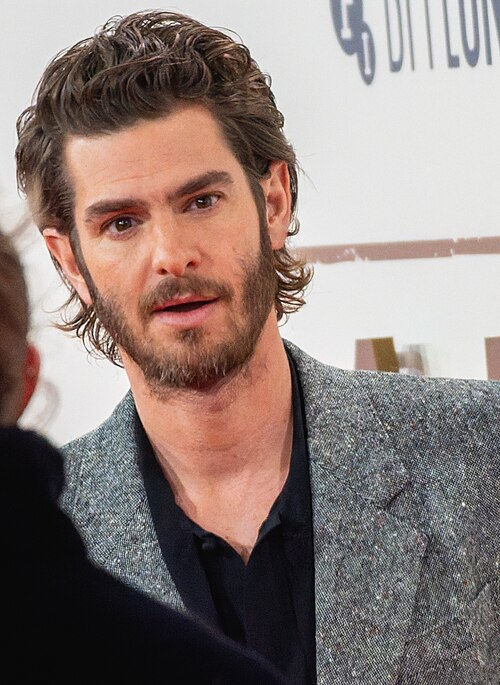
Garfield's casting places him again in the role of a real individual at the center of a documented corporate rupture. His turn as Eduardo Saverin in The Social Network established a template: an actor known for emotional interiority playing a real figure whose public record leaves significant interior space for interpretation. Altman's five days in November 2023, across board meetings, private texts, and public social media posts, offer that same space.
In late July 2026, Garfield spoke publicly about the film for the first time, telling Variety he was "and wasn't" surprised by Amazon's exit and expressing a desire to meet Altman before the film reaches audiences.
Malik Hassan Sayeed handled cinematography. Sayeed also shot Queer for Guadagnino, making this their second collaboration. Marco Costa edited. Stefano Baisi designed the production. Producers include Simon Rich, Guadagnino, David Heyman, Jeffrey Clifford, and Jennifer Fox.
Barbaro's casting as Murati is worth specific attention. Murati was a central figure in the crisis: she served as interim CEO during the days Altman was out, navigated a company in active revolt, and is one of the few principals who has spoken publicly about the events in the period since. Her public statements are measured and provide limited direct access to her perspective from that weekend. That opacity makes the role an interpretive challenge of the same kind Guadagnino faces with Altman.
The casting of Cooper Hoffman and Jason Schwartzman alongside the headline names signals the film's tonal ambitions. Both actors carry strong associations with specific kinds of American male failure, intelligence, and social performance. That casting alongside Garfield, Barinholtz, and Rylance suggests a film working with a range of registers simultaneously.
How the Film Lost Amazon, Netflix, A24, and Focus
Amazon MGM backed Artificial from development, committing before the company's $50 billion OpenAI investment changed the equation. When that deal closed in February 2026, distributing a film that depicts OpenAI's CEO as a pathological liar became commercially untenable. Amazon exited without issuing a public statement attributing the decision to the OpenAI partnership. The complete account of how that conflict of interest unfolded is in our original report on the studio's exit.
Netflix and Focus Features were the first studios to pass after Amazon's exit. Focus rejected the film despite Universal's specialty label having a strong track record with European prestige cinema. Warner Bros.' Clockwork, the studio's specialty acquisitions unit, screened and did not make an offer. A24 followed. As reported when the distribution situation first became clear, the studio stayed silent on its reasoning, though its investor Josh Kushner runs Thrive Capital, the venture firm holding a board seat at OpenAI. MUBI circled seriously before Neon ultimately closed.
The pattern across all four rejections was consistent. The film had tested well with audiences. It arrived with Guadagnino's name, a complete star cast, and no production failures on its record. Each studio made a commercial calculation about what distributing a film critical of OpenAI would cost them given their own AI financial relationships.
Artificial is the first major case where a studio's AI investment forced it off a finished film about that AI partner. The sequence matters: Amazon committed to the film before its OpenAI deal existed. Any studio that builds a significant financial relationship with an AI company now carries potential exposure to creative projects that examine that company's history. The Amazon case makes that exposure concrete in a way it was not before.
The film's survival after five major passes, ultimately landing at Neon with an Oscar campaign commitment, establishes that distributor reluctance driven by financial entanglements does not eliminate the market for this category of work. It changes which category of distributor can take it. The independent specialist absorbs the commercial risk that the studio partner cannot.
The long chain of passes also generated coverage that functions as free marketing. Every report on Amazon's conflict of interest, every article about A24's quiet refusal, built the cultural profile of a film that has still never been released. By the time Artificial reaches audiences, it will arrive with more documented industry resistance than almost any prestige film in recent memory. That history is now part of what Neon is selling.
Neon's Playbook for Controversial Biopics
Neon has direct experience with this acquisition model. The distributor also released The Apprentice, Ali Abbasi's film about Donald Trump's rise through the Manhattan real estate world, which followed almost the same path through the market before Neon acquired it. Major studios passed over concerns about the subject matter. Neon took it through awards season. Sebastian Stan received a Best Actor Oscar nomination.
The structural parallel between the two films is precise. A controversial biographical film about a living public figure. Major distributors reluctant over perceived political or commercial exposure. An independent specialist willing to absorb the risk and run the Oscar campaign. Neon has executed that model twice with major critical subjects and has an awards season track record to show for it.
Neon's catalog includes Parasite, Titane, Triangle of Sadness, and Anatomy of a Fall, films that required an acquisitions approach built around director reputation and festival positioning over mainstream commercial calculation. Guadagnino's commercial standing after Challengers and Queer makes Artificial easier to position than most acquisitions in that mold. Neon's statement committing to an Oscar campaign makes the strategic intent explicit from the announcement.
Parasite won the Palme d'Or at Cannes in 2019 and went on to become the first foreign language film to win Best Picture at the Academy Awards. Neon distributed it in North America. That precedent establishes Neon not just as a distributor willing to take on unconventional material, but as one with a proven record of carrying those films to the highest level of industry recognition. That track record is part of what the Artificial deal communicates to the market.
A Venice Premiere Still in Play
Guadagnino has a longer track record at Venice than at any other major festival. Bones and All won the Silver Lion in 2022. Queer opened the festival's competition in 2024. I Am Love, A Bigger Splash, and Suspiria all debuted on the Lido. His relationship with Venice Artistic Director Alberto Barbera, confirmed through 2028, is the most sustained partnership between a working director and a single major festival in contemporary cinema.
The Lido is not the only festival competing for the premiere. Telluride, which programs in complete secrecy until its lineup drops Labor Day weekend, is another realistic possibility. Toronto's TIFF opens its main slate announcement in August. Any of the three major fall festivals could premiere Artificial, and Neon's Oscar timeline allows for all of them. A Venice premiere is the most historically grounded prediction given Guadagnino's relationship with the Lido, but it is a prediction, not a confirmed fact.
The Venice 2026 competition lineup announces July 23. The Venice 2026 jury, led by director Maggie Gyllenhaal, draws primarily from outside the Hollywood guild framework. None of its members are bound by the SAG-AFTRA, DGA, or WGA agreements that have defined Hollywood's AI negotiations. A film about the OpenAI CEO arriving at a festival that has not announced an AI ban would put the technology at the center of Venice 2026's conversation regardless of the festival's official position on generative tools. A Lido premiere is widely anticipated, but as of July 1 no confirmation has come.
Cannes 2026 excluded generative AI tools from its Palme d'Or competition. Venice has not announced a comparable restriction. Artificial was not made using generative AI tools, but its subject, the man who runs the company whose tools are reshaping cinema, means any Venice programming decision involving the film reads as a position. The July 23 lineup announcement resolves whether Venice takes that position publicly.
A Venice main competition slot would launch the film directly into an awards season whose parallel track at TIFF opens the same week. Films that premiere on the Lido and transfer to Toronto encounter two different press and industry audiences within days. That media dynamic amplifies whatever position Venice's jury and press take on the film before it ever opens in North American theaters.
What Neon's Oscar Commitment Means
Neon's public commitment to an Oscar campaign sets a hard autumn deadline. A film without a September or October festival berth faces a compressed awards timeline. Guadagnino's Venice track record makes that festival the most probable first move. A main competition slot, announced July 23, would give the film a global press launch from the Lido and a full awards season runway through TIFF and October releases.
Update, July 10: A Screen Daily analysis confirmed that Neon CEO Tom Quinn received premiere offers from every major fall festival and declined them all. The film will go directly to an awards season release without festival exposure. Buyers who screened the film before Neon acquired it described divided reactions: some were unimpressed, while others called Yura Borisov's performance a standout.
Artificial arrives with significant guild goodwill built in. Guadagnino is an internationally respected director with strong relationships across the acting and craft guilds that vote on Oscar nominations. Garfield has two previous Oscar nominations. Rylance is a winner. The supporting cast includes actors with substantial Academy visibility. The question for awards season is whether the subject matter, a film sharply critical of a man whose company now finances and tools much of Hollywood's own operations, creates guild hesitation that the film's artistic credibility does not overcome.
The distribution story ending at Neon, after Amazon's exit and five major studios passing, is itself part of the film's marketing arc. Every article covering the conflict of interest, every report on Netflix and A24 declining, built the cultural framing before a single frame screened publicly. A film about Silicon Valley's most chaotic week is arriving through a door that Hollywood's most established institutions found too complicated to open. That framing will be part of how Neon positions the picture for voters and critics.
Neon's track record with The Apprentice demonstrates that controversial biographical films can reach the Oscars through this path. The distributor proved it can handle the press attention, the subject's public counternarrative, and the awards season campaign simultaneously. Artificial will test whether that playbook scales to a film whose subject has considerably more financial power in the industry than the former president Abbasi depicted.
The Oscar campaign structure will depend heavily on the fall premiere placement. A Venice or Telluride debut gives the film the maximum runway: SAG nominating ballots open in November, and a film that has been in release since September has substantially more time to build guild screening momentum than one arriving in October. Neon ran The Apprentice through a similar timeline with a Cannes premiere in May 2024 giving the film months of critical attention before its October theatrical release.
The specific awards categories where Artificial is strongest, on the current information available, are Best Actor (Garfield), Best Director (Guadagnino), and Best Picture. The screenplay and score each represent additional possibilities. Guadagnino has never won an Oscar but has a consistent record of producing Best Actor nominated performances from his casts. The film's completion and positive test screenings make those possibilities concrete rather than speculative.
Artificial will also be the first major film about an AI company released while that company is actively reshaping the industry screening the film. Members of the Academy who vote on Best Picture work in an industry where OpenAI's tools, partnerships, and financial relationships are daily professional realities. Whether that context helps the film by making its subject vivid and immediate, or complicates its reception by making voters reluctant to weigh in through their ballots, is not predictable in advance. It is genuinely new territory.
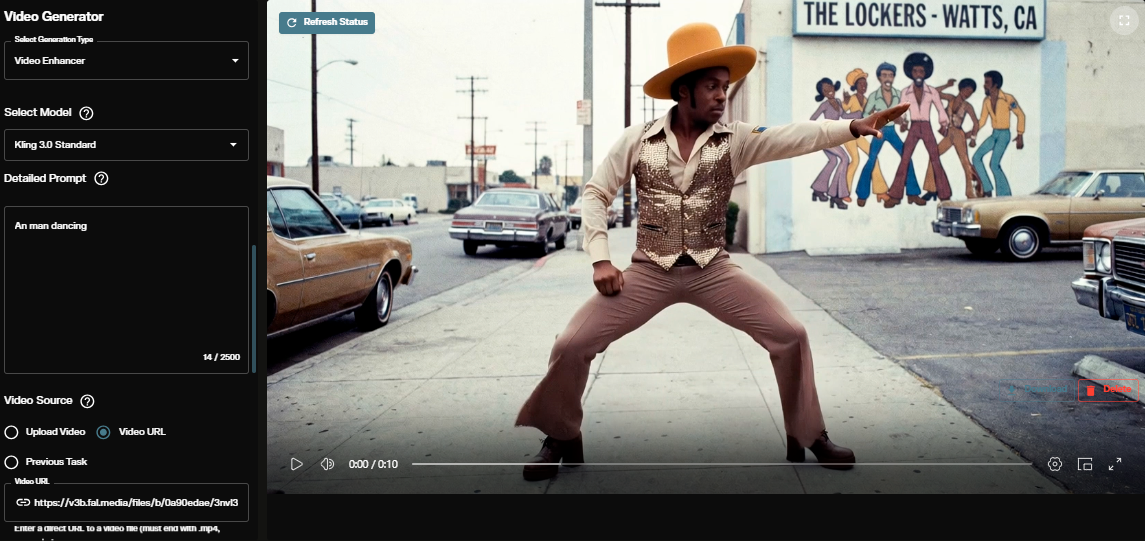
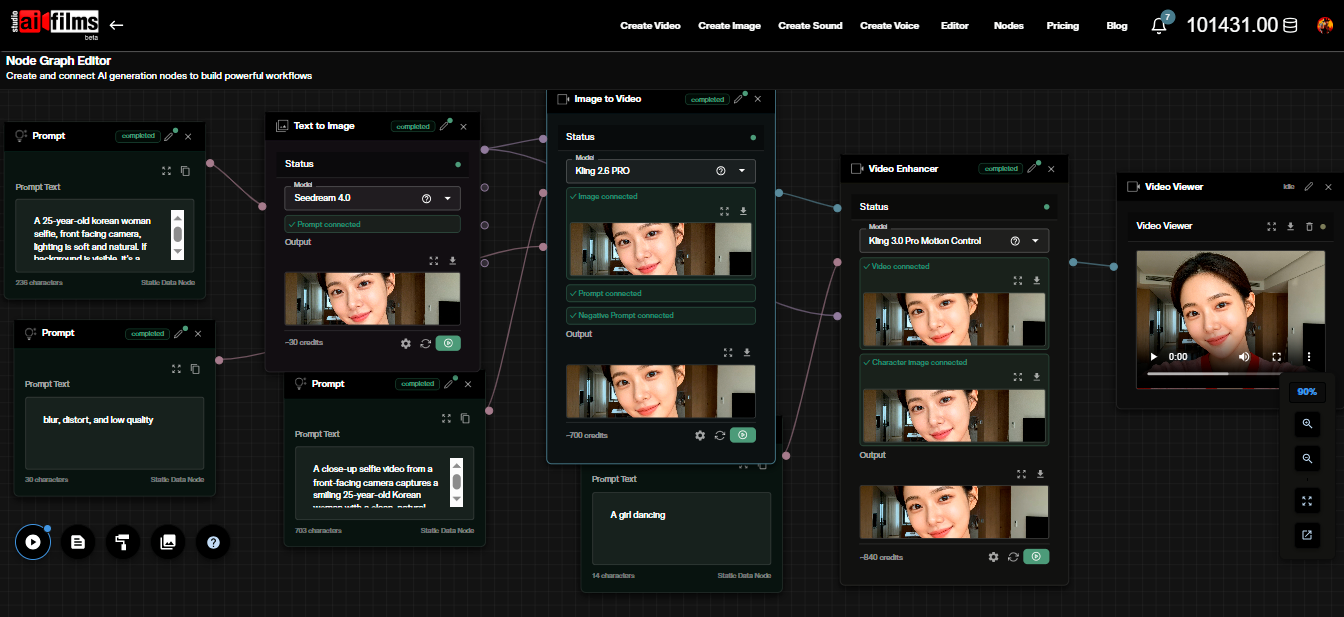
Independent filmmakers working on projects that examine AI and technology can access text-to-video and image-to-video tools through AI FILMS Studio's video workspace.
Artificial is set to world premiere at the New York Film Festival Main Slate on October 5, with a second festival appearance at the London Film Festival Gala on October 11.
Sources
Variety | Deadline | The Hollywood Reporter | Screen Daily
Continue Reading
.jpg?w=3840)


Video & LipSync
- Video Generator
- Text to Video
- Image to Video
- Start-End Frame to Video
- Draw to Video
- Motion Control
- Video Enhancer
- Video Upscaler
- Video Extend
- Video to Video LipSync
- Audio to Video LipSync
- Image to Video LipSync
- Video FaceSwap
- Seedance 2.5
- WAN 3.0
- Seedance 2
- FLUX 3
- Minimax H3
- Vidu Q3 Pro
- Grok Imagine Video 1.5
- Gemini Omni
- Google Veo 3.1
- Kling 3.0 Pro
- Luma Ray 3.2
- LTX 2.3
- Happy Horse 1.1
- Kling 3.0 Motion
- ByteDance Upscaler
- InfiniteTalk
- InsightFace
Image & Edit
- AI Character
- AI Actor
- Art Generator
- Text to Image
- Image to Image
- LoRA Image to Image
- Draw to Edit
- Image LoRA Training
- Remove Background
- Image Enhancer
- MidJourney 8.0
- Krea 2
- OpenAI GPT Image 2.0
- Nano Banana Pro Ultra
- Nano Banana 2 Lite
- Nano Banana Pro
- Minimax Image
- Clarity Pro
- Z-Image Turbo LoRA
- Krea 2 Turbo LoRA
- Z-Image LoRA Trainer
- Qwen Image LoRA Trainer
- Background Erase Network 2 (BEN2)