
Steven Soderbergh Used Meta AI in His John Lennon Documentary at Cannes
.jpg?w=3840&q=90)
Share this post:
Steven Soderbergh Used Meta AI in His John Lennon Documentary at Cannes
Steven Soderbergh's documentary "John Lennon: The Last Interview" uses Meta AI tools for approximately 10% of its runtime, Soderbergh confirmed in a Deadline interview ahead of the film's world premiere at Cannes as a special screening. He applied AI to sequences where Lennon's most abstract reflections could not be illustrated with conventional archival footage.
The Interview at the Center of the Film
The documentary is built around Lennon's final recorded interview, conducted at The Dakota in New York City on December 8, 1980, hours before his murder. Lennon spoke about Double Fantasy, the album he released that year after five years away from recording, and about creativity, parenthood, and his life in New York.
The interview's most revealing passages are philosophical and abstract, describing states of mind and ways of seeing that do not exist as footage. That gap is what Soderbergh addressed with AI.
The Dakota Interview and December 8, 1980
Lennon gave the interview to Rolling Stone journalist Jonathan Cott at The Dakota apartment building in New York City on the afternoon of December 8, 1980. Hours later he was shot dead outside the building by a gunman who had approached him for an autograph earlier that day. The interview was published in Rolling Stone in January 1981, after his death.
Cott had interviewed Lennon multiple times over the years. The December 8 interview was scheduled as part of the Double Fantasy promotional cycle: a sitting with a journalist Lennon trusted to produce a substantial conversation rather than promotional material. That context shaped what Lennon was willing to discuss and how openly he discussed it.
The interview was his final major recorded conversation. What he said about Double Fantasy, creativity, and life in New York took on retrospective weight that no interview conducted during a normal moment could have carried. That weight is what makes the material both extraordinary as documentary source material and impossible to illustrate through conventional means. The most significant moments are also the most internal.
.jpg)
Bob Gruen; Distributed by Capitol Records, Public domain, via Wikimedia Commons
Lennon's Walls and Bridges album in 1974 preceded his return to recording by six years. The gap between that 1974 press photo and his final interview in 1980 is a period Soderbergh's documentary treats as context rather than subject. The film focuses on the last interview itself, not on the interim years.
The 1974 image is documentary material from a different chapter of Lennon's career. Its use in a film about 1980 requires the kind of connective tissue that AI generated imagery can provide. It offers visual representation of an interior state rather than a factual record of an external event.
Double Fantasy and What Lennon Was Working Through
Double Fantasy was Lennon's first studio album in five years. He had stepped back from music entirely to be a father and called himself a "house husband" in the years between 1975 and 1980. The album's subject matter of returning to music made the final interview a meditation on what it means to leave creative work and come back to it.
That theme is what Soderbergh chose to illustrate with AI. Lennon's abstract reflections on time, innocence, and creativity in the interview are not about specific events. They are about internal states that the five year silence and the return to recording produced in him. AI generation of surreal imagery is one of the few tools available to a documentary filmmaker working with that kind of material.
Where the AI Comes In
Soderbergh used Meta AI to generate surreal visual sequences for portions of the interview where Lennon spoke in abstract or philosophical terms. One example involved tiny babies dressed in 1960s period clothing, to illustrate Lennon's reflections on innocence and time. The AI imagery is clearly not photographic and is not intended to deceive.
"There's a way of using AI in which your intention is to fool somebody or manipulate them", Soderbergh said. "And then there's a use, which is what we're doing in the documentary, where it's obvious that it is AI and that it is being used essentially in the way that you would use VFX or CGI".
What Meta's Filmmaking Tools Can Do in 2026
Meta's AI generation tools include Emu Video and other multimodal generation capabilities. The tools Soderbergh used produce surreal imagery from text descriptions and are not documentary reconstruction tools. Soderbergh was not claiming to recreate Lennon's life; he was creating visual accompaniment to abstract ideas that do not exist as photographs.
The collaboration began when Meta approached Soderbergh to stress test their filmmaking tools. That invitation reflects Meta's strategy of partnering with working directors rather than developing tools in isolation. A filmmaker of Soderbergh's caliber working under real production conditions provides more valuable feedback than a controlled test environment. The resulting film is simultaneously a documentary about Lennon and a demonstration of what Meta's filmmaking tools can produce in the hands of an experienced director.
Meta's interest in documentary production rather than fiction is strategic. Documentary filmmakers regularly face the problem of illustrating abstract or unavailable material: historical events with no footage, interior states, speculative reconstruction. That problem is exactly what generative AI tools are positioned to solve, which makes documentary a natural starting point for AI assisted production before fiction audiences accept similar techniques.
Transparency as the Standard
Soderbergh disclosed the AI use from the start and has been direct about why. "All I can do in any of these discussions about AI is just be transparent", he said. "That's got to be rule number one".
He argued the same position at the Sands Film Festival earlier in 2026, saying AI is a legitimate production tool when the filmmaker is honest about how it is used. The Lennon documentary puts that argument into practice on one of the most visible stages of the year.
Soderbergh's transparency approach is part of a larger argument he has been making publicly since at least 2025 about the conditions under which AI use in production is ethically acceptable. The Lennon documentary is his first major work to apply that argument.
Soderbergh's transparency goes beyond a disclosure statement in the credits.
For most productions, AI disclosure appears in credits or in press notes issued after the film is released. Soderbergh put his disclosure in advance interviews before critics and audiences had seen the film. That sequence changes the reception: critics evaluate the AI sequences knowing what they are, rather than discovering the disclosure after they have already formed a reaction. He discussed the specific sequences, the tools used, and the reasoning for each choice in advance publication interviews. That level of specificity treats AI disclosure as documentation rather than a legal formality, which is a different standard from what most productions have applied.
The Transparency Argument and How It Functions
Soderbergh's position is that transparency about AI use removes the ethical problem. If viewers know a sequence is AI generated, they can evaluate it as a creative choice rather than a factual claim. The alternative, using AI without disclosure, is what he identifies as the manipulative use case.
His transparency rule is not a concession to critics but his actual position on what makes AI use acceptable. Soderbergh was among several filmmakers at Cannes who openly described their AI use in practical terms, part of a wider shift across the festival where AI disclosure became the norm.
What 10 Percent Means in a Documentary
A 90 minute documentary at 10 percent AI is nine minutes of AI generated material. The AI sequences are concentrated around abstract passages in the interview. The other 81 minutes use conventional archival footage, photographs, and interview material.
That proportion means AI is one tool among many in the film's visual vocabulary, not the dominant approach. Soderbergh did not make an AI documentary; he made a documentary that uses AI in the same way it might use archival photographs or restored audio: as source material that serves the film's argument rather than defining it.
The 9 minutes of AI generated material in a 90 minute film is a figure that will be cited repeatedly in discussions about AI use thresholds. What percentage of AI generated content changes the nature of a film? The Lennon documentary does not answer that question but provides a concrete data point: 10 percent is enough to require disclosure and enough to generate press discussion, while leaving the film's essential character as a documentary about a specific interview intact.
The Meta Partnership
Meta approached Soderbergh and asked him to stress test their filmmaking tools. The collaboration became a full creative technology partnership, with Meta providing both technology and financial backing. The arrangement is disclosed publicly, not buried in end credits.
Brian Grazer applied AI to postproduction on his Churchill film for Netflix around the same period. Soderbergh's approach goes further, integrating AI into the film's visual logic as a creative design decision.
Patrick Wachsberger and 193 as Distributor
International sales for "John Lennon: The Last Interview" launched at the Cannes Marché du Film on May 13 through production company 193, founded by Patrick Wachsberger and backed by Legendary Entertainment. Wachsberger co-ran Summit Entertainment during the Twilight and Hunger Games years and founded 193 after Summit's sale to Lionsgate.
His involvement as international sales agent rather than as a major studio distribution partner signals a festival first strategy. Prestige documentaries about cultural icons regularly launch sales at the Marché rather than signing studio distribution deals in advance. The festival press coverage serves as the first marketing campaign, and sales agents use the response to negotiate territory deals at prices the coverage justifies.
RSL Media and Soderbergh's Broader Cannes Week
Soderbergh is also among the founding backers of RSL Media, [Cate Blanchett's open AI consent standard](/blog/cate-blanchett-rsl-media-ai-consent-standard-2026) launched on Cannes opening day. His involvement in both a Meta AI production and an AI consent framework in the same week is consistent with his stated position. AI use is acceptable when disclosed and conducted with consent.
The Lennon documentary and RSL Media are the practical and policy sides of the same argument. One shows how AI can be used ethically in documentary filmmaking. The other builds the infrastructure that makes ethical use verifiable at scale.
Soderbergh's participation in RSL Media is consistent with his position on AI use. The tool is legitimate when the process is transparent and the rights holders whose material is used have consented. RSL Media is the attempt to build that consent infrastructure at industry scale, extending the same logic that governed his own production decision to a general framework other filmmakers can adopt.
.jpg)
Abxbay, CC0, via Wikimedia Commons
Sales at the Cannes Market
Wachsberger's 193 company was founded with Legendary Entertainment backing specifically to handle prestige documentary and fiction projects that benefit from international sales expertise. The company's roster of projects since its founding reflects that positioning: films with strong subject matter and credible directors that require territory by territory distribution rather than global platform sales.
The world premiere of "John Lennon: The Last Interview" is a Cannes special screening. Special screenings at Cannes sit outside the competition structure; they are presented to the press and industry without competing for the Palme d'Or or any other prize. The designation is common for documentary films from well known directors who do not need the competitive context to attract attention.
The Cannes special screening followed by Marché sales is the standard path for prestige documentaries with international distribution potential. A film about Lennon with Soderbergh directing has recognition in every English speaking market and significant recognition in the major European territories where Lennon remains a cultural reference.
The UK market is the most obvious priority: Lennon was born in Liverpool and spent his adult life between London and New York. A documentary built around his final interview has a domestic audience in the UK that other territories cannot match. Wachsberger's Cannes Marché launch is timed to sign UK and European territorial deals before the film completes post and begins its awards campaign run.
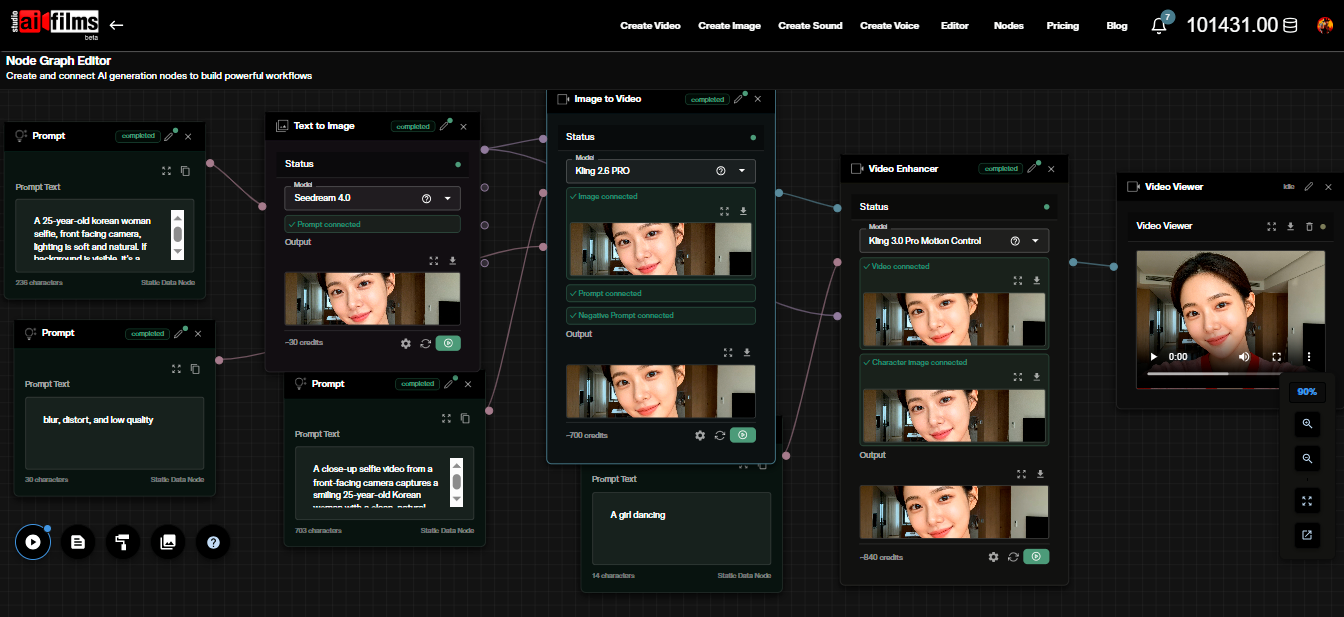
Filmmakers building documentary sequences with AI video tools can explore text-to-video and image-to-video at AI FILMS Studio's video workspace. The Soderbergh approach, using AI to illustrate abstract or internal states that archival footage cannot cover, represents a documentary application that applies to any film working with historical figures or philosophical subject matter.
Sources
Deadline | Variety | NME | Rolling Stone | The Playlist | The Guardian
Continue Reading
.jpg?w=3840)


Video & LipSync
- Video Generator
- Text to Video
- Image to Video
- Start-End Frame to Video
- Draw to Video
- Motion Control
- Video Enhancer
- Video Upscaler
- Video Extend
- Video to Video LipSync
- Audio to Video LipSync
- Image to Video LipSync
- Video FaceSwap
- Seedance 2.5
- WAN 3.0
- Seedance 2
- FLUX 3
- Minimax H3
- Vidu Q3 Pro
- Grok Imagine Video 1.5
- Gemini Omni
- Google Veo 3.1
- Kling 3.0 Pro
- Luma Ray 3.2
- LTX 2.3
- Happy Horse 1.1
- Kling 3.0 Motion
- ByteDance Upscaler
- InfiniteTalk
- InsightFace
Image & Edit
- AI Character
- AI Actor
- Art Generator
- Text to Image
- Image to Image
- LoRA Image to Image
- Draw to Edit
- Image LoRA Training
- Remove Background
- Image Enhancer
- MidJourney 8.0
- Krea 2
- OpenAI GPT Image 2.0
- Nano Banana Pro Ultra
- Nano Banana 2 Lite
- Nano Banana Pro
- Minimax Image
- Clarity Pro
- Z-Image Turbo LoRA
- Krea 2 Turbo LoRA
- Z-Image LoRA Trainer
- Qwen Image LoRA Trainer
- Background Erase Network 2 (BEN2)