
Matthew McConaughey Files Eight Trademark Applications to Protect His Voice and Likeness
.png?w=3840&q=90)
Share this post:
Matthew McConaughey Files Eight Trademark Applications to Protect His Voice and Likeness
Matthew McConaughey filed eight trademark applications at the 2026 Cannes Film Festival covering his voice and likeness. The filings are the most concrete step he has taken after months of public statements urging Hollywood to treat AI identity protection as a personal legal responsibility, not a union one.
His statement at Cannes was direct: "I want consent and attribution to be the norm in an AI world".
The eight applications represent the full scope of what trademark law can currently protect for a performer: voice as a standalone trademark category, likeness in multiple commercial contexts, and identity markers associated with his most recognized work. McConaughey is testing the limits of trademark protection in the AI context simultaneously with lobbying for legislation that would create clearer statutory rights.
The January 2026 Catchphrase Filing
McConaughey began building his legal strategy against AI likeness use in January 2026, when he trademarked his signature catchphrase from "Dazed and Confused" specifically to block AI generated audio mimicking the phrase. The single phrase registration was a test of whether voice and catchphrase could be protected under trademark law before committing to broader filings.
The January registration established that the USPTO would accept a film catchphrase associated with a specific performer as a trademark. That precedent was what the eight Cannes applications extended: from a single phrase to full voice and likeness coverage across multiple categories of commercial use.
The catchphrase "alright, alright, alright" is associated with McConaughey specifically because of the 1993 film and because he has continued to use and reference it in subsequent public appearances over 30 years. That sustained association across time is part of what makes it protectable as a trademark rather than simply as a copyright protected film performance. It became a commercial identifier in its own right, separate from the film in which it originated.
From Words to Legal Action
At the CNN and Variety Town Hall in Austin in February, McConaughey told aspiring performers: "Own yourself. Voice, likeness, et cetera. Trademark it. Whatever you gotta do, so when it comes, no one can steal you".
The eight applications filed at Cannes extend that logic across his full vocal and physical identity. Where the January filing protected a single phrase, the May filings cover voice as a category and likeness as a category, creating overlapping protections across the two assets AI tools most commonly target.
Eight Applications, One Standard
Voice filings protect against AI models trained on his recorded speech generating new audio in his voice. Likeness filings protect against AI generated images or video using his face and body without his consent.
McConaughey's "consent and attribution" framing casts the filings as an industry argument. He is proposing a standard he wants others to adopt, one that applies regardless of whether a production is covered by a SAG-AFTRA contract or California's digital replica consent requirements.
The eight applications are also a signal to AI companies about his intentions. Filing defensively without announcement would protect him legally without affecting industry behavior. Filing publicly at Cannes with a direct statement about consent norms is a communication to AI developers, studios, and fellow performers simultaneously. The announcement is as strategic as the filings themselves.
What Trademark Covers That Guild Agreements Do Not
SAG-AFTRA contracts govern productions by member studios and signatories. Trademark protection extends across all markets and productions, including AI content that falls outside union jurisdiction. A registered trademark can be enforced against any commercial use, by any party, in any country that honors international IP law.
The eight applications create a legal perimeter that the guild agreement leaves open. An independent production, a foreign company, or a standalone consumer AI application that generates synthetic McConaughey content without a SAG-AFTRA contract faces trademark infringement liability in addition to any other applicable law. The trademark is the layer that catches what the guild agreement cannot.
.jpg)
Mike is Michi, CC BY-SA 4.0, via Wikimedia Commons
McConaughey chose Cannes as the venue for his filing announcement rather than a Los Angeles law office or a Washington press conference. The festival's concentration of entertainment press, studio executives, and AI company representatives means the announcement reaches every relevant audience simultaneously.
His "consent and attribution as the norm" framing positions the filings as an industry standard proposal, not a personal defensive move. A standard requires public announcement to function as one; a Cannes press moment is more effective at that than a USPTO filing notice.
The Austin Advice and Who Heard It
McConaughey told aspiring performers at the CNN and Variety Town Hall in Austin in February 2026 to "own yourself" and trademark "voice, likeness, et cetera". The audience at a CNN and Variety event is working industry rather than the general public.
His advice was directed at performers who have not yet achieved the name recognition to make a trademark economically meaningful, as an argument for establishing that protection early. The legal cost of a trademark application is low relative to the cost of litigation later. McConaughey's argument is that performers should file before their names have value, not after an AI company has already exploited the gap.
A Separate Legal Track
Union contracts govern how studios use the voices and likenesses of guild members on covered productions. Trademark law operates on a different axis. A registered trademark can be enforced against any party, in any market, regardless of production type or union membership.
The central question trademark law has not yet answered is whether voice or likeness protections can be enforced against an AI company that trained on publicly available recordings or images. McConaughey's filings do not resolve that question. They create the legal standing to litigate it, which is a different kind of protection than existing contract language provides.
McConaughey is not the first performer to pursue individual legal protection against AI use of their voice or likeness, but he is the most visible one to execute a filing strategy with multiple applications publicly and to frame it as a model for the industry. The visibility is deliberate: he is not filing defensively in private, he is filing demonstratively.
The filings land as SAG-AFTRA members vote through June 4 on a four year deal containing expanded AI guardrails for synthetic performers. The two strategies, collective bargaining and individual trademark, are not alternatives. They address different vectors of the same problem.
The ElevenLabs Investment and Its Logic
One answer to unauthorized cloning is licensing. McConaughey is himself an investor in ElevenLabs, the AI audio company building a voice marketplace on consent for Hollywood, which already works with estates including James Earl Jones and Michael Caine.
His dual position, filing defensive trademarks while investing in a licensed voice marketplace, is internally consistent. He is building a legal framework that makes unauthorized use costly while creating an authorized path that generates revenue. The trademark filings are arguments for consent, not against AI. ElevenLabs is the commercial expression of what consent based AI voice use looks like in practice.
The investment also means McConaughey has a financial interest in the growth of the licensed voice marketplace. The stronger the consent based licensing system becomes, the more valuable ElevenLabs' position in it becomes. His advocacy for consent and attribution standards is simultaneously ideological and commercial, which is typical of the most effective industry standard campaigns.
James Earl Jones and Michael Caine as Precedents
Jones authorized the use of his Darth Vader voice for the extended Star Wars franchise under a consent agreement before his death. Caine's AI voice narrated a 13 hour audiobook of Homer's The Odyssey in June 2026, the first franchise product from ElevenLabs' Iconic Marketplace.
Both used consent licensing rather than trademark protection. McConaughey's strategy combines both approaches. Trademark creates the legal barrier, licensing creates the authorized channel. Together they define the full perimeter of a consent based identity protection framework that his Austin advice was urging other performers to build.
Jones's Darth Vader consent agreement was negotiated directly with Lucasfilm before his death. Caine's Odyssey audiobook is a product sold through ElevenLabs' Iconic Marketplace. Both models require the performer or their estate to be the active party in the consent negotiation. McConaughey's argument is that performers should build that negotiating position before AI companies have already derived value from their voices and likenesses without asking.
McConaughey's campaign found a legislative parallel in June 2026, when the Senate Judiciary Committee unanimously advanced [the NO FAKES Act](/blog/no-fakes-act-senate-judiciary-committee-2026), creating a federal right to block unauthorized AI replicas of voice and likeness. The bill would give every American the same statutory protection McConaughey is pursuing through trademark registration.
The Cannes timing of his announcement maximized coverage across the entertainment press, studio executives, and AI company representatives present at the festival simultaneously. That audience is the one whose adoption of consent based standards he is seeking.
.jpg)
Abxbay, CC0, via Wikimedia Commons
The NO FAKES Act Timeline
The Senate Judiciary Committee unanimously advanced the NO FAKES Act in June 2026. The bill would create a federal statutory right to block unauthorized AI replicas of voice and likeness for every American, not only those who can afford trademark applications.
The bill creates a floor; trademark creates a ceiling. Both serve complementary purposes. The floor applies to everyone; the ceiling is the additional protection a named performer can build on top of it. A performer who relies only on the NO FAKES Act once it passes has less protection than a performer who also holds trademark registrations, because trademark enforcement does not depend on legislation that can be amended or repealed.
The NO FAKES Act's unanimous committee advancement is significant because AI related legislation has frequently stalled in markup over disagreements about scope. A unanimous vote signals that the specific framing of voice and likeness protection has broad partisan support in a way that broader AI governance bills have not achieved. McConaughey's visibility as an advocate contributed to that political environment, which is one function his public campaign served beyond protecting his own assets.
The Model He Is Offering
McConaughey's timeline, from a single catchphrase in January to full voice and likeness coverage in May, shows an escalating strategy rather than a single response to a news cycle. Performers who heard his Austin advice in February now have a visible example of what executing that advice looks like at scale.
The commercial logic of AI generation favors established names. A synthetic performance using a widely recognized voice or face commands attention in ways that replicas of unknown performers do not. McConaughey is drawing a legal perimeter around exactly the assets AI tools have the strongest financial incentive to reproduce.
Eight applications across multiple categories also create redundancy in the protection. If a court finds that one filing does not cover a particular type of AI use, another filing may still apply. The portfolio approach is a hedge against the legal uncertainty about what trademark protection covers in the AI context, which is not yet settled by case law.
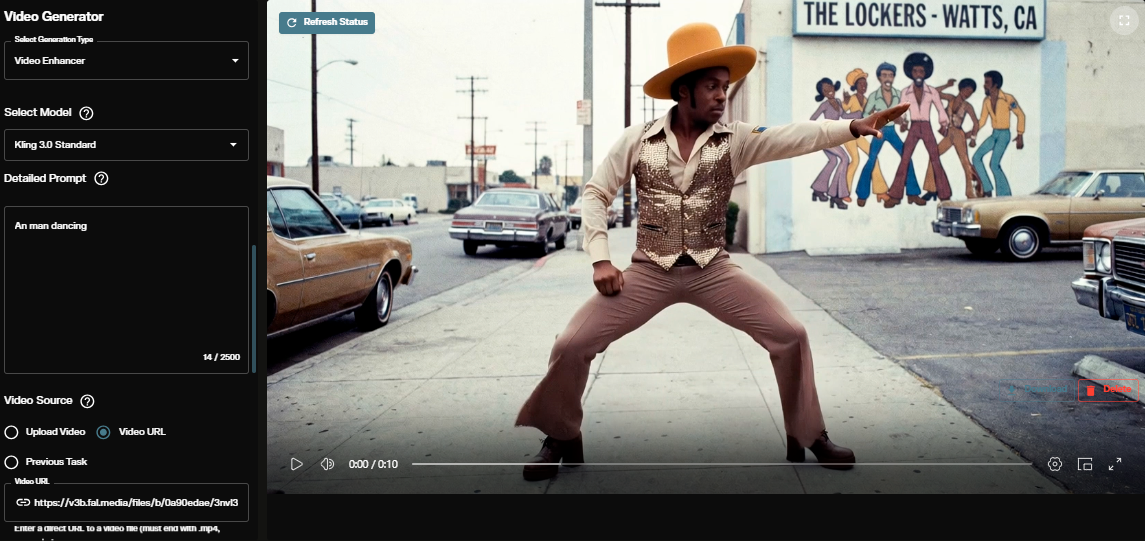
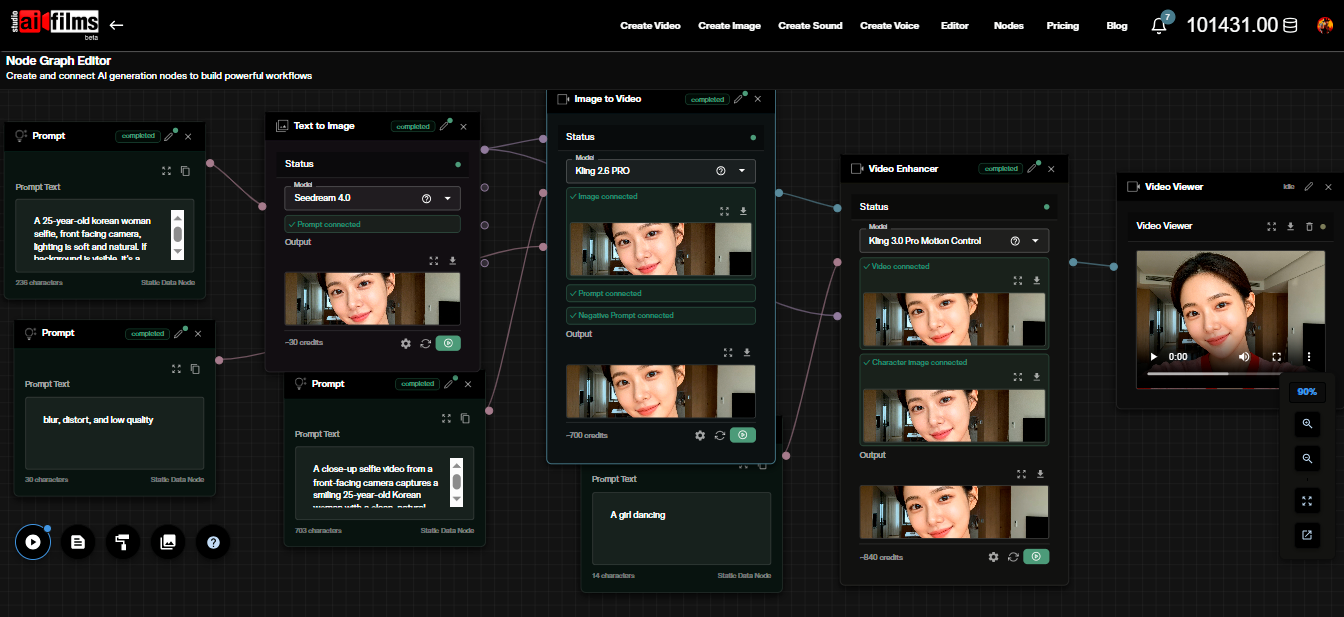
Explore AI voice and video tools for your own productions at the AI FILMS Studio workspace.
McConaughey's Cannes filing week coincided with Cate Blanchett's launch of the RSL Media open consent standard and Soderbergh's Meta AI documentary disclosure, making mid May 2026 the most concentrated single week of AI consent and identity news the entertainment industry had seen. All three developments reinforced each other as evidence that the industry was building a consent based framework from multiple directions simultaneously.
The convergence at Cannes was not coordinated. Each initiative was independently developed and independently announced during the same festival week. That they landed together reflects how many performers, directors, and producers had been working on consent and attribution frameworks simultaneously, each approaching the same problem from a different angle.
Sources
Variety | Deadline | The Hollywood Reporter | The Wrap
Continue Reading
.jpg?w=3840)


.jpg)
Video & LipSync
- Video Generator
- Text to Video
- Image to Video
- Start-End Frame to Video
- Draw to Video
- Motion Control
- Video Enhancer
- Video Upscaler
- Video Extend
- Video to Video LipSync
- Audio to Video LipSync
- Image to Video LipSync
- Video FaceSwap
- Seedance 2.5
- WAN 3.0
- Seedance 2
- FLUX 3
- Minimax H3
- Vidu Q3 Pro
- Grok Imagine Video 1.5
- Gemini Omni
- Google Veo 3.1
- Kling 3.0 Pro
- Luma Ray 3.2
- LTX 2.3
- Happy Horse 1.1
- Kling 3.0 Motion
- ByteDance Upscaler
- InfiniteTalk
- InsightFace
Image & Edit
- AI Character
- AI Actor
- Art Generator
- Text to Image
- Image to Image
- LoRA Image to Image
- Draw to Edit
- Image LoRA Training
- Remove Background
- Image Enhancer
- MidJourney 8.0
- Krea 2
- OpenAI GPT Image 2.0
- Nano Banana Pro Ultra
- Nano Banana 2 Lite
- Nano Banana Pro
- Minimax Image
- Clarity Pro
- Z-Image Turbo LoRA
- Krea 2 Turbo LoRA
- Z-Image LoRA Trainer
- Qwen Image LoRA Trainer
- Background Erase Network 2 (BEN2)