
Consumers Widely Accept AI Created and Curated Media, Study Finds
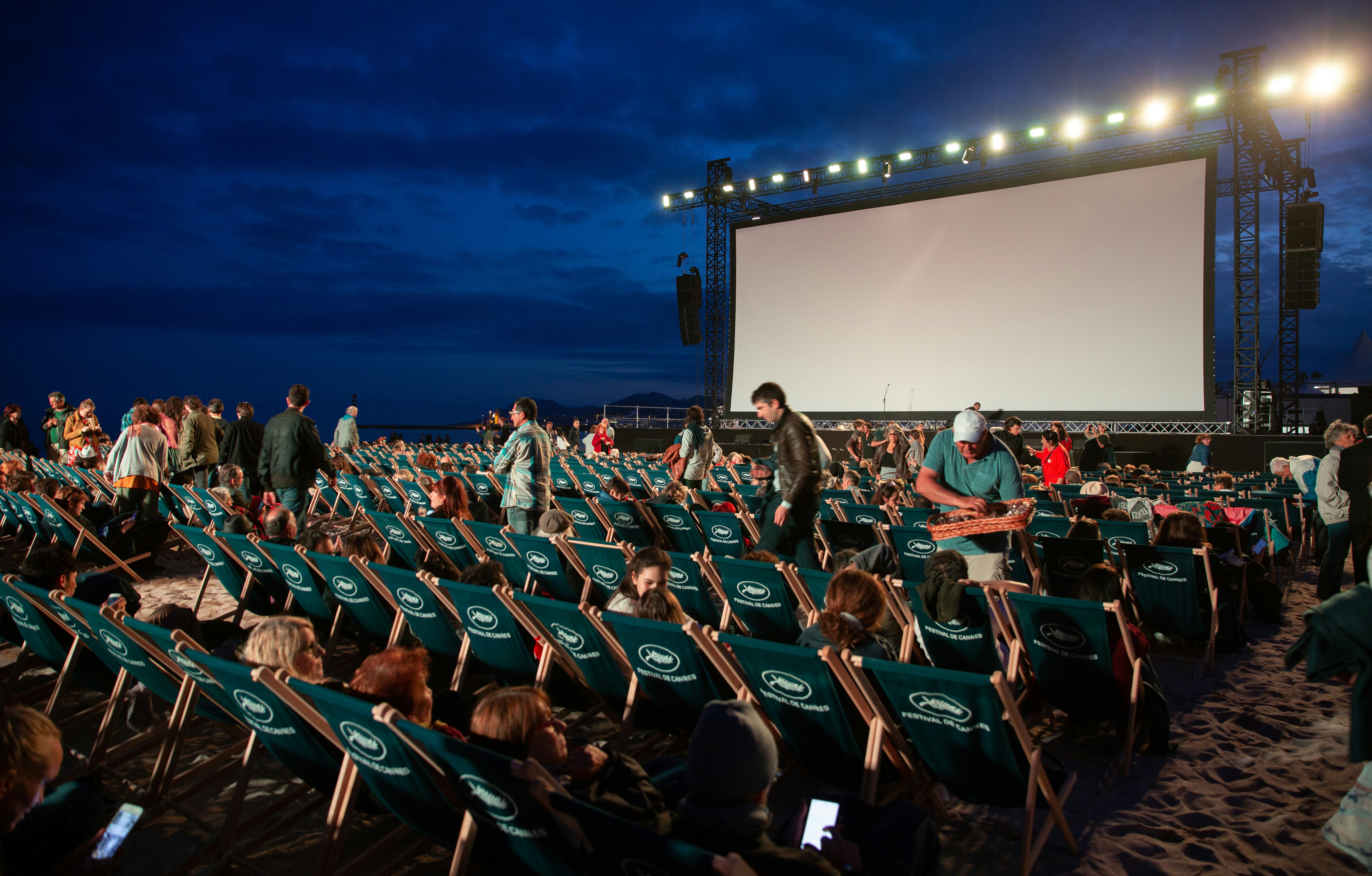
Photo by Zhifei Zhou on Unsplash
Share this post:
Consumers Widely Accept AI Created and Curated Media, Study Finds
A new report from Alvarez & Marsal challenges the assumption that audiences are hostile to AI filmmaking. Released March 30, the study polled nearly 2,000 U.S. consumers aged 18 to 65 and found acceptance levels that exceed what most in the industry expected.
What the Numbers Say
The headline finding: 51% of respondents said they would pay full ticket prices for a film that is 100% AI generated, as long as the story is compelling. That number sits in direct tension with the narrative that audiences reject AI content on principle.

The study also found 64% of respondents believe human and AI collaboration will result in higher quality premium content. Trust appears contingent not on the technology itself but on whether a compelling human creative vision is driving it.
On the platform side, 76% said they want AI tools that select, organize, and present personalized content. Consumers expect AI to play a curatorial role in how they discover media, not just how it is produced.
The Cable Shift
Perhaps the most consequential data point for the industry is not about film at all. Consumers expect to spend 29% more time with AI driven platforms this year. That gain comes directly from somewhere. The report projects an 11% drop in time spent on traditional broadcast and cable.
That is not a gradual erosion. It is a structural shift in attention. Streaming services and social platforms that deploy AI for recommendation and curation are absorbing hours that once belonged to linear television.
The Trust Gap
Not every finding points toward unconditional acceptance. Only 51% of respondents said they can confidently distinguish AI generated content from human made content. That split creates a reliability problem. Audiences who believe they can tell the difference may be wrong about that half the time, and the ones who know they cannot tell add their own anxiety about authenticity.
Privacy concerns also remain high in the data. Audiences want personalized AI experiences, but that desire sits alongside real unease about how their data and attention are being used to train those systems.
The A&M report is not the only consumer data in circulation. A 2024 Baringa survey offered a contrasting picture: more than half of U.S. consumers in that study said they prefer films made by humans over AI generated content. Read together, the two studies suggest the same consistent pattern found in earlier audience polling from 2025. Acceptance depends heavily on framing. When the question is about replacing filmmakers, resistance rises. When the question is about story quality regardless of production method, acceptance rises.
The Curation Angle Is the Strongest Signal
The 76% approval for AI content curation is arguably the most durable finding in the study. It is the area of least controversy and the largest stated appetite.
Audiences have always had more content available than time to find what they actually want to watch. AI curation addresses a real friction point that human editorial teams cannot solve at individual scale. A platform that learns a viewer's preferences across genre, pacing, tone, and cast choices delivers something a linear TV schedule never could.

For AI filmmaking platforms, this is the path of least resistance into audiences' daily routines. Curation builds familiarity. Familiarity lowers resistance to AI produced content. The 51% willing to pay full price for a fully AI generated film may grow as AI curated platforms normalize the encounter with AI media.
What Story Quality Actually Means for AI Film
The condition attached to that 51% willingness to pay is worth holding onto: the story must be compelling. That condition does not favor or disfavor AI. It holds AI filmmakers to exactly the same standard as human ones.
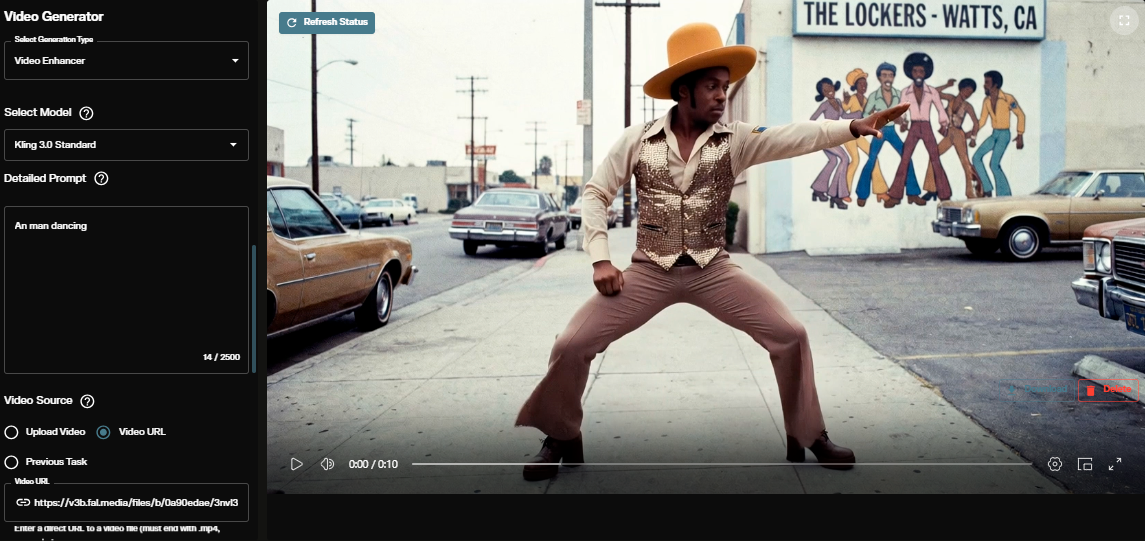
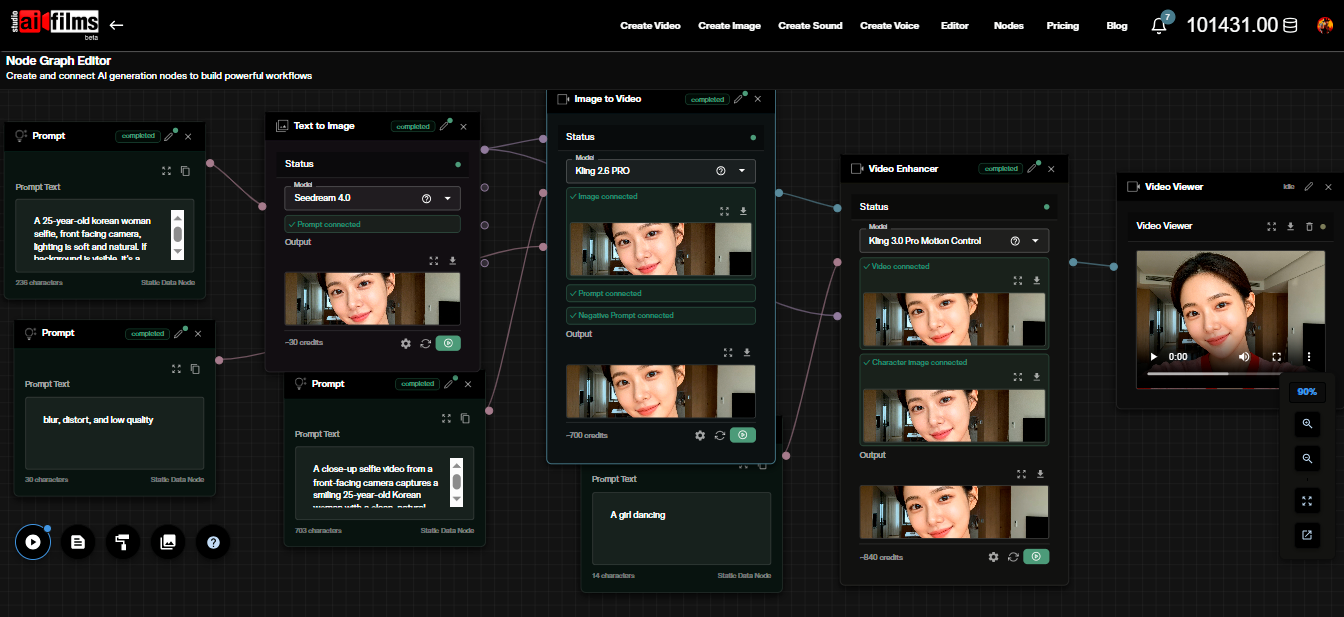
That is the opening. Tools available on AI FILMS Studio give filmmakers access to production capabilities that did not exist two years ago. The A&M data suggests that if the story lands, audiences will not turn it away at the door because the credits list an AI model.
The Taboola and Columbia University study on AI advertising found a closely related result in a different domain. AI generated content performs at parity with human creative when it is indistinguishable in quality. Story quality in film works the same way. The audience's response comes from the experience, not the production process that preceded it.
Sources
Alvarez & Marsal | Baringa | ScienceDirect
Continue Reading
.jpg?w=3840)


Video & LipSync
- Video Generator
- Text to Video
- Image to Video
- Start-End Frame to Video
- Draw to Video
- Motion Control
- Video Enhancer
- Video Upscaler
- Video Extend
- Video to Video LipSync
- Audio to Video LipSync
- Image to Video LipSync
- Video FaceSwap
- Seedance 2.5
- WAN 3.0
- Seedance 2
- FLUX 3
- Minimax H3
- Vidu Q3 Pro
- Grok Imagine Video 1.5
- Gemini Omni
- Google Veo 3.1
- Kling 3.0 Pro
- Luma Ray 3.2
- LTX 2.3
- Happy Horse 1.1
- Kling 3.0 Motion
- ByteDance Upscaler
- InfiniteTalk
- InsightFace
Image & Edit
- AI Character
- AI Actor
- Art Generator
- Text to Image
- Image to Image
- LoRA Image to Image
- Draw to Edit
- Image LoRA Training
- Remove Background
- Image Enhancer
- MidJourney 8.0
- Krea 2
- OpenAI GPT Image 2.0
- Nano Banana Pro Ultra
- Nano Banana 2 Lite
- Nano Banana Pro
- Minimax Image
- Clarity Pro
- Z-Image Turbo LoRA
- Krea 2 Turbo LoRA
- Z-Image LoRA Trainer
- Qwen Image LoRA Trainer
- Background Erase Network 2 (BEN2)