
Emmys Tried to Handle AI. The Shows Most Nominated Prove It's Harder Than Expected.

Share this post:
Emmys Tried to Handle AI. The Shows Most Nominated Prove It's Harder Than Expected.
The Television Academy announced the 2026 Primetime Emmy nominations on July 8. The shows leading the field include two productions whose central subject is AI's threat to the people who make television.
The rules governing whether those same shows were required to disclose any AI use in their own production are, by the Academy's own description, subject to inquiry. Not mandate.
The Nominations
"The Pitt" leads all nominees with 25 nominations, followed by "Hacks" with 24. "The Comeback" Season 3, the final run of HBO's mockumentary series, earned Lisa Kudrow a nomination for lead comedy actress and a writing nomination for Kudrow and co-creator Michael Patrick King. The 78th Primetime Emmy Awards will air September 14, 2026, on NBC, hosted by Mariska Hargitay.
This is the first Emmy season in which the Television Academy's new AI guidelines formally apply. Both nominations for The Comeback acknowledge a season that was built, from pitch to premiere, around one specific question. What happens to television when the writing comes from a machine?
The Comeback's third and final season satirized AI's effects on writers' rooms directly. Kudrow and King raced to get the show on air before the thing they were satirizing became standard industry practice. The nominations arrived on July 8, the same day press coverage of the Emmy AI guidelines reached its highest point.
Among the other programs in contention, "The Bear," "Severance," and "Andor" were also among the nominees. The Pitt's 25 nominations, spread across acting, writing, directing, and technical categories, suggest the Television Academy recognized it as a complete production achievement, not a single standout performance.
The AI Storylines in the Two Lead Shows
"The Comeback" Season 3 builds its central argument around a single exchange in the first episode. Jimmy Burrows, played by the legendary sitcom director James Burrows, tells lead character Valerie Cherish that a pilot written by AI "turned out OK". The line does not stop there.
Burrows adds: "OK is also the ceiling for a sitcom written by AI." The rest of the season follows Valerie as she performs AI generated scripts she does not know are machine produced, surrounded by writers who know exactly what they are watching and by a network counting on her not to find out.
"The Pitt," a medical drama set in a Pittsburgh emergency room, approaches the same question through character conflict rather than plot mechanics. Dr. Al-Hashimi's commitment to AI in medical diagnostics consistently collides with the show's wider argument about what a patient standing in front of a doctor requires that no dataset contains. Both shows locate their critique at the same point. The question is not whether AI can perform the task. The question is whether the task is the whole job.
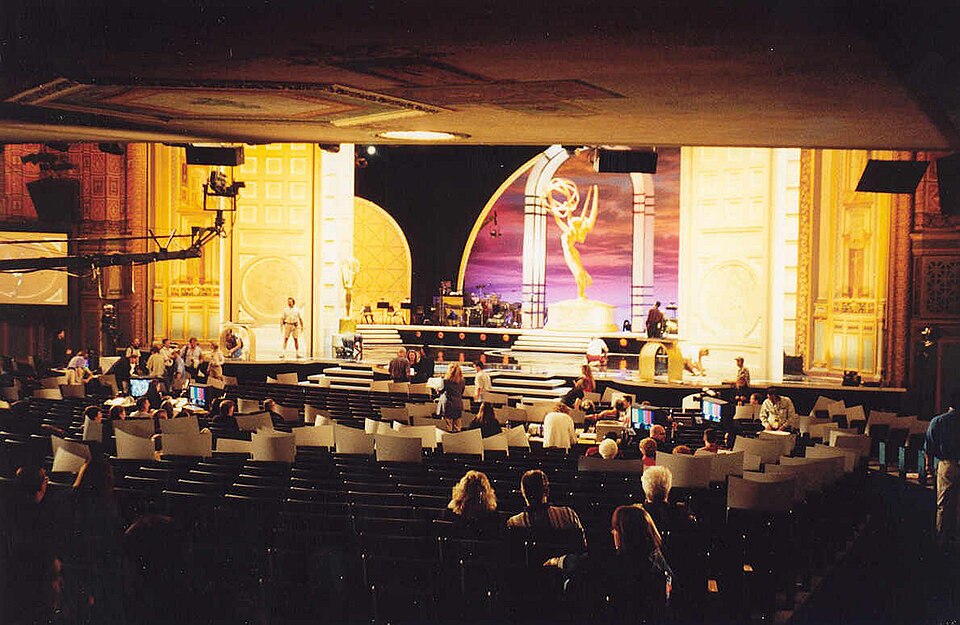
Photo by Alan Light, CC BY 2.0, via Wikimedia Commons
Lisa Kudrow earned an Emmy nomination for "The Comeback" Season 2 in 2015. A nomination for Season 3 marks the fourth time the Television Academy has recognized the series, each time in response to a different disruption. Reality television in 2005. Prestige cable in 2015. AI in 2026.
Michael Patrick King told TheWrap that the urgency behind Season 3 was not abstract. "We realized we had a window," he said, "and we needed to make this season before a studio admitted they were using AI." The 2026 nominations arrived before any major studio had publicly admitted exactly that.
King confirmed there will be no fourth season. "We're not doing a quadrilogy," he said. The series ends its run as the most Emmy recognized television satire of the AI era, having made its argument before the argument had time to become background noise.
The Shows That Named the Problem First
The Emmy nominations reflect what television writers and producers were thinking about in the 2024-2025 development season, when most of this year's nominated programs were written and greenlit. Both of the two most nominated shows center their conflicts on what machines cannot do or fully understand, a preoccupation that was already visible in pilot pitches before the AI adoption wave in television production became the subject of active guild negotiation.
The shows were written by people who lived through the 2023 WGA and SAG-AFTRA strikes, in which AI's role in writing and performance was one of the central disputes. The stories these writers chose to tell in 2024 and 2025 reflect what they were watching in their own industry throughout that period.
The Television Academy's selection of The Pitt and The Comeback as its most nominated programs does not mean Emmy voters chose them because of their AI themes. The shows were recognized for craft, performance, and writing quality. But the convergence is visible in the record: the most formally honored television storytelling of 2026 is the storytelling that most directly examined the tool that is also the subject of the Emmy AI guidelines.
"The Comeback" returned three times across three decades, each time targeting a different economic threat to scripted comedy. Reality TV in 2005. Prestige cable in 2014. AI in 2026. Each season earned Television Academy recognition. The Emmy record for the series is now also a catalog of the industry's three largest disruptions to the writers who make television.
That tradition closes with Season 3. King confirmed there will be no fourth season. The series ends with a nomination cycle that places its final argument at the center of awards season, at a moment when the Television Academy's own rules are the object of exactly the debate the show was built to provoke.
The Last Line James Burrows Delivered
James Burrows directed more than 2,800 episodes of television across a career that spanned from The Mary Tyler Moore Show to The Big Bang Theory. He died in June 2026, before the Emmy nominations were announced.
His final recorded appearance was in "The Comeback" Season 3, playing himself as Jimmy Burrows in the show's central scene about AI and creative authorship. He was the most nominated director in Emmy history before his death, with 16 Emmy nominations across his career in comedy. The line about AI's ceiling was among the last things he delivered on camera.
That fact gives the episode an additional weight the season's creators did not plan for. Burrows spent more than five decades directing the kind of precisely crafted, character specific comedy that The Comeback's third season argues AI cannot produce. The scene in which he delivers that argument is now his final statement on the medium he spent his career building.
The Television Academy will recognize Burrows as a nominee or winner through the work he produced across his career. His appearance in The Comeback Season 3 will not factor into a separate category. What it adds to the record is context: the most nominated comedy director in Emmy history appeared in the Emmy season's most AI critical show, playing himself, to deliver a line about what AI cannot do.
What the Emmy Rules Actually Say
The Television Academy announced AI rule changes for the 78th Emmy Awards in January 2026. The stated principle is that "recognition remains centered on human storytelling, regardless of the tools used." The Academy "reserves the right to inquire about the use of AI in submissions."
Disclosure is required only when AI generated material "exceeds a minimal threshold." That threshold has not been publicly defined. There is no blanket disclosure requirement for nominees, and no submission form asking producers to confirm or deny AI use in their production.
Without a universal disclosure process, the Television Academy must identify which shows to ask through existing information. Press reports, industry conversation, or the shows themselves would have to surface the question. A production could complete its season, submit for Emmy consideration, and face no AI disclosure requirement unless the Academy's attention was directed toward it through other means.
The Academy's January rule changes also addressed several unrelated eligibility matters, including adjustments to the Outstanding Television Movie category name. AI was treated as one item in a broader administrative update, not as a standalone policy change.
The overlap between AI and standard production tools remains unaddressed in the Television Academy's published guidelines. A sound design system that uses AI to clean audio, a color grading pipeline with an AI assist component, or a previsualization tool that generates reference images could each occupy ambiguous territory under the current threshold. None of these scenarios has been publicly addressed by the Television Academy.
Why Writers Say the Rules Are Not Enough
Victor Levin, a television writer whose credits include Mad Men and Mad About You, says the Academy should require "much more specific disclosures" and then make decisions based on what those disclosures say. His framing is direct: "I think of it like a food label. Viewers have a right to know what they're consuming."
Chris Auer, a faculty member at the Savannah College of Art and Design, supports the Academy's right to inquire but says the current standard "leaves things too open." The absence of a defined threshold means the same production could categorize identical AI tools differently and arrive at different conclusions about whether disclosure is required at all.
The "food label" framing matters because it changes what kind of problem the rules are supposed to solve. Levin is not calling for prohibition or disqualification. He is arguing that AI disclosure should be treated as a viewer right, not an industry preference. That distinction changes what an adequate disclosure standard looks like, and the current Emmy rules do not engage with it on those terms.
Emmy winning writers have specifically asked which nominated shows used AI in writing, directing preparation, or visual effects production. Under the current rules, that information is not something the Television Academy collects from all nominees.
The Television Academy has not announced a timeline for revisiting the disclosure threshold. The writers asking for clearer rules are, in the 2026 cycle, the same writers being nominated by the Academy whose AI guidelines they are criticizing.
The Comparison to the Oscars
The Academy of Motion Picture Arts and Sciences set a harder standard for the 99th Oscars, announced in May 2026. AI generated performances are disqualified from acting categories. AI written screenplays cannot compete in writing categories. Producers must sign an Affidavit of Human Origin, a formal certification that carries consequences for false declaration.
The Oscars Academy also formed a Digital Integrity Committee staffed with forensic AI specialists to examine submissions. The Television Academy has announced no equivalent enforcement body for the Emmy competition.
The Golden Globes, announcing their guidelines for the 84th ceremony in May 2026, took a position closer to the Emmy approach. AI does not disqualify a work if human authorship remains primary. All submissions must include a disclosure describing any AI use. The Globes also stopped short of a formal human authorship certification requirement.
All three major awards bodies ban AI generated performances in acting categories. The gap between them is in writing categories and in what paperwork nominees are required to sign. A television writer can receive an Emmy nomination without ever formally attesting to the human origin of their scripts.
The Enforcement Gap
The Television Academy's January 2026 rule announcement did not describe an enforcement mechanism. There is no forensic review process for Emmy submissions, no committee empowered to examine how nominated productions were made, and no penalty schedule attached to AI use that exceeds the undefined threshold.
The Oscars' Digital Integrity Committee, announced in May 2026 alongside the 99th eligibility rules, fills that gap on the film side. The committee is staffed with forensic AI specialists and carries a mandate to investigate submissions that raise eligibility questions in prohibited categories. No equivalent body exists in the Television Academy's structure for Emmy submissions.
In practice, the Emmy inquiry right functions most clearly for publicized cases. A show reported in the press to have used AI generated scripts would presumably trigger the right to inquire. A show that used AI tools without public disclosure faces no systematic review under the current rules.
Victor Levin's "food label" argument points directly at this structural gap. A labeling requirement works because it applies to every product regardless of whether a complaint was filed first. The Television Academy's inquiry right is reactive rather than systematic. Whether the Academy moves toward a proactive disclosure model, as the Oscars Academy did for the 99th ceremony, will be the central Emmy AI policy question heading into 2027.
Emmy submissions for the 79th season will not open until spring 2027. If the Academy defines the disclosure threshold, establishes review procedures, and clarifies what the inquiry right requires in practice before that date, the rules would enter the next cycle in materially stronger shape. The 2026 nominations, and the press attention they generated, are the clearest prompt the Academy has received.
What the 2026 Nominations Signal
The most AI skeptical television of the 2025-2026 season is now the most nominated. That convergence was not coordinated. It reflects how quickly the industry's relationship with AI shifted between when these shows were developed and when Emmy voters made their selections in the spring.
Kudrow told interviewers during the Season 3 press campaign that she worried the satire would arrive too late. "There's going to be a lot of corrections," she said, describing what she expected the industry to go through. "Use of AI, and then a lot of corrections, and then we'll need people." The Emmy nominations arrived while the corrections cycle is still in its early stages.
The Television Academy's AI rules will govern the 79th Emmy season on the same terms unless the organization amends them before submissions open in 2027. The 2026 nominations have now made those rules visible to writers and viewers in a way the January announcement did not. Whether the Academy treats this Emmy season as a reason to sharpen its guidelines, or whether it treats the rules as settled, is a decision that will arrive well before the September 14 ceremony.
The Television Academy's AI guidelines are also new enough that the people who submitted to the 78th Emmy season may not have written their shows with those rules in mind. The shows nominated this year were in production in 2024 and early 2025. The rules were announced in January 2026, after most of the nominated work was already complete. The 79th Emmy season will be the first in which writers and producers develop projects knowing the disclosure framework in advance.
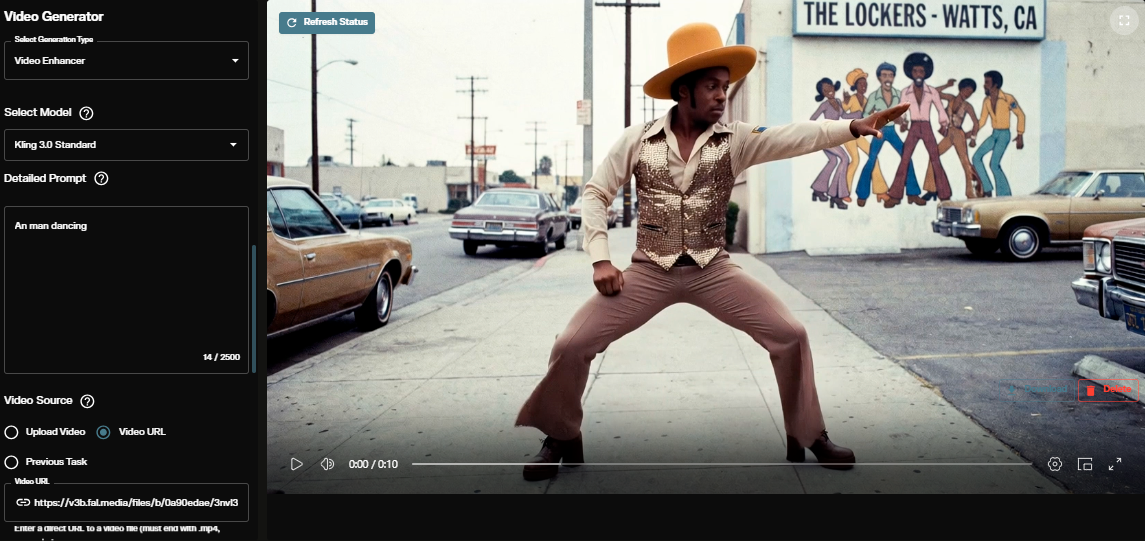
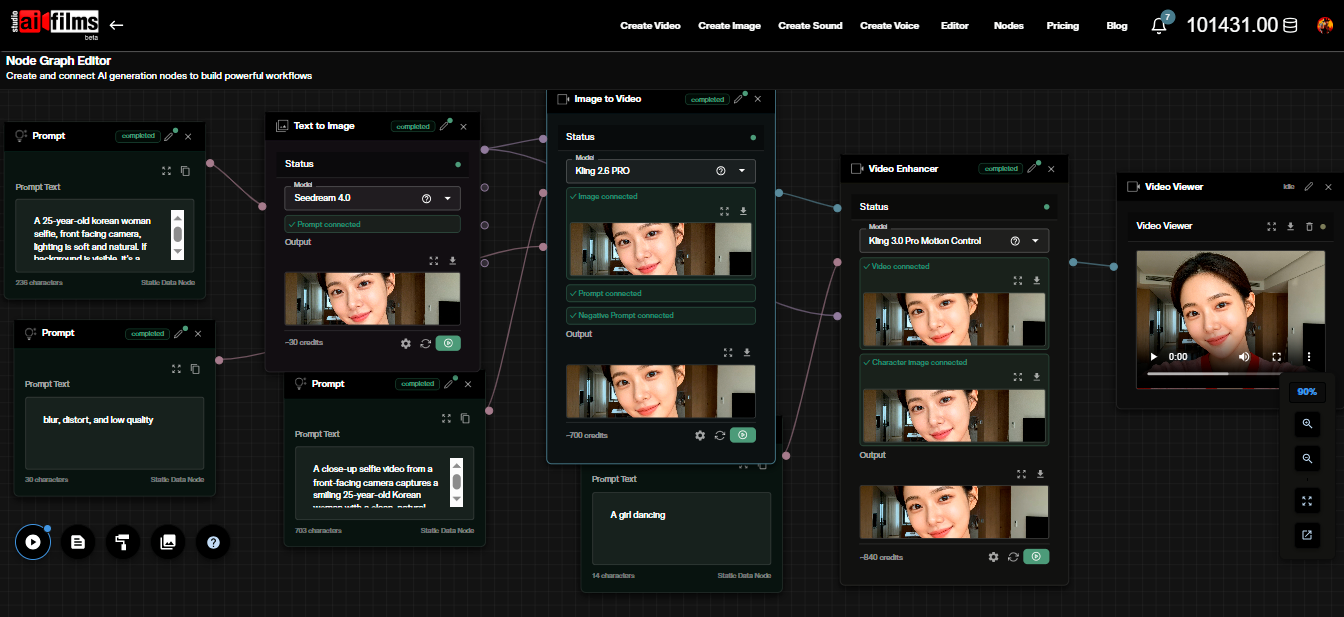
Filmmakers and independent creators who want to work with AI video tools today can access text-to-video and image-to-video generation through AI FILMS Studio, including the latest models, without the submission certification questions that have now reached every major awards body in Hollywood.
Sources
Variety | The Hollywood Reporter | The Wrap | Deadline
Continue Reading
.jpg?w=3840)


Video & LipSync
- Video Generator
- Text to Video
- Image to Video
- Start-End Frame to Video
- Draw to Video
- Motion Control
- Video Enhancer
- Video Upscaler
- Video Extend
- Video to Video LipSync
- Audio to Video LipSync
- Image to Video LipSync
- Video FaceSwap
- Seedance 2.5
- WAN 3.0
- Seedance 2
- FLUX 3
- Minimax H3
- Vidu Q3 Pro
- Grok Imagine Video 1.5
- Gemini Omni
- Google Veo 3.1
- Kling 3.0 Pro
- Luma Ray 3.2
- LTX 2.3
- Happy Horse 1.1
- Kling 3.0 Motion
- ByteDance Upscaler
- InfiniteTalk
- InsightFace
Image & Edit
- AI Character
- AI Actor
- Art Generator
- Text to Image
- Image to Image
- LoRA Image to Image
- Draw to Edit
- Image LoRA Training
- Remove Background
- Image Enhancer
- MidJourney 8.0
- Krea 2
- OpenAI GPT Image 2.0
- Nano Banana Pro Ultra
- Nano Banana 2 Lite
- Nano Banana Pro
- Minimax Image
- Clarity Pro
- Z-Image Turbo LoRA
- Krea 2 Turbo LoRA
- Z-Image LoRA Trainer
- Qwen Image LoRA Trainer
- Background Erase Network 2 (BEN2)