
Academy Bans AI Performances and Scripts from the 99th Oscars
Share this post:
Academy Bans AI Performances and Scripts from the 99th Oscars
The Academy of Motion Picture Arts and Sciences voted May 1, 2026, to prohibit AI generated performances from acting categories and AI written scripts from screenplay categories at the 99th Academy Awards. The rules apply to films released in 2026 and represent the most explicit restrictions the Academy has placed on AI in any creative category.
The Acting Ban
The new rule bars any performance generated or substantially assisted by AI from competing in Best Actor, Best Actress, Best Supporting Actor, and Best Supporting Actress. A human performer must have delivered the performance on screen.
The Academy's previous eligibility framework, articulated by CEO Bill Kramer in March 2026, treated AI as a tool and asked branch members to weigh human authorship in each submission. The 99th Oscars acting rule eliminates that discretion for performance categories. Kramer had stated that AI "neither helps nor harms" a film's chances, but that standard applied to production tools, not to whether the performance itself was human.
The rule also reflects what the acting branch already knows from practical experience. Acting nominations are awarded to specific performances. A branch member watching a performance generated substantially by AI is watching something they can evaluate without a policy framework. It is either a performance they would nominate or it is not. The rule formalizes a judgment the branch was already implicitly applying.
The harder case is partial AI enhancement of a human performance. If an actor's vocal performance is processed by AI to correct pitch or timing, or if their physical performance is augmented by AI motion capture processing, the rule's "substantially assisted" threshold becomes relevant. The Academy has not defined where enhancement ends and disqualification begins.
Matthew McConaughey predicted in February 2026 that AI would eventually infiltrate Oscar acting categories, describing the scenario as inevitable. The new rule pushes that outcome further off, at least formally.
The Writing Rule
AI generated or substantially AI written screenplays are ineligible in Best Original Screenplay and Best Adapted Screenplay. Writers may use AI as a drafting or editing tool, but primary creative authorship must be human.
The rule does not define a threshold for how much AI involvement disqualifies a script. That ambiguity puts the determination in the hands of Academy members reviewing submissions, similar to how VFX branch members currently assess AI use in technical categories.
In practice, the rule is most clearly triggered at the extremes. A screenplay generated entirely by a large language model, with minimal human revision, falls squarely within the rule's reach. A human writer who used AI to brainstorm a single scene and then substantially rewrote that scene is far less likely to face eligibility questions. The middle ground, where AI generated text appears throughout a draft that was substantially human revised, is where the ambiguity the rule acknowledged becomes relevant.
The Academy has not published guidance on how its members should weigh AI assisted writing assistance against AI generated output. That judgment is currently left to the individual Academy member reviewing a submission, which means the same amount of AI involvement could produce different eligibility outcomes depending on which branch member is making the call.
The Affidavit of Human Origin addresses the disclosure problem but not the definition problem. A producer who signs an affidavit attesting to human authorship is making a legal claim. Whether that claim is accurate depends on a definition of "primary creative authorship" the Academy has not specified.
Affidavit of Human Origin
Submitters in the affected categories must sign an Affidavit of Human Origin confirming the performance or screenplay is human created. The affidavit carries formal consequences: a false declaration can result in disqualification.
The Next Web described the certification as "not a vague principle. It is a contractual obligation with consequences". The Academy is not relying on voluntary disclosure, which was the approach for the 98th Oscars. The affidavit creates a paper record that can be examined after the fact.
The affidavit system creates a different kind of incentive structure than a blanket disclosure requirement. A producer who knows they must sign a legal document attesting to the human origin of a performance or screenplay is making a different calculation than a producer who is simply asked to disclose AI use voluntarily. The legal consequence of a false affidavit is more concrete than the reputational consequence of not disclosing when no one has asked.
The Digital Integrity Committee, staffed with forensic AI specialists, provides the enforcement mechanism that makes the affidavit meaningful. A certification without investigation is a formality. The committee's mandate is to examine submissions where eligibility is in question, using technical tools to identify AI generated content. No equivalent body exists for the Emmy Awards or the Golden Globe Awards.
What AI Can Still Win
The ban applies to acting and writing. It does not extend to technical categories. AI assisted visual effects, sound design, editing, and cinematography remain eligible under the existing human authorship standard.
The boundary the Academy has drawn is between AI as a production instrument and AI as a credited creative author or performer. A film that uses AI to clean up backgrounds in post production, or to generate reference images in preproduction, or to assist in color grading remains fully eligible across all categories. A film in which the leading performance is substantially AI generated, or in which the screenplay was primarily written by a generative AI system, is not eligible in the categories those contributions would have occupied.
The practical effect of this distinction is that the most visible uses of AI in film, the ones most likely to draw audience and awards attention, are the ones now excluded. AI that operates invisibly in pipeline stages audiences cannot see remains eligible. AI that appears on screen or generates the words performers say is the AI the rule targets.
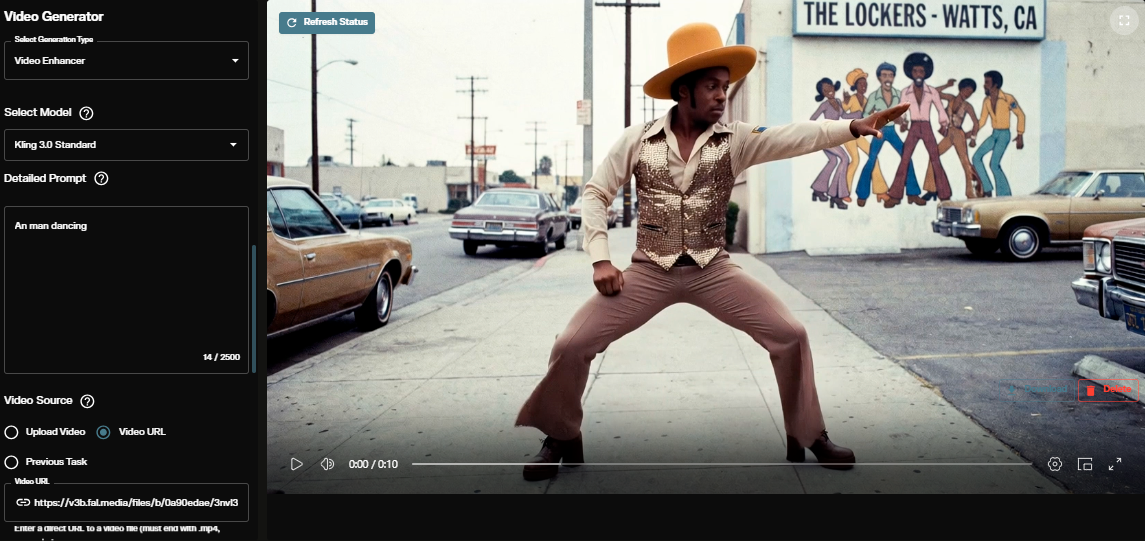
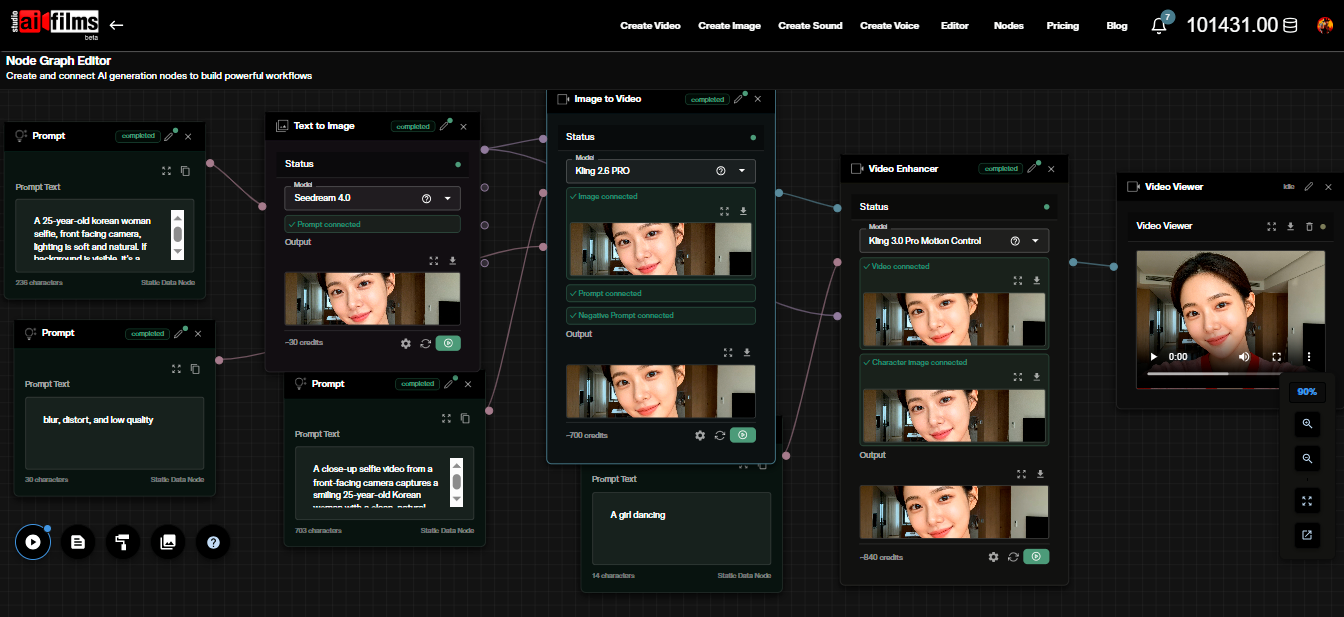
The debate over AI in VFX accelerated after Guillermo del Toro's Frankenstein won Best Visual Effects at the 98th Oscars while del Toro was publicly opposed to generative AI. That category remains governed by branch member discretion. Filmmakers generating AI video for short films and independent productions through tools like AI FILMS Studio retain full eligibility in technical categories under the current framework.
International Film Changes
The Academy also reformed the International Feature Film category. The requirement that each country submit only one film is eliminated: a film is no longer blocked from competing because another submission from the same country was already entered. Variety confirmed six festival qualifiers can now earn a film automatic consideration.
Cannes director Thierry Fremaux welcomed both sets of changes at the 2026 festival, calling the AI acting rules 'obvious' and praising the international category reform as Hollywood 'opening up to universality'.
The film, not the country, becomes the official nominee under the new structure. Deadline cited Anatomy of a Fall as an illustration: under the previous rules, it could not have competed for France if France had already submitted another entry that year.
The international category change was the part of the rule announcement that drew the most attention from non-US markets. For filmmakers in countries where international prestige awards represent their primary path to distribution deals and theatrical release in major markets, removing the one per country limit changes the strategic calculus for which films get submitted and campaigned.
The change addresses a structural inequity in how international cinema reached the Oscars. Countries with robust film industries, producing multiple strong films in a given year, previously had to choose. Countries with smaller industries, or films that did not meet the national selection committee's preferences, could be shut out entirely. The six festival qualifier provision creates an additional path that bypasses the national committee process entirely.
Multiple Acting Nominations
A third rule change permits actors to receive multiple acting nominations in the same category in a single year. Previously, an actor whose performances in two different films both reached nomination consideration would appear as a single nominee. The new rule allows both nominations to stand simultaneously.
The same week the Academy formalized its eligibility rules, SAG-AFTRA and the AMPTP reached a four year agreement restricting synthetic performers and digital replicas. The 99th Oscars eligibility standards and the new labor contract now set a consistent boundary across both the awards and the production sides of the industry.
The Digital Integrity Committee is the enforcement mechanism the Oscars added that the Television Academy did not add for the 78th Emmy Awards. The Emmys reserve the right to inquire about AI use in submissions, but that inquiry right is reactive. The Oscars approach is proactive: the Affidavit of Human Origin is required from all producers in the affected categories before any complaint is filed.
By contrast, the Television Academy's approach for the 78th Emmys is less prescriptive. It reserves the right to inquire about AI use but imposes no mandatory disclosure. Critics say this leaves the Emmy's AI rules too vague, particularly as the most nominated shows of 2026 are themselves stories about AI's threat to television writers and the inadequacy of the industry's response.
The distinction between the two approaches will be tested in the same calendar year. The 99th Oscars and the 78th Emmy Awards both apply their AI rules to work produced in 2026, under contracts and guidelines that were finalized within weeks of each other. If the Oscars' affidavit system produces a different distribution of disclosures than the Emmys' inquiry system, the industry will have a data point for which approach generates more transparency.
The rule allowing multiple acting nominations in the same category also changes the Academy's internal mathematics around performance recognition. A year in which two performances by the same actor rise to nomination level quality will now produce two entries, potentially reshaping how category totals are counted and how branch members weigh comparative merit when multiple slots could theoretically go to a single individual.
No film has yet produced a test case for the multiple nomination rule. The rule's effect will become visible only when a performer delivers two fully separate nominated performances in the same eligibility year, a scenario the previous single entry rule made invisible in the awards record. Whether that affects nomination patterns in the 99th Oscars cycle is the open question the new rule creates.
The three rule changes together, the AI acting ban, the screenplay requirement, and the multiple nomination allowance, each address a different kind of boundary the Academy previously left undefined. The AI bans establish which creative contributions must be human. The multiple nomination rule addresses what counts as one actor's contribution in a given year. Both sets of rules respond to conditions, widespread AI generation tools and an industry producing more volume than its nomination structures were built for, that did not exist in the same form when the Academy last revised its eligibility standards.
The 99th Oscars eligibility cycle will be the first full test of whether these rules change behavior in production, in disclosure, and in what gets submitted. The answer will be visible in the nominee list when the ceremony is held in early 2027.
Independent filmmakers generating AI video through tools like AI FILMS Studio remain fully eligible under the current framework, as technical assistance tools are not covered by the acting or screenplay bans.
At the Cannes Film Market in mid-May, an independent initiative proposed a market side counterpart: Human Provenance in Film, a free AI disclosure standard designed to travel through film sales and distribution.
The Academy's screenplay rule reflects a cultural conviction that "Gladiator II" writer David Scarpa articulated directly: human authorship matters because audiences care about human achievement, not machine capability.
The Academy's rule changes followed sustained advocacy from groups including the Creators Coalition on AI, whose 500 member coalition launched in December 2025 and includes Oscar winners Daniel Kwan and Sian Heder among its founders. Three days after this announcement, the Golden Globes took a different approach, announcing rules that permit AI in production as long as human creative direction remains primary.
Two and a half months later, BAFTA took the most permissive position yet among the major English language film awards bodies. The organization's July 22 guidance recognizes "outstanding human achievement in originating, shaping and realising the final artistic outcome, regardless of the tools used", with no categorical ban on AI production methods and no mandatory affidavit requirement at entry. Days later, Venice extended the debate beyond the English language awards circuit: the Venice 83 competition lineup announcement included Alberto Barbera's declaration that AI films are welcome "under the complete control of the artist", with no categorical eligibility rule and an Italian AI film selected out of competition.
Sources
Variety | Deadline | The Next Web
Continue Reading
.jpg?w=3840)


Video & LipSync
- Video Generator
- Text to Video
- Image to Video
- Start-End Frame to Video
- Draw to Video
- Motion Control
- Video Enhancer
- Video Upscaler
- Video to Video LipSync
- Audio to Video LipSync
- Image to Video LipSync
- Video FaceSwap
- Seedance 2.5
- WAN 3.0
- Seedance 2
- FLUX 3
- Minimax H3
- Vidu Q3 Pro
- Grok Imagine Video 1.5
- Gemini Omni
- Google Veo 3.1
- Kling 3.0 Pro
- Luma Ray 3.2
- LTX 2.3
- Happy Horse 1.1
- Kling 3.0 Motion
- ByteDance Upscaler
- InfiniteTalk
- InsightFace
Image & Edit
- AI Character
- AI Actor
- Art Generator
- Text to Image
- Image to Image
- LoRA Image to Image
- Draw to Edit
- Image LoRA Training
- Remove Background
- Image Enhancer
- MidJourney 8.0
- Krea 2
- OpenAI GPT Image 2.0
- Nano Banana Pro Ultra
- Nano Banana 2 Lite
- Nano Banana Pro
- Minimax Image
- Clarity Pro
- Z-Image Turbo LoRA
- Krea 2 Turbo LoRA
- Z-Image LoRA Trainer
- Qwen Image LoRA Trainer
- Background Erase Network 2 (BEN2)