
CC-BY-4.0: © European Union 2019 – Source: EP
Share this post:
EU Lawmakers Vote to Protect Copyright in the Age of AI
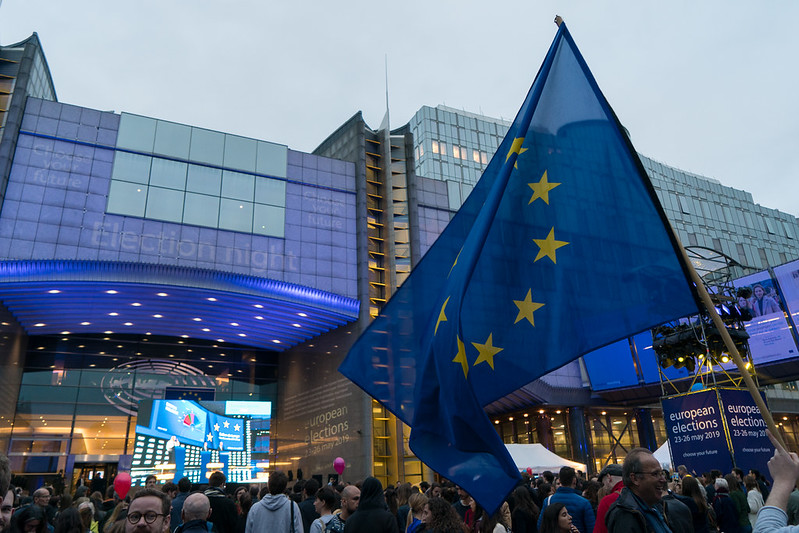
On March 10, 2026, the European Parliament voted on a landmark own-initiative report from the Legal Affairs Committee addressing one of the most contested questions in AI policy: who owns the creative work that trains generative AI systems, and who gets paid for it.
What the Report Calls For
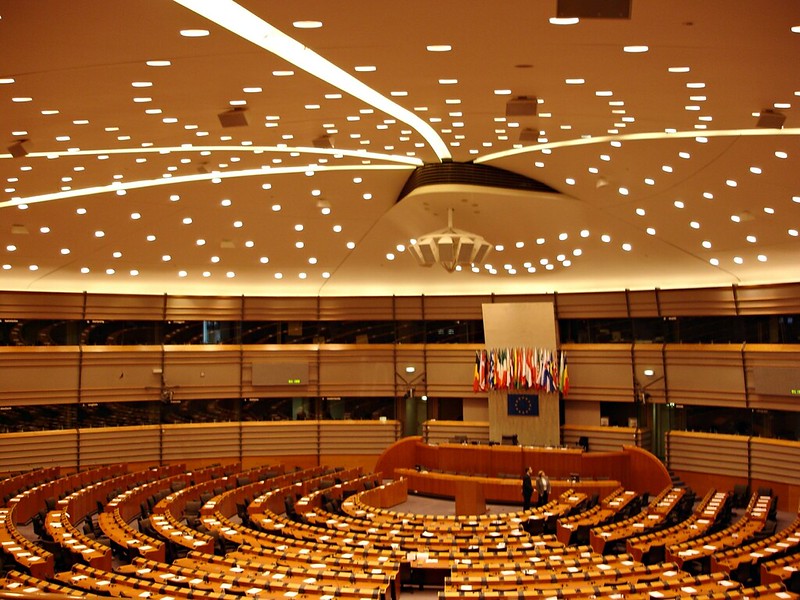
The report, prepared by rapporteur Axel Voss (EPP, Germany), tackles the legal gap between how generative AI systems are built and what existing copyright law was designed to protect. At its core, the proposal frames the relationship between AI providers and creators as one that must include both transparency and remuneration.
MEPs called on AI developers to openly acknowledge which copyrighted works they used to train their systems. They also demanded that rightsholders receive fair compensation for such use. This is a direct challenge to the current practice of training large language models and video generation systems on scraped internet data, much of which includes copyrighted films, scripts, photographs, and news articles.
The vote follows months of committee work and a dedicated workshop on generative AI and copyright held in June 2025.
Transparency as a Legal Requirement
Central to the proposal is the idea that opacity is itself a problem. When a filmmaker, illustrator, or journalist cannot know whether their work contributed to the training of a commercial AI product, they cannot assert their rights or pursue compensation.
The Legal Affairs Committee report calls for AI providers to disclose training data in a manner that gives rightsholders practical recourse. This builds on the transparency obligations already embedded in the EU AI Act, which entered application in phases from 2024 onward and requires general-purpose AI model providers to publish summaries of training data. The copyright report goes further by linking disclosure directly to the right to compensation.
The Opt-Out Mechanism for Creators
Beyond disclosure, MEPs want rightsholders to have the power to exclude their work from AI training datasets. This opt-out mechanism mirrors the text and data mining provisions in the EU Copyright Directive (DSM Directive) from 2019, which allowed rights holders to reserve their content for automated processing.
For independent filmmakers, photographers, writers, and musicians, this is significant. The ability to opt out gives individual creators a legal tool that does not depend on collective bargaining or guild membership to be effective. It also creates the infrastructure for a consent-based licensing model where creators can choose to participate. and negotiate terms rather than have their work absorbed by default.
What "absorbed by default" looks like in practice became concrete in early 2026. AI marketer Dan Kieft demonstrated that Nano Banana 2 had memorized a specific YouTube creator's facial likeness from training data well enough that a text description alone reproduced her face, with no image reference needed. Google had trained the model on roughly 20 billion YouTube videos. The creator had no mechanism to exclude her content. That case is documented in our analysis of the Nano Banana YouTube creator likeness controversy.
This push mirrors battles already being fought elsewhere. In the UK, Equity secured improved AI protection terms from PACT after 99% of performers voted to refuse digital scanning consent, establishing that blanket consent is not acceptable in professional contracts. You can read more about that fight in our coverage of the UK Equity and PACT AI protection negotiations.
Building a Licensing Market
The report pushes the European Commission to create a structured licensing market for copyrighted content. MEPs called on the Commission to facilitate licensing agreements. Including agreements with individual creators rather than only large rightsholders or collective management organisations.
This is a significant detail. Major studios and publishing houses already have the legal resources and market power to negotiate directly with AI companies. Individual filmmakers, musicians, and journalists typically do not. A Commission-facilitated licensing framework that extends to individual creators would change that dynamic.
The broader ambition is to make the EU a reference point for how AI and copyright coexist commercially, not just legally. A functioning licensing market would allow creators to monetize their contribution to AI development while giving AI companies a clear path to compliant training data.
Outside the regulatory track, a market response is already emerging. Certification platforms like the MindStar Standard and Not By AI are issuing AI free logos to verify that human authorship drove the creative work. That kind of third party provenance documentation is exactly what a structured licensing framework would require studios to produce.
Press and News Media Under Pressure
The report also addresses the press and news media sectors specifically. MEPs asked the Commission and member states to protect news outlets from AI systems that regularly scrape and repurpose their content without payment. The proposal calls for adequate compensation and the protection of media pluralism and diversity of information.
This part of the vote matters for the broader media ecosystem that filmmakers depend on. Investigative journalism, entertainment reporting, and film criticism all generate the cultural record that AI systems draw from when producing contextually relevant outputs. If news media cannot sustain themselves financially, that record degrades.
The concern is concrete. Several large language model providers have been involved in licensing disputes with major news publishers in the US and Europe, and some have reached commercial agreements while others face ongoing litigation. The MPA's high-profile condemnation of ByteDance's Seedance 2.0 over alleged copyright violations involving AI-generated video of Tom Cruise and Brad Pitt illustrated how quickly these disputes escalate from policy debate to legal action.
What It Means for Filmmakers Using AI
The EU Parliament vote does not produce binding law on its own. It is an own-initiative report, meaning it expresses Parliament's position and pushes the Commission to act. But the political signal is clear, and the Commission has historically moved to legislate in areas where Parliament has established a strong consensus position.
For filmmakers working with AI tools, including video generation platforms like AI FILMS Studio, the trajectory points toward a more regulated environment for training data. That is not necessarily a constraint. A licensing market with clear opt-in and opt-out mechanisms would create more legal certainty for both creators and the platforms they use.
The documentary sector is already wrestling with the implications of AI copyright law. Our coverage of what AI copyright law means for documentary filmmakers outlines how archival footage and fair use are being reinterpreted in light of AI scraping cases.
SAG-AFTRA is approaching the same territory from the performer side, with a proposal for a digital likeness tax on AI performers that would feed pension and health funds as synthetic actors become commercially viable. These parallel legislative and union-driven efforts are converging on the same conclusion: AI needs to contribute economically to the creative ecosystem it draws from.
The EU Parliament vote is the clearest institutional articulation of that principle yet. ByteDance's Seedance 2.0 provided a live example of the problem the EU is trying to solve: the suspension of Seedance 2.0's global launch after cease-and-desist letters from Disney, Warner Bros. Discovery, Netflix, Paramount, Sony, and the MPA showed exactly what happens when a major AI platform ships without resolving training data rights first.
Sources
European Parliament | Variety | The Hollywood Reporter | Deadline
Continue Reading


Video & LipSync
- Video Generator
- Text to Video
- Image to Video
- Start-End Frame to Video
- Draw to Video
- Motion Control
- Video Enhancer
- Video Upscaler
- Video Extend
- Video to Video LipSync
- Audio to Video LipSync
- Image to Video LipSync
- Video FaceSwap
- Seedance 2.5
- WAN 3.0
- Seedance 2
- FLUX 3
- Minimax H3
- Vidu Q3 Pro
- Grok Imagine Video 1.5
- Gemini Omni
- Google Veo 3.1
- Kling 3.0 Pro
- Luma Ray 3.2
- LTX 2.3
- Happy Horse 1.1
- Kling 3.0 Motion
- ByteDance Upscaler
- InfiniteTalk
- InsightFace
Image & Edit
- AI Character
- AI Actor
- Art Generator
- Text to Image
- Image to Image
- LoRA Image to Image
- Draw to Edit
- Image LoRA Training
- Remove Background
- Image Enhancer
- MidJourney 8.0
- Krea 2
- OpenAI GPT Image 2.0
- Nano Banana Pro Ultra
- Nano Banana 2 Lite
- Nano Banana Pro
- Minimax Image
- Clarity Pro
- Z-Image Turbo LoRA
- Krea 2 Turbo LoRA
- Z-Image LoRA Trainer
- Qwen Image LoRA Trainer
- Background Erase Network 2 (BEN2)