

NVIDIA Research (FoundationStereo disparity output, NVIDIA Open Model License)
Share this post:
FoundationStereo-S: Open Source Stereo Depth for VFX
Stereoscopic camera rigs, witness camera pairs on virtual production stages, and Apple Vision Pro spatial video capture give VFX teams two synchronized viewpoints of every shot. Turning those left and right frames into a crisp, zero shot disparity map without domain specific fine tuning has long required fragile optical flow heuristics that break on shiny surfaces or flat walls. NVIDIA FoundationStereo-S (nvidia/c-foundationstereo-s, published on Hugging Face in September 2026 under the commercial NVIDIA Open Model License), packages NVIDIA Research's zero shot stereo matching architecture (arXiv:2501.09898) into a compact 63M parameter ONNX and TensorRT release. You can test FoundationStereo-S free in the embedded browser demo below with zero login.
Studio availability. Try the public Hugging Face demo below; FoundationStereo-S is not part of a paid AI FILMS Studio plan (use MiniMax H3 Image to Video in the video workspace for example instead).
Try FoundationStereo-S Live
Upload a rectified left and right stereo image pair (or select one of the built in test pairs) inside the public Hugging Face Space below to generate dense disparity maps directly in your browser.
Architecture and Technical Design
FoundationStereo-S merges monocular geometric priors with classic stereo cost volume matching inside a mixed transformer and CNN pipeline totaling 63 million parameters. Rather than choosing between learned monocular cues and epipolar stereo geometry, it extracts features from a frozen DepthAnythingV2 encoder sandwiched alongside a trainable EdgeNeXt side tuning convolutional branch.
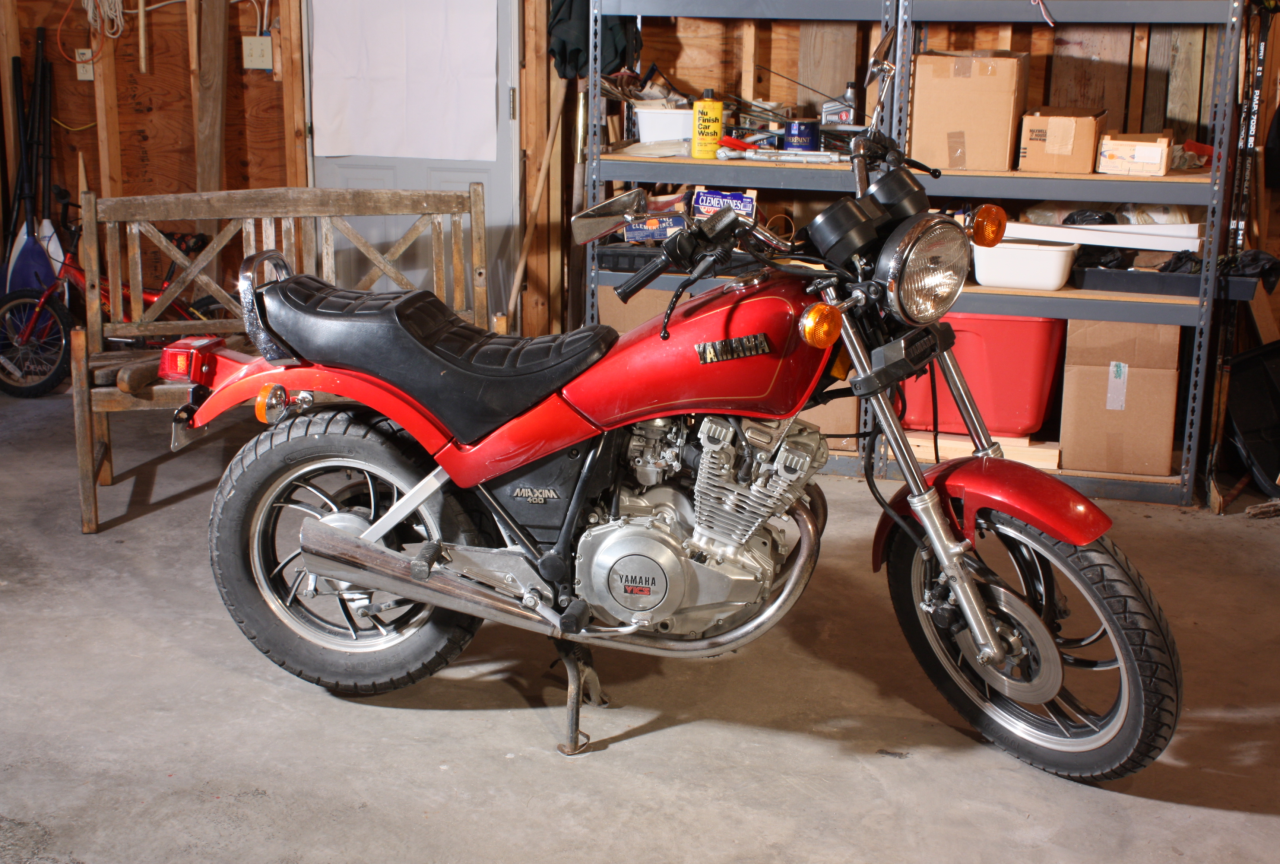
Rectified stereo benchmark frame from FoundationStereo-S Demo Space
Those fused stereo features feed into an Attentive Hybrid Cost Filtering (AHCF) cost volume paired with a disparity transformer that models long range horizontal correspondence across the epipolar line. An iterative convolutional GRU then refines the initial coarse disparity map step by step under L1 supervision.
To generalize across indoor sets, outdoor exteriors, and complex thin geometry without per shoot retraining, NVIDIA trained the model on a hybrid synthetic data mixture: 1.6 million Omniverse rendered pairs from the Foundation Stereo Dataset (FSD, 720 x 1280), 200K CREStereo pairs (1080 x 1920), and 307K TartanAir frames (480 x 640).
Unlike research checkpoints tied to slow Python scripts, nvidia/c-foundationstereo-s ships ready for low latency production deployment through decrypted ONNX graphs and TensorRT FP16 engines across Ampere, Lovelace, Hopper, Blackwell, and Jetson Orin or Thor accelerators.
NVIDIA publishes two fixed shape ONNX models for TensorRT acceleration (320 x 736 and 576 x 960) alongside a dynamic shape ONNX build (deployable_foundation_stereo_small_dynamic_v1.0) for arbitrary aspect ratios inside ONNX Runtime.
On an NVIDIA A100 at FP16 batch size 1, the 320 x 736 engine runs in 199.32 ms (5.00 FPS) and the 576 x 960 engine runs in 437.14 ms (2.24 FPS), while Jetson Orin AGX delivers 1.00 FPS on portable on set rigs.
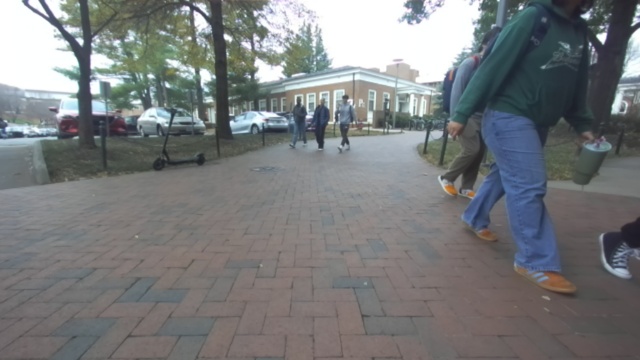
Outdoor stereo sample plate from NVIDIA FoundationStereo-S
Hardware, VRAM, and License Matrix
| Artifact / Engine | Input Resolution | Runtime & Precision | Measured Latency (BS=1, FP16) | License | Production Role |
|---|---|---|---|---|---|
deployable_foundationstereo_small_320x736_v1.0.onnx |
320 x 736 fixed |
TensorRT / ONNX Runtime FP16 | 199.32 ms (A100, 5.00 FPS); 1039 ms (Orin AGX) |
NVIDIA Open Model License | Fast on set stereo preview and witness rig depth |
deployable_foundationstereo_small_576x960_v1.0.onnx |
576 x 960 fixed |
TensorRT / ONNX Runtime FP16 | 437.14 ms (A100, 2.24 FPS); 2750 ms (Thor AGX) |
NVIDIA Open Model License | Higher detail compositing disparity passes |
deployable_foundation_stereo_small_dynamic_v1.0 |
Dynamic H x W |
ONNX Runtime only | Varies with frame dimensions | NVIDIA Open Model License | Custom cinema aspect ratios without rescaling |
The NVIDIA Open Model License explicitly permits commercial production use across studio compositing pipelines, virtual production stages, and spatial video workflows.
Parameter Reference
| Parameter / Concept | Specification | VFX Pipeline Note |
|---|---|---|
| Input tensor layout | Two rectified RGB images B x 3 x H x W |
Both cameras must be stereo rectified before inference |
| Output tensor | Dense disparity map B x 3 x H x W |
Pixel shift between left and right cameras |
| Metric depth conversion | depth = (focal_px * baseline_m) / disparity |
Uses known stereo rig baseline and lens focal length |
| Supported GPUs | Pascal through Blackwell + Jetson Orin / Thor | Best throughput via trtexec FP16 engines on Linux |
| Known failure surfaces | Transparent glass, water, dark low light, heavy occlusion | Combine with matte masks on reflective windows |
Local Python and CLI Setup
Download the decrypted ONNX archive from Hugging Face and run inference either through onnxruntime-gpu for arbitrary frame sizes or compile a fixed shape TensorRT engine using trtexec for batch plate processing.
# Download the FoundationStereo-S ONNX release
hf download nvidia/c-foundationstereo-s --local-dir ./foundationstereo-s

# Optional TensorRT FP16 engine build for fixed 576x960 stereo pairs
trtexec \
  --onnx=./foundationstereo-s/deployable_foundationstereo_small_576x960_v1.0.onnx \
  --saveEngine=./foundationstereo_576x960_fp16.engine \
  --fp16
import cv2
import numpy as np
import onnxruntime as ort

session = ort.InferenceSession(
    "foundationstereo-s/deployable_foundation_stereo_small_dynamic_v1.0.onnx",
    providers=["CUDAExecutionProvider", "CPUExecutionProvider"],
)

def prep(path):
    img = cv2.cvtColor(cv2.imread(path), cv2.COLOR_BGR2RGB).astype(np.float32)
    return np.transpose(img, (2, 0, 1))[None, ...]

left_t = prep("stereo_left.png")
right_t = prep("stereo_right.png")
inputs = {session.get_inputs()[0].name: left_t, session.get_inputs()[1].name: right_t}
disparity = session.run(None, inputs)[0]
np.save("disparity_pass.npy", disparity)
Filmmaker Production Playbook
Pull metric Z depth passes from dual witness cameras
Monocular depth estimators guess relative scale and often breathe from frame to frame when focal length changes. When your set uses a calibrated stereo witness rig or spatial video camera, converting FoundationStereo-S disparity with exact focal length and camera baseline produces rock solid metric Z depth passes for atmospheric fog, synthetic bokeh, and CG holdouts.
Keep reflective glass and water in separate passes
NVIDIA's model card notes that transparent glass, water reflections, and severely underexposed regions degrade stereo matching accuracy. Run FoundationStereo-S on the main matte environment, then isolate car windshields or puddles with a separate rotoscoped holdout in compositing.
Deploy ONNX dynamic shapes for anamorphic plates
Because cinema plates rarely fit 16:9 robotics resolutions, run the dynamic ONNX file offline on your workstation for 2.39:1 scope plates, and reserve the fixed 576 x 960 TensorRT engine for fast on set slap depth checks.
Known Limitations and Calibration Requirements
Stereo matching requires clean epipolar alignment between left and right frames. If a witness rig slips out of calibration or lenses have unmatched distortion profiles, rectify both streams with standard OpenCV stereo calibration matrices before feeding tensors to FoundationStereo-S.
NVIDIA also documents reduced accuracy on transparent glass, reflective water, high saturation neon zones, dimly lit shadows, and heavily occluded edges. Keep secondary matte holdouts ready in compositing whenever foreground subjects cross reflective surfaces.
Frequently Asked Questions
Can FoundationStereo-S run on a single monocular camera shot?
No. FoundationStereo-S requires a rectified left and right stereo RGB pair. For single camera VFX plates, pair it with monocular metric depth models like Apple Depth Pro 2 or Depth Anything 3.
Why can the dynamic ONNX build not run inside TensorRT FP16?
NVIDIA notes that deployable_foundation_stereo_small_dynamic_v1.0 cannot convert cleanly to a FP16 TensorRT engine, so arbitrary resolution plates must run through ONNX Runtime while fixed 320 x 736 and 576 x 960 models compile into TensorRT engines.
Is NVIDIA FoundationStereo-S cleared for commercial studio pipelines?
Yes. The Hugging Face release uses the NVIDIA Open Model License, which permits global commercial deployment across VFX, spatial video, and virtual production workflows.
Related Reading
- Compare single camera metric depth for VFX in Apple Depth Pro 2 open source metric depth for VFX.
- Explore multi view camera extrinsics and depth in Depth Anything 3 metric depth for VFX.
- Generate depth and surface normals from a single generative frame in Open Vision Banana open source VFX depth and normals.
- For cloud video generation workflows inside AI FILMS Studio, visit the AI Video Generator page.

Sources
Continue Reading


Video & LipSync
- Video Generator
- Text to Video
- Image to Video
- Start-End Frame to Video
- Draw to Video
- Motion Control
- Video Enhancer
- Video Upscaler
- Video Extend
- Video to Video LipSync
- Audio to Video LipSync
- Image to Video LipSync
- Video FaceSwap
- Seedance 2.5
- WAN 3.0
- Seedance 2
- FLUX 3
- Minimax H3
- Vidu Q3 Pro
- Grok Imagine Video 1.5
- Gemini Omni
- Google Veo 3.1
- Kling 3.0 Pro
- Luma Ray 3.2
- LTX 2.3
- Happy Horse 1.1
- Kling 3.0 Motion
- ByteDance Upscaler
- InfiniteTalk
- InsightFace
Image & Edit
- AI Character
- AI Actor
- Art Generator
- Text to Image
- Image to Image
- LoRA Image to Image
- Draw to Edit
- Image LoRA Training
- Remove Background
- Image Enhancer
- MidJourney 8.0
- Krea 2
- OpenAI GPT Image 2.0
- Nano Banana Pro Ultra
- Nano Banana 2 Lite
- Nano Banana Pro
- Minimax Image
- Clarity Pro
- Z-Image Turbo LoRA
- Krea 2 Turbo LoRA
- Z-Image LoRA Trainer
- Qwen Image LoRA Trainer
- Background Erase Network 2 (BEN2)