
Google Invests $75 Million in A24 to Develop AI Filmmaking Tools

Share this post:
Google Invests $75 Million in A24 to Develop AI Filmmaking Tools
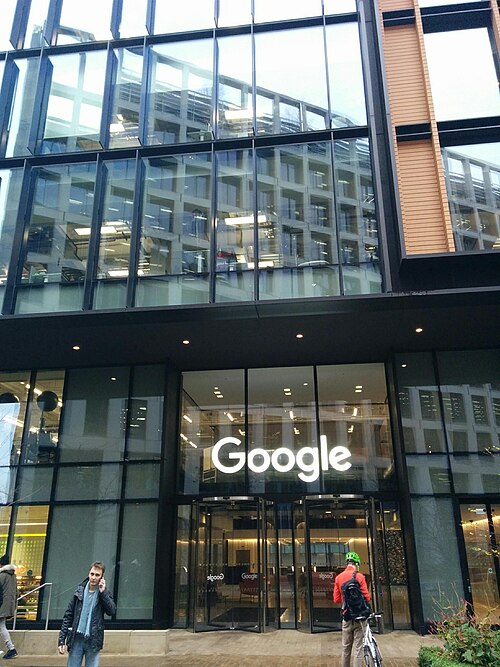
Google committed $75 million to A24 on June 22, 2026, forming a research partnership with Google DeepMind to build new AI tools for filmmaking. The deal marks the first time Google has taken a direct equity stake in a major Hollywood studio, a line no major tech company had crossed with a film company of A24's standing before.
The First Studio Equity Stake
Google already owns YouTube through Alphabet, and its DeepMind division has spent years building AI tools for creative applications, including the Veo video generation models released earlier in 2026. The A24 investment is different in kind. This is a direct equity position in a production company that finances and distributes films for theatrical release and awards campaigns.
The $75 million is tied specifically to the AI research partnership, not a general capital raise. A24 was most recently valued at $3.5 billion. The Google commitment does not alter A24's creative independence or its mandate to back unconventional projects. It does place Google at the table as A24 develops the next generation of its production tools.
Demis Hassabis, CEO of Google DeepMind, said the best way to develop tools for artists is to work directly with them.
A Research Deal Without a Production Mandate
The structure distinguishes this arrangement from nearly every other studio AI agreement signed in the past two years. A24 gets access to DeepMind research, infrastructure, and technical personnel. Google DeepMind gets creative input from A24 to shape how its tools are designed. Neither side carries a production mandate, and Google gains no access to A24's content library or film catalog.
That content exclusion matters. Lionsgate granted Runway access to build a generative model trained on its film and TV library. Netflix paid roughly $600 million to acquire Ben Affleck's InterPositive, bringing its tools directly into the production workflow. Disney struck a licensing deal with OpenAI that ended in March 2026 without producing a lasting framework. In each case, the tech company gained some form of access to creative output, either as training data or as a production integration point.
"We believe breakthroughs happen when you get technology into the hands of the best minds in the field," said Eli Collins, VP of Product at Google DeepMind.
What the Tools Will Actually Do
Scott Belsky, who leads A24 Labs, was direct about the intended direction of the work. "We think there are better uses that preserve creative control and support risk taking," he said. The tools, he added, "won't look anything like the prompted generation type of AI that people feel uncomfortable with."
.png)
The stated applications include AI storyboarding, new previsualization workflows, and tools that help directors explore shot compositions and scene possibilities before physical production begins. These are early stage creative tools, not post production automation. The goal, as Belsky framed it, is to extend what filmmakers can try without increasing what they have to spend to try it.
A24 has won 10 Oscars in the past five years on films including Everything Everywhere All at Once, Past Lives, and Midsommar. Its reputation for backing unconventional, director driven work means any AI tool bearing its name carries an implicit endorsement. A tool that visibly compromised the studio's creative identity would cost A24 the filmmaker relationships that define its value as a studio.
The Broader Shift in Tech Studio Partnerships
For a year that began with multiple studio AI partnerships collapsing or being quietly walked back, the A24 announcement signals a recalibration. The first wave of deals prioritized speed: tech companies offering access to capabilities, studios offering content or distribution reach. Many produced friction.
Google's approach through A24 inverts that logic. DeepMind brings its research directly to the people who will use the tools. A24 shapes the design, the creative constraints, and the standards the tools will have to meet to be useful in actual production. The $75 million moves toward the filmmakers first, then shapes the technology around what they need. It reflects a pattern Google started earlier with its AI Literacy Initiative at Sundance: reach the artists directly, and let the tools follow from that conversation.
IndieWire's analysis noted that the A24 deal "might be different than other studios," specifically because the tools are being built for creative expansion rather than cost reduction. That difference, if it holds through development, would make any tool produced by this partnership a harder sell to studios that view AI primarily as a line item.
Days after the announcement, A24 faced significant fan backlash and issued a public defense of the partnership, telling critics it partnered to "dictate what tools get built for artists" rather than to hand them tools without a voice in the design.
The American Film Market announced a dedicated AFM House Innovation Hub for November 2026, giving the commercial marketplace a structural home for the kind of AI partnerships that festivals and studios have been testing since early 2026.
The timing produced an additional contrast the studio had not planned for. On June 23, the day after the DeepMind announcement, A24 released the first trailer for Jesse Eisenberg's "The Debut." Eisenberg later described the film at the Karlovy Vary festival as "the opposite of AI", noting it was shot on 16mm in April 2025, more than a year before the Google deal became public. The film that appeared in trailers the day after the AI announcement was, by the director's own account, the structural opposite of what the AI partnership is intended to support.
The Trailer and the "Opposite of AI"
"The Debut" stars Julianne Moore and Paul Giamatti and is set in 1990. Eisenberg shot it on 16mm film with Drew Daniels as cinematographer. It will release through A24 on December 3, 2026. None of those decisions were made in response to the Google deal. The film was in post production before the partnership was announced.
Eisenberg's remarks at Karlovy Vary on July 5 placed the film's production choices in a direct relationship to the AI debate the studio had entered two weeks earlier. His concern was specific: AI visualization tools that can approximate physical sets at low cost reduce the financial incentive to commit to physical production. His 16mm choice was an argument against that reduction, made before the argument had become necessary.
For A24, the situation is not a contradiction to be resolved. Both things can be true at once: the studio can invest in AI preproduction tools and also distribute films made with zero AI involvement. What the Eisenberg timing demonstrates is how closely the audience will watch that dual position over the 2026 release calendar.
What A24's Independence Changes
A24 is not a subsidiary of a major conglomerate. Universal is owned by Comcast. Sony Pictures is owned by Sony Group. Warner Bros. is owned by Warner Bros. Discovery. Disney owns its studio and streaming divisions as a single entity. A24 remains independently owned with a current valuation of $3.5 billion. The Google equity stake is a minority investment, not an acquisition.
That independence is the basis for A24's claim that the partnership can be structured on terms that put artists first. A studio owned by a tech conglomerate negotiates from a position where the parent company's AI strategy already shapes the studio's direction. A24 negotiates as a counterparty. The $75 million is Google's investment in A24's model, not A24's adoption of Google's model.
The independence also means the partnership does not trigger the antitrust and regulatory concerns that would accompany a major tech company acquiring a Hollywood studio outright. The investment is structured to give Google research input without the content library access or editorial influence that would define an acquisition.
How Other Studios Have Approached AI Partnerships
The Lionsgate deal with a generative video platform gave the tech company access to its film and TV library to build a model. Netflix acquired Ben Affleck's production company for roughly $600 million, bringing AI tools directly into the production pipeline. Disney's licensing deal with OpenAI was announced and expired within a year without producing a lasting framework.
Each of those arrangements involved either content access or direct production integration. The A24 structure involves neither. The distinction Belsky draws between preproduction tools and production generation reflects a different theory of where AI adds value in the filmmaking process. Rather than building a generative model on existing content, the partnership starts from what filmmakers need before the camera rolls.
Whether that distinction holds in practice will depend on what tools the partnership produces and how A24 directors actually use them. The announced scope covers storyboarding, previsualization, and shot composition tools. Those are the creative stages where a director's vision is translated into a production plan. If the tools function as Belsky describes, they would produce more precise films rather than cheaper films.
DeepMind's Role in Creative AI
Google DeepMind's CEO Demis Hassabis has described creative AI as one of the lab's longstanding interests. DeepMind produced WaveNet, an early breakthrough in realistic speech synthesis, and its research group has published work on music generation and visual AI for several years before the commercial AI wave of 2022 to 2024.
The Veo series of text-to-video models, including the Veo 3.1 release in January 2026, represent DeepMind's most visible consumer-facing creative AI work. Veo is deployed in Google's consumer products and has been used by a range of filmmakers and content creators. The A24 partnership places DeepMind researchers in a different context: they would be building tools to a filmmaker's specification rather than deploying general purpose generation to mass users.
That difference in design philosophy is the basis for Belsky's claim that the tools "won't look anything like the prompted generation type of AI." Prompted generation is what Veo does. The A24 partnership aims at something more like a film director's design tool: precise, controllable, specialized for a single stage of the production process.
What the Partnership Produces Next
A24 has not given a timeline for when tools developed with DeepMind would be available to its directors in production. The preproduction scope Belsky described (storyboarding, previsualization, shot composition) covers the period before principal photography begins. Films already in production at the time of the announcement are unaffected.
The first A24 film to use tools from the partnership in preproduction will mark a different kind of milestone than the announcement itself. The announcement is a financial and research commitment. A film that discloses preproduction AI tool use would be the first test of whether the tools changed what got made or only how precisely it was planned.
A24 has not addressed the disclosure question publicly. Industry standards on AI preproduction disclosure are inconsistent in 2026, and no guild mandate covers visualization tools specifically. The absence of a disclosure framework means the first use may pass unannounced.
A different kind of disclosure pressure is building in the courts. Midjourney filed a motion in July 2026 seeking to compel Disney, Universal, and Warner Bros. to reveal their internal AI training practices in an ongoing copyright lawsuit. Where A24 chose to make its Google partnership public, the Midjourney motion targets the AI investments studios have not disclosed voluntarily.
Google's equity position in A24 is a minority stake, not a controlling one. Decisions about which films to make, which directors to fund, and what creative standards to apply remain with A24's leadership. The partnership changes what tools are available to those directors. It does not change who makes the decisions about how to use them.
The broader industry question is whether A24's model of the partnership, with content independence and artist input at the design stage, becomes a template others adopt or remains specific to A24's unusual position. Most studios negotiating AI deals in 2025 and 2026 do not have A24's audience credibility or its history of creative independence. A deal that works for A24 because of its specific identity does not automatically translate to studios without that identity.
Filmmakers outside A24 watching this partnership will have to make their own calculations about where AI tools fit in their production process. Preproduction visualization tools are available now, well before whatever DeepMind and A24 develop together reaches the market. The question Eisenberg raised at Karlovy Vary, about what physical commitment means and what is lost when AI approximation replaces it, is not resolved by which studio owns which tools.
The $75 million also represents 2.1% of A24's $3.5 billion valuation. Google is not acquiring a controlling stake. It is placing a research bet on a studio whose production methodology it wants to understand from the inside. That context matters for how to read Belsky's framing: it is the studio's position, not a concession to an investor's preferences.
For A24's directors, the situation is largely unchanged in the near term. Films in active development continue under existing terms. The preproduction tools, when they arrive, will be options rather than requirements. Whether directors working with A24 Labs choose to use them, and whether that use affects the films they produce, will be the practical answer to a debate that a press release cannot resolve.
What does change immediately is A24's position in the broader conversation about how major creative institutions should relate to AI research. By committing publicly and explaining its reasoning in detail, the studio has taken on accountability it could have avoided. That accountability will be evaluated against its actual 2026 and 2027 releases.
German Dogma 25, the movement of European directors who launched a formal response to AI tools at Cannes in May 2026, operates from the opposite premise. Where A24 argues for influence over how tools are built, German Dogma 25 argues for eliminating the tools entirely from the creative process through a rule banning internet access. Both positions are serious responses to the same pressure.
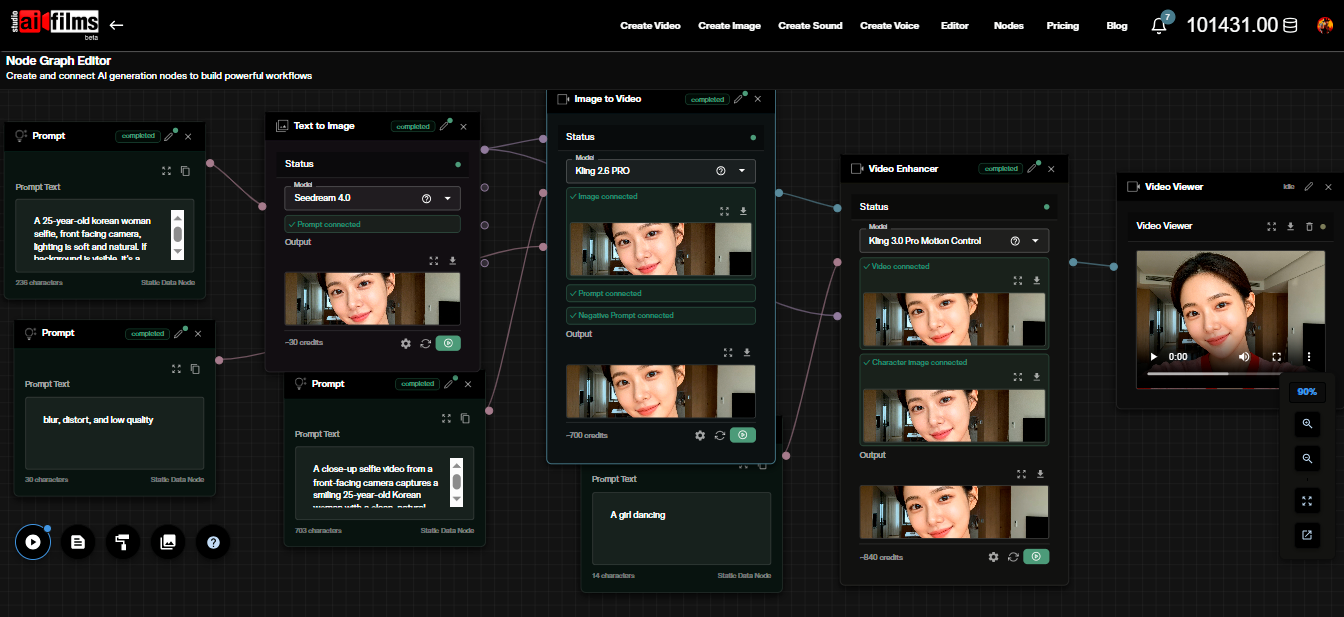
Filmmakers don't need to wait for either the A24 partnership's tools or a Dogma manifesto to start exploring where AI generation fits in their practice. What is available now covers the range from quick preproduction ideation to full text-to-video output, and the practical question is how each tool changes the decisions that get made before the camera rolls.
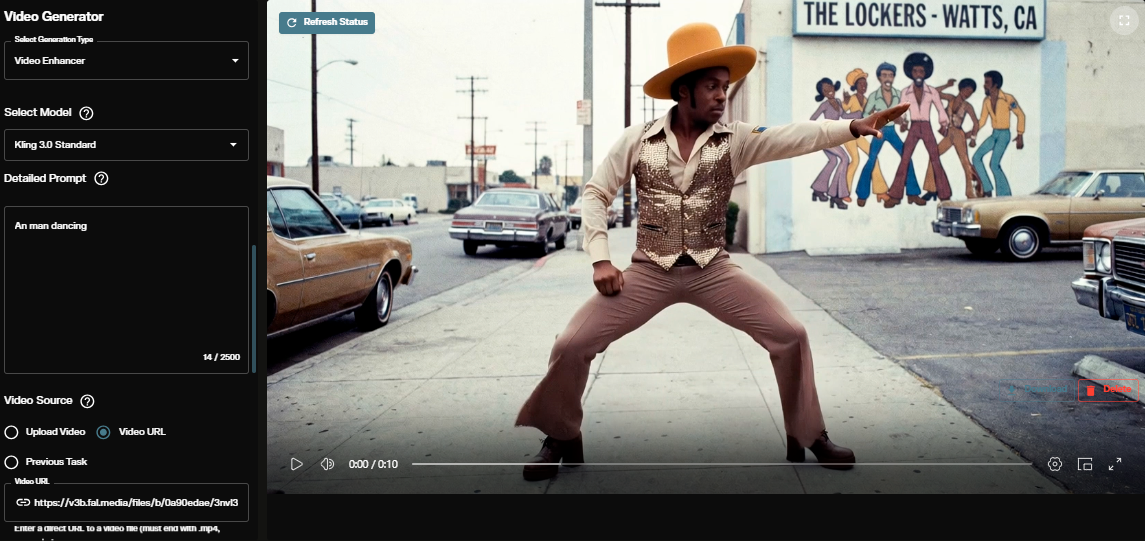
For filmmakers and creators who want to explore AI video generation tools available today, the AI FILMS Studio video workspace gives direct access to the latest text-to-video and image-to-video models.
Sources
Variety | Deadline | The Hollywood Reporter | The Wrap | IndieWire
Continue Reading
.jpg?w=3840)


Video & LipSync
- Video Generator
- Text to Video
- Image to Video
- Start-End Frame to Video
- Draw to Video
- Motion Control
- Video Enhancer
- Video Upscaler
- Video to Video LipSync
- Audio to Video LipSync
- Image to Video LipSync
- Video FaceSwap
- Seedance 2.5
- WAN 3.0
- Seedance 2
- FLUX 3
- Minimax H3
- Vidu Q3 Pro
- Grok Imagine Video 1.5
- Gemini Omni
- Google Veo 3.1
- Kling 3.0 Pro
- Luma Ray 3.2
- LTX 2.3
- Happy Horse 1.1
- Kling 3.0 Motion
- ByteDance Upscaler
- InfiniteTalk
- InsightFace
Image & Edit
- AI Character
- AI Actor
- Art Generator
- Text to Image
- Image to Image
- LoRA Image to Image
- Draw to Edit
- Image LoRA Training
- Remove Background
- Image Enhancer
- MidJourney 8.0
- Krea 2
- OpenAI GPT Image 2.0
- Nano Banana Pro Ultra
- Nano Banana 2 Lite
- Nano Banana Pro
- Minimax Image
- Clarity Pro
- Z-Image Turbo LoRA
- Krea 2 Turbo LoRA
- Z-Image LoRA Trainer
- Qwen Image LoRA Trainer
- Background Erase Network 2 (BEN2)