
Jesse Eisenberg: 'The Debut' Is 'The Opposite of AI'
.jpg?w=3840&q=90)
Share this post:
Jesse Eisenberg: "The Debut" Is "The Opposite of AI"
Jesse Eisenberg appeared at the 60th Karlovy Vary International Film Festival on July 5, 2026, and called his forthcoming A24 film "the opposite of AI." The remark landed in a specific context: A24 had announced a $75 million research partnership with Google DeepMind thirteen days earlier, drawing significant fan backlash, and Eisenberg's film had already been shot on 16mm before any of that was public.
The statement was not a prepared critique of the studio distributing his work. Eisenberg was responding to a question about the A24 announcement and described his film's analog production as a contrast. "The Debut" was shot on film, set in 1990, and made with an approach shaped by the Dogma movement's philosophy of creative constraint. The timing was coincidental. The contrast was genuine.
"The Debut" at the 60th Karlovy Vary Festival
Eisenberg received the President's Award at the festival. The 60th edition, running July 3 to 11, 2026, honored Dustin Hoffman, Juliette Binoche, and Jeffrey Wright with career awards, placing Eisenberg among a group of filmmakers and actors making the case for cinema grounded in human performance and physical production. The President's Award is given at the festival's discretion to filmmakers of emerging or established distinction.
He confirmed that "The Debut" will premiere at an autumn film festival, declining to name which one. "A24 will sue me," he said, drawing a laugh while refusing to specify whether the premiere would be at Venice, Toronto, or elsewhere. The autumn circuit is the primary launch corridor for A24's awards season releases.
He also revealed at the festival that he is writing a new series for A24, based on his short stories, with producer Peter Rice attached. The project had not been publicly announced before the Karlovy Vary appearance. Peter Rice was previously president of Fox Networks Group and later served in senior roles at Comcast following Disney's acquisition of 21st Century Fox.
Screen Daily reported that Eisenberg described "The Debut" as feeling "looser, fun and experimental" compared to his previous directorial work, and that it "plays like a crowd pleaser" with "the ethos of a 1990s throwback independent movie." That description marks a shift from the tonal weight of "A Real Pain," which addressed intergenerational trauma and the memory of the Holocaust.
The Karlovy Vary appearance was his first major European festival presence since "A Real Pain" earned him an Oscar nomination for Best Original Screenplay at the 97th Academy Awards in early 2025, the same ceremony at which Kieran Culkin won Best Supporting Actor for the film.
Shot on Film Before the AI Deal Was Public
"The Debut" was shot on 16mm film with principal photography in April 2025, more than a year before A24's Google DeepMind announcement became public. Cinematographer Drew Daniels handled the camera. Daniels previously shot "Waves" (2019) and collaborated with Eisenberg on "A Real Pain." The score was composed by Emile Mosseri, whose previous work includes "Minari" and "The Last Black Man in San Francisco."
The decision to shoot on film was made at the project's inception and was not a response to A24's AI strategy. "The Debut" is set in 1990, when 16mm was the standard format for independent American productions. Shooting on the film stock of the depicted era reflects a consistent directorial logic. The format serves the subject. The grain and texture of 16mm belong to the world the film inhabits.
Eisenberg described admiring the Dogma movement specifically for its central paradox. "The paradox of rules is that they open creativity," he said at Karlovy Vary. The Dogma 95 manifesto, launched by Lars von Trier and Thomas Vinterberg, built restrictive production rules around what could not be done and produced work that was precisely identifiable by its constraints.
Eisenberg applied a comparable logic to "The Debut". The film stock, the period setting, and the exclusion of digital production tools are choices that define the work rather than limit it. Constraint makes it specific.
Eisenberg also wrote the songs for the film. "The Debut" follows a shy woman who is unexpectedly cast in a local community theater production of an original musical and, under the influence of a strong willed director, loses herself in the role. It stars Julianne Moore and Paul Giamatti, both Oscar winners, and runs 105 minutes. The US release date is December 3, 2026, through A24.
The Songs and the Musical Setting
The decision to set the film in a community theater production of an original musical is specific to the argument Eisenberg is making about performance and creative commitment. Community theater musicals are among the most human, low budget, physically committed forms of performance. They require the cast to work with the space, the costumes, and each other. There is no room for digital smoothing.
Eisenberg writing the songs makes the case more explicit. Original songs composed for a film require a composer to commit to a specific emotional register. Covers and licensed music arrive with existing associations. Original musical material has to earn its meaning entirely within the film, which is a constraint comparable to shooting on 16mm. The format demands that the work justify itself on its own terms.
The musical form also places the film in a tradition that AI generation has not engaged with at the level of narrative comedy. AI tools can generate music, generate video, and approximate many surface elements of cinematic production. A film about a woman who loses herself in the act of performance, staged inside a community theater production in 1990, with original songs and a specific physical location, is a set of constraints that do not reduce to any prompt.
The 1990 setting adds a layer. The film is not being made about the current moment of AI filmmaking debate. It is a period piece about a type of performance that was normal in 1990 and that is now freighted with symbolic weight it did not carry then. The argument the film makes about performance and physical commitment is embedded in a time before that argument was necessary.
From "A Real Pain" to "The Debut"
"A Real Pain" (2025) was shot on digital, addressed intergenerational trauma and Holocaust memory, and earned Eisenberg an Oscar nomination for Best Original Screenplay. "The Debut" is a musical comedy shot on 16mm in 1990. The two films share a director and a distributor and almost nothing else in terms of format, tone, or subject.
That range is itself a statement. A director who can move between those two registers without settling into a house style is not building a brand. He is building a body of work. The constraint philosophy Eisenberg describes at Karlovy Vary applies differently in each case: the bleached digital palette of "A Real Pain" and the grain of 16mm serve different subjects. The logic is consistent even when the results look completely different.
The shift from drama to comedy is also relevant to how "The Debut" will be received during awards season. Musical comedies from A24 are unusual enough that the film will not slot automatically into the prestige drama category that generated attention for "A Real Pain." That novelty is a risk and an opportunity. A film that is genuinely funny as well as technically accomplished occupies a different position in the year end conversation.
Eisenberg's track record at A24 also matters for the reception. The studio's promotional apparatus and critical relationships are oriented toward exactly the kind of filmmaker who has made a variety of formally distinct work. Two films in four years, at opposite ends of the dramatic spectrum, is a credible argument that the third film will be worth watching.
Culkin's Oscar win for "A Real Pain" also raised the visibility of Eisenberg's films as vehicles for performance. Moore and Giamatti, both Oscar winners already, bring a different kind of attention. The expectation is not that "The Debut" will produce a first career breakthrough for an unknown performer. It is that it will give two well established performers an environment where the work is genuinely interesting.
The A24 DeepMind Announcement and the Trailer's Timing
A24 announced its Google DeepMind research partnership on June 22, 2026. The studio committed to developing AI tools for filmmaking alongside DeepMind researchers, with a $75 million equity investment from Google. The deal drew immediate backlash from A24's audience, who treat the studio's creative philosophy as inseparable from its business decisions.
The following day, June 23, A24 released the first trailer for "The Debut." The sequence was unintended but precise. An A24 director's film made on 16mm appeared in public for the first time the day after the studio announced its largest AI investment. Neither the film nor the announcement was made in response to the other.
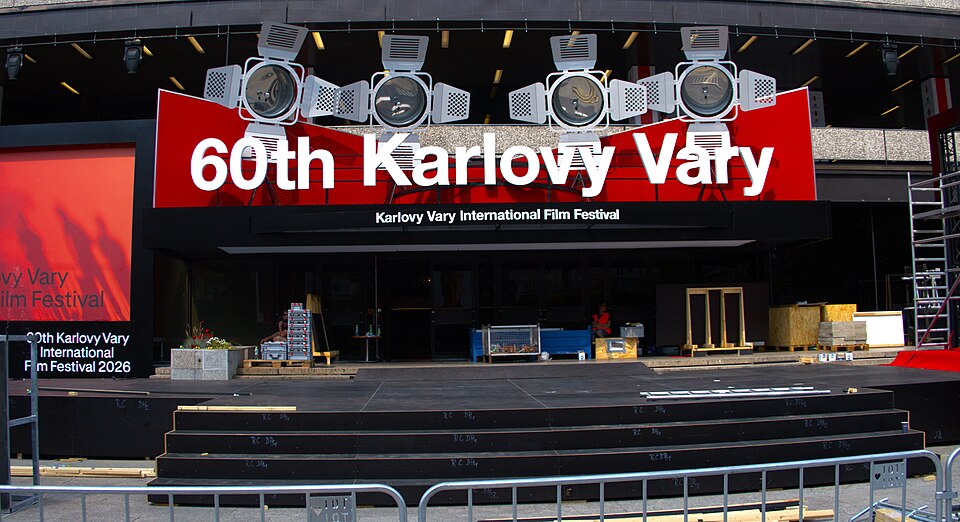
Dobroš, CC BY-SA 4.0, via Wikimedia Commons
A24 issued a public defense of the partnership on June 26, framing it as a way for artists to have a voice in how tools get designed rather than receiving finished tools built without their input. Scott Belsky, who leads A24 Labs, said the resulting tools would look nothing like the prompted generation type of AI that audiences find uncomfortable. The A24 defense of its Google partnership covers that statement in full.
Fan discussions about the DeepMind announcement frequently cited "The Debut" trailer as evidence of what A24 could continue to support alongside its AI research. The contrast was read as proof that the studio could back fully analog work and invest in AI tools at the same time, which is precisely the position A24 had staked out in its defense.
Eisenberg's remarks at Karlovy Vary on July 5 added a further layer. An A24 director had arrived at an analog approach that was the structural opposite of the work the studio's AI investment is designed to support. Neither position was performative. Both were genuine creative decisions made on different timelines for different reasons.
Eisenberg on AI and the Physical World
Eisenberg told Screen Daily that he finds "the future of the film industry quite scary" in relation to AI visualization tools that can eliminate the need for physical sets. His concern is specific and grounded in production practice rather than a general objection to technology.
The economics behind his concern are real. AI visualization tools that can approximate any environment at low cost reduce the financial incentive to build or find a specific location. That reduction may be efficient in aggregate, but it changes the creative conditions under which a film is made. A director working on a built set or a found location makes decisions in response to physical reality.
Eisenberg's concern is not that AI visualization produces bad results. It is that the availability of approximation at low cost gradually reduces the incentive to commit to the physical conditions that define a specific kind of filmmaking. The physical world is imperfect, specific, and resistant. Those qualities are not incidental to what films made in physical conditions look like. They are central to it.
The Dogma paradox he cited points to why constraint matters here. Dogma 95 required physical production because its rules prohibited the workarounds that artificial conditions provide. Eisenberg's 16mm choice on a film set in 1990 follows the same logic. The format makes certain decisions unavoidable and others impossible. Those enforced choices are where the film's specific character is formed.
Eisenberg did not position himself as opposed to all AI applications in filmmaking. His concern was targeted: AI visualization that eliminates the production necessity of physical sets. That specificity distinguishes his remarks from a general technology objection and places them within a debate about what kinds of creative commitment different production methods make possible.
The distinction matters for how his film is read. "The Debut" is not a protest film about AI. It is a comedy about a woman who loses herself in a performance. Its 16mm format and 1990 setting are production decisions made before the current debate intensified, which is precisely what gives them credibility as a position. The film argues by existing, not by stating.
"The Debut" Cast and the December Release
Julianne Moore appears in two of Eisenberg's three directorial features. Her presence in "When You Finish Saving the World" (2023) and "The Debut" reflects a working relationship that Eisenberg has developed across projects, which is consistent with how A24 directors typically build their collaborator networks over time.
Paul Giamatti's involvement is the new casting element. Giamatti received an Oscar nomination for Best Actor for "The Holdovers" (2023) and won a Screen Actors Guild Award for the same performance. His track record with prestige character work makes him a credible partner for an A24 awards campaign.
The December 3, 2026 release date positions "The Debut" as a late awards season entry. Films opening in early December typically have enough theatrical run time for Oscar nominations while staying within the eligibility window. The A24 pattern for awards releases has historically favored Q4 openings that allow extended runs to accumulate audience word of mouth that supplements critical coverage.
The autumn festival premiere Eisenberg refused to name would provide the initial press attention and critical response that shapes how the film enters the December theatrical window. Venice, Toronto, and Telluride each have different critical audiences and programming profiles. All three are viable for a prestige A24 comedy directed by an Oscar nominated filmmaker.
"The Debut" will be Eisenberg's third feature as director. His previous two, "When You Finish Saving the World" and "A Real Pain," both received strong critical responses and secured Oscar attention. Three films for A24 in a short span is a notable rate of output for a director who also maintains an active acting career. The Karlovy Vary President's Award marks the moment when the directorial identity has become distinct from the acting career in how the industry categorizes him.
The Dogma Comparison and the Constraint Tradition
Dogma 95's ten rules included no artificial lighting, no post sound additions, and only location shooting. They were designed by von Trier and Vinterberg to force filmmakers into contact with the physical world as it is rather than as they want it to appear. The movement produced "The Celebration" and "Festen" before dissolving, and its influence has returned in different forms whenever a generation of filmmakers reacts to the smoothing effect of technology on screen aesthetics.
German Dogma 25, announced at Cannes 2026 by Tom Tykwer, Nora Fingscheidt, and three colleagues, applies the same logic specifically to AI. Rule four of the German Dogma manifesto states: "The internet is off limits in all creative processes." Since all AI generation tools require a connection, the rule eliminates them without naming them. German Dogma 25 and its ten rules for resisting algorithm driven filmmaking represent one organized response to the same force Eisenberg describes.
Eisenberg arrived at a related position independently, without signing a manifesto. His choice of 16mm film and the period setting of 1990 function as implicit constraints that exclude digital methods not by rule but by formal necessity. The film becomes what it is through the limitations of its format, which is the same argument Dogma makes with explicit rules.
The Google and A24's DeepMind research partnership is built on a different premise: that AI tools designed with artist input will expand creative options rather than narrow them. Belsky's framing of the tools as preproduction exploration instruments (storyboarding, visualization, shot composition) describes tools that help filmmakers see more possibilities before committing to any of them.
Both premises can coexist. A director who uses AI visualization to test ten versions of a scene before committing to one is using AI to make a more informed physical production choice. A director who uses AI visualization because the physical production is too expensive is using AI to replace the physical production. Eisenberg's concern is the second use. His directorial choices are arguments for the first.
Whether the tools developed through the A24 and DeepMind partnership will support the first use and discourage the second is the question A24's next five years of releases will answer more clearly than any announcement. Eisenberg's film, opening December 3, 2026, is one early data point in that test.
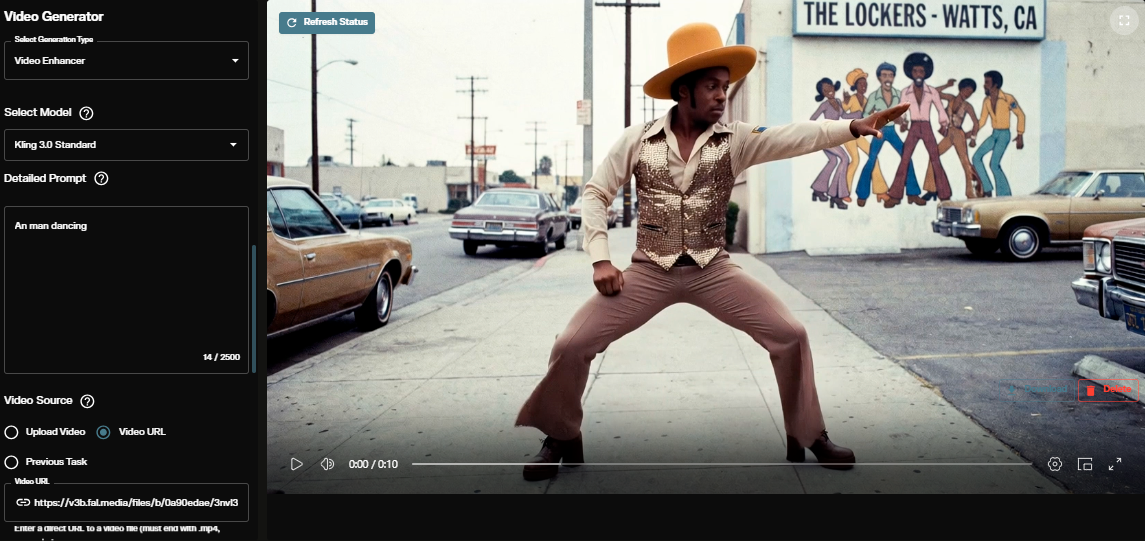
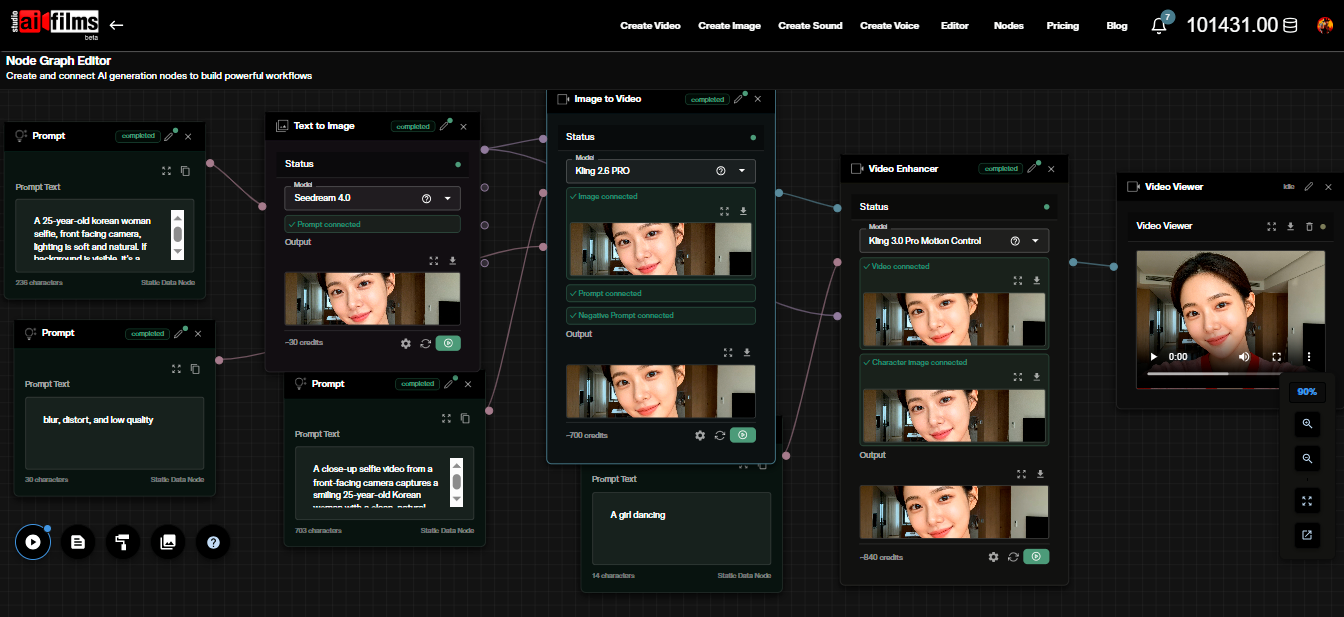
For filmmakers thinking through where AI tools fit in their own practice, the AI FILMS Studio video workspace offers direct access to text-to-video and image-to-video generation that can inform that practical question.
Sources:
Variety | Screen Daily | The Playlist | Deadline | Wikipedia
Continue Reading
.jpg?w=3840)


Video & LipSync
- Video Generator
- Text to Video
- Image to Video
- Start-End Frame to Video
- Draw to Video
- Motion Control
- Video Enhancer
- Video Upscaler
- Video Extend
- Video to Video LipSync
- Audio to Video LipSync
- Image to Video LipSync
- Video FaceSwap
- Seedance 2.5
- WAN 3.0
- Seedance 2
- FLUX 3
- Minimax H3
- Vidu Q3 Pro
- Grok Imagine Video 1.5
- Gemini Omni
- Google Veo 3.1
- Kling 3.0 Pro
- Luma Ray 3.2
- LTX 2.3
- Happy Horse 1.1
- Kling 3.0 Motion
- ByteDance Upscaler
- InfiniteTalk
- InsightFace
Image & Edit
- AI Character
- AI Actor
- Art Generator
- Text to Image
- Image to Image
- LoRA Image to Image
- Draw to Edit
- Image LoRA Training
- Remove Background
- Image Enhancer
- MidJourney 8.0
- Krea 2
- OpenAI GPT Image 2.0
- Nano Banana Pro Ultra
- Nano Banana 2 Lite
- Nano Banana Pro
- Minimax Image
- Clarity Pro
- Z-Image Turbo LoRA
- Krea 2 Turbo LoRA
- Z-Image LoRA Trainer
- Qwen Image LoRA Trainer
- Background Erase Network 2 (BEN2)