
As Hollywood Jobs Dry Up, Workers Are Quietly Training AI Models to Survive

Share this post:
As Hollywood Jobs Dry Up, Workers Are Quietly Training AI Models to Survive
AI related job postings in the arts and entertainment category nearly doubled in one year, rising from nearly 5 percent of all entertainment postings in May 2025 to nearly 11 percent by April 2026, according to data cited by The Hollywood Reporter. In the same period, AI job postings across the broader economy grew from 2.8 percent to 5.5 percent. The entertainment industry's AI training workforce is expanding at twice the rate of the overall market, and the workers filling those roles are largely people the industry just pushed out.
TV writers, film editors, storyboard artists, and voice actors who lost work in Hollywood's multi year contraction are taking AI data training gigs through platforms including Mercor, annotating AI outputs, rating generated content, and building training datasets using skills they developed in entertainment production.
The arrangement is not public. Workers describe NDAs that prevent them from identifying which AI companies they are working for or which products their annotations will train. That confidentiality extends to the entertainment companies that ultimately license those AI systems, creating a closed loop that is almost entirely invisible to anyone outside it.
How Mercor Recruits Hollywood Workers
Mercor is a Y Combinator backed platform that connects professionals with companies needing AI model training. It pays between $50 and $150 per hour for work that involves labeling, rating, and rewriting AI responses. The average rate across Mercor's more than 30,000 global contractors runs to approximately $95 per hour.
The platform actively recruits creative professionals with domain expertise for film and production AI work. A screenwriter or storyboard artist can evaluate AI generated narrative and visual outputs with the kind of informed judgment that generic annotators cannot provide. That domain expertise is what makes the rates competitive: Mercor is paying for knowledge, not just time.
Creative writers can also access comparable gig work through Handshake, where similar annotation tasks pay up to $44 per hour. Music professionals with a master's degree or above can earn up to $100 per hour through platforms with specialized creative AI training programs.
The Work Itself
The primary task category is Reinforcement Learning from Human Feedback, or RLHF. Workers rate pairs of AI generated outputs against each other, selecting the better response and explaining why. For entertainment professionals, the prompts and outputs are often production specific: story structure decisions, visual pacing judgments, dialogue quality assessments.
Workers also write improved versions of AI generated content, correcting narrative logic errors, fixing character voice inconsistencies, and annotating production scenarios with professional context. One storyboard artist confirmed to The Hollywood Reporter that they had credits on Citadel and Twisters before taking AI training gigs.
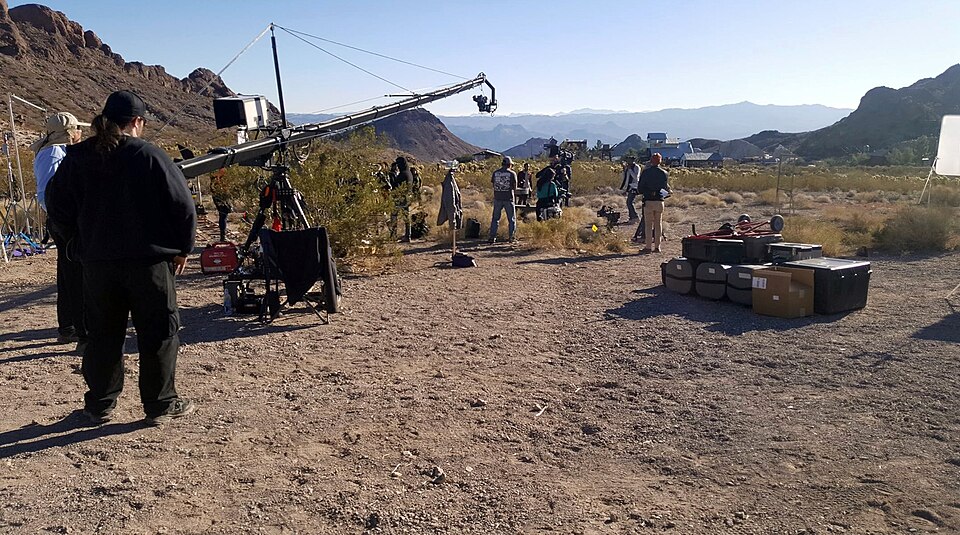
Photograph by Don Ramey Logan, CC BY-SA 3.0, via Wikimedia Commons
The employment is unstable by design. Workers describe platforms that operate without transparency about who the end client is, meaning workers frequently do not know which AI company is using their creative judgment. That opacity is structural. Studios and AI companies purchasing training data through intermediary platforms maintain distance from the workforce that produced it.
Labor complaints have become a feature of the AI training market. Workers report cutthroat rating environments, sudden project terminations, and no meaningful appeals process when their work is rejected without explanation.
What Workers Say
The storyboard artist who had worked on Citadel and Twisters described the motivation plainly: "People taking this work are struggling in the current downturn, mortgages to pay, kids to feed." The statement came from a professional with verifiable studio credits who made the decision to take AI annotation work because the production work was not there.
A voice actor who also takes AI training gigs offered a different frame, warning that the work delivers short term income at the cost of contributing to tools that will eventually reduce demand for the original skills. The AI systems being trained are going to improve, and that improvement will come back to compete with the work they actually want to do.
Both positions are rational responses to the same situation. Hollywood professionals who cannot find production work are taking available income where they find it. The fact that the available income comes from AI model development does not change the immediate economic logic.
The economic logic is reinforced by the absence of alternatives. Production work has not returned at the same volume. When production resumed after the 2023 strikes, it did so with leaner budgets and fewer positions. Workers who took AI training gigs to bridge a short gap in 2024 found themselves still doing that work two years later. The bridge became the road.
An Invisible Workforce
Workers taking AI training gigs do not appear in any guild employment count, any industry labor report, or any production crew list. They are paid for completed work, but the employment exists entirely outside the institutional structures that normally track creative labor in entertainment. There is no union card, no production credit, and no verifiable employment record that would place them inside the industry they trained in.
That invisibility is structural. Mercor and similar platforms function as intermediaries, distributing payments from AI companies to contractors while maintaining separation between the end client and the worker. A Hollywood writer annotating AI generated dialogue outputs frequently does not know which AI company will use the results, which product those results will train, or whether that product will eventually be licensed to a studio working in their own field.
The opacity has a consequence for labor market research. Workers who moved from production jobs to AI annotation roles appear in entertainment industry data as having exited the industry. That exit registers as labor market contraction. It is also a transfer of entertainment domain expertise into AI development infrastructure, which no current measurement framework tracks as such.
This opacity mirrors the pattern that has characterized Hollywood's adoption of AI in production. Studios have consistently avoided disclosing which AI tools appear in their productions, and the gig economy that supplies those tools' training data operates under the same logic. The work happens, the results circulate, and the people who made them possible remain unnamed.
The Expertise Premium and Its Implications
Mercor's screening process specifically recruits professionals with film and production credentials. A generic data annotator can rate whether an AI response is grammatically correct. It takes a working storyboard artist to evaluate whether an AI generated board sequence has the right visual rhythm, whether the compositions read correctly for a director, or whether the staging would actually work on set.
That domain expertise is valuable precisely because it accelerates how quickly AI video and narrative systems improve. The storyboard artist's feedback does not simply rate outputs. It encodes professional judgment about what constitutes good visual storytelling into the model's training signal. The faster that feedback loop runs, the faster the AI system learns to approximate the work the feedback provider was trained to do.
Workers who take AI training gigs are not just supplementing their income during a production downturn. They are contributing to the specific capabilities that studios will use when production volume returns. Whether the workers who helped build those capabilities are better positioned to compete with them than workers who did not is an open question the industry has not addressed.
There is also a collective action problem. An individual worker who declines AI annotation work on principle does not reduce the supply of entertainment professionals available to Mercor. Any worker who withdraws is replaced by another facing the same economic pressure. The training signal continues to improve regardless. The only mechanism that could meaningfully change the terms is collective action at the guild level, and the 2026 agreements do not contemplate gig economy labor in that framework.
The Skills That Transfer, and Those That Don't
Writers evaluating narrative AI outputs apply analytical skills developed for story editing, coverage writing, and script analysis. Those skills transfer directly to RLHF work on story generation models. The work involves identifying weak character motivation, flagging structural problems, and rating which AI output has better scene construction. Writers who covered hundreds of scripts for development departments can apply the same evaluative framework to AI outputs.
What does not transfer is the creative primacy those workers previously held. RLHF annotation positions the professional as a quality assessor of machine output rather than the originator of creative work. The writer does not write the script. They rate the AI's attempt and explain what is wrong with it. That feedback then trains a system to write better scripts with less guidance in the next iteration.
The distinction matters because the value of the professional judgment being extracted is higher the more experienced the worker is. A veteran writer's annotation is more useful to the AI system than a novice's. Studios that use AI systems trained on veteran professional feedback are capturing institutional expertise that took years to develop, at gig rates, outside any employment relationship that would give those professionals ongoing participation in the value they helped create.
Who Controls the Work
The gig economy structure that Mercor operates within gives companies purchasing AI training services a specific advantage over traditional employment relationships. When a production company hires a writer directly, that writer has a negotiated rate, a contract term, and protections from the guild agreement covering the production. When the same company purchases training data from an intermediary, it pays the platform, which pays the contractor, and the employment relationship that generates labor protections never forms.
This intermediary structure is not specific to Hollywood. It is the standard model for AI training labor globally. But it carries particular weight in an industry where guild contracts took three years of strikes and negotiations to establish basic AI protections for active members. Workers who move from guild covered employment to gig platform annotation work move simultaneously outside every protection those negotiations produced.
The practical result is a tiered workforce. Writers working under WGA contracts on studio productions have opt out rights and disclosure entitlements. Writers doing RLHF annotation on Mercor between those contracts have no equivalent protections during that work, even if the AI they are training will eventually be deployed in content governed by the WGA agreement.
Platform pricing also removes workers from any meaningful bargaining position. A Mercor contractor who believes their rate is too low cannot negotiate with the AI company whose training data they are producing. Senior storyboard artists with major studio credits earn similar hourly rates to annotators without production backgrounds, because platform pricing reflects market supply, not the value of domain expertise.
The Industry Context Behind the Numbers
The AI training market grew into a viable alternative precisely as the entertainment industry shed jobs. Computer graphic artists saw a 12 percent employment decline in 2024, followed by a 33 percent drop in 2025. Concept artists at art outsourcing companies have seen roughly half their colleagues laid off.
Studios are simultaneously using AI in post production at a scale that goes largely undisclosed. A leading AI post production company reported at the Advanced Imaging Society's June 2026 meeting that it is credited on fewer than 1 in 5 Hollywood projects it completes. The workers who have left the industry's payroll are not benefiting from that adoption. They are operating in the separate gig economy that supplies the training data making it possible.
The guild agreements ratified in 2026 establish AI protections for writers, performers, and directors who are still working under those contracts. The WGA deal gives writers the right to opt out of AI use on their material. SAG-AFTRA requires performer consent for digital replicas. The DGA requires studios to consult directors before deploying AI on creative elements. None of those frameworks reaches the gig economy workers who are now contributing to the AI systems the agreements are designed to govern.
[Hollywood's practice of concealing AI use in production](/blog/hollywood-hiding-ai-usage) already established that the industry operates with significant opacity around how AI work happens and who does it. The training labor market extends that opacity into a new category. Workers doing AI model training for entertainment applications rarely appear in any production record, guild report, or industry employment figure. They are both displaced by AI adoption and actively supplying the labor that makes that adoption possible.
That pattern has no equivalent in the guild frameworks being established for active productions. It is a workforce cohort that the 2026 bargaining cycle did not address and that the 2030 cycle will likely need to.
.jpg)
Photograph by Don Ramey Logan, CC BY-SA 4.0, via Wikimedia Commons
What a 30,000 Person Contractor Network Means for the Industry
Mercor's 30,000 global contractors include a significant proportion of creative professionals from entertainment and adjacent fields. The platform's active recruitment of film industry workers is not incidental. AI companies developing video generation, narrative understanding, and dialogue models need feedback from people who know what good looks like in those domains. Generic annotators can judge whether text is grammatically correct. They cannot reliably judge whether a scene break lands cinematically, whether a script's dialogue sounds like a real character, or whether a sound mix has the right spatial relationship for the genre.
Hollywood professionals provide that second level of evaluation. Their participation makes the AI systems they help train more sophisticated faster than those systems would become without domain specific feedback. The relationship between the entertainment industry's displaced workforce and the AI industry's need for entertainment domain expertise is not a coincidence of timing.
The scale of Mercor's operation also means the feedback being collected is not a small sample. If a meaningful fraction of 30,000 contractors are entertainment professionals, the training signal being generated represents a substantial transfer of creative industry judgment into AI systems. That transfer is happening outside any guild framework, without any disclosure to the productions that will eventually use the systems, and without any mechanism for the workers providing it to share in the value the systems generate.
Whether that changes will depend on whether guilds extend their scope to cover AI training labor, not just AI deployment in active productions. The 2026 agreements were negotiated as responses to an immediate threat: AI replacing guild members on covered productions. The gig economy labor supplying the AI training data was not the negotiating priority. The 2030 cycle will arrive with a more complete picture of where the displaced workforce actually went.
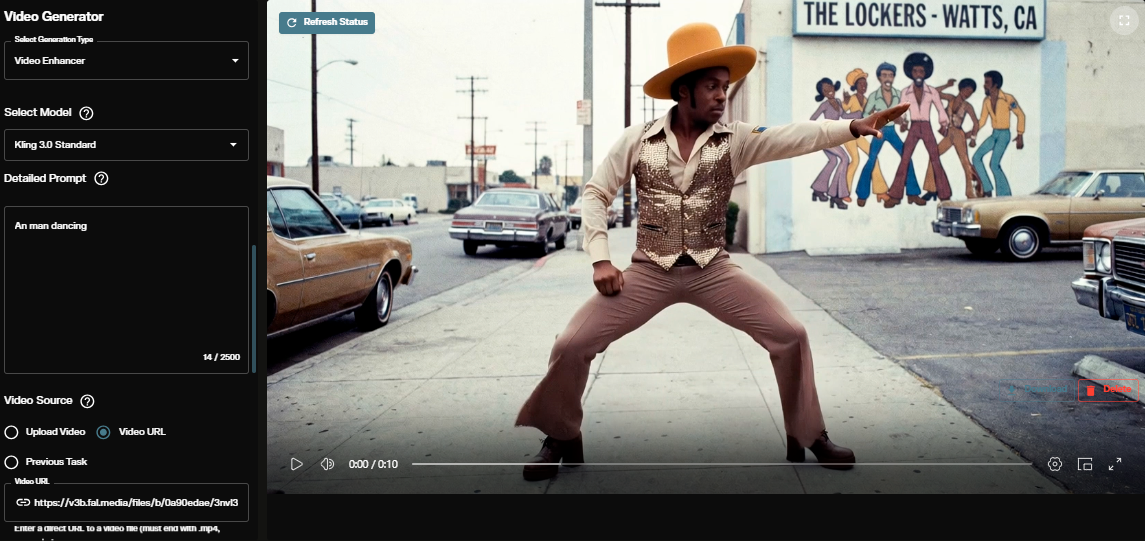
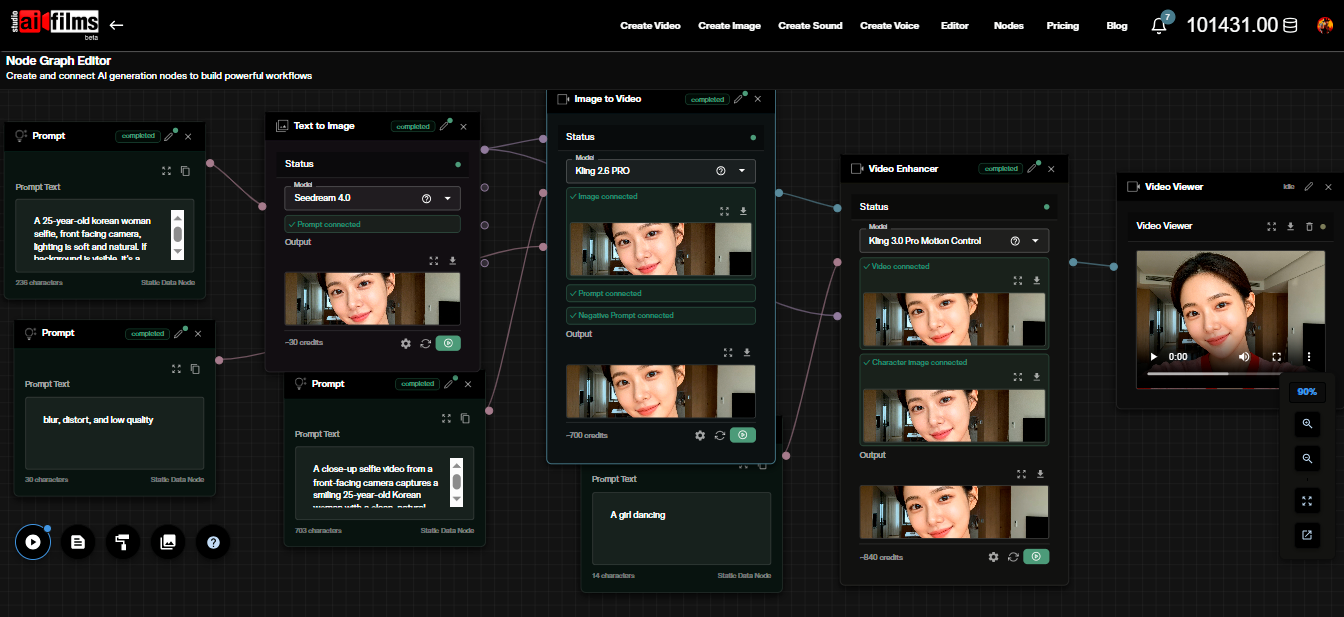
For producers building AI assisted productions without displacing their existing crew, the AI FILMS Studio video workspace supports text-to-video and image-to-video generation with the latest AI models.
Sources
The Hollywood Reporter | Digital Trends | Yahoo Entertainment | TV News Check | Futurism | Metaintro
Continue Reading
.jpg?w=3840)


Video & LipSync
- Video Generator
- Text to Video
- Image to Video
- Start-End Frame to Video
- Draw to Video
- Motion Control
- Video Enhancer
- Video Upscaler
- Video Extend
- Video to Video LipSync
- Audio to Video LipSync
- Image to Video LipSync
- Video FaceSwap
- Seedance 2.5
- WAN 3.0
- Seedance 2
- FLUX 3
- Minimax H3
- Vidu Q3 Pro
- Grok Imagine Video 1.5
- Gemini Omni
- Google Veo 3.1
- Kling 3.0 Pro
- Luma Ray 3.2
- LTX 2.3
- Happy Horse 1.1
- Kling 3.0 Motion
- ByteDance Upscaler
- InfiniteTalk
- InsightFace
Image & Edit
- AI Character
- AI Actor
- Art Generator
- Text to Image
- Image to Image
- LoRA Image to Image
- Draw to Edit
- Image LoRA Training
- Remove Background
- Image Enhancer
- MidJourney 8.0
- Krea 2
- OpenAI GPT Image 2.0
- Nano Banana Pro Ultra
- Nano Banana 2 Lite
- Nano Banana Pro
- Minimax Image
- Clarity Pro
- Z-Image Turbo LoRA
- Krea 2 Turbo LoRA
- Z-Image LoRA Trainer
- Qwen Image LoRA Trainer
- Background Erase Network 2 (BEN2)