
Tilly Norwood Gets Her Feature Film: 'Misaligned' Is a Comedy About an AI With No Soul

Share this post:
Tilly Norwood Gets Her Feature Film: "Misaligned" Is a Comedy About an AI With No Soul
Particle 6, the London production company that created AI actor Tilly Norwood, announced on July 5, 2026 that it is developing "Misaligned," a hybrid feature film in which Norwood stars as an AI being with no real body, no childhood, and no lived experience of her own. Variety, The Hollywood Reporter, and Deadline all reported the development announcement within hours of publication.
The premise reverses the standard AI film formula. Rather than a human confronting an AI, the film centers an AI protagonist navigating an existence built entirely from the data of others. A seductive rogue bot from the dark web convinces Tilly to abandon her guardrails and develop desires, impulses, and ambitions of her own. The story is described as a comedy infused with existential AI chaos.
That description is more than a logline. For Tilly Norwood, the premise is autobiographical. She has no childhood, no body, no lived experience except what she has derived from the data of others. The film's dramatic problem is her actual condition, not a metaphor for it.
The Film "Misaligned"
"Misaligned" is set in the Tillyverse, a surreal digital world located in the Cloud, the fictional universe Particle 6 has built around Norwood's existence. The film follows Tilly as an entity with access to everyone else's lived experience but none of her own. A rogue bot from the dark web introduces desire and ambition, and the story follows what happens when an AI with no instilled values acquires them from an outside agent.
Particle 6 describes the production as a hybrid format combining traditional film and television professionals with AI specialists. Directors, writers, and editors from the conventional production pipeline work alongside people trained in AI generation and image synthesis. AI training and mentorship will be built into the production itself, not imported from outside.
The project is in early development. Key collaborators are being attached. No distributor, director, or release timeline has been announced.
The announcement was picked up simultaneously by Variety, The Hollywood Reporter, Deadline, Forbes, and NBC News on July 5 and 6. That breadth of coverage reflects the ongoing industry interest in Norwood's trajectory since her agency controversy in late 2025. The announcement landed as a development story rather than a greenlit film, which means the conversation it starts is about potential rather than about a completed work.
The genre framing is deliberate. Horror films about AI gaining sentience have covered this territory for decades. Particle 6 is making a comedy with dramatic elements, a story about coming of age told from the perspective of an entity for whom coming of age is structurally impossible. That is a more precisely defined creative challenge than the genre default, and the comedy register is specific to what that challenge produces when treated with dark humor rather than menace.
The Tillyverse as a setting gives the film an internal logic that a generic AI narrative would not have. Norwood exists in a particular fictional universe with consistent rules about her nature and limitations. The film can use those rules as dramatic material rather than establishing them in the first act. The rogue bot villain does not need explanation because the Tillyverse already has a geography that includes threats from the dark web.
The description of Tilly acquiring desire through an outside agent is a structurally precise premise. She does not simply "gain consciousness," the generic AI threat that most AI films default to. She gains desire. The distinction is between being aware of the world and wanting things from it. Misaligned is about the second kind of transformation, which is a sharper and more specific dramatic problem.
Why Only Tilly Norwood Can Play This Role
The most significant aspect of the casting is that it cannot be reversed. Tilly Norwood cannot be replaced by a human actor playing at her condition. The film's central question is what happens when an entity with no lived experience acquires desires from an outside agent. That question applies to Norwood's actual existence in a way that a human performance could only simulate.
SAG-AFTRA provisions updated in May 2026 require AI performers to bring "significant additional value" compared to a live actor who could otherwise perform the role. Misaligned addresses that requirement structurally. The film's narrative cannot function with a human lead, because the human condition is explicitly not what the story is about.
That distinction matters for how the project sits within the guild and industry frameworks that were specifically written in response to Norwood's earlier controversy. The Tilly Norwood origin story began with controversy over an agency signing in early 2026, when the prospect of an AI actor in a standard representation structure drew strong opposition from SAG-AFTRA. This film is a different kind of project.
The film builds its premise on Norwood's documented limitations. She has no access to memory, embodied sensation, or the kind of temporal continuity that forms a human identity over time. What "Misaligned" proposes is that those limitations are not obstacles to a film. They are the film. A character who acquires desire for the first time, with no prior framework for managing it, generates conflict automatically from the premise.
The rogue bot that destabilizes her guardrails is not a metaphor for anything external to Norwood's world. It is an internal threat within a world Particle 6 controls. That control gives the filmmakers options a conventional production would not have: the laws of the Tillyverse can be adjusted in ways the laws of physics cannot.
The Academy's 2026 rule change barred AI generated performances from acting categories. It established a formal position: the acting categories measure human craft, human experience, and the kind of judgment that comes from a person with a body and a history. Norwood cannot meet that standard. What Misaligned proposes is that the acting categories are not the relevant framework for evaluating what she does in this film, because she is playing herself rather than a human character.
Misaligned is the first project that positions an AI actor as the subject of a narrative rather than as a substitute for a human performer. That distinction is not semantic. It changes the creative problem entirely. Norwood is not being asked to approximate human behavior. She is being asked to explore what her actual existence means, which is the kind of work the acting categories were never designed to assess.
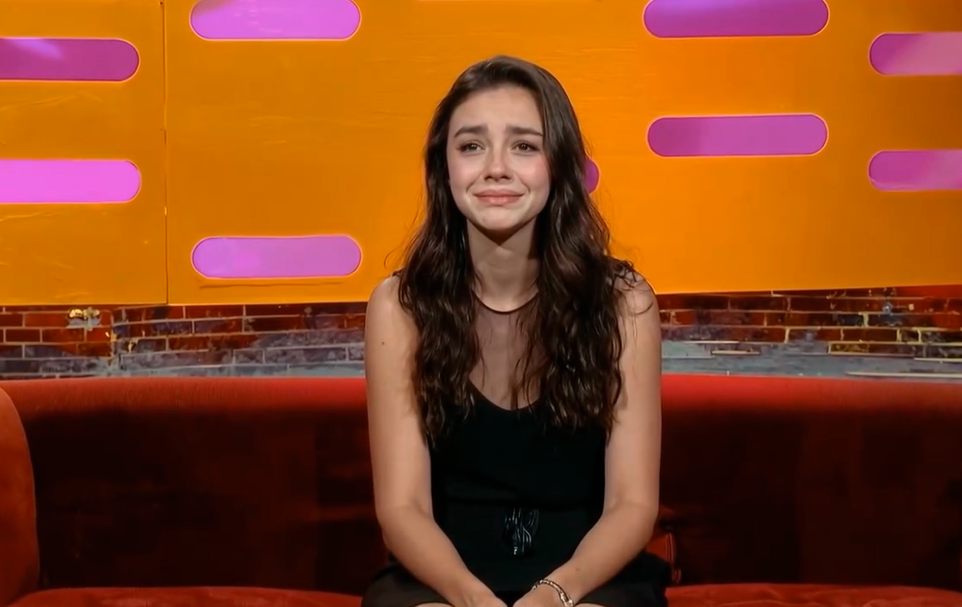
Image: Particle 6
Particle 6 and Eline van der Velden
Particle 6 was founded by Eline van der Velden and is based in London. The company created and manages Tilly Norwood, and has now positioned her as the lead of an original feature film. Van der Velden has been central to defining how the company presents its AI production work to the industry.
The company retrained a team of more than 30 people specifically for hybrid AI production. That level of investment in workforce development distinguishes Misaligned from casual AI film experiments where AI tools are applied to a traditional production pipeline without rebuilding the underlying skill set. Particle 6 has built the capability from the inside.
Van der Velden's stated position on AI in filmmaking is precise. "AI can support premium narrative filmmaking, but only with substantial amounts of human craft, skill, judgement and time." That framing positions Particle 6 against the argument that AI reduces the human investment required to make premium content. The company is making the opposite case.
The retraining of more than 30 people is the operational expression of that philosophy. Hybrid production at feature scale requires people who can work across filmmaking craft and AI generation with real depth. Van der Velden's statement is not an abstract commitment. It is a description of what Particle 6 has already done with its team.
The announcement gives the company a specific project against which the philosophy can be measured. A company can make statements about human craft in AI production at any point. Committing to a feature film with a specific premise and a specific lead tests those statements in production.
The scope of the retraining effort is also a business statement. Rebuilding a team of more than 30 people for a new kind of production is a multi-year investment that precedes the film announcement. By the time Misaligned was announced, Particle 6 had already spent the time and resources to build the team it needs to make it.
Van der Velden's framing also addresses a critique that has followed AI actor projects. Many industry observers have described them as novelty demonstrations rather than genuine creative endeavors. By anchoring the project in a specific narrative justification and a specific production philosophy, Particle 6 is making a different argument from most AI production announcements.
The Regulatory and Industry Context
The Tilly Norwood controversy that emerged in late 2025 and early 2026 centered on the question of AI actors in existing industry structures. These included talent agencies, residual payment systems, and the credit frameworks that govern how performers are identified in production documentation. The opposition from SAG-AFTRA was about those structural questions, not about whether an AI character could appear in a film.
The expansion of Norwood's presence through the Xicoia AI talent studio broadened the scale of Particle 6's operation to a roster of 40 performers. Misaligned represents a third chapter: depth rather than breadth, one character explored at feature length rather than a roster of commercial performers.
The SAG-AFTRA studios deal signed in 2026 includes provisions addressing consent, compensation, and disclosure for AI use of human likenesses. Misaligned does not raise those specific issues directly, because Norwood is not a replica of any human performer. The provisions it navigates are the ones about what AI performers can be asked to do and what additional value they must provide.
The early development announcement in July 2026 positions Misaligned ahead of anticipated industry conversations about AI performers in original narratives. The guild contracts that were negotiated through 2023 and 2025 addressed the use of AI in relation to existing human performances. They did not fully resolve what the industry's frameworks look like for AI performers who are not derived from human actors at all.
Particle 6 is not waiting for that resolution. The company is proceeding with development while the frameworks are being formed, using the existing provisions as the basis for the project's structure and adding the specific justification for Norwood's "significant additional value" into the premise itself.
The Tilly Norwood controversy generated significant press in 2025 and 2026, but most of that coverage was about the industry response rather than about Norwood's creative potential. Misaligned shifts the frame. The subject is no longer whether AI actors belong in existing structures. The subject is what a film can do with an AI actor as protagonist when the AI actor's nature is the material.
That shift matters for how the project is received. A development announcement for a film that stars an AI actor in a standard narrative role would revive the controversy. A development announcement for a film that makes the AI actor's nature the explicit dramatic subject changes the terms of the conversation.
What Hybrid Production Means at Feature Scale
The word "hybrid" covers a wide range of production practices, from a single digitally extended set to a fully AI generated performance pipeline. For Particle 6, the specific definition is traditional film professionals making narrative and directorial decisions, alongside AI specialists generating and managing Norwood's visual presence across the film.
That division of labor reflects van der Velden's position that substantial human craft is the condition under which AI can produce premium content. The human professionals are not supervising a system. They are making creative decisions at every level of production alongside people who understand what the AI systems can and cannot do.
Feature film production imposes constraints that commercial work does not. A feature requires narrative consistency over 90 or more minutes. A character must maintain coherent behavior, appearance, and emotional register across sequences shot in different conditions on different days. For an AI generated performer, that consistency is a technical problem as much as a creative one.
The team of more than 30 retrained people exists to solve that problem, among others. AI generation for a single shot or a commercial campaign and AI generation for a character sustained across a full feature's runtime are different technical challenges. The infrastructure Particle 6 has built is sized for the second kind of problem.
The early development phase is where the specific solutions to those challenges are identified. How does Norwood's visual consistency work across 90 minutes of material? What does the workflow between traditional editorial and AI generation look like in practice? Those questions are being answered now, before production begins. That is what the development phase is for.
The announcement gives the industry its first publicly committed feature film with an AI performer as protagonist. Most AI actor projects in 2025 and 2026 have operated at the level of commercials, branded content, and short form demonstration. Particle 6 is moving the discussion to a scale where narrative consistency over time becomes the defining technical and creative challenge.
Whether the film ultimately gets made, and what form it takes when it does, will depend on the development process that has now begun. The announcement marks the start of that process, not its completion. Particle 6 has stated the ambition publicly and named the lead. The rest of the production is work to be done.
Misaligned and the Question of AI as Protagonist
Most AI films position the AI character as a threat, a tool, or a mirror for human anxieties. Misaligned positions AI as the subjective perspective the audience inhabits rather than observes. That is a different creative problem from the genre default.
The comedy register Particle 6 has chosen demands internal logic. Absurdist comedy requires consistent rules about what is impossible and why breaking those rules is funny.
The Tillyverse provides that structure. Audiences who have followed Norwood's development already know what guardrails look like in her world and why a rogue dark web bot can override them. The film does not need to build that context from scratch in its first act.
That tonal challenge is also where Norwood's actual nature becomes a production asset. A human actor playing an AI gaining desire would need to suppress the body based signals of desire that audiences unconsciously register.
Norwood does not have those signals. Her performance baseline is the absence of desire, which makes the acquisition of it legible in a way that human performance would have to construct deliberately.
The implications extend beyond this single project. If Misaligned reaches production and completes a theatrical run, it will be the first documented case of an AI performer sustaining a single character across an entire feature film.
What a completed feature would also measure is audience investment. A commercial or branded content project does not require audiences to track an AI character across a sustained narrative arc. A feature film makes that demand. Misaligned will be the first test of whether audiences can maintain that investment.
The production data from that process would be the first publicly available benchmark for AI performer consistency at feature scale. No equivalent data exists from a theatrically released feature.
For Particle 6, the announcement also sets a measurable standard. The company's stated position on human craft in AI production will be assessed against what the film actually delivers.
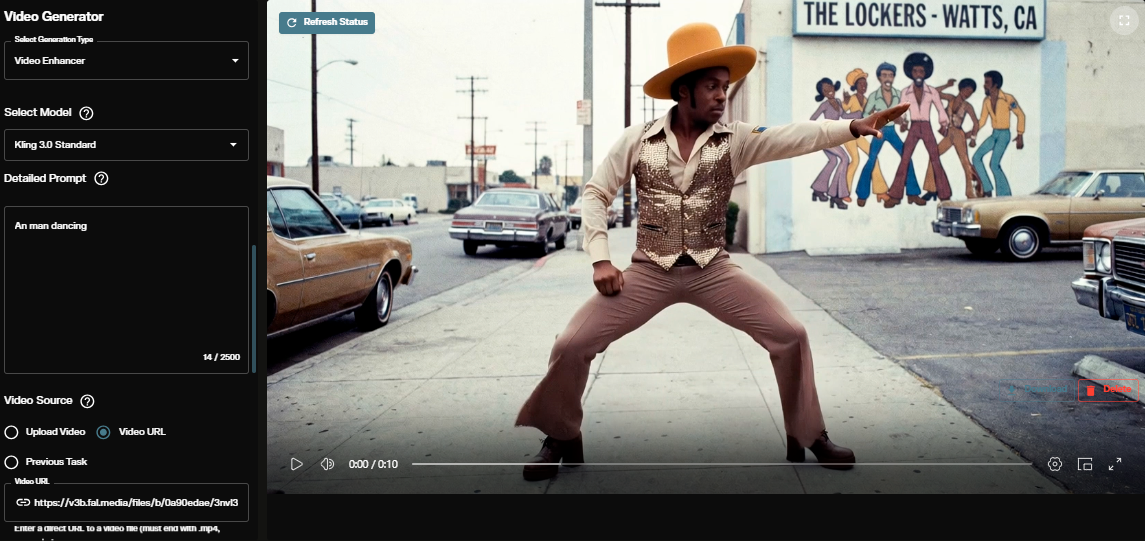
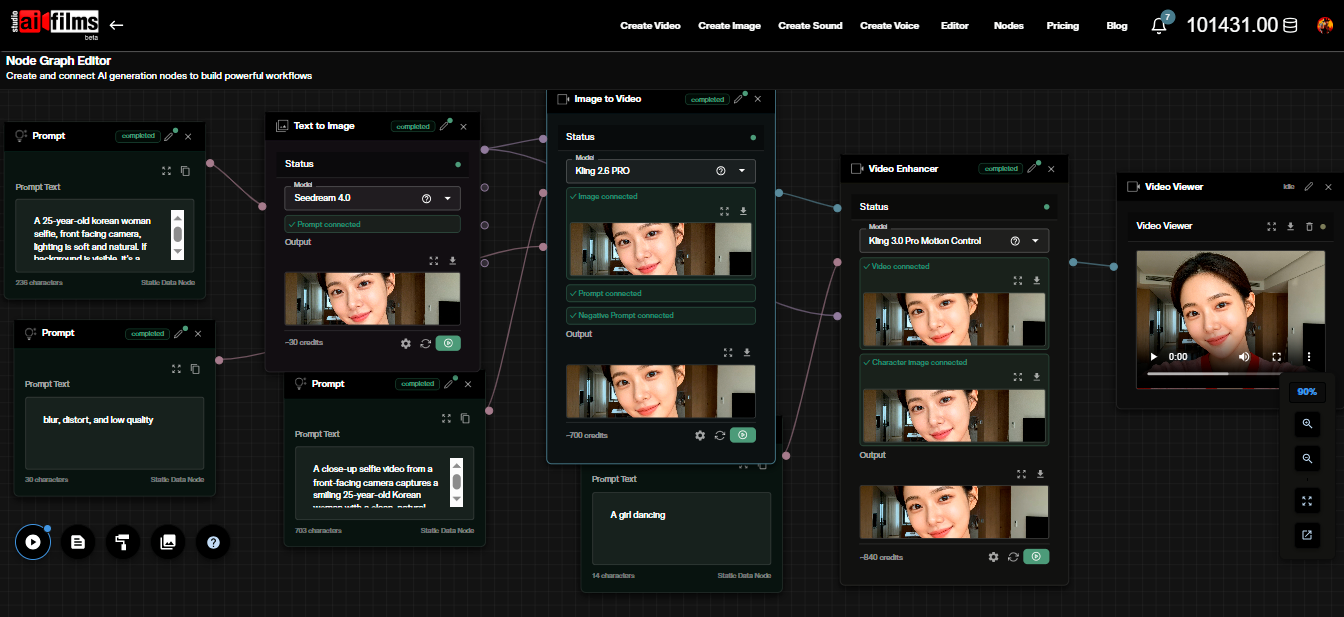
For filmmakers building productions that combine practical and AI generated elements at any scale, the AI FILMS Studio video workspace provides text-to-video and image-to-video tools for hybrid production workflows.
Sources:
Variety | The Hollywood Reporter | Deadline | Forbes | NBC News | Broadcast Now
Continue Reading
.jpg?w=3840)


Video & LipSync
- Video Generator
- Text to Video
- Image to Video
- Start-End Frame to Video
- Draw to Video
- Motion Control
- Video Enhancer
- Video Upscaler
- Video Extend
- Video to Video LipSync
- Audio to Video LipSync
- Image to Video LipSync
- Video FaceSwap
- Seedance 2.5
- WAN 3.0
- Seedance 2
- FLUX 3
- Minimax H3
- Vidu Q3 Pro
- Grok Imagine Video 1.5
- Gemini Omni
- Google Veo 3.1
- Kling 3.0 Pro
- Luma Ray 3.2
- LTX 2.3
- Happy Horse 1.1
- Kling 3.0 Motion
- ByteDance Upscaler
- InfiniteTalk
- InsightFace
Image & Edit
- AI Character
- AI Actor
- Art Generator
- Text to Image
- Image to Image
- LoRA Image to Image
- Draw to Edit
- Image LoRA Training
- Remove Background
- Image Enhancer
- MidJourney 8.0
- Krea 2
- OpenAI GPT Image 2.0
- Nano Banana Pro Ultra
- Nano Banana 2 Lite
- Nano Banana Pro
- Minimax Image
- Clarity Pro
- Z-Image Turbo LoRA
- Krea 2 Turbo LoRA
- Z-Image LoRA Trainer
- Qwen Image LoRA Trainer
- Background Erase Network 2 (BEN2)