
WGA Ratifies Four Year Deal with $321 Million Health Fund and New AI Protections
 (1).jpg?w=3840&q=90)
Chris Long from Los Angeles, CA, USA, CC BY 2.0
Share this post:
WGA Ratifies Four Year Deal with $321 Million Health Fund and New AI Protections
The Writers Guild of America ratified a new four year contract with the Alliance of Motion Picture and Television Producers on April 20, 2026, with 90.38% of voting members in favor. The deal, effective May 2, 2026 through May 1, 2030, secures a record $321 million contribution to the guild's health plan and establishes new requirements around studios' use of AI.
Three Weeks at the Table
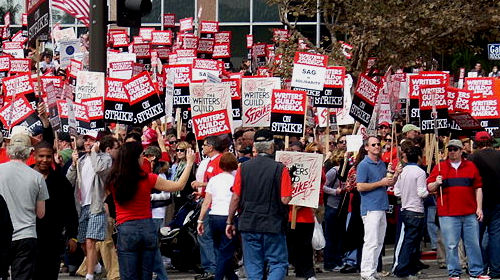
jengod, CC BY-SA 4.0, via Wikimedia Commons
The WGA reached its tentative agreement on April 4, 2026, three weeks into formal negotiations. That is an unusually short timeline for a contract of this scope. Studios demanded a four year term instead of the typical three; the guild accepted in exchange for the health plan funding and AI governance provisions.
Pay, Residuals, and Health Care
The $321 million health plan contribution from the AMPTP is the largest single infusion in the WGA's history with the studios. Writers also secured a "success bonus" increase for the most watched streaming titles: the payout rises from 50% to 75% of the base residual.
Minimum rates increase by 1.5% in the first year, then 3% in each of the three remaining years. The deal also extended the WGA's existing restrictions on AI use of members' scripts, which had first been addressed in the 2023 contract.
What the Contract Says About AI
The new agreement prohibits studios from using AI to write or rewrite literary material. AI generated material is not recognized as source material under the contract, which means it cannot generate writing credits or trigger residuals.
Studios must notify the WGA before licensing members' scripts for AI training purposes. They must also hold meetings with the guild before deploying commercially available AI systems trained on writers' work.
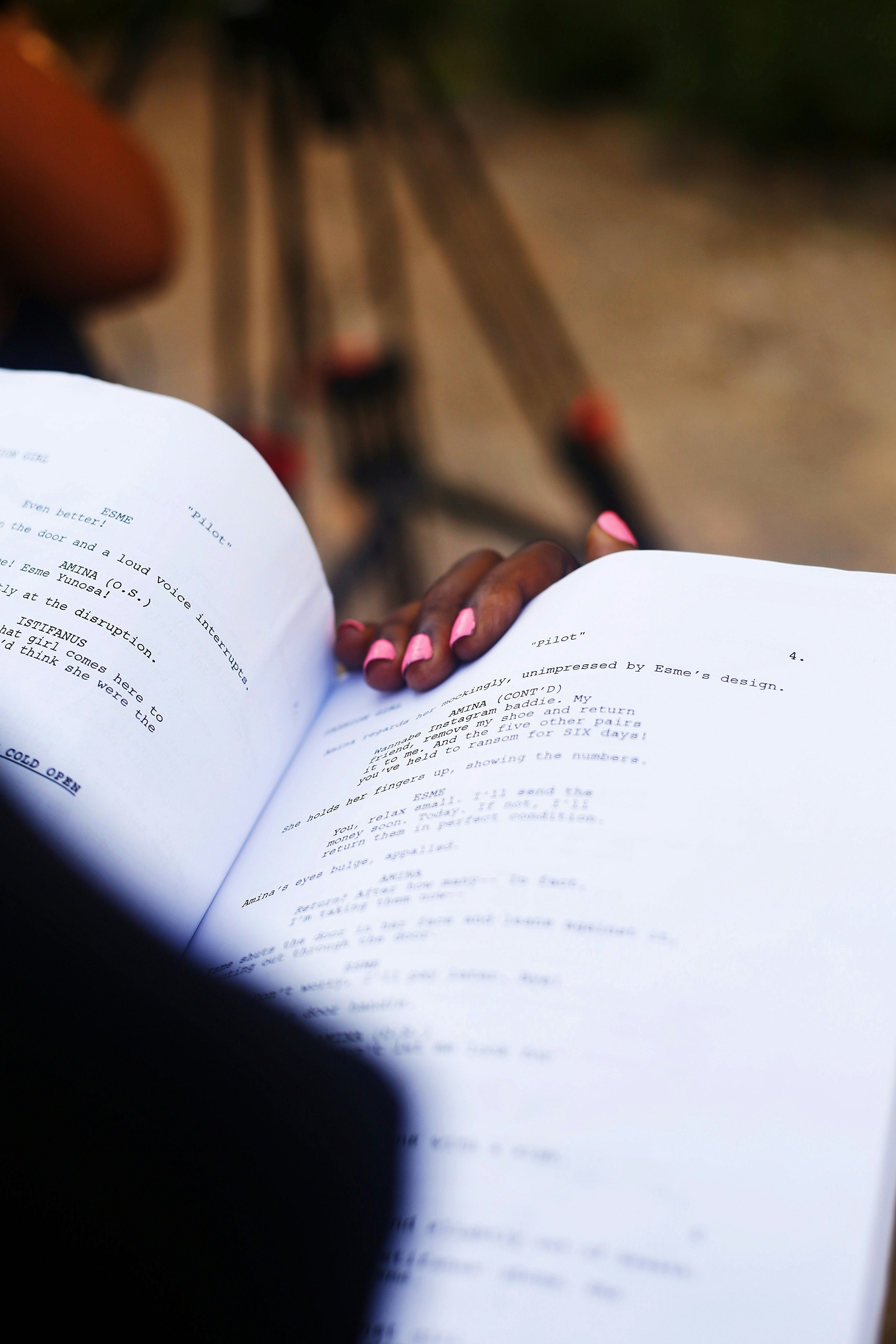
Photo by Muhammad-Taha Ibrahim on Unsplash
What the Deal Did Not Include
The WGA's central AI demand was compensation for members when studios use their scripts to train AI models. Studios did not agree to that. The contract establishes notification and meeting requirements but sets no payment obligation for training data use.
The four year term also removes the WGA from the near term AI renegotiation cycle. The guild's next opportunity to revisit these provisions is May 1, 2030.
The Three Guilds, Three Contracts
The WGA deal ratified weeks before SAG-AFTRA's four year agreement reached May 2, which expanded protections for synthetic performers and digital replicas. The SAG-AFTRA digital likeness framework established in 2023 provided the foundation both guilds built on in 2026.
With both deals in place, the Directors Guild of America formally opened talks with the AMPTP on May 11, the last major Hollywood guild without a 2026 contract. Those talks closed on June 9 with a four year DGA deal requiring studios to consult directors before using generative AI on any production's creative elements.
.jpg)
ufcw770, CC BY 2.0, via Wikimedia Commons
The DGA's AI exposure differs from the WGA's. While writers focused on training data and authorship, directors face displacement through AI tools that automate post production decisions or allow studios to generate alternate cuts without director involvement.
Beyond the contract language, some writers offered a cultural argument in parallel. "Gladiator II" screenwriter David Scarpa cited the chess precedent to argue that AI capability has never killed demand for human competition and will not kill demand for human stories.
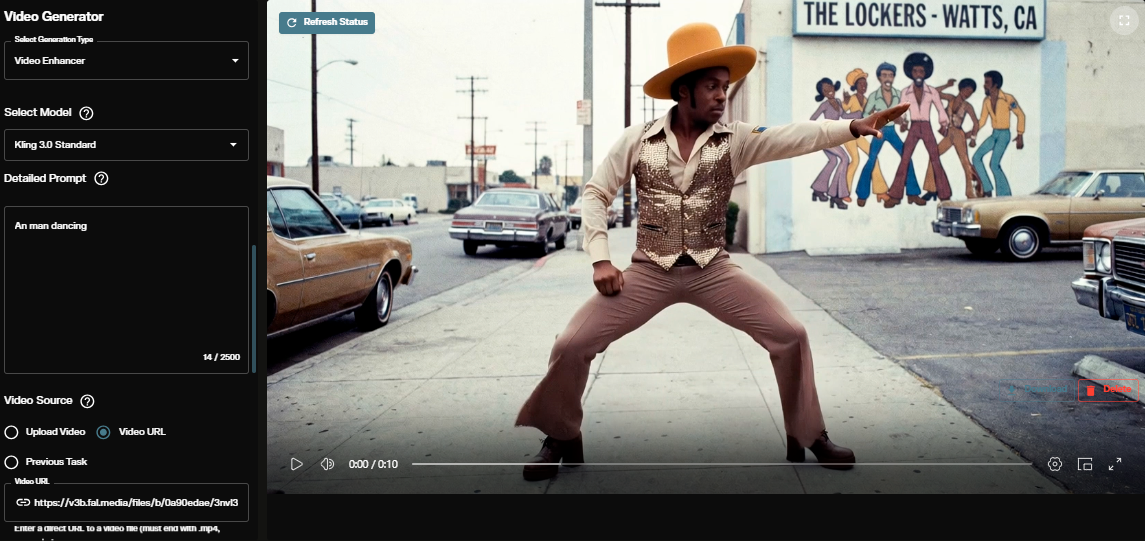
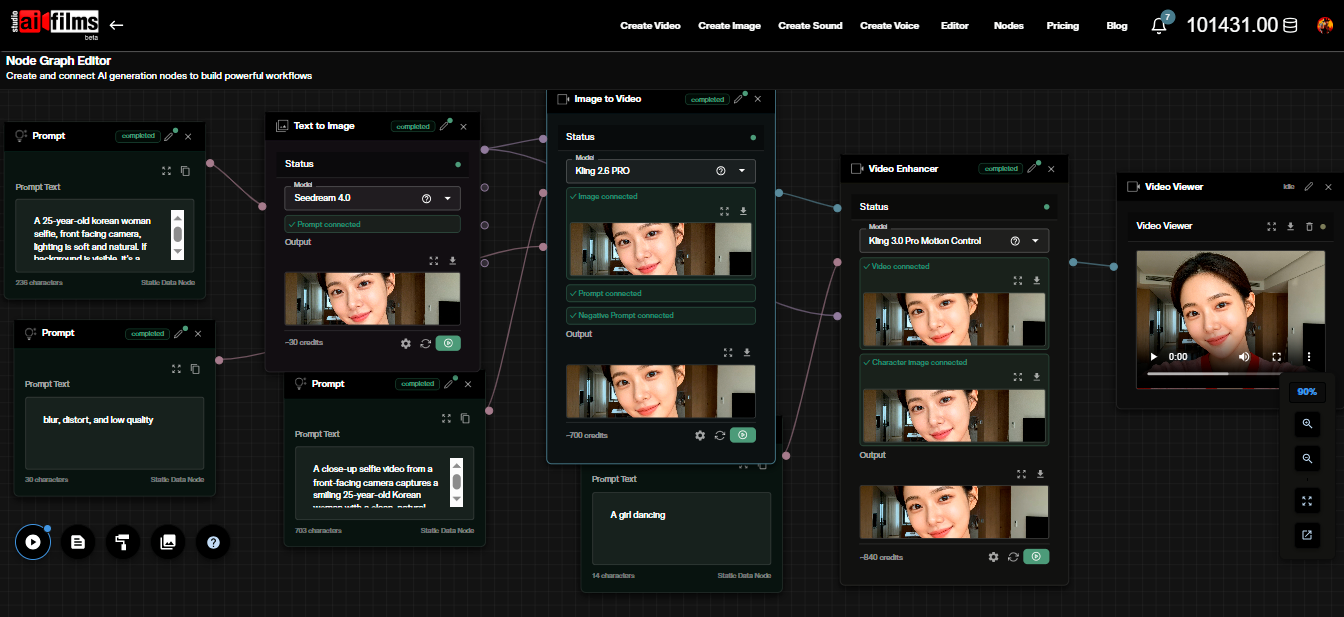
Both the WGA and SAG-AFTRA accepted longer contract terms in exchange for governance provisions, a trade the DGA can now observe before structuring its own position. Writers can explore what AI generation looks like in practice through the AI FILMS Studio video workspace, which operates independently of studio negotiations.
The content company response came a month after the WGA ratification: on June 15, 2026, Disney, BBC, the New York Times, and seven other organizations launched ARIAM, a coalition focused on governance frameworks that preserve AI innovation while setting attribution and licensing standards across the content supply chain.
The 90.38 Percent Vote in Context
A 90.38% ratification vote is among the highest the WGA has recorded for a deal reached without a strike. The 2023 contract, won after 148 days on the picket line, ratified at 78%. The disparity reflects both the terms and the absence of strike fatigue that shaped the 2023 vote. Members who voted on the 2026 deal had the 2023 gains as a baseline, which gave the negotiating committee a clearer mandate on the health fund demand.
The 90% threshold also signals that the AI provisions did not divide the membership. The debate over whether to accept notification requirements without payment is the substantive disagreement in any such deal. That it produced a 90% yes vote suggests the membership read the overall package, including the $321 million health contribution, as outweighing the gap on training data revenue.
What the Success Bonus Actually Changes
The streaming success bonus increase from 50% to 75% applies to writers on titles that appear in the most watched category for their platform. Before 2023, streaming residuals for writers were largely fixed regardless of viewership. The 2023 contract introduced a success bonus tied to performance. The 2026 deal raises the bonus ceiling.
In practice, a writer on a show that lands in Netflix's weekly Top 10 sees a materially different residual calculation than a writer whose show underperforms. The 75% multiplier applies to the base residual for that title in that quarter. The gap between that payment and what would have been paid under the pre-2023 framework is the financial case for what the guild built over two consecutive contracts.
What AMPTP's Disclosure Requirement Actually Requires
Studios must notify the WGA before licensing members' scripts for AI training. They must hold meetings with the guild before deploying commercially available AI systems trained on writers' work. Neither requirement triggers a payment obligation or a right of refusal. They are procedural, not substantive.
The gap between disclosure and compensation is what the WGA characterizes as unresolved. The studios read notification as adequate governance. The guild reads it as the minimum possible concession. The 2030 negotiation will open with that disagreement intact.
The 2023 Contract as Foundation
The WGA's 2023 contract was the first major Hollywood guild agreement to address AI directly. It prohibited AI from writing or rewriting scripts and required studios to disclose whether AI generated material had been given to writers. The 2026 deal extends that framework with notification and meeting requirements around AI training use. The 2023 provisions were emergency measures written during a strike. The 2026 provisions were negotiated as the established baseline.
The Training Data Revenue Question
The unresolved issue from both the 2023 and 2026 negotiations is compensation for members when studios use their scripts to train AI models. Studios argued that licensing decisions are a business right, not a labor issue. The guild argued that scripts are literary works created under employment agreements that entitle writers to compensation for derivative uses. Neither position has been tested in court under the 2026 contract, which sets up potential litigation before 2030.
The studios' counter-argument rests on the distinction between a delivered work product and downstream business activity. Under that view, a completed script is an asset the studio owns once delivered, and extracting training data from it is an internal business operation rather than a derivative use requiring additional compensation. That legal theory has not faced federal court review in the specific context of AI model training, which makes the 2030 negotiation the more likely venue for resolution than a lawsuit.
What the Four Year Term Means for AI
The WGA's next contract negotiation opens May 1, 2030. By that date, the AI capabilities available to studios will be substantially more developed than those in 2026. The guild accepted the longer term in exchange for health funding and current AI protections. Whether the 2030 negotiation produces stronger or weaker AI provisions depends on how the provisions in this contract are enforced over the four year term.
The DGA Difference: Creation vs. Oversight
The DGA deal reached on June 9, 2026 focused on director consultation rights before AI is used on the creative elements of any production. Directors face displacement from AI tools that automate post production decisions or allow studios to generate alternate cuts without director involvement. The WGA concerns production authorship. The DGA concerns creative oversight after authorship is complete. That structural difference explains why the two guild agreements look different even when both address the same technology.
What the Contract Cannot Cover
The WGA contract governs work produced under AMPTP signatory agreements. It does not apply to AI tools operating outside guild jurisdiction. International productions, non-signatory companies, and content produced for platforms that have not signed with the AMPTP all fall outside its scope. A studio can route AI written scripts through a non-signatory production entity and remain outside the contract's coverage.
The WGA's AI provisions are meaningful for the studio system. They do not bind the independent and international segments of the industry. That jurisdictional boundary is where AI adoption will likely move fastest over the four year contract term, and it is the area the 2030 negotiation will need to address in addition to training data revenue.
The ARIAM coalition launched on June 15, 2026, the month after the WGA ratification, with Disney, the BBC, and the New York Times among its founding members. ARIAM's focus on cross-industry content licensing governance overlaps with the WGA's training data concerns but operates outside guild jurisdiction. Its existence reflects that the question of how AI companies should pay for training content is now being addressed simultaneously in guild negotiations, civil litigation, and industry coalitions.
The WGA ratification creates a four year window in which studios can develop AI tools under a known governance framework. Both sides now have time to test what the provisions mean in practice before returning to the table in 2030.
Sources
Variety | Deadline | The Hollywood Reporter | The Wrap | AV Club
Continue Reading
.jpg?w=3840)


Video & LipSync
- Video Generator
- Text to Video
- Image to Video
- Start-End Frame to Video
- Draw to Video
- Motion Control
- Video Enhancer
- Video Upscaler
- Video Extend
- Video to Video LipSync
- Audio to Video LipSync
- Image to Video LipSync
- Video FaceSwap
- Seedance 2.5
- WAN 3.0
- Seedance 2
- FLUX 3
- Minimax H3
- Vidu Q3 Pro
- Grok Imagine Video 1.5
- Gemini Omni
- Google Veo 3.1
- Kling 3.0 Pro
- Luma Ray 3.2
- LTX 2.3
- Happy Horse 1.1
- Kling 3.0 Motion
- ByteDance Upscaler
- InfiniteTalk
- InsightFace
Image & Edit
- AI Character
- AI Actor
- Art Generator
- Text to Image
- Image to Image
- LoRA Image to Image
- Draw to Edit
- Image LoRA Training
- Remove Background
- Image Enhancer
- MidJourney 8.0
- Krea 2
- OpenAI GPT Image 2.0
- Nano Banana Pro Ultra
- Nano Banana 2 Lite
- Nano Banana Pro
- Minimax Image
- Clarity Pro
- Z-Image Turbo LoRA
- Krea 2 Turbo LoRA
- Z-Image LoRA Trainer
- Qwen Image LoRA Trainer
- Background Erase Network 2 (BEN2)