
Harvey Keitel: AI Voice Cloning Is a 'Danger' That Can't Reproduce an Actor's Soul

Share this post:
Harvey Keitel: AI Voice Cloning Is a 'Danger' That Can't Reproduce an Actor's Soul
Harvey Keitel told journalists at the 60th Karlovy Vary International Film Festival on July 5, 2026, that AI voice cloning represents a genuine danger to actors and to the art of performance. He made his case through a specific example: the AI audiobook of Homer's The Odyssey narrated using a replica of Sir Michael Caine's voice, produced by ElevenLabs and released in June 2026.
"Danger is in front of us," Keitel said. He was in Karlovy Vary while making a low budget film in Prague directed by his wife, Daphna Kastner. At 85, with a career spanning six decades and an Oscar nomination for Bugsy (1992), his remarks carried the weight of someone who has spent his life thinking about what a performance actually requires.
"They Couldn't Reproduce Michael Caine's Beauty"
Keitel's critique of the Caine audiobook was precise. "They used his voice, but there was no emotion in it," he said. "They couldn't reproduce Michael Caine's beauty."
That last word is specific. Not talent. Not skill. Not craft. Beauty. What Keitel is describing is the quality of a performance that belongs to the whole person and cannot be extracted from a voice file. The ElevenLabs audiobook used a replica trained on Caine's vocal characteristics. Keitel's argument is that what made Michael Caine's voice worth replicating cannot be replicated.
The Odyssey audiobook was produced by a team of four over six weeks, with ElevenLabs using its Iconic Marketplace voice of Caine, who licensed his voice and likeness to the platform in 2025. ElevenLabs and the Caine Odyssey audiobook arrived in June 2026, weeks before Christopher Nolan's theatrical adaptation of the same source material opened in theaters.
Keitel did not dispute that the technology could produce something that sounded like Michael Caine. His objection was to the claim that sounding like Caine is what an actor does.
What AI Voice Cloning Cannot Reproduce
"This new industry that's developing where actors are selling their image and their voices, but they can't reproduce their emotional life," Keitel said.
The statement draws a line between what can be licensed and what cannot. A voice pattern can be measured, sampled, trained on, and reproduced. The emotional life that produces the specific weight and texture of a great performance, the accumulation of experience and attention and vulnerability that gives a voice its specific gravity in a specific scene, is not in the audio file. It is in the person.
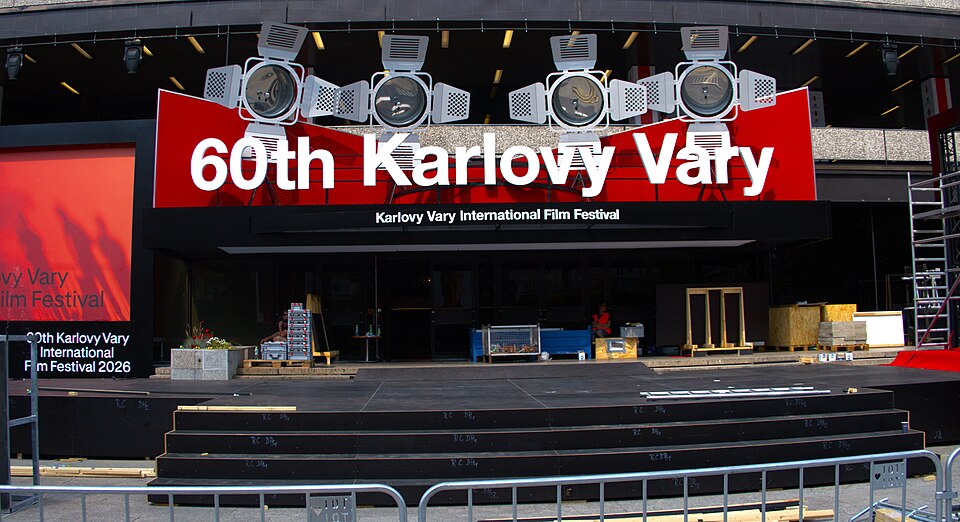
Dobroš, CC BY-SA 4.0, via Wikimedia Commons
That gap between what is measurable and what is not is the core of Keitel's argument. AI voice models work by identifying and reproducing acoustic patterns. They can be trained to match pitch, pacing, resonance, and accent with high fidelity. What they cannot identify are the conditions that produced those patterns: the specific choices made in a scene, the preparation that preceded them, the physical state of the actor on the day the voice was recorded.
Keitel's concern is not about technical failure. The Caine audiobook works as a product. ElevenLabs delivered a 13 hour production with 20 character voices and an original score in six weeks. His concern is about what the product claims to be.
When an AI voice replica narrates 13 hours of Homer using Caine's voice pattern, the product benefits from the association with Caine's decades of performance without the thing that made those decades of performance worth associating with. That distinction is not semantic. It determines what the audience is actually experiencing.
The Emotional Life Argument
The phrase "emotional life" has a specific meaning in acting methodology. It refers to the actor's lived experience, psychological access, and moment to moment responsiveness that produces genuine feeling in a performance rather than an imitation of feeling.
Keitel has worked with directors who demanded exactly that quality. His roles with Martin Scorsese and Abel Ferrara placed him repeatedly in scenes that required sustained access to difficult emotional material. His performance in Bad Lieutenant (1992) is the most extreme instance: it is a film built around the question of what an actor can genuinely access and sustain.
That background makes his argument about AI voice cloning precise in a way a more general objection would not be. He is not saying that AI voice lacks warmth or humanity in some vague aesthetic sense. He is saying it lacks the specific thing that the actor's craft requires access to, and that this specific thing cannot be extracted from a recording.
The distinction between acoustic pattern and emotional life is also a practical claim about what audiences respond to. If audiences in fact cannot tell the difference between Michael Caine's voice and an AI trained on Michael Caine's voice, Keitel's argument has to be made on grounds other than audience perception. His ground is that the absence of emotional life represents a loss regardless of whether the listener notices.
Keitel in Prague: Making Film in the Way He Describes
Keitel was in Karlovy Vary as part of a broader stay in Prague, where he was shooting a film directed by Daphna Kastner, his wife. The production was described as a guerrilla film: small crew, physical location, no studio infrastructure. It is the production model that is the opposite of AI voice generation at scale.
The context matters for his argument's credibility. A 85 year old actor still shooting on location in a foreign city under guerrilla conditions is not making an argument against AI from comfort or complacency. He is describing what he values in filmmaking by continuing to do it.
Kastner has directed Keitel before and the two have collaborated on several projects. Making a film in Prague without a studio mandate is a specific kind of commitment. It places the argument Keitel is making at Karlovy Vary in direct relation to what he is doing with his time. The danger he describes is not abstract. It is in front of the practice he is actively engaged in.
The Karlovy Vary appearance followed his work on the Prague production. He did not travel to the festival to make a statement about AI. He was already in the region, working. That proximity gives the remarks a different quality from a prepared keynote or a press conference.
The Pattern at Karlovy Vary
Keitel was one of two A-list actors at the 60th Karlovy Vary festival who made pointed remarks about AI and performance. Jesse Eisenberg, who received the President's Award at the same festival, described his A24 film "The Debut" as "the opposite of AI" and expressed concern about AI visualization eliminating physical production commitments.
The two positions address different layers of the same problem. Eisenberg's concern is about what disappears when AI approximates physical sets. Keitel's concern is about what disappears when AI approximates a human voice. Both argue that what disappears is not detectable in the output but is real and significant.
That convergence at a single festival was not organized. Both actors were responding to questions in separate press contexts. The fact that two performers with very different career profiles and current projects arrived at the same structural critique from different directions is evidence that the concern is widely felt within the acting community.
James Woods made comparable remarks to The Hollywood Reporter earlier in 2026, describing the threat to performers from AI voice and likeness replication in terms that parallel Keitel's Karlovy Vary statement. Tony Leung expressed a similar position at SIFF 2026, describing AI as unable to reproduce an actor's soul. Keitel is one of several prominent actors who have put this specific argument on the record in 2026.
What Keitel's Career Brings to the Argument
Keitel has worked with some of the most demanding directors in American and European cinema. Martin Scorsese cast him in Mean Streets (1973) and Alice Doesn't Live Here Anymore (1974). Quentin Tarantino cast him in Reservoir Dogs (1992) and Pulp Fiction (1994). His career has been shaped by collaborators who understood that performance is not decoration.
The roles that established Keitel's reputation required sustained access to difficult material. Bad Lieutenant, which he starred in and produced alongside director Abel Ferrara, is a sustained exercise in what genuine emotional access looks like when a director refuses to protect the actor from what the role demands. The Italianer, his early television work, and his collaborations with European directors across four decades have produced a body of work that is recognizable precisely because of the quality Keitel describes as "beauty."
That quality is audible in Keitel's own voice. His Manhattan accent, his specific pacing, his way of pausing before a key word, are the product of 60 years of performance choices. AI trained on recordings of Keitel would capture the acoustic pattern. It would not capture the choices.
When Keitel says AI cannot reproduce Michael Caine's beauty, he is saying something he has access to as a practitioner. He has made performances of the kind he is describing. He knows from inside what they require. His authority on this question is not theoretical.
The Scale of the AI Voice Industry in 2026
ElevenLabs' valuation reached $11 billion in 2026, supported by $330 million in annual recurring revenue. The platform operates at a scale that would have been impossible to predict when the first AI voice synthesis tools reached the consumer market. The Iconic Marketplace, which licenses celebrity voices for commercial use with consent and per use compensation, is one product within that larger commercial structure.
The scale matters for understanding what Keitel's remarks are responding to. The "danger" he describes is not a minor experiment. It is a funded, commercially successful industry with significant capital investment, established licensing frameworks, and productions reaching audiences of millions. The Caine Odyssey audiobook was not a proof of concept. It was a finished product distributed on a major platform.
That scale is also why Keitel's concern about actors "selling their image and their voices" is a structural observation rather than a hypothetical. The transactions are happening. The industry is developing. His question is whether what those transactions produce, the replicated voice without the emotional life, will gradually replace the original in commercial contexts where the distinction matters least.
What Consent Does and Does Not Resolve
Michael Caine licensed his voice to ElevenLabs with consent and compensation. The arrangement is the model the AI audio industry is using to distinguish legitimate voice partnerships from unconsented cloning. Keitel's critique applies equally to the consented version.
The consent model addresses the legal and ethical question of whether an actor's voice can be used without permission. It does not address the question Keitel is raising, which is about what a performance actually is and what is lost when the voice is separated from the person who produced it. Consent makes the transaction legitimate. It does not make the product identical to the original.
That distinction matters for how the industry thinks about the consent framework. SAG-AFTRA's agreements with major studios establish consent and compensation as requirements for digital replicas. Those requirements protect performers' rights and their compensation. They do not resolve the artistic question Keitel is raising about what a performance requires and whether an AI voice replica can provide it.
Keitel's argument suggests that the consent framework, however necessary, is a floor rather than a ceiling. Protecting actors from unconsented cloning is an ethical requirement. The question of whether consented AI voice replication represents a genuine artistic contribution is a different question that the consent framework does not answer.
The Commercial Pressure Keitel Is Describing
The industry Keitel is describing, where actors sell their image and their voices, is not a future scenario. ElevenLabs' Iconic Marketplace is the clearest example, but the commercial pressure toward AI voice licensing has reached actors at every level of the industry. Independent narrators competing for audiobook work are already facing AI narration in their market. Session voice actors who record video game dialogue and commercial spots are already in a market where AI generation covers significant ground.
For film actors, the pressure arrives differently. The Iconic Marketplace model offers passive income from a licensed vocal asset. For an actor who is no longer working at their peak, or whose vocal characteristics have become commercially valuable beyond their current output, licensing to a platform like ElevenLabs is a financial instrument that did not previously exist.
That commercial pressure has reached the youngest performers in children's entertainment. Hasbro sent AI voice rights contracts to child actors on Peppa Pig requiring families to accept the terms or lose their children's roles. The Peppa Pig AI voice case applied that pressure to performers under the age of 10 who fall outside UK Equity's membership rules.
Keitel's concern is that this instrument separates the performer from the performance in a way that degrades both. The financial logic is sound. The artistic logic, in his view, points in the opposite direction.
The Voice Is Not the Performance
Every voice acting teacher will eventually say something like: the voice is the instrument, not the musician. What Keitel is describing at Karlovy Vary is the same principle in a different context. Michael Caine's vocal pattern is the instrument. The decades of preparation and emotional access that produced the particular expressiveness of that voice are the musician.
An AI trained on recordings of Caine can reproduce the instrument with increasing fidelity. It cannot reproduce the musician, because the musician is not in the recording. The recording captures what the musician produced. It does not capture how.
That gap is what Keitel calls "beauty" and "emotional life." These are words that point at something that practitioners know and that is difficult to make precise. But the difficulty of making it precise does not mean it is imaginary. Any listener who has compared a great audiobook performance with a merely competent one knows the difference. The question Keitel's remarks raise is whether an AI trained on great performances produces great performances or produces high quality imitations of them.
Keitel's answer is implied by his continued presence on set in Prague rather than selling a vocal replica. At 85, in a foreign city, working with a crew small enough to call guerrilla, his argument is not only spoken. It is enacted.
Weeks after Keitel's Karlovy Vary remarks, over 80 UK performers including Nicola Coughlan and Hugh Bonneville launched the Save Our Voices Now petition, calling on Parliament to introduce a statutory right over voice that operates independently of existing name and image protections. The petition targets Prime Minister Andy Burnham directly. Keitel's Karlovy Vary remarks and Caulfield's campaign share the same factual claim about how quickly a voice can be cloned, but address different audiences: one speaking to the film community, the other to Parliament.
For filmmakers and producers working with AI voice tools, the AI FILMS Studio voice workspace gives direct access to voice generation and cloning tools for production use.
Sources:
Variety | The Hollywood Reporter | Screen Daily | Deadline
Continue Reading
.jpg?w=3840)


Video & LipSync
- Video Generator
- Text to Video
- Image to Video
- Start-End Frame to Video
- Draw to Video
- Motion Control
- Video Enhancer
- Video Upscaler
- Video Extend
- Video to Video LipSync
- Audio to Video LipSync
- Image to Video LipSync
- Video FaceSwap
- Seedance 2.5
- WAN 3.0
- Seedance 2
- FLUX 3
- Minimax H3
- Vidu Q3 Pro
- Grok Imagine Video 1.5
- Gemini Omni
- Google Veo 3.1
- Kling 3.0 Pro
- Luma Ray 3.2
- LTX 2.3
- Happy Horse 1.1
- Kling 3.0 Motion
- ByteDance Upscaler
- InfiniteTalk
- InsightFace
Image & Edit
- AI Character
- AI Actor
- Art Generator
- Text to Image
- Image to Image
- LoRA Image to Image
- Draw to Edit
- Image LoRA Training
- Remove Background
- Image Enhancer
- MidJourney 8.0
- Krea 2
- OpenAI GPT Image 2.0
- Nano Banana Pro Ultra
- Nano Banana 2 Lite
- Nano Banana Pro
- Minimax Image
- Clarity Pro
- Z-Image Turbo LoRA
- Krea 2 Turbo LoRA
- Z-Image LoRA Trainer
- Qwen Image LoRA Trainer
- Background Erase Network 2 (BEN2)