
Jodie Foster Says F1 "Was Made by AI," and She Means It as a Critique of Formula Filmmaking

Share this post:
Jodie Foster Says F1 "Was Made by AI," and She Means It as a Critique of Formula Filmmaking
Jodie Foster told a panel at the Aspen Ideas Festival on July 3, 2026, that Brad Pitt's racing film F1 was "made by AI," then immediately clarified she was not attacking the movie. The comment was a critique of what she described as the film's perfectly engineered narrative structure, one that follows a commercial optimization logic so consistent it could have been generated by an algorithm without any algorithm being involved.
The panel was titled "Who Owns the Future of Hollywood" and also featured Michael Lynton, former CEO of Sony Pictures. Foster and Lynton approach the question from opposite ends of the same industry. Foster has spent decades making specific artistic choices under commercial pressure. Lynton spent years managing the corporate structure that sets those pressures.
The summer of 2026 produced more direct public discussion of AI in Hollywood than any previous year, driven by guild contract implementations taking effect and by a string of AI festival premieres that forced the question into mainstream coverage. Foster's comment at Aspen added a dimension those industry conversations had not addressed: the possibility that commercial optimization logic shapes films before any AI tool is opened.
The Panel, the Film, and the Remark
Foster did not offer the observation casually. She built to it. Her opening was direct: "F1 was made by AI." She followed it with a qualification that shifted the weight of what she had said. "I don't say this disparagingly. How could I? This movie went on to make millions of dollars."
The remarks were reported by multiple outlets covering the Aspen Ideas Festival programming. Variety, Deadline, and The Hollywood Reporter each captured her comments, ensuring the observation reached the full industry press cycle rather than staying within the cross-sector Aspen audience that heard it live.
She then explained what she meant. The film's narrative structure, she said, was "exactly the structure that you would learn in school". The actors delivered their lines, she added, exactly as a computer would have written them, optimizing for each moment's expected emotional register rather than any instinct that could only come from a human decision.
Her argument does not claim F1 used generative AI tools in production. No source has reported that it did. Her claim is that the film's internal story logic follows the same commercial optimization calculus that AI systems apply when generating content designed to reach the widest possible audience.
Foster has won the Academy Award twice, for The Accused in 1988 and The Silence of the Lambs in 1991. She has worked in the industry as actor, director, and producer for more than five decades. Her critique of F1 is not coming from someone outside commercial filmmaking. It is coming from someone who has operated inside it long enough to name its optimization logic from direct experience.
Her comment about F1 was part of a longer conversation about what it means to own creative output in an era when both humans and machines can generate commercially viable work. She was not describing one film in isolation. She was describing a logic she had observed across many projects she had watched or been offered over the course of her career.
The Aspen Ideas Festival is itself a meaningful venue for these remarks. The festival draws policy advisors, foundation executives, technology leaders, and journalists alongside entertainment figures. Speaking to that audience, Foster was not managing industry relationships in the way she might at a guild event or a trade press luncheon. The cross-sector context creates different conditions for candor than the industry's own conference circuit typically does.
What "Made by AI" Actually Means
The phrase "made by AI" circulated in headlines as celebrity commentary on a fellow filmmaker's film. The substance of the argument is more specific and less covered in roundup reporting.
Foster is identifying a feedback loop in commercial filmmaking. When studios measure what audiences respond to, optimize toward those signals, and apply that optimization systematically to narrative structure, pacing, and character arc, the output converges toward what an AI trained on the same signals would produce. The human beings making the film may apply the formula deliberately or absorb it over years of working in the industry.
She was drawing a line between AI as a production tool and AI as a creative logic. The first is documentable: which software, which shots, which credits. The second is a cultural condition that production credits cannot capture. Her remark was about the second.
The critique also has historical precedent. Critics and scholars have been describing Hollywood's genre machinery in terms that anticipate Foster's argument for decades. The formulas she is describing have been documented since the 1970s. What is new is the specific comparison to AI, which gives the long-standing observation a precision that "formula filmmaking" or "genre conventions" did not previously provide. AI makes the optimization process explicit in a way that helps audiences understand what they are watching even when no AI was involved.
When a critic in 1985 said a film was formulaic, the critique was impressionistic. When Foster says a film was "made by AI," she is pointing at something specific: the convergence between the film's creative logic and the training objective of any AI system built to maximize audience satisfaction. That convergence is now visible and nameable in a way it was not before generative AI became broadly understood.
That naming also has a feedback effect on how audiences engage with films going forward. Once the phrase "made by AI" is available as a descriptor for commercial optimization without AI, audiences have a mental category they did not previously have. They can ask of any film: does this feel like it was made by AI? The question changes how they watch, and it gives critics language for something they had previously described only as "generic" or "formulaic."
a.jpg)
Rhododendrites, CC BY-SA 4.0, via Wikimedia Commons
The Aspen Ideas Festival convenes leaders from policy, technology, business, and the arts for conversations that cross disciplinary lines. The "Who Owns the Future of Hollywood" panel brought together two people who have spent their careers on opposite ends of the same decision about which films get made and how.
Lynton's presence gave the conversation a corporate anchor. As Sony CEO during an era of significant studio output, he oversaw projects that navigated exactly the commercial pressures Foster was describing. That pairing gave the exchange weight that it would not have had if Foster were speaking alone.
F1's $600 Million Commercial Logic
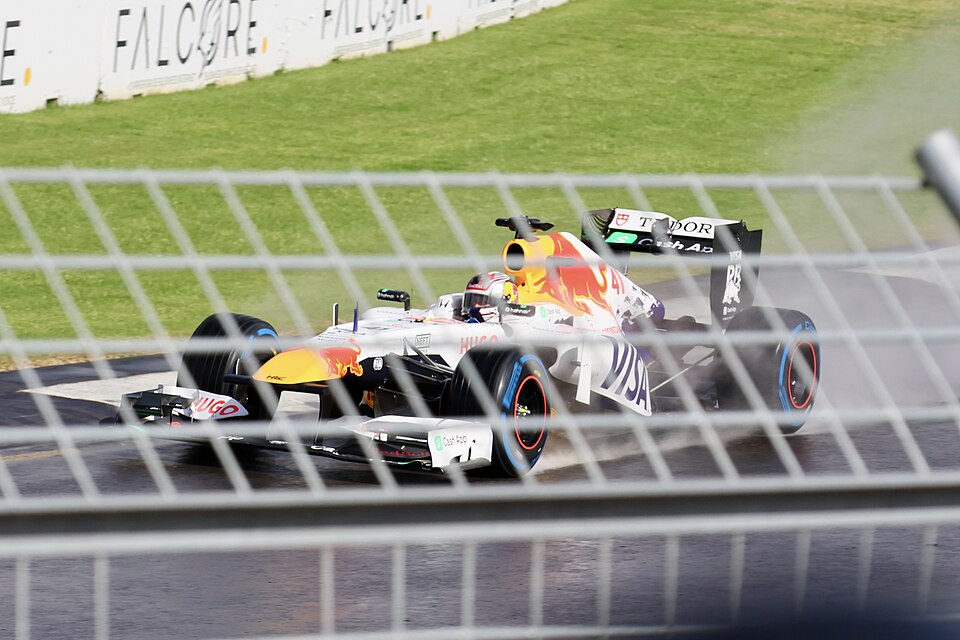
The film Foster was describing grossed over $600 million globally. F1, directed by Joseph Kosinski and starring Brad Pitt, was produced by Jerry Bruckheimer and distributed by Apple Original Films in partnership with Warner Bros. It is one of Pitt's most commercially successful films.
That scale matters to Foster's argument. She was not identifying the formula in a niche production. She was pointing at one of 2026's biggest mainstream releases and arguing that its size proves the commercial reliability of the optimization logic she was describing. "How could I" be disparaging, she said, if the film earned that kind of return.
Kosinski's two most recent films follow a consistent strategic pattern. Top Gun: Maverick (2022), starring Tom Cruise, grossed $1.49 billion globally and became the defining theatrical event of its year by applying a proven IP to a spectacular visual canvas with a narrative arc audiences had pre-validated through decades of the original film's cultural presence. F1 applied the same logic to Formula 1 racing: a globally recognized sport, a star with strong international appeal, and a story structure designed to satisfy rather than challenge. The consistency across both films is itself evidence for Foster's argument. She is not criticizing one director's choices. She is naming a production logic that has proven commercially reliable across multiple studios and multiple productions.
Apple Original Films has built its theatrical strategy around exactly this model. Global spectacle with A-list talent, optimized for international box office reach and simultaneous streaming library value. The Warner Bros partnership for F1's theatrical release gave the film the widest possible footprint before streaming rights returned to Apple. The production machine Foster is describing spans studio, distributor, platform, and talent agency, each contributing inputs that push the final product toward the same commercially validated target. The commercial case for this model is not new. Bruckheimer has been making it successfully for four decades. What is new is that it can now be described precisely using AI training terminology rather than impressionistic genre criticism, and that precision is what Foster's comment adds to the conversation.
The F1 sport gives Hollywood a narrative architecture that comes preassembled: driver rivalries, elite competition under physical danger, and a globally recognized brand that removes the need to build audience familiarity from scratch. A film built around those structures starts with commercial advantages most original stories do not have.
What Foster appears to be identifying is not a failure of execution but a property of the design process itself. A film built to extract maximum commercial return from a proven formula will, by construction, resemble what a system optimizing for the same signals would produce. The craft is still present. The space where authorial risk would otherwise operate has been narrowed by design.
Yu Chu Chin, CC BY-SA 4.0, via Wikimedia Commons
AI Use vs. AI Logic: The Distinction That Production Credits Miss
The industry debate around AI in filmmaking has focused primarily on disclosure. Did a production use generative tools, how many shots, which software, what the credits say. That is a measurable and accountable question. Guilds, the Academy, and the public have been pressing for clearer answers to it.
Foster's comment points at a different problem that disclosure cannot solve. A film made entirely by human hands can follow the logic that AI would apply if tasked with the same commercial goal. A March 2026 study by Alvarez and Marsal of nearly 2,000 US consumers found that only 33 percent believe AI effectively crafts emotionally resonant content. Foster is suggesting the audience cannot necessarily tell the difference when commercial optimization is applied with enough consistency, regardless of whether AI is involved. The full audience acceptance data reveals how far ahead of audiences the industry's own beliefs about AI have moved.
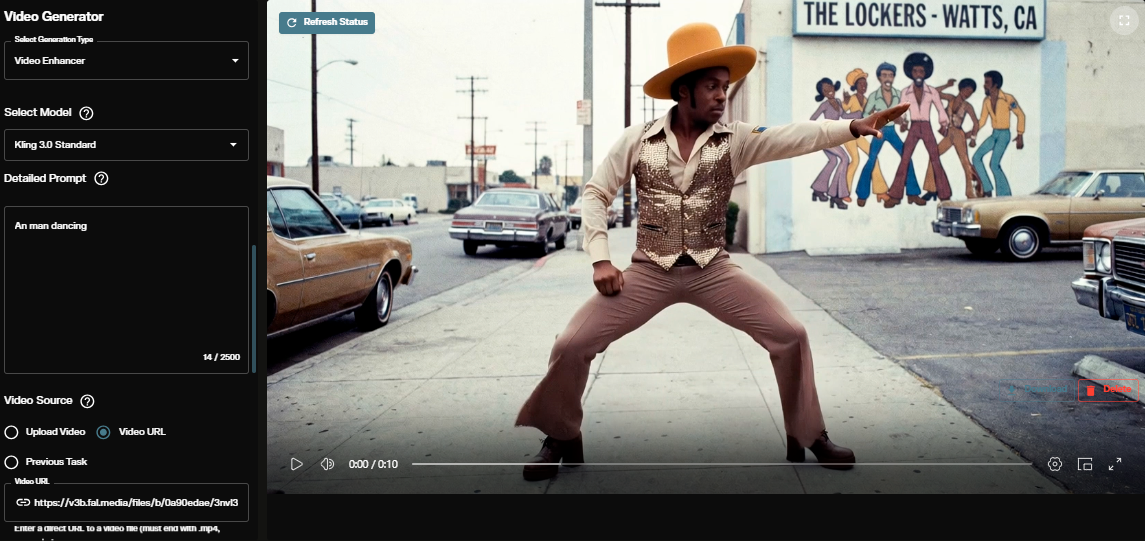
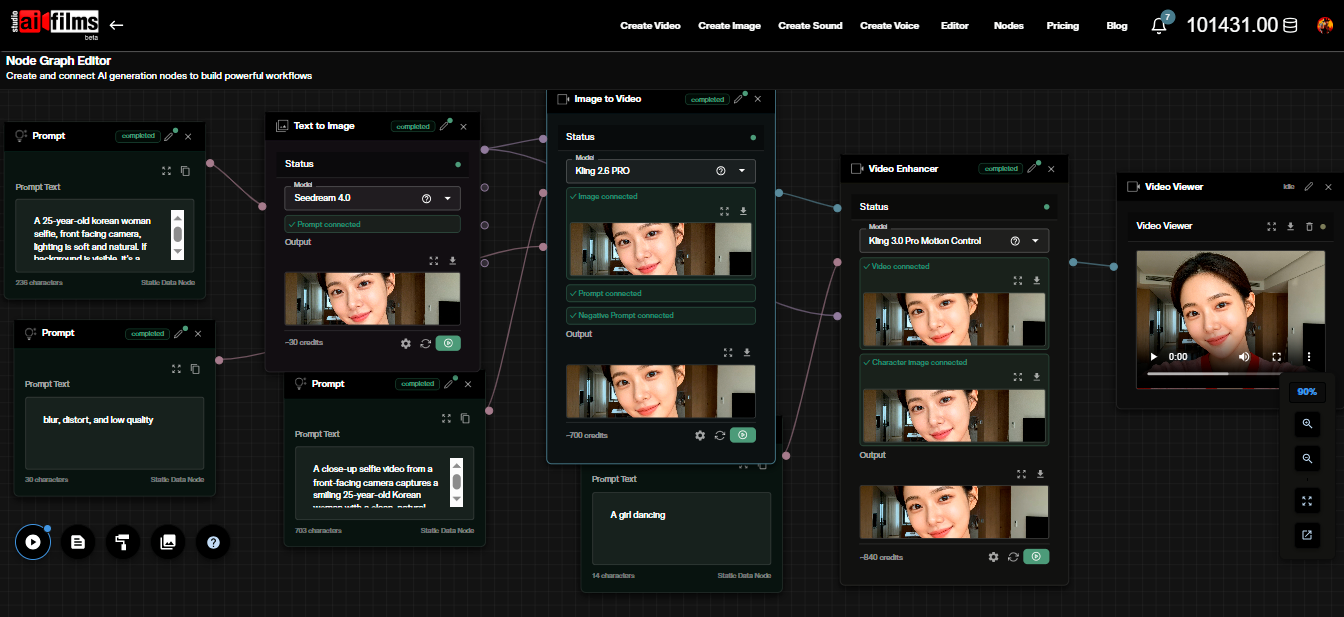
The AI filmmaking conversation captured at Variety's Entertainment and Technology Summit in 2025 centered on producers describing AI as a tool that amplifies creative ambition. Foster is making the inverse argument: that ambition itself can be replaced by the kind of commercial logic AI is trained to reproduce, without AI being present at all. For filmmakers who want to use AI as a tool for genuine creative exploration, the AI FILMS Studio video workspace provides text-to-video and image-to-video generation built around the filmmaker's own intent rather than optimization metrics.
The craft question behind her argument is worth stating directly. Kosinski is an accomplished director. Bruckheimer has produced some of the most technically demanding large-scale films of the past four decades. A commercial formula does not execute itself; applying it with precision at the scale of a major studio release requires real skill. But the skill involved is the craft of applying an established pattern with maximum efficiency. That is a different craft from the one that produces unexpected creative results.
The Alvarez and Marsal study's finding that 33 percent of consumers believe AI effectively crafts emotionally resonant content may be measuring exactly this intuition. Audiences may not be detecting AI specifically. They may be detecting the absence of creative risk that makes human authorship feel different from any other optimization system.
What the Critique Means for Hollywood's AI Debate
Most of the ongoing industry conversation about AI focuses on whether AI use in production is disclosed, who owns the output, and what happens to the labor categories AI can replace. Foster's remark at Aspen raises a question that sits outside all of those frames.
The argument also has implications for how films are pitched and developed, not just how they are received at the box office. Development decisions made years before a camera rolls can embed the same optimization logic that a generative AI system applies at inference time. A production that optimizes from the earliest development stage toward commercial validation metrics is applying the same optimization decision that an AI content system would apply if given the same commercial brief. The influence of commercial optimization logic on filmmaking does not begin when a generative tool is opened. It begins when the story is chosen.
Paul Schrader has made a related argument from a different direction, examining how AI's capacity to generate commercially viable protagonists depends on the same commercial optimization logic Foster is describing in F1. Schrader's argument is that AI will eventually produce the protagonist; Foster's is that the process producing that protagonist is already operating in films made entirely by humans.
Whether F1's creative team would accept Foster's characterization is beside the point. Her argument is not about intent. It is about the relationship between the production logic applied to a project and the creative logic that AI systems reproduce when given the same commercial objective. A filmmaker can work in good faith within a commercial framework and still produce a result her argument applies to. The question she is raising is structural, not personal.
The combination of those two arguments describes a narrower space than either one alone. AI does not need to be in the room to exert pressure on narrative structure. And when it does enter the room, the product it generates may be harder to distinguish from human commercial filmmaking than anyone in the industry has so far acknowledged. Foster's "made by AI" is the clearest way any prominent filmmaker has stated that publicly. The question it raises will outlast any one film.
The industry is beginning to have both conversations at once. That is new.
What Human Authorship Has to Prove
Foster's argument implies that the industry's current frameworks for thinking about AI are asking the wrong question. Disclosure tells audiences whether AI was used. It does not tell them whether human creative judgment produced results that a machine optimizing for the same commercial goal would not have arrived at independently.
That is the harder question, and it is the one Foster is forcing into the conversation. If a film can feel indistinguishable from what AI would generate without AI being present, then the defense of human creative authorship cannot rest on the production process alone. It has to rest on the creative choices the process produced, and whether those choices required a human to make them.
The filmmakers who will answer that question most convincingly are the ones who use AI as a genuine creative tool rather than as an optimization layer. Those are productions where the AI generation reflects a specific artistic intent that the filmmaker brought to the process, not where the filmmaker's intent was determined by what the commercial formula requires. The distinction is available to anyone building a production workflow, at any budget level, who understands the difference.
That distinction matters equally for independent filmmakers and emerging voices as it does for the major studio productions Foster was describing at Aspen. A production does not need to be expensive to resist commercial optimization logic. Some of the most commercially unexpected films of the past decade came from directors working without institutional pressure to optimize for a validated audience segment. The argument applies at every budget level. The optimization logic Foster is describing is not a function of scale. It is a function of what questions a production is trying to answer before principal photography begins.
The disclosure conversation and the authorship conversation are related but not the same thing. Knowing that a film used or did not use generative AI tells audiences something about the production process. Foster's remark at Aspen is asking them to notice something about the creative result: whether the film they are watching could have been generated by a system optimizing for the same commercial goal, regardless of who was in the room when it was made.
The conversation she started at Aspen will not resolve quickly. The industry is still building the vocabulary to discuss what generative AI produces and what human authorship contributes. Her remark gives that vocabulary a specific reference point. A named film, a named filmmaker, a precise claim: F1 was made by AI. That claim is harder to dismiss than a general observation about formula filmmaking. It assigns accountability to a specific judgment and puts the argument on record.
Foster is not arguing against commercial filmmaking or against the financial logic that drives studio decisions. She has worked inside that logic her entire career and found ways to make artistically significant work within it. Her argument is more specific: that commercial logic, operating without countervailing authorial intent, produces something audiences can now name precisely. That is what her Aspen remark accomplishes.
Sources:
Variety | TMZ | Deadline | The Hollywood Reporter | MovieWeb
Continue Reading
.jpg?w=3840)


a.jpg)

Video & LipSync
- Video Generator
- Text to Video
- Image to Video
- Start-End Frame to Video
- Draw to Video
- Motion Control
- Video Enhancer
- Video Upscaler
- Video Extend
- Video to Video LipSync
- Audio to Video LipSync
- Image to Video LipSync
- Video FaceSwap
- Seedance 2.5
- WAN 3.0
- Seedance 2
- FLUX 3
- Minimax H3
- Vidu Q3 Pro
- Grok Imagine Video 1.5
- Gemini Omni
- Google Veo 3.1
- Kling 3.0 Pro
- Luma Ray 3.2
- LTX 2.3
- Happy Horse 1.1
- Kling 3.0 Motion
- ByteDance Upscaler
- InfiniteTalk
- InsightFace
Image & Edit
- AI Character
- AI Actor
- Art Generator
- Text to Image
- Image to Image
- LoRA Image to Image
- Draw to Edit
- Image LoRA Training
- Remove Background
- Image Enhancer
- MidJourney 8.0
- Krea 2
- OpenAI GPT Image 2.0
- Nano Banana Pro Ultra
- Nano Banana 2 Lite
- Nano Banana Pro
- Minimax Image
- Clarity Pro
- Z-Image Turbo LoRA
- Krea 2 Turbo LoRA
- Z-Image LoRA Trainer
- Qwen Image LoRA Trainer
- Background Erase Network 2 (BEN2)