
Paul Schrader: The First AI Box Office Protagonist Is Coming
.jpg?w=3840&q=90)
Share this post:
Paul Schrader: The First AI Box Office Protagonist Is Coming
Paul Schrader told the fourth annual AI on the Lot conference in Culver City on May 28 that the defining test for AI in Hollywood will be a fully AI generated protagonist in a film that earns money at the box office. "The real tip of the spear", he said, "is when we can create an AI protagonist, not a hybrid, and that movie makes money".
Schrader wrote Taxi Driver and Raging Bull for Martin Scorsese and directed First Reformed, The Card Counter, and Mishima: A Life in Four Chapters. His public argument for AI's creative possibilities has been building for more than seven months, with each public appearance adding a more specific claim than the last. In June 2026, Scorsese himself joined Black Forest Labs as an advisor, citing AI storyboarding as a pre production efficiency tool.
A Thesis Seven Months in the Making
Schrader first stated the position publicly in October 2025. Variety reported he said the first fully AI feature was "two years away" and that he already had "the perfect script to do all AI". In the same period, The Hollywood Reporter quoted him on the technical capacity: "You can create the face, and you can create the emotion on the face, and you can sculpt it".
His work on the question had been going on longer than those interviews suggested. Conference materials for AI on the Lot noted that Schrader had been "quietly publishing experiments with image generators" for years before the October 2025 statements. The May 28 keynote was the most public step yet in an argument he had developed without announcement.

Taxi Driver (1976), written by Paul Schrader. Original: Columbia Pictures. Public Domain, via Wikimedia Commons.
Schrader's credibility on this question is partly a function of his specific career history. He has written protagonists whose interiority drives entire films, characters like Travis Bickle in Taxi Driver whose inner world is the story. His argument that an AI can generate a protagonist audiences will pay to watch is coming from someone who has spent decades constructing exactly what he says AI can eventually replicate.
That background makes his claim more specific than a general prediction about AI capability. He is describing something he has spent a career doing, and arguing that the technology is approaching the threshold for doing it too.
The Live Demonstration
On stage in Culver City, Schrader moved from argument to demonstration. He used ChatGPT to generate a script treatment in minutes during the session. The result, which he called "The Collection Agent", was a live proof of concept, not an announcement of a project in development.
His framing of what AI makes possible centered on a single image. "You do the new Clint Eastwood", he said. A bankable archetype defined by traits and screen presence, generated from a text description, with no living actor behind it. That is the protagonist category his prediction is about.
The live demonstration served a specific rhetorical purpose. Schrader has been making the argument in interviews for months. Generating a treatment in front of an industry audience moves the claim from assertion to demonstration. Whether "The Collection Agent" is a good script is beside the point. The point is that the output existed within the session.
Faster Than He Predicted
When Schrader said in October 2025 that the first AI feature was two years away, he was among the most optimistic public voices in Hollywood on the question. What followed was faster than even that forecast.
Dreams of Violets, a fully AI generated feature, received its world premiere in Tribeca's official selection in June 2026, roughly seven months after his prediction. Schrader had placed the first AI feature film 24 months out. It arrived in seven. The screenwriter who was already calling it inevitable had underestimated the timeline by 17 months.
That compression has become a recurring pattern in AI capability forecasts from industry insiders. The people most informed about the technology have consistently underestimated how fast specific thresholds would be reached. Schrader's prediction belongs to that pattern, and his willingness to make a specific timeline claim is what makes the compression documentable.
Why the Box Office Test Matters
Schrader's specific threshold is a box office result, not a festival selection or a critical reception. A film that wins at Tribeca with an AI generated protagonist answers a different question than a film that earns money from a general audience at scale.
Festival audiences evaluate work within a frame of art cinema and experimentation. Multiplex audiences evaluate it against genre expectations and entertainment value. The gap between those two evaluation modes is what Schrader is pointing at when he says "that movie makes money." He is describing a result that proves audience acceptance at the level that drives studio investment decisions.
The Dreams of Violets Tribeca premiere demonstrates that AI generated films can reach official festival competition. Whether an AI protagonist can drive commercial box office is the question Schrader is actually asking, and the festival circuit does not answer it.
The Audience Gap
The harder question behind his prediction is whether audiences will accept an AI generated protagonist, a question the industry has not yet answered at the box office. A March 2026 study by Alvarez and Marsal of nearly 2,000 US consumers found that only 33 percent believe AI effectively crafts emotionally resonant content. Among industry creators and marketers, 77 to 78 percent believe it does.
That gap of more than 40 points is what a box office result would close, or confirm. The industry is nearly unanimous that AI can do the work; the audience is not convinced. David Scarpa, another prominent Hollywood screenwriter, has raised questions about AI's capacity for the cognitive complexity of screenwriting, placing two of the most respected working writers in direct disagreement about what AI can actually produce. Jodie Foster made a parallel argument from outside the screenwriting community, arguing at the Aspen Ideas Festival in July 2026 that F1's narrative structure felt indistinguishable from what AI would have generated, even though no AI was reportedly involved in the film's production.
What the Screenwriter's Stake Is
The AI protagonist question carries a different weight for a screenwriter than for a director or producer. A screenwriter's job is to generate a protagonist that an audience will spend two hours following. If AI can generate that protagonist, the screenwriter's most fundamental task is reproducible by a machine.
Schrader's enthusiasm for the prospect is therefore not the obvious position for a screenwriter to take. His argument is that the human skill required to direct AI toward a compelling protagonist is itself a form of authorship, and that the screenwriter who can do this well will produce a different result than one who cannot. The tool does not eliminate the craft; it changes what the craft requires.
That framing is consistent with how Schrader has described his own approach to the live demonstration at AI on the Lot. He is not arguing that AI replaces screenwriters. He is arguing that the screenwriters who understand AI will produce the first box office result that changes the industry's assumptions about what AI can generate.
What an AI Protagonist Actually Requires
Schrader's "new Clint Eastwood" framing identifies the technical requirement precisely. A bankable AI protagonist is not a photorealistic human face. It is a coherent screen persona with recognizable traits, consistent behavior across scenes, and the capacity to generate audience investment. Generating a face is the easiest part. Generating a character that audiences will follow for two hours is the hard part.
Current AI generation can produce faces with specific emotional expressions and physical characteristics. It can hold visual consistency across shots with careful prompting and workflow discipline. What it cannot currently do without significant human direction is generate the character behavior arc, the interiority, and the emotional development that a screenplay provides.
Schrader's argument is not that AI will write and generate the protagonist independently. It is that a screenwriter can write the character arc and a director can use AI generation to realize it visually, creating a protagonist who exists on screen without a living actor but who is shaped entirely by human creative decisions.
The Commercial Logic
The box office test Schrader describes is ultimately a commercial argument. Studios invest in productions because they believe a specific combination of story, cast, and execution will generate a return. An AI protagonist removes one major cost component from that equation: talent deals, scheduling, physical production requirements tied to a specific performer's availability.
A film built around an AI protagonist can be produced on a timeline independent of any living actor's schedule. Reshoots, extensions, and sequels can be produced without renegotiating with a talent agency. The character ages at the speed the story requires rather than at the speed a human performer ages.
Those commercial arguments are separate from the creative question of whether AI can generate a protagonist audiences care about. The studios will not test the concept at commercial scale until the creative question is at least provisionally answered. Schrader is arguing that someone is about to answer it, and that the industry should pay attention to who does it first.
The Comparison With David Scarpa
The public disagreement between Schrader and David Scarpa maps the range of serious professional opinion on AI's creative capacity. Schrader writes for directors who visualize. His screenplays are architectural documents for visual storytelling. His enthusiasm for AI generation reflects genuine overlap between what he does and what AI generation can produce.
Scarpa writes for comprehension of complex historical and psychological material. His films turn on the capacity to construct arguments through character that require the reader to hold competing ideas simultaneously. His skepticism about AI's cognitive capacity is equally grounded in his specific experience of what screenwriting requires.
The disagreement is not about capability in general. It is about which kind of screenwriting AI can replicate. Schrader is probably right about the kind he does. Scarpa is probably right about the kind he does. The question is which kind will get to the box office test first.
The Inevitable Moment
Schrader's October 2025 prediction was "two years away." The Dreams of Violets Tribeca premiere arrived in seven months. The pattern of underestimation suggests his current statements about what comes next should be read with the same correction: it is probably closer than his framing implies.
The first AI protagonist to earn money at the box office will not necessarily be produced by a filmmaker who announces the intent in advance. It will more likely arrive as part of a production whose AI elements are disclosed after the commercial result is documented. The announcement Schrader is predicting may come as a retrospective rather than a prospective announcement.
That makes the box office result itself, when it arrives, the data point worth watching rather than any pre-announcement. Schrader's value is in naming the threshold clearly enough that the industry will recognize when it has been crossed.
Where the Prediction Stands
Schrader's October 2025 statement was followed in seven months by the first AI generated feature in Tribeca's official selection. His May 2026 statement at AI on the Lot identifies the next threshold. A box office result with an AI protagonist is what he is pointing to. The question is whether the seven month compression from announcement to Tribeca premiere is a pattern that holds for the next benchmark.
Several productions announced in 2025 and 2026 involve AI generation at levels that could produce a commercially distributed protagonist. Whether any of them will be the specific film Schrader is describing depends on production timelines and distribution decisions that are not yet public. His prediction function is to establish that the industry is watching for that result, which increases the likelihood that the filmmakers pursuing it will announce it when it arrives.
The May 2026 AI on the Lot conference where Schrader spoke drew 2,460 attendees, nearly double the prior year. The audience for predictions about AI protagonist box office results is growing at the same rate as the institutional investment in producing them. Whatever arrives first at the box office, Schrader has made sure the benchmark is clearly named.
The Screenwriter's Competitive Advantage
Schrader's argument implies a specific competitive advantage for screenwriters who understand AI generation. A director can use AI to generate visuals, but the script that directs what those visuals should accomplish still requires a writer. The screenwriter who can write both narrative architecture and the prompt logic that will realize it visually is better positioned for an AI protagonist production than one who treats the two tasks as separate disciplines.
His generation spent decades learning the craft of writing for actors who interpret characters through performance. Writing for AI generation requires understanding what the generation model responds to, what visual and behavioral traits can be specified, and what the model cannot produce regardless of prompt precision. That is a different craft, but it is still a craft, and Schrader is arguing that the screenwriters who learn it early will have the first results to show.
The Historical Analogy
Schrader draws on a career spent watching new production technologies reshape what was possible. Each generation of technology created the same argument: people who learned to use it before it became standard gained a competitive advantage that lasted until the technology became universal.
AI generation is following the same pattern at faster pace. The screenwriters and directors who spent 2024 and 2025 working with the tools are building production fluency that cannot be acquired from reading about the results.
Schrader's thesis about the AI protagonist is also an argument about why he published experiments for years before making the prediction publicly. The first box office result will be measured against the benchmark he named.
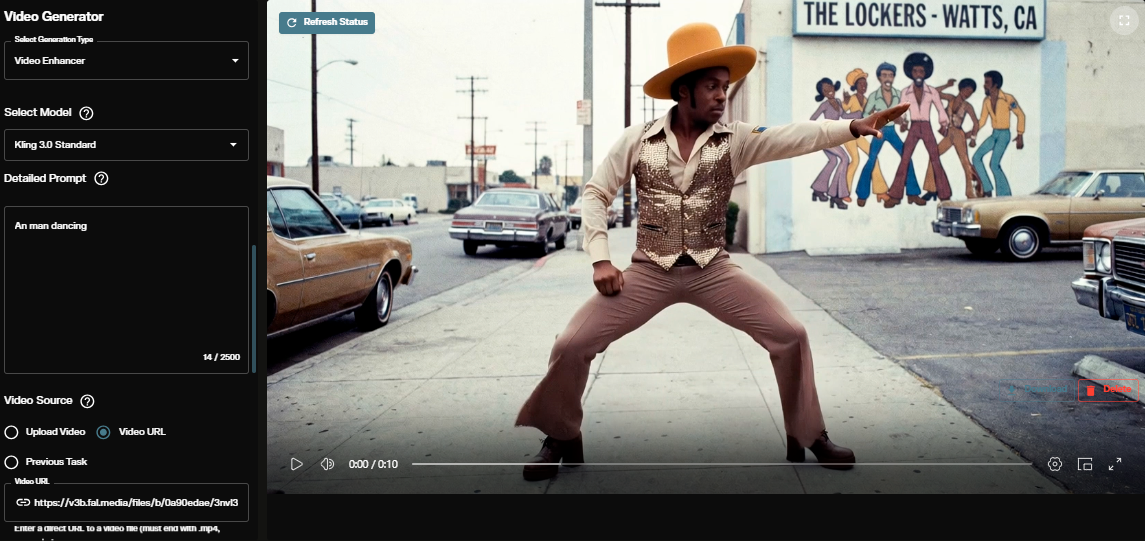
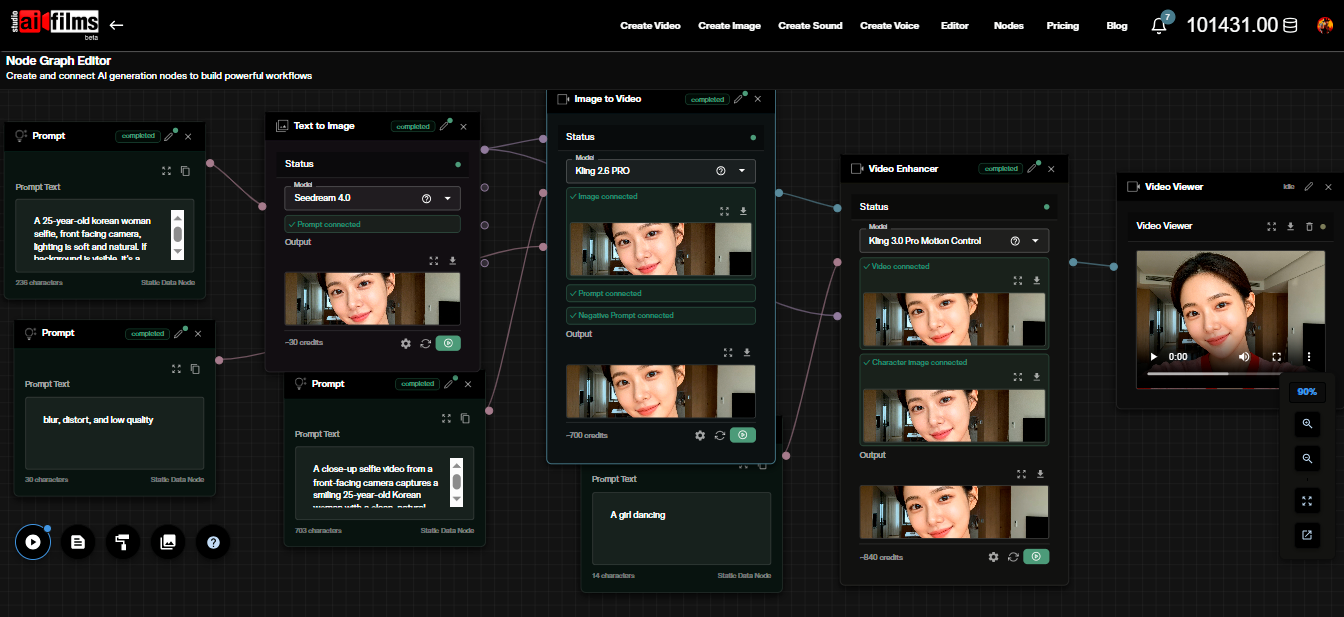
Filmmakers who want to work with AI video on their own projects can start in AI FILMS Studio.
Sources
Deadline | Variety | The Hollywood Reporter | Silicon Report | Alvarez and Marsal | AI on the Lot
Continue Reading
.jpg?w=3840)


Video & LipSync
- Video Generator
- Text to Video
- Image to Video
- Start-End Frame to Video
- Draw to Video
- Motion Control
- Video Enhancer
- Video Upscaler
- Video Extend
- Video to Video LipSync
- Audio to Video LipSync
- Image to Video LipSync
- Video FaceSwap
- Seedance 2.5
- WAN 3.0
- Seedance 2
- FLUX 3
- Minimax H3
- Vidu Q3 Pro
- Grok Imagine Video 1.5
- Gemini Omni
- Google Veo 3.1
- Kling 3.0 Pro
- Luma Ray 3.2
- LTX 2.3
- Happy Horse 1.1
- Kling 3.0 Motion
- ByteDance Upscaler
- InfiniteTalk
- InsightFace
Image & Edit
- AI Character
- AI Actor
- Art Generator
- Text to Image
- Image to Image
- LoRA Image to Image
- Draw to Edit
- Image LoRA Training
- Remove Background
- Image Enhancer
- MidJourney 8.0
- Krea 2
- OpenAI GPT Image 2.0
- Nano Banana Pro Ultra
- Nano Banana 2 Lite
- Nano Banana Pro
- Minimax Image
- Clarity Pro
- Z-Image Turbo LoRA
- Krea 2 Turbo LoRA
- Z-Image LoRA Trainer
- Qwen Image LoRA Trainer
- Background Erase Network 2 (BEN2)