
Locarno Pro 2026: Of 1,000+ Indie Film Pros at the AI Algorithm Debate, Only Two Were Full of Hope

Share this post:
Locarno Pro 2026: Of 1,000+ Indie Film Pros at the AI Algorithm Debate, Only Two Were Full of Hope
More than 1,000 independent film industry professionals attended Locarno Pro at the 79th Locarno Film Festival, running August 6 to 11. Over ten days they debated algorithms, AI, data driven acquisitions, and the future of arthouse distribution. At the opening StepIn think tank panel, moderator A.C. Coppens asked the packed room a direct question. Who is full of hope? Two hands went up.
That data point, reported by Deadline, is the clearest summary of where the independent film professional community stands in August 2026. The session had just heard specific analysis from researcher Stephen Follows showing how algorithmic decision making at streaming platforms has narrowed the acquisition market for independent films. The two who raised their hand for hope were not wrong. They were rare.
The StepIn Opening Panel
StepIn is Locarno Pro's annual think tank. The 2026 program theme was AI, algorithms, and how data is reshaping independent film.
Stephen Follows presented research on how streaming platforms use behavioral data to make acquisition decisions. The research showed that data driven acquisition models favor content with proven engagement signals. Familiar genres, known talent, and territories with demonstrated subscriber conversion all score well. Independent arthouse films, which depend on festival discovery and critical positioning rather than prior audience behavior, do not generate the signals these models optimize for.
The opening panel ran through this analysis in detail. After it concluded, Coppens asked the room who was full of hope. In a room of more than 1,000 film industry professionals, two people raised their hands.
Locarno Pro director Markus Duffner told Deadline: "Step-In is anticipating one or two years max because things are moving so fast." That one or two year window is not a prediction about recovery. It is a prediction about how quickly the structural shifts visible in the data will reach each remaining part of the independent film market.
Andrea Occhipinti: Conviction Over Data
The most direct response to the algorithm question came from Andrea Occhipinti, founder and president of Lucky Red, the Italian distributor responsible for titles including Pawel Pawlikowski's "Ida" and multiple Palme d'Or winners across three decades.
Occhipinti stated plainly: "We don't use algorithms to choose a film that we want to distribute or produce." His decision process runs on instinct, sensitivity, and experience. He named two films as evidence of what algorithm driven acquisitions would have rejected: Pawlikowski's "Ida" and Barry Jenkins's "Moonlight."
Neither film fits the behavioral data profile of commercially viable arthouse. "Ida" is a black and white Polish film about a novice nun discovering her Jewish heritage. "Moonlight" is a story told in three chapters about a Black boy in Miami raised in poverty. Both films won Academy Awards. "Ida" took Best International Feature Film in 2015. "Moonlight" won Best Picture in 2017. Both are now canonical works of contemporary cinema.
An acquisition model that filters for prior engagement data would have passed on both. Occhipinti's argument is that the quality of judgment required to acquire "Ida" or "Moonlight" is exactly what algorithms cannot replicate, and that replacing that judgment with data is a category error, not an efficiency gain.
The Films That Data Would Have Missed
The "Ida" and "Moonlight" examples are a specific argument about what the independent film market is for.
Major studio acquisitions and platform commissioning models target known audiences with measurable appetite. That is a commercially sound approach for its intended purpose. The independent film market serves a different function: it introduces audiences to work they did not already know they wanted. The distributor who acquired "Ida" bet that audiences would find a black and white Polish film deeply moving. The data from prior behavior could not have predicted that bet would land.
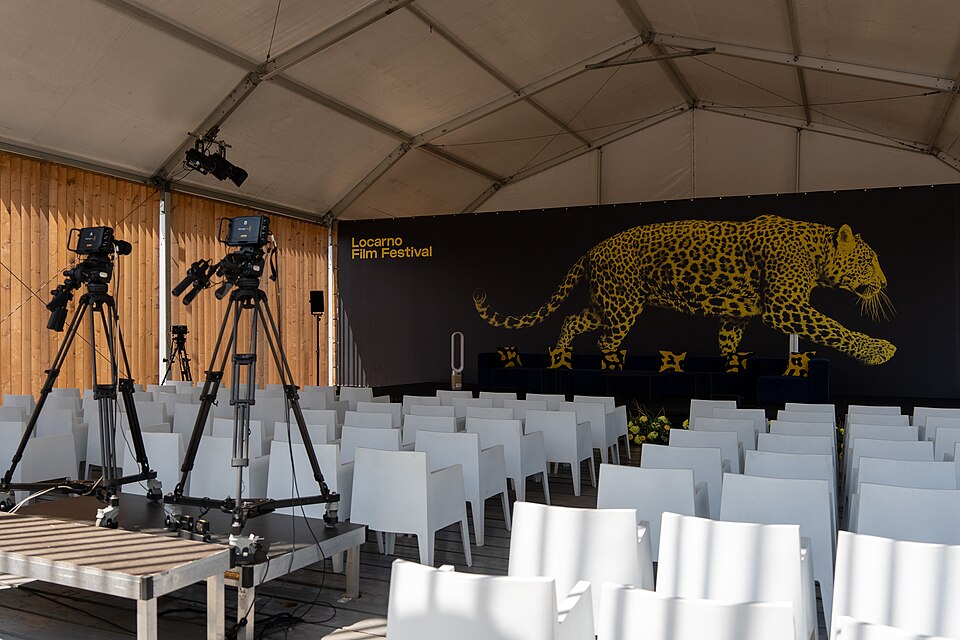
Kalai Ramu, CC BY-SA 4.0, via Wikimedia Commons
The THR Power/People/Data panel at Locarno Pro extended the same argument. MK2 and Lucky Red both described operating on conviction rather than data. Their position is that the films worth distributing are precisely the ones that behavioral data cannot identify in advance.
This is the paradox of data driven acquisition in arthouse. The data that would help identify an arthouse hit does not exist because the film's audience has never been assembled before. Data can identify sequels and genre continuations. It cannot identify what "Ida" was before "Ida" existed.
Olivia Wilde on Theatrical
Olivia Wilde attended the festival and said directly: "They bribe you to not take theatrical. We have to fight for it."
The "they" is streaming platforms that offer production budgets with contractual provisions steering films away from theatrical release. The mechanism is financial: a platform offers funding with terms that either prohibit theatrical windows or make them too narrow to be commercially relevant. Accepting the deal means accepting the platform's distribution model.
Wilde's use of "bribe" is deliberate. It describes a financial incentive whose cost is distribution autonomy. A filmmaker who accepts platform funding on those terms has traded theatrical revenue potential, the critical visibility of a theatrical run, and the long term cultural presence that theatrical releases build, for an upfront production budget. The Locarno Pro audience for this remark consisted of professionals who make exactly those decisions.
Venture Capital at Locarno Investment Community
Alongside the algorithm debate, the Locarno Investment Community ran August 6 to 9. It drew venture capital interest as an alternative financing source for arthouse cinema.
The VC presence reflects a structural reality: traditional streaming platforms have contracted their spending on independent European and international cinema. The platforms that expanded acquisitions aggressively from 2020 to 2023 have since reduced their budgets for films that streaming platform models cannot read as commercially viable. That contraction left a financing gap.
The Locarno Investment Community provides a formal context for conversations about who fills it. It connects arthouse producers with investors looking for returns from cultural assets rather than behavioral data optimization. Whether VC investment can replace streaming acquisition at scale is the open question. That VC funds attended Locarno in 2026 to explore those connections is itself a measure of how far the streaming acquisition market has shifted.
Nazzaro on AI: No Ideological Prejudices
Before Locarno 79 opened, Giona Nazzaro framed the festival's curatorial position as the counter-algorithm: a human programmer who gives a damn is the festival's answer to algorithmic recommendation culture. At the festival itself, Nazzaro confirmed that position is not hostility toward AI tools.
Nazzaro told press at the festival: "We have no ideological prejudices whatsoever" on AI. His view is that AI is one tool among many. The festival's position, based on curation rather than eligibility rules, does not require rejecting AI at the tool level. It requires defending human judgment at the selection level.
This is a precise distinction. Locarno is not Cannes. At the Cannes Marché, AI vendors dominated the commercial floor while the competition banned AI generated films from Palme eligibility. Locarno's approach names what human programmers provide without restricting what tools filmmakers use to make the work.
Co-Production as the Survival Strategy
Multiple sessions at Locarno Pro identified coproduction as the primary mechanism for arthouse survival in the current market. The financing logic is direct: no single territory can carry a film's budget alone when streaming investment has contracted. Multiple territories coproducing a film spread both the cost and the distribution path.
Coproduction has been standard practice in European arthouse for decades. What changed in 2026 is that coproduction is now the survival strategy for films without commercial genre positioning, not one option among several. When streaming platforms contract and studio distributors reduce their festival presence, coproduction with broadcast and public funds becomes the primary path.
AFM House, launching in November 2026 as a dedicated AI and tech venue at the American Film Market, addresses a different part of the same problem. Locarno Pro asked how arthouse survives algorithmic acquisition models. AFM House asks how AI companies and independent distributors find each other in a commercial market. Both are responses to the same structural shift: the streamers that were the primary acquirers of independent film have changed their behavior, and the market is reorganizing around that change.
What Two Raised Hands Means
The "two of 1,000 raised their hand" figure is not a precise scientific measurement. It is a room's self reported emotional state at a specific moment in a specific conversation.
It is also the clearest statement from a professional community of that scale about the independent film industry in mid-2026. 1,000 professionals attended the program. They heard data on algorithmic acquisition. They discussed the gap between what data can identify and what arthouse film requires. At the end of that conversation, almost none of them reported hope.
That result does not mean the independent film sector lacks resources, talent, or good work. Locarno selected 233 titles for the 79th edition. Locarno Pro drew 1,000 professionals. The Locarno Investment Community attracted VC participants. These are the actions of an industry that is working.
What the two raised hands reflects is the industry's assessment of the structural environment in which that work is happening. The arthouse professionals at Locarno Pro in August 2026 are doing their jobs while holding a clear view of the conditions around them. The two people who raised their hand for hope are not naive. They are choosing a different frame than the rest of the room.
TIFF's Market 2026 AI Innovation Hub, launching that same month, represents one version of that different frame: festivals and markets building AI infrastructure rather than only debating whether AI belongs. The industry is not choosing one position. It is running both conversations simultaneously.
Deadline | Variety | The Hollywood Reporter | Screen Daily
Continue Reading
.jpg?w=3840)


Video & LipSync
- Video Generator
- Text to Video
- Image to Video
- Start-End Frame to Video
- Draw to Video
- Motion Control
- Video Enhancer
- Video Upscaler
- Video Extend
- Video to Video LipSync
- Audio to Video LipSync
- Image to Video LipSync
- Video FaceSwap
- Seedance 2.5
- WAN 3.0
- Seedance 2
- FLUX 3
- Minimax H3
- Vidu Q3 Pro
- Grok Imagine Video 1.5
- Gemini Omni
- Google Veo 3.1
- Kling 3.0 Pro
- Luma Ray 3.2
- LTX 2.3
- Happy Horse 1.1
- Kling 3.0 Motion
- ByteDance Upscaler
- InfiniteTalk
- InsightFace
Image & Edit
- AI Character
- AI Actor
- Art Generator
- Text to Image
- Image to Image
- LoRA Image to Image
- Draw to Edit
- Image LoRA Training
- Remove Background
- Image Enhancer
- MidJourney 8.0
- Krea 2
- OpenAI GPT Image 2.0
- Nano Banana Pro Ultra
- Nano Banana 2 Lite
- Nano Banana Pro
- Minimax Image
- Clarity Pro
- Z-Image Turbo LoRA
- Krea 2 Turbo LoRA
- Z-Image LoRA Trainer
- Qwen Image LoRA Trainer
- Background Erase Network 2 (BEN2)