
Jon Favreau: 'A Healthy Concern' About AI in Hollywood
.jpg?w=3840&q=90)
Greg2600, CC BY-SA 2.0, via Wikimedia Commons
Share this post:
Jon Favreau: 'A Healthy Concern' About AI in Hollywood
Jon Favreau told CBS Sunday Morning on May 17, 2026 that he has "a healthy concern about what might come" regarding artificial intelligence in Hollywood. The interview aired three days after the world premiere of The Mandalorian and Grogu at the TCL Theatre in Hollywood, the first Star Wars film shot entirely in Los Angeles.
CBS Sunday Morning is not a trade program. Its national audience includes millions of viewers with no professional stake in Hollywood's AI debate. Favreau's remarks there reached a different audience than the industry panels and festival press conferences where most filmmakers speak on AI.
The interview covered Favreau's relationship with technological change across a career spanning the transition from practical to digital effects and from traditional sets to LED virtual production stages. Each of those transitions was contentious at the time. His "healthy concern" framing situates AI within that longer pattern.
The timing was specific. The interview aired during the press tour for The Mandalorian and Grogu, the first Star Wars theatrical film produced on LED volume stages in Hollywood. Favreau was describing his position on AI innovation while promoting a film that itself represents the previous generation's major technology transition.
His use of "healthy concern" as a phrase is precise. The modifier does work. A concern without "healthy" would imply anxiety or opposition. "Healthy" frames the concern as appropriate and manageable: something to engage rather than resolve through avoidance or acceptance.
The phrase "a healthy concern about what might come" is prospective. Favreau is not reacting to a specific harm he has already experienced. He is describing an orientation toward a technology that is still becoming. That prospective quality distinguishes his statement from filmmakers reacting to specific AI deployments they have encountered.
Transparency Over Avoidance
"Trying to avoid innovation doesn't seem to be a winning strategy," Favreau said, "but helping to have transparency when using new technologies, understanding as best we could the ramifications of them, really thinking things through and trying to be responsible, I think that's important."
Correspondent Tracy Smith conducted the interview for the national broadcast. Favreau named responsibility and transparency as the appropriate response to AI, without calling for abstention from the technology.
"Life has improved, but there are always unintended consequences if anything novel is embraced without being thoughtful," he added.
Favreau's framework is procedural, not directional. He is not saying AI should be adopted or avoided. He is describing practices he believes should govern technology adoption: transparency, thoughtfulness, and awareness of unintended consequences.
The emphasis on transparency has a specific professional history for Favreau. He built The Mandalorian's virtual production methodology in public, documenting the Volume's techniques so the rest of the industry could evaluate and adopt the approach with full knowledge of what it was. That is his model for technology integration.
His three quoted sentences from the CBS interview are structured as a progression: from a rejection of avoidance, to a description of responsible practices, to an acknowledgment that unintended consequences are inherent to novelty. The argument is careful in structure, not just in content.
The absence of any named AI system from his remarks is notable. Favreau did not endorse or criticize any specific platform, model, or use case. His statement is about method. That generality makes it applicable across the full range of AI applications currently in production, from image generation to script development to voice synthesis.
Responsibility as a term appears in most Hollywood AI statements that are neither flat endorsements nor flat rejections. What Favreau adds to that pattern is the observation that avoiding innovation is not a winning strategy. His argument is that selective engagement is more workable than principled abstention.
The phrase "unintended consequences" carries weight from a filmmaker who pioneered virtual production technology. The Volume was not expected to become the standard for tentpole productions within five years. That adoption at scale produced effects that were not anticipated when the technology was developed. He is applying the same lesson to AI.
The CBS interview was conducted during a week when several major Hollywood figures were making public statements on AI at Cannes. Favreau's statement is the most pragmatic of the group. Where del Toro drew a line between human art and AI generation, Favreau described a practice for navigating the space between the two.
A Pioneer's Position
Favreau is among Hollywood's most technically engaged practitioners. He pioneered large scale LED virtual production on the original Mandalorian television series, a method now standard at major studios across the industry.
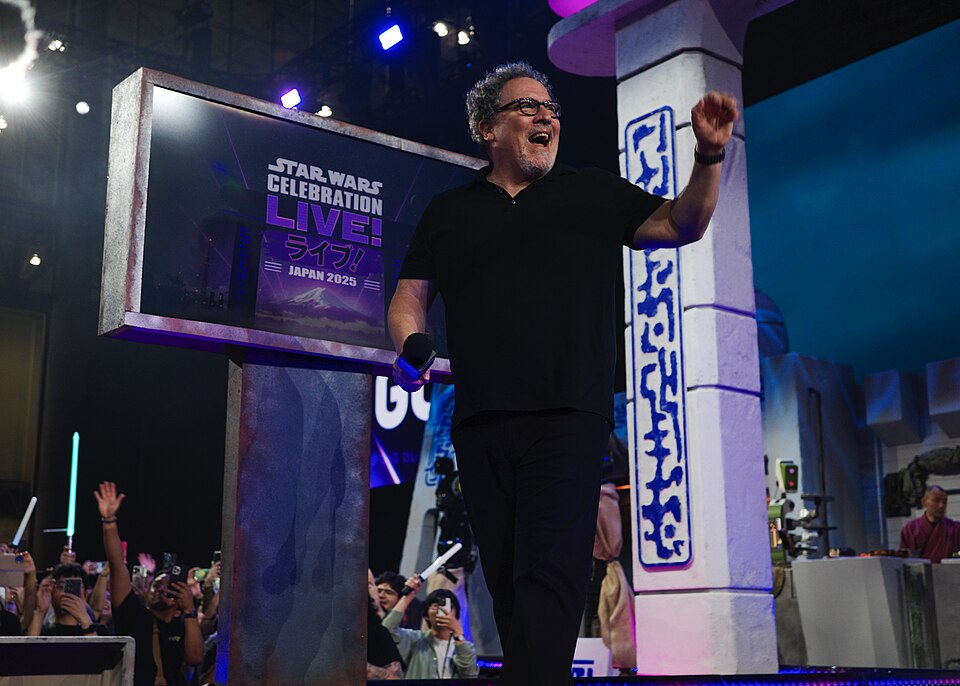
The Mandalorian and Grogu was produced entirely in California, a first for the Star Wars franchise. Favreau has previously expressed concern that production technologies pioneered by independent creators can be appropriated by studios in ways that harm the originators.
The Volume, developed for The Mandalorian's first season in 2019, is now standard infrastructure at studios that produce tentpole content. Favreau's concern about appropriation of independently pioneered technologies comes from direct observation of that transition: he built the technology, then watched it spread without the credit or compensation arrangements that would have been in place had a studio developed it.
That experience shapes his approach to AI. A filmmaker who has seen how quickly a production technology can move from independent innovation to industry standard in five years has a different perspective on adoption speed than someone who has not watched that transition in their own career.
The Mandalorian and Grogu is also notable for being shot entirely in California. Productions of this scale frequently move to international locations for cost reasons. Keeping it in Los Angeles is a statement about local employment and the sustainability of Hollywood as a production center, which is directly related to the AI discussion: the same cost pressures that drive location departures are the ones driving AI adoption.
Favreau built The Mandalorian's Volume without a framework for how the industry would respond. The technology was adopted faster than any governance structure could follow. He is applying that lesson to AI: governance needs to be built during adoption, not after it, because after is too late.
The Mandalorian's production also pioneered real time game engine rendering for background environments. AI generation systems are now extending those same environments in ways that were not anticipated when the Volume was being designed. The lineage from LED volume to AI generated environments is a short one.
Favreau's record in bringing new production technology into mainstream commercial filmmaking establishes his credibility when he discusses responsible technology adoption. He is not arguing from the outside. He built the infrastructure that the next generation of tools is being built on top of.
The Franchise and Technology Context
The Mandalorian and Grogu premiered at the TCL Theatre on May 14, 2026, four days before the CBS interview aired. Favreau was describing his principles while standing at the end of one technology cycle and the beginning of the next.
Star Wars has a specific relationship with production technology. The original trilogy pioneered practical effects. The prequel trilogy pioneered digital effects. The Mandalorian television series pioneered LED virtual production. If the pattern holds, the next generation of Star Wars productions will be shaped by whatever AI integration the industry settles on in the coming years.
Favreau is the person most positioned to make those next generation choices for the franchise. His thoughtful engagement language is not just a personal position. It is a signal to Lucasfilm, his collaborators, and the broader industry about how he intends to operate at the intersection of AI and one of the most commercially significant franchises in existence.
The theatrical release of The Mandalorian and Grogu is also a test of whether a franchise built on streaming can convert that audience to theatrical attendance. The commercial result will shape how Disney approaches future Star Wars productions, and the production technology choices that come with them.
If AI tools can deliver theatrical quality output at lower cost, the business case for using them in franchise production grows. Favreau is the person who would evaluate that case for the Star Wars franchise. His CBS statement is therefore also a signal about how he intends to approach that evaluation.
His "healthy concern" about AI, stated in the context of launching a major franchise film, is meaningful. He is the franchise's most important director. Saying he will be thoughtful about AI tells his crew and collaborators what working environment to expect.
Hollywood's Divided Response to AI
Favreau's measured CBS statement arrives during the most publicly fractured week of debate over AI in Hollywood. At Cannes, Seth Rogen told reporters that writers who use AI for scripts should not call themselves writers. Demi Moore, serving on the 2026 Cannes jury, described fighting AI as "a battle we will lose" and urged finding ways to work with the technology.
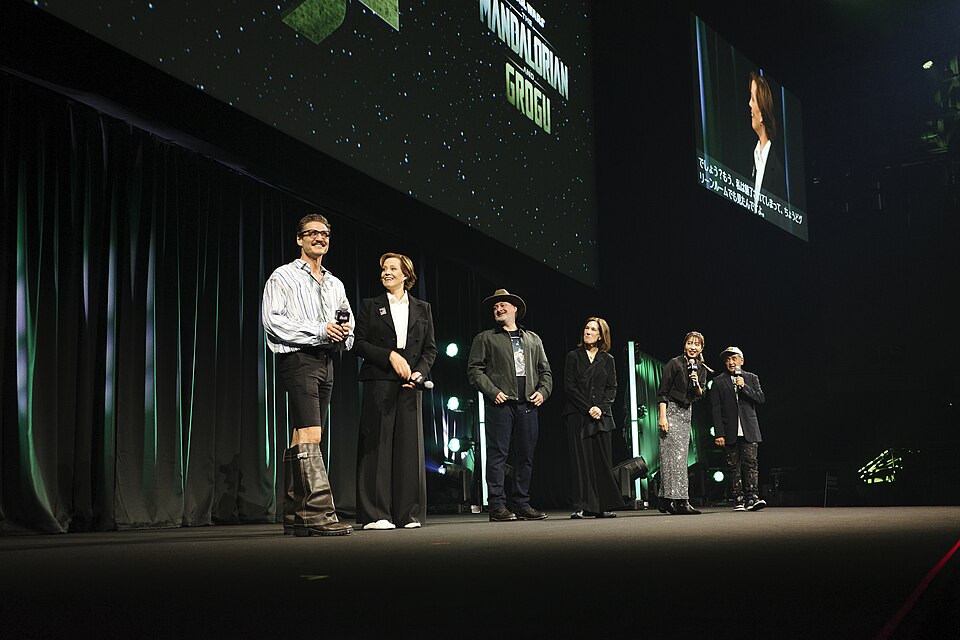
Hannah Einbinder called AI creators "losers" and "not creative" in April 2026. Favreau engaged with none of those positions directly. He framed the question in terms of process: thoughtfulness, transparency, and an awareness that new technologies carry unintended consequences.
In June 2026, Favreau and Guillermo del Toro were both present at a BFI Fellowship dinner in Hollywood, where del Toro warned of cinema illiteracy and called AI 'natural stupidity'. Both filmmakers were in the same room; their positions on AI were not.
The CBS Sunday Morning platform gave his statement a national audience well beyond the entertainment trade press, during the promotional cycle for a major Disney theatrical release.
What made Favreau's CBS appearance notable is who he is in the current production landscape: the filmmaker who built virtual production and is now building the Star Wars theatrical franchise. His words carry more weight than most on the production technology question.
The promotional cycle context also shaped what Favreau could and could not say. He was speaking as the director of a Disney film in active release. "Healthy concern" fits comfortably within what a filmmaker can say in that context while remaining accurate to his actual position.
Favreau's CBS appearance placed him in a different kind of public discourse than Cannes. Cannes is the film industry talking to itself. CBS Sunday Morning is the film industry addressing its audience directly. His remarks on AI are now part of how his audience understands who he is as a filmmaker.
The Creators Coalition, backed by more than 500 industry signatories, has taken a more structural approach to the same concerns.
The range of positions visible in that single week illustrates that Hollywood's AI debate has not consolidated. Rogen said refuse. Moore said adapt. Einbinder expressed contempt. Favreau called for thoughtfulness. Del Toro declared resistance. The industry is genuinely fractured across generation, department, and individual experience.
Guild frameworks negotiated in 2023 created minimum protections around voice, likeness, and consent. Those frameworks addressed the most immediate legal concerns. The cultural and creative questions that Favreau and others are discussing in 2026 were not resolved by contract language.
Favreau's position is difficult for either side to claim. Advocates of AI adoption cannot use him as an endorsement because he named responsibility and transparency as prerequisites. Opponents of AI adoption cannot claim him as support because he explicitly said avoidance does not work as a strategy.
The Creators Coalition's legislative approach and Favreau's individual thoughtfulness approach respond to the same condition: AI capabilities are advancing faster than the industry's ability to build governance frameworks. Favreau is describing what he does personally in the meantime.
The same week as Favreau's CBS interview, Lionsgate announced an equity stake in an AI video platform projecting tens of millions in annual savings. Studio investment decisions and filmmaker principle statements are separate things. The studios are making bets. The filmmakers are deciding how to work inside those bets.
Favreau's measured position is, empirically, where most working Hollywood practitioners actually operate. The outright refusals and the enthusiastic endorsements generate more coverage. The working middle of the industry navigates AI more like Favreau does: engage carefully, watch the consequences, maintain transparency.
Sources
Deadline | CBS Sunday Morning | The Hollywood Reporter | Variety
Continue Reading
.jpg?w=3840)


Video & LipSync
- Video Generator
- Text to Video
- Image to Video
- Start-End Frame to Video
- Draw to Video
- Motion Control
- Video Enhancer
- Video Upscaler
- Video Extend
- Video to Video LipSync
- Audio to Video LipSync
- Image to Video LipSync
- Video FaceSwap
- Seedance 2.5
- WAN 3.0
- Seedance 2
- FLUX 3
- Minimax H3
- Vidu Q3 Pro
- Grok Imagine Video 1.5
- Gemini Omni
- Google Veo 3.1
- Kling 3.0 Pro
- Luma Ray 3.2
- LTX 2.3
- Happy Horse 1.1
- Kling 3.0 Motion
- ByteDance Upscaler
- InfiniteTalk
- InsightFace
Image & Edit
- AI Character
- AI Actor
- Art Generator
- Text to Image
- Image to Image
- LoRA Image to Image
- Draw to Edit
- Image LoRA Training
- Remove Background
- Image Enhancer
- MidJourney 8.0
- Krea 2
- OpenAI GPT Image 2.0
- Nano Banana Pro Ultra
- Nano Banana 2 Lite
- Nano Banana Pro
- Minimax Image
- Clarity Pro
- Z-Image Turbo LoRA
- Krea 2 Turbo LoRA
- Z-Image LoRA Trainer
- Qwen Image LoRA Trainer
- Background Erase Network 2 (BEN2)