
Creators Coalition on AI: Oscar Winners Lead 500 Member Industry Response
.jpg?w=3840&q=90)
CalTV, CC BY 3.0, via Wikimedia Commons
Share this post:
Creators Coalition on AI: Oscar Winners Lead 500 Member Industry Response
The Creators Coalition on AI launched in December 2025 with 18 founding members and grew to more than 500 signatories within weeks. The group includes Oscar winners, major directors, and guild members from SAG-AFTRA, the DGA, WGA, PGA, and IATSE. Its formation marked the first major industry coalition spanning all major guilds and built specifically around AI governance.
.jpg)
What Triggered the Launch
The coalition accelerated after Disney announced a $1 billion investment in OpenAI on December 11, 2025. That announcement arrived as studios were already in AI licensing discussions with technology companies, and it concentrated months of industry anxiety into a single week.
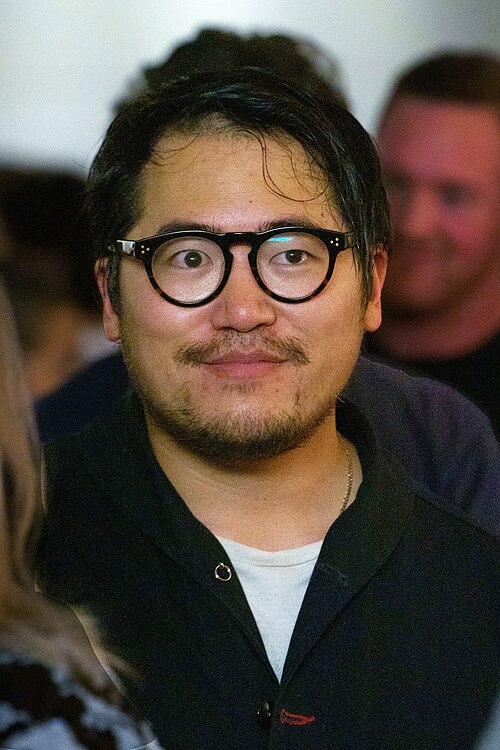
Daniel Kwan, who directed Everything Everywhere All at Once and won two Academy Awards for it, described the moment as requiring immediate organized response. He called AI technology something that can be both "amazing" and "terrible" for filmmakers and characterized the situation as an "all-hands-on-deck" moment to reimagine how the industry should operate.
The Founding Group
The 18 founding members cover directors, producers, writers, and performers across film and television. Oscar winners Daniel Kwan and Sian Heder, who directed CODA, are among them. Natasha Lyonne, Joseph Gordon-Levitt, and Janet Yang, a producer who served as Academy president, are also in the founding group.
David Goyer, whose writing credits include Blade and the Dark Knight trilogy, brings the large franchise production perspective. Director Paul Trillo and producer Jonathan Wang, Kwan's longtime collaborator on EEAAO, complete the creative core.
500 Signatories
The coalition's public list of more than 500 signatories spans the full width of the industry. Natalie Portman, Cate Blanchett, Ben Affleck, Guillermo del Toro, Aaron Sorkin, Ava DuVernay, and Taika Waititi are among those who signed. Guild members from SAG-AFTRA, the DGA, the WGA, the PGA, and IATSE are also represented.
Most organized responses to AI in Hollywood had come from within specific guilds, focused on contract terms. The Creators Coalition pulls together members across all those guilds, plus producers and directors outside the union structure, under a shared governance framework.
.jpg)
Four Principles
The coalition's framework rests on four positions. Transparency, consent, and compensation for any creator whose data or content trains an AI model. Job protection measures and transition plans for workers displaced by AI tools. Guardrails against misuse and deepfakes, particularly for performers. And safeguarding human authorship as the legal and commercial standard for creative work.
These are governance positions, not collective bargaining demands. The coalition has no binding authority over studio contracts. What it has is 500 names it can bring to public campaigns, legislative advocacy, and industry negotiations as those develop. The coalition's push gained new urgency in June 2026 when industry data confirmed 80% of AI post production work in Hollywood goes uncredited, with a major 2026 box office hit among the projects that received no AI credit.
Outside the Guild Structure
The Creators Coalition operates outside the formal guild structure. It is not affiliated with SAG-AFTRA, the WGA, or the DGA as an organization, though its membership overlaps heavily with all three.
That separation is deliberate. Guild contracts set terms for members within specific labor categories. The coalition is building industry-wide norms that apply to the AI governance questions that cut across all of them: training data rights, authorship standards, and disclosure requirements. Joseph Gordon-Levitt, one of the founding members, has described the goal as building an "ethical future" with AI rather than opposing the technology outright. Kwan's work on the coalition earned him recognition as one of the 25 most influential people shaping Hollywood's AI future, in a ranking published in May 2026.
In May 2026, Gordon-Levitt's advocacy expanded to international scale when he was named a UN global advocate for human-centric digital governance, the first major Hollywood figure with a formal UN role focused on AI policy.
On the institutional side, content companies and publishers formed a complementary coalition in June 2026: ARIAM, launched by Disney, BBC, and the New York Times, approached the same governance questions from the production and distribution end of the supply chain.
What the Coalition Is Pushing Against
The Frankenstein VFX controversy at the 98th Oscars surfaced the central problem the coalition is organized around: studios and VFX houses make decisions about AI tools several layers below the director, and there is currently no framework requiring disclosure to creators whose work may have fed the models in use.
The Academy's subsequent ban on AI generated performances and AI written scripts from the 99th Oscars drew institutional lines in two creative categories. The SAG-AFTRA 2026 agreement expanded synthetic performer protections but did not secure compensation for training data use. The coalition's position is that training data compensation is the gap all of these agreements leave open, and it intends to keep that question on the table until a contract addresses it.
That view found a direct challenge on May 12, when Demi Moore told the Cannes jury press conference that fighting AI is "a battle we will lose" and Hollywood should find ways to work with it instead.
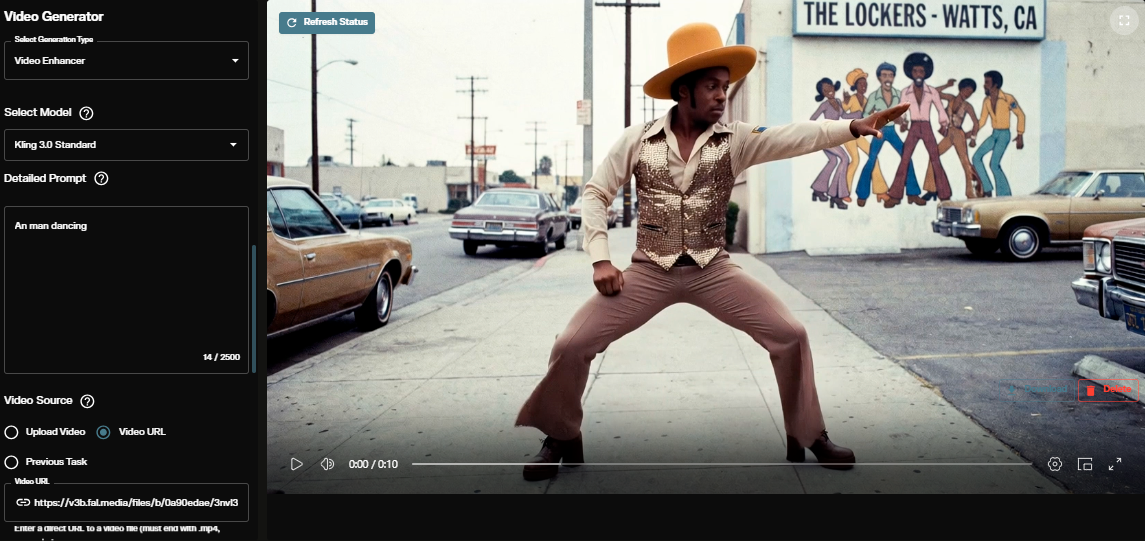
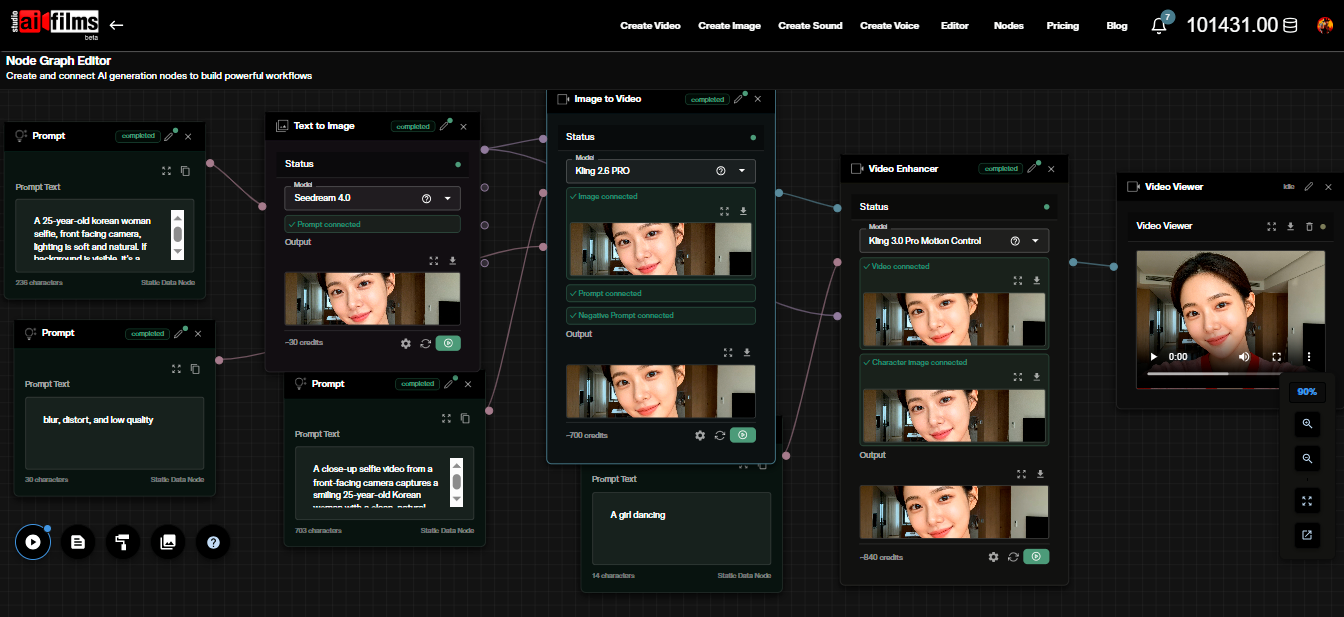
Filmmakers can explore the AI generation tools these governance debates are shaping through the AI FILMS Studio video workspace.
Sources
The Hollywood Reporter | PetaPixel | Decrypt | Unite.AI | Coming Soon
Continue Reading
.jpg?w=3840)


.jpg)
Video & LipSync
- Video Generator
- Text to Video
- Image to Video
- Start-End Frame to Video
- Draw to Video
- Motion Control
- Video Enhancer
- Video Upscaler
- Video to Video LipSync
- Audio to Video LipSync
- Image to Video LipSync
- Video FaceSwap
- Seedance 2.5
- WAN 3.0
- Seedance 2
- FLUX 3
- Minimax H3
- Vidu Q3 Pro
- Grok Imagine Video 1.5
- Gemini Omni
- Google Veo 3.1
- Kling 3.0 Pro
- Luma Ray 3.2
- LTX 2.3
- Happy Horse 1.1
- Kling 3.0 Motion
- ByteDance Upscaler
- InfiniteTalk
- InsightFace
Image & Edit
- AI Character
- AI Actor
- Art Generator
- Text to Image
- Image to Image
- LoRA Image to Image
- Draw to Edit
- Image LoRA Training
- Remove Background
- Image Enhancer
- MidJourney 8.0
- Krea 2
- OpenAI GPT Image 2.0
- Nano Banana Pro Ultra
- Nano Banana 2 Lite
- Nano Banana Pro
- Minimax Image
- Clarity Pro
- Z-Image Turbo LoRA
- Krea 2 Turbo LoRA
- Z-Image LoRA Trainer
- Qwen Image LoRA Trainer
- Background Erase Network 2 (BEN2)