
Demi Moore at Cannes: "Fighting AI Is a Battle We Will Lose"
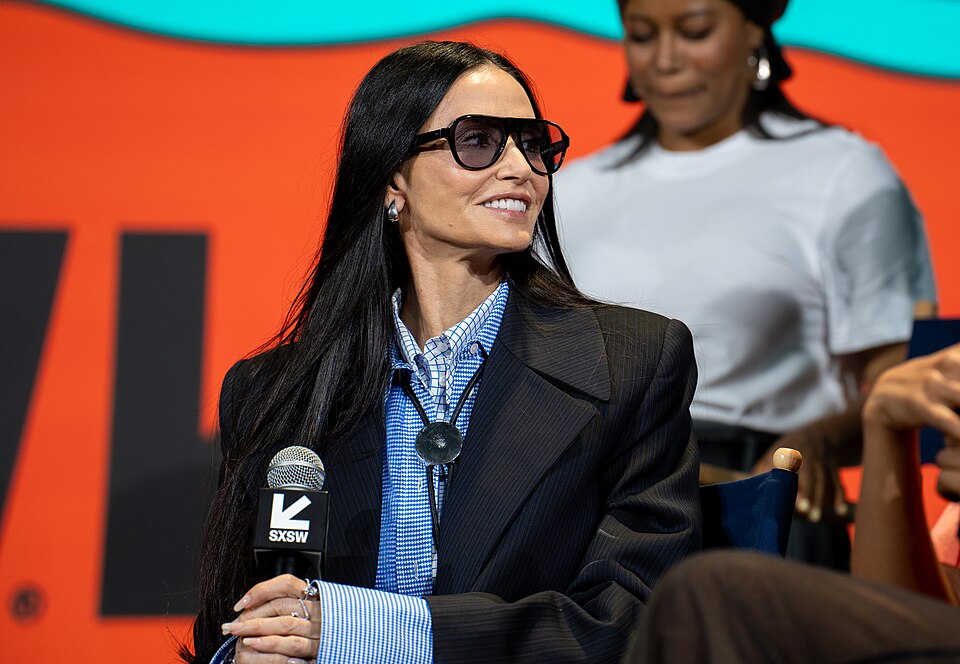
Saraa.kom, CC BY-SA 4.0, via Wikimedia Commons
Share this post:
Demi Moore at Cannes: "Fighting AI Is a Battle We Will Lose"
Demi Moore, serving on the 79th Cannes Film Festival jury, told the opening press conference on May 12 that Hollywood should stop fighting artificial intelligence and start finding ways to use it. Her statement became the defining AI story of the festival's first day, drawing broad coverage and sharp criticism in equal measure.
"Find Ways in Which We Can Work With It"
Moore did not frame AI as something to celebrate. When asked whether Hollywood is doing enough to regulate it, she answered: "I don't know the answer, but probably not". Still, she argued that resistance was the wrong approach. "AI is here, and so to fight it is, in a sense, to fight something that is a battle that we will lose", she said.
She offered a different orientation: "find ways in which we can work with it" is "a more valuable path to take". The principle behind it, in her words: "against-ness breeds against-ness". She drew a distinction between using AI and surrendering to it. "There are beautiful aspects to being able to utilize it", Moore said, "but true art comes from the human spirit".
Moore also addressed the broader question of self censorship in filmmaking. "If we start censoring ourselves, then we shut down the very core of our creativity, which is, I think, where we can discover truth and answers", she said. The comment applied to political content as much as AI, and it set up a theme the jury returned to throughout the press conference.
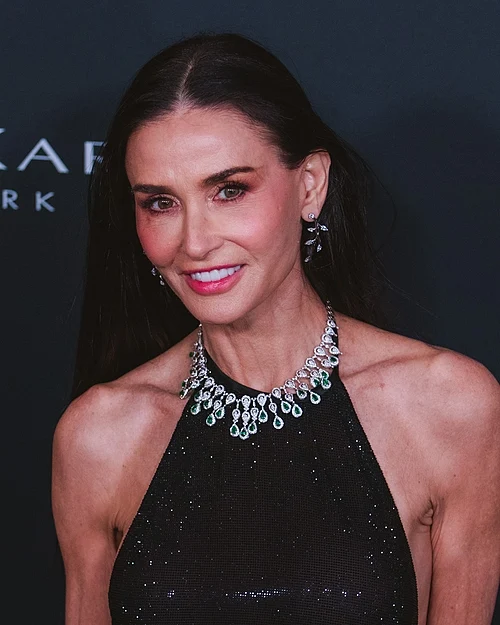
Kevin Paul, CC BY 4.0, via Wikimedia Commons
Moore's statement came on the same day that Festival General Delegate Thierry Frémaux proposed a certification label for films made without AI. The two positions are not contradictory. Frémaux was talking about what audiences should be able to know. Moore was talking about how the industry should respond to what is already here.
Her role on the jury gave her words a specific institutional weight. She was not speaking as a celebrity advocate. She was speaking as one of nine people who would determine which films won the competition's top prizes over the following 12 days.
AV Club described Moore's remarks as her "parroting AI talking points." That reaction points to a real fault line. For many in the industry, pragmatic accommodation of AI and principled resistance to it are not equally valid positions, and Moore's framing treats them as if they are.
Park Chan-wook Leads the Jury
Jury president Park Chan-wook, the South Korean director of "Oldboy", "The Handmaiden", and "Decision to Leave", became the first South Korean filmmaker to chair the main competition jury at Cannes. He won Best Director at the festival for "Decision to Leave" in 2022.
Park addressed the question of politics in cinema directly. "I don't believe that films only with political statements are great films", he said, "but just because a film is political, it doesn't mean it's an enemy of art". He described his approach to the competition as welcoming political content "without prejudice".
The full jury: Moore, "Nomadland" director Chloé Zhao, actor Stellan Skarsgård, actress Ruth Negga, director Laura Wandel, actor Isaach De Bankolé, director Diego Céspedes, and screenwriter Paul Laverty.
Park Chan-wook took the position that a film being political does not make it an enemy of art. That framing, delivered at the same press conference where Moore spoke, placed the jury's own critical framework alongside the AI debate. The jury's approach to political cinema would shape which films were recognized in the competition that followed.
Park's record as a filmmaker who works with political material in genre contexts gives his statement a specific credibility. He is not an academic making an argument about art. He is a director whose films have made the argument through the work itself.
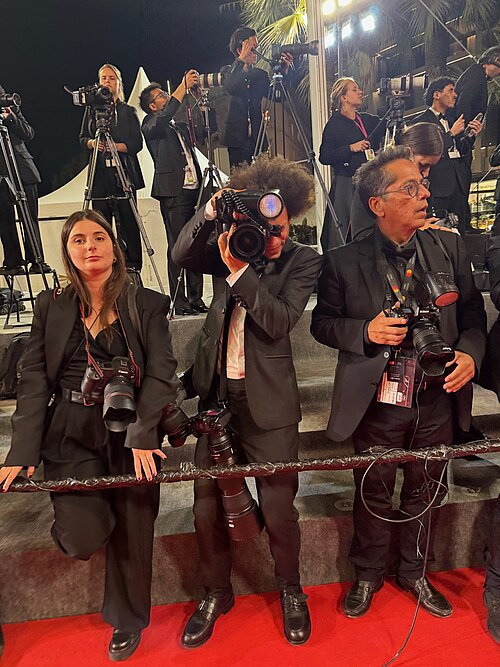
Photo by Jennifer 8. Lee / WikiPortraits
What "Work With It" Actually Means
Moore's argument is not that AI is good. It is that resistance is not a strategy. Her phrasing, "against-ness breeds against-ness," describes a psychological position: fighting something you cannot stop wastes the energy that could go toward shaping how it develops.
The practical implication is that the industry's engagement with AI governance, licensing frameworks, and disclosure standards is more productive than calls for prohibition. Moore did not say those governance efforts are sufficient. She said that people who focus only on fighting the technology are not contributing to the outcome.
Her framing separates two questions that are often conflated. Whether AI should exist is a different question from what rules should govern how it is used. Moore is addressing the second question. Her critics at AV Club were addressing the first, which is why the two arguments did not engage directly.
The Censorship Argument Moore Connected to AI
Moore's statement about self-censorship was not only about AI. She said that when filmmakers start censoring themselves, they shut down the core of their creativity. That observation applied to political content as much as to the AI debate, and it connected the two issues at the press conference.
Her argument is that creativity requires willingness to engage with difficult and contested material. A filmmaker who avoids AI as a subject because it is controversial, or who avoids political content for the same reason, is practicing the same censorship in different domains.
The connection she drew is not widely reported. Most coverage focused on her AI pragmatism. The self-censorship argument, which applies more broadly to how the industry handles contested topics, was the more consistent thread across her full statement at the press conference.
Why AV Club's "Parroting AI Talking Points" Framing Matters
AV Club's description of Moore's remarks as "parroting AI talking points" captures a specific fault line in the industry. For many working in Hollywood, pragmatic accommodation of AI and principled resistance to it are not equally valid positions.
The criticism is that Moore's "work with it" framing adopts the language of inevitability that AI companies use to neutralize opposition. Companies that want to deploy AI without paying for training data benefit when major talent describes resistance as futile. Moore's statement, intentionally or not, performs that function.
The counterargument is that Moore was addressing strategy rather than ethics. She did not say the industry should accept any terms AI companies offer. She said that opposition without engagement produces nothing. Those are different claims, and the gap between them is where the real debate lives.
The Demi Moore "Substance" Context
Moore won the Academy Award for Best Actress for "The Substance" in February 2026. That win, combined with her jury appointment, put her at Cannes as one of the industry's most recently recognized performers.
"The Substance" is a body horror film directed by Coralie Fargeat that addresses themes of female aging, the entertainment industry's treatment of older women, and the pressure to maintain a particular physical image. The film's subject matter gave Moore's public statements throughout the awards season a resonance that connected her personal experience to the broader cultural questions the film raised.
Her AI statement at Cannes arrived in the context of that post-win profile. She was speaking not only as a Cannes jury member but as an Oscar winner whose most recent major work engaged directly with the pressures that AI is now intensifying for performers.
What Her Statement Means for AI Negotiations
Moore's position has practical implications for how performers approach the AI licensing negotiations that SAG-AFTRA and other guilds have been conducting since 2023. A prominent actor saying that accommodation is the right path creates cover for negotiating teams that want to reach agreements rather than hold out.
The Creators Coalition, founded by Daniel Kwan and Sian Heder, has taken a harder line: no accommodation without mandatory training data compensation and full creator protections. Moore's statement did not engage with those specific demands. It addressed orientation, not terms.
Whether the "work with it" frame or the "protection first" frame produces better results for performers will be determined by the specific agreements that SAG-AFTRA reaches over the next cycle. Moore's Cannes statement was one data point in a debate that will be settled in contract negotiations, not press conferences.
The Jury's Composition as Context
The full Cannes jury in 2026 brought together perspectives that cut across the AI debate's fault lines. Chloé Zhao has worked inside the studio system on "Eternals" while also making personal documentary work. Her range gives her a view of both the commercial and independent sides of the AI negotiation.
Paul Laverty's career with Ken Loach places him in the tradition of British social realist cinema that has explicitly rejected commercialism as a creative driver. His presence alongside Moore creates a jury where different models of what filmmaking is for are all represented.
Ruth Negga, Stellan Skarsgård, Isaach De Bankolé, and the other jurors bring their own national contexts to the deliberations. AI's impact on filmmaking looks different from an Irish, Swedish, or Ivorian perspective than it does from Hollywood's position. The jury's international composition meant that the AI debate at the press conference was filtered through those different frames.
Park Chan-wook's First Day as Jury President
Park Chan-wook used his first press conference as jury president to establish that the jury would evaluate political cinema without prejudice. That statement had specific implications for a competition that included films dealing with war, displacement, and political violence.
He did not address AI directly at the opening press conference. His focus was on the films rather than the industry debate. That restraint was itself a position: the jury's job is to evaluate what is on screen, not to adjudicate what tools were used to make it.
His record as a competition participant at Cannes, winning prizes in 2003, 2009, and 2022, means he approaches the jury chair with a direct understanding of what it is like to be on the other side of the evaluation. That experience typically produces jury presidents who are attentive to filmmakers' intentions rather than only their results.
The True Art Distinction Moore Drew
Moore's full statement contains a distinction that most coverage compressed or dropped. She said AI has "beautiful aspects" and can be utilized, but "true art comes from the human spirit." That sentence is not a simple accommodation argument. It is a claim about what art is and what AI cannot be.
The distinction she drew separates the utility of AI tools from the source of what makes work meaningful. A director using AI for specific production tasks is still making art in Moore's framing, as long as the human creative impulse is driving the work. A production generated primarily by AI is not, because it lacks the human spirit she identifies as the origin of true art.
That distinction is closer to the position of many working filmmakers who use generative tools in specific contexts than to either full prohibition or full replacement. Moore was describing a middle position that the "work with it" summary does not fully capture.
The question her framing leaves open is where the line falls between AI as a tool the human spirit uses and AI as a replacement for that spirit. Her statement names the distinction without drawing the line, which is where every practical governance decision in Hollywood will eventually have to land.
Moore's position sits at the pragmatic end of a debate that runs through every institution in Hollywood. The Creators Coalition, founded by Oscar winners Daniel Kwan and Sian Heder, has taken the harder line: no accommodation without training data compensation and full creator protections. The Cannes decision to bar AI generated films from the Official Competition established the festival's structural boundary. Moore's "work with it" argument is not a fringe view. It is, for now, one of the two dominant responses to a question that Hollywood has not answered. Peter Jackson, who accepted an Honorary Palme d'Or at the same opening ceremony, made the same case at his masterclass the following day, saying AI is "just a special effect" that belongs alongside every other tool in cinema. Days later, Seth Rogen took the opposite position, telling reporters that writers who use AI to generate scripts "shouldn't be a writer". Jon Favreau, speaking on CBS Sunday Morning, echoed Moore's pragmatic framing: "trying to avoid innovation doesn't seem to be a winning strategy". Moore's acceptance stance was part of a broader shift at Cannes 2026: the first festival where filmmakers openly admitted AI use, as major Hollywood names stayed home and a new generation of directors stepped in.
Follow the tools at the center of this debate in the AI FILMS Studio video workspace.
Sources
Variety | The Wrap | The Hollywood Reporter | Deadline | Far Out Magazine | AV Club
Continue Reading
.jpg?w=3840)


Video & LipSync
- Video Generator
- Text to Video
- Image to Video
- Start-End Frame to Video
- Draw to Video
- Motion Control
- Video Enhancer
- Video Upscaler
- Video Extend
- Video to Video LipSync
- Audio to Video LipSync
- Image to Video LipSync
- Video FaceSwap
- Seedance 2.5
- WAN 3.0
- Seedance 2
- FLUX 3
- Minimax H3
- Vidu Q3 Pro
- Grok Imagine Video 1.5
- Gemini Omni
- Google Veo 3.1
- Kling 3.0 Pro
- Luma Ray 3.2
- LTX 2.3
- Happy Horse 1.1
- Kling 3.0 Motion
- ByteDance Upscaler
- InfiniteTalk
- InsightFace
Image & Edit
- AI Character
- AI Actor
- Art Generator
- Text to Image
- Image to Image
- LoRA Image to Image
- Draw to Edit
- Image LoRA Training
- Remove Background
- Image Enhancer
- MidJourney 8.0
- Krea 2
- OpenAI GPT Image 2.0
- Nano Banana Pro Ultra
- Nano Banana 2 Lite
- Nano Banana Pro
- Minimax Image
- Clarity Pro
- Z-Image Turbo LoRA
- Krea 2 Turbo LoRA
- Z-Image LoRA Trainer
- Qwen Image LoRA Trainer
- Background Erase Network 2 (BEN2)