
Share this post:
McConaughey Warns AI Actors Will Infiltrate the Oscars
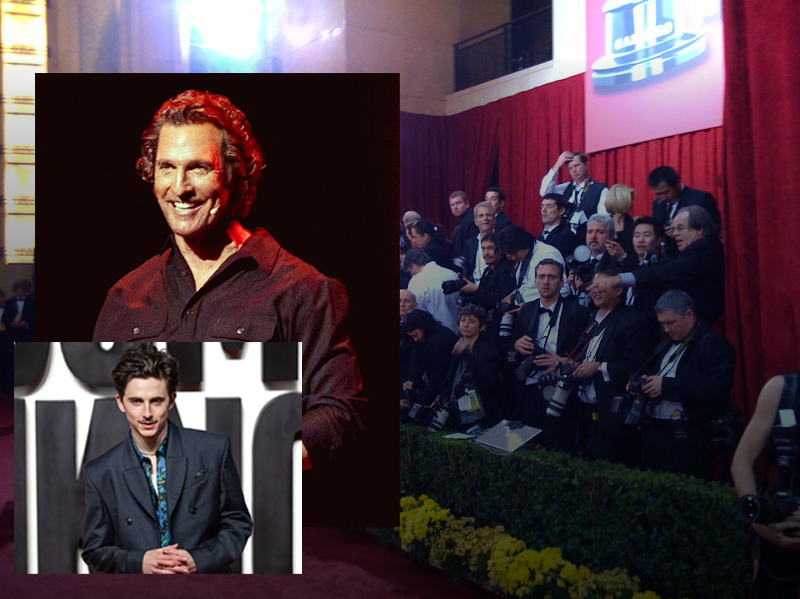
Two of Hollywood's biggest stars stepped in front of a room of young filmmakers and delivered a stark verdict: AI is already inside the building, and the Oscars will feel it.
Speaking at the CNN and Variety Town Hall at the University of Texas at Austin on February 20, 2026, Matthew McConaughey and Timothée Chalamet addressed aspiring actors and filmmakers on the seismic changes AI is bringing to the entertainment industry. The event reunited the two stars from "Interstellar," with Chalamet now an Oscar frontrunner himself and McConaughey nominated for Best Actor for his role in "Marty Supreme."
"It's Damn Sure Going to Infiltrate Our Category"
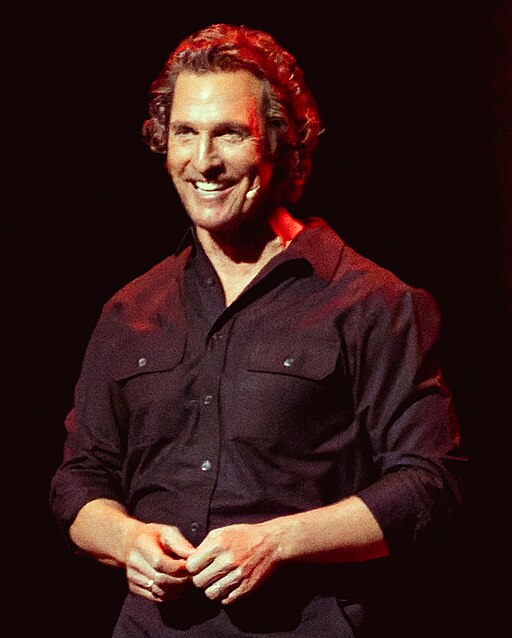
McConaughey did not mince words when a student asked about AI. His response was direct and layered. He predicted that AI will not knock on Hollywood's door. It will walk through it.
"It's coming. It's already here," he said. "Don't deny it. It's not going to be enough to sit on the sidelines and make the moral plea that, 'No, this is wrong.' It's not gonna last. There's too much money to be made, and it's too productive. So I say: Own yourself. Voice, likeness, et cetera. Trademark it. Whatever you gotta do, so when it comes, no one can steal you."
He then speculated on how AI might reshape the awards landscape altogether: "It's damn sure going to infiltrate our category. Does it become another category? Will we be, in five years, having 'the best AI film'? 'The best AI actor?' Maybe. I think that might be the thing; it becomes another category."
.jpg)
The warning carries extra weight given McConaughey recently moved to trademark his signature catchphrase from "Dazed and Confused," specifically to guard against AI misuse. His advice to students was not hypothetical. It was a blueprint drawn from personal experience.
Chalamet's Generational Burden
Timothée Chalamet's tone at the town hall was more measured but equally urgent. He addressed the Gen Z audience with a frank acknowledgment that they will bear the heaviest burden of integrating AI responsibly into creative life.
"It's going to be all of our war to wage. sounds confrontational, I don't mean to say it like that. But it's a dual responsibility," Chalamet told the room. "Unfortunately for your generation, I think it's going to be you guys that figure out how to integrate it."
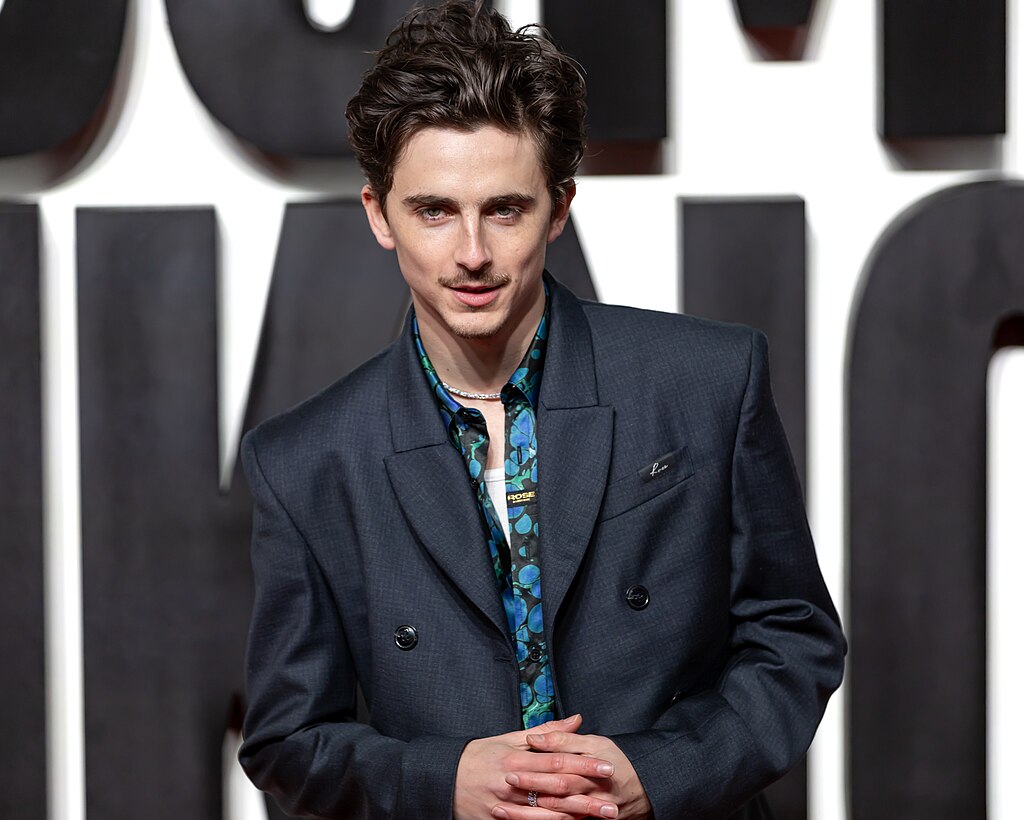
He also pointed to the 2023 SAG-AFTRA strike as an early, incomplete attempt to address the threat. "In the last Screen Actors Guild negotiation that Fran Drescher tried to head off with the studios, it was dicey. They didn't really get the protections for the Screen Actors Guild that she was after. AI is a hard thing to advocate against."
His framing was almost fatalist: "There's a level of fatalism I feel. It will be on your generation, and mine to an extent, to know how to ethically integrate it, if at all, or do away with it. But the fatalist in me feels like this stuff is coming."
Yet Chalamet did not close the door entirely. He acknowledged that AI could remove gatekeepers and open opportunities for voices that current industry structures exclude. "The dreamer in me wants to go, 'Hey, if it enables a 19-year-old to produce something they couldn't otherwise because there's gatekeepers standing in the way, then good.'"
The Oscars' Current Position on AI
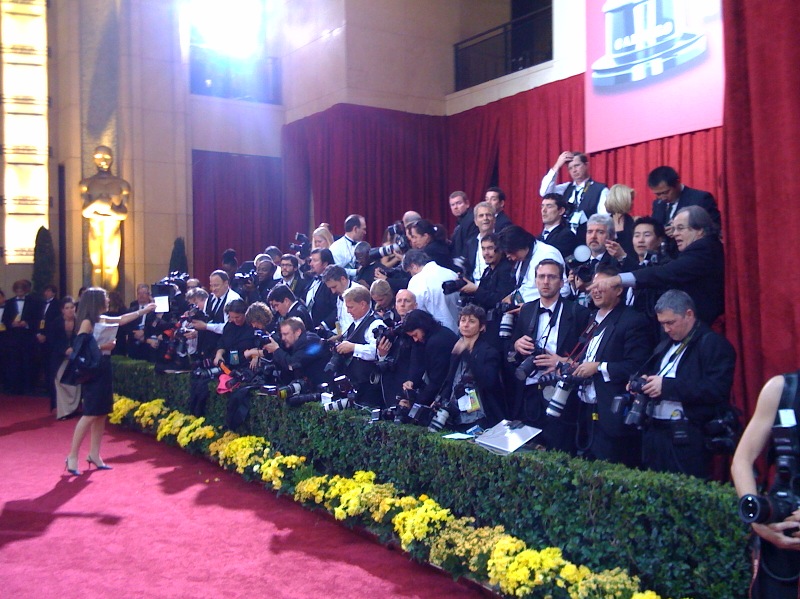
The Academy of Motion Picture Arts and Sciences moved first on this issue. In April 2025, the Academy announced that films made with the help of AI remain eligible for top Oscars, as long as human creativity stays central to the work. Under the new rules, AI use is stated to "neither help nor harm" a film's chances of achieving a nomination.
The BBC and The New York Times both reported on the rule changes, which came after AI-assisted films collected trophies at the most recent ceremony. Adrian Brody's Best Actor win for "The Brutalist" brought attention to the fact that AI had been used to refine his Hungarian accent. The musical "Emilia Pérez" also used voice-cloning technology to enhance its singers.
The Academy's language stops short of barring AI tools. It weights human authorship as the deciding factor when members deliberate on what to honor. That language leaves room for exactly the scenario McConaughey is imagining. A wholly AI generated performance could technically qualify under current rules if the Academy decides human direction shaped the result. In March 2026, just days before the 98th ceremony, Academy CEO Bill Kramer went further in public than the institution usually does, telling The Guardian that the Academy views AI strictly as a tool and acknowledging a sharp divide between branches on how to handle it.
SAG-AFTRA's Protections: How Far Do They Go?
Chalamet's reference to the SAG-AFTRA negotiations points to a genuine gap between what the union secured and what the moment may eventually demand. The November 2023 TV/Theatrical agreement did establish what the union called "historic digital replica terms." Under those terms, studios must obtain explicit informed consent before creating or using a digital replica of a performer, and actors must be compensated for that use.
SAG-AFTRA has since pushed for legislative reinforcement. The union backed California's digital replica laws in 2024 and has lobbied for federal legislation, including the No AI Fraud Act and the ELVIS Act. Variety reported that the union is working to codify consent requirements and clarify how contract language applies to posthumous likeness use.
Those protections address replicas of existing human actors. They do not yet draw a clear line around fully synthetic AI performers with no human original to replicate. That is the space McConaughey is pointing toward when he imagines a "best AI actor" category. The arrival of wholly artificial performers is where current union protections have the least reach.
What a "Best AI Actor" Category Would Actually Mean
McConaughey's prediction is provocative, but scenario-mapping it reveals why the entertainment industry is taking it seriously. The path toward an AI performer competing at the Oscars is not as distant as it might seem.
Current AI can already generate photorealistic human faces, voices, and body motion. Productions have begun using fully synthetic characters in background roles. The question of whether a synthetic lead performance, conceived and directed by a human filmmaker but executed entirely by an AI model, could be meaningfully evaluated by the same criteria used for human acting remains genuinely unresolved.
A separate awards category would function as a pressure valve. It would allow the Academy to honor AI-driven creative work without forcing a direct competition between synthetic and human performers. It would also buy time for the industry to develop clearer ethical frameworks before the technology fully matures.
The analogy to animated films is useful here. When Pixar and DreamWorks changed what animation could accomplish, the Academy did not ask animated characters to compete against human actors in the Best Actor race. It created the Best Animated Feature category in 2002. That structural response kept the playing field legible. A similar move for AI performances would reflect the same institutional logic.
The Advice Both Stars Gave to the Room
The most practically useful part of the town hall may have been what McConaughey and Chalamet told those students to actually do.
McConaughey's message was explicit: get ahead of the technology by owning your identity before someone else can commodify it. Trademark your voice, your likeness, your signature phrases. Build a legal moat around what makes you distinctively you. When AI comes for that same creative territory, and he believes it will, you will have legal standing to negotiate rather than simply react.
Chalamet's message was more protective. He acknowledged that the roles that launched his own career might not exist for the next generation in the same form. The economic calculus that brought young performers to auditions for independent films is shifting. He described himself as "fiercely protective of actors and artists in this industry," even as he acknowledged that whatever tide is coming will arrive regardless.
The dual message resonates in a town where SAG-AFTRA representation and union protections have historically been the primary shield for working performers. Those protections are being tested at exactly the moment when the technology they are meant to guard against is accelerating fastest.
For more on where Hollywood stands on AI rights and digital replicas, read our earlier coverage of California's digital replica laws and what they mean for actors. For a different angle on the same moment in Hollywood history, see Christopher McQuarrie's 2026 Saturn Awards speech, which argues the industry's deeper problem is not the technology itself but its failure to keep audiences at the center.
HBO's "The Comeback" Season 3 captures the same anxieties McConaughey and Chalamet raised, placing Valerie Cherish inside a network sitcom scripted entirely by AI, with Fran Drescher warning the cast: "A.I. is coming for all of us."
Sources
Variety: "Matthew McConaughey Predicts to Timothée Chalamet That AI Actors Will Crash the Oscars"
Selome Hailu, February 20, 2026
https://variety.com/2026/film/news/matthew-mcconaughey-timothee-chalamet-ai-actors-oscars-1236667017/
BBC News: "Films made with AI can win Oscars, Academy says"
https://www.bbc.com/news/articles/cqx4y1lrz2vo
The New York Times: "Oscars Rules and AI"
April 21, 2025
https://www.nytimes.com/2025/04/21/business/oscars-rules-ai.html
SAG-AFTRA: "A.I. Bargaining and Policy Work Timeline"
https://www.sagaftra.org/contracts-industry-resources/member-resources/artificial-intelligence/sag-aftra-ai-bargaining-and
Variety: "SAG-AFTRA AI Digital Replica Protections"
https://variety.com/2024/biz/news/sag-aftra-ai-artificial-intelligence-mpa-legislation-1235960687/
Continue Reading


Video & LipSync
- Video Generator
- Text to Video
- Image to Video
- Start-End Frame to Video
- Draw to Video
- Motion Control
- Video Enhancer
- Video Upscaler
- Video Extend
- Video to Video LipSync
- Audio to Video LipSync
- Image to Video LipSync
- Video FaceSwap
- Seedance 2.5
- WAN 3.0
- Seedance 2
- FLUX 3
- Minimax H3
- Vidu Q3 Pro
- Grok Imagine Video 1.5
- Gemini Omni
- Google Veo 3.1
- Kling 3.0 Pro
- Luma Ray 3.2
- LTX 2.3
- Happy Horse 1.1
- Kling 3.0 Motion
- ByteDance Upscaler
- InfiniteTalk
- InsightFace
Image & Edit
- AI Character
- AI Actor
- Art Generator
- Text to Image
- Image to Image
- LoRA Image to Image
- Draw to Edit
- Image LoRA Training
- Remove Background
- Image Enhancer
- MidJourney 8.0
- Krea 2
- OpenAI GPT Image 2.0
- Nano Banana Pro Ultra
- Nano Banana 2 Lite
- Nano Banana Pro
- Minimax Image
- Clarity Pro
- Z-Image Turbo LoRA
- Krea 2 Turbo LoRA
- Z-Image LoRA Trainer
- Qwen Image LoRA Trainer
- Background Erase Network 2 (BEN2)