
McQuarrie's Saturn Speech: Cinema Must Serve the Audience
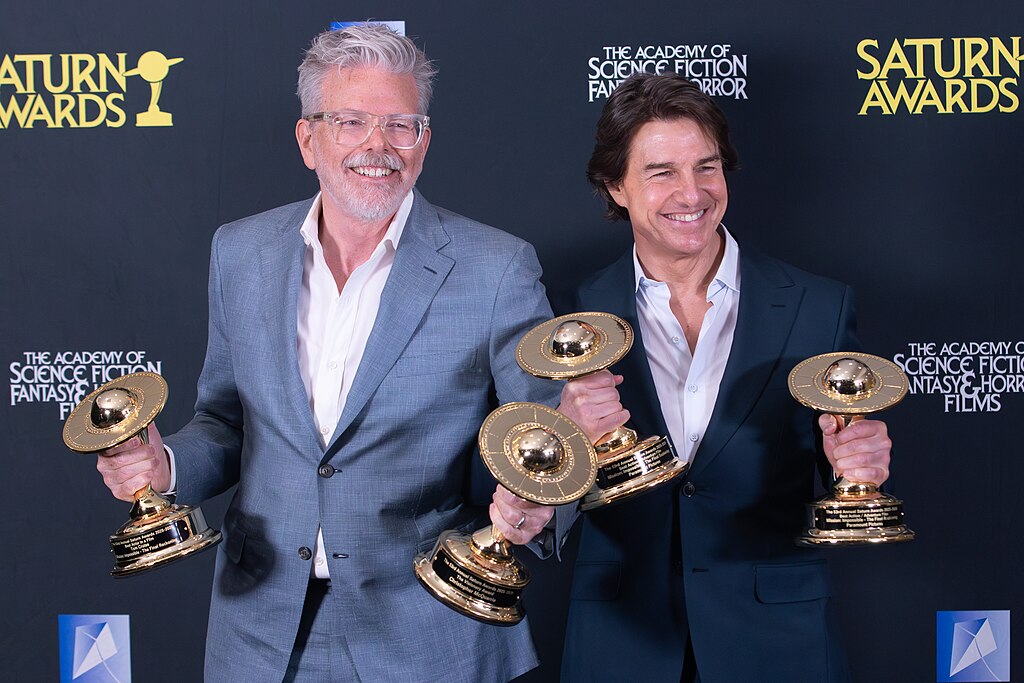
Luis Ochea, CC BY-SA 4.0, via Wikimedia Commons
Share this post:
McQuarrie's Saturn Speech: Cinema Must Serve the Audience
At the 53rd Annual Saturn Awards on March 8, 2026, Christopher McQuarrie accepted the Visionary Award with a speech that cut through a decade of industry hand-wringing. His diagnosis was blunt: Hollywood's obsession with streaming economics, AI debates, and IP franchises is a distraction. The real crisis is a failure to put the general audience first.
53rd Annual Saturn Awards ceremony highlights, March 8, 2026
The ceremony, held at the Hilton Universal City in Los Angeles and streamed live, honored achievements across science fiction, fantasy, and horror in film and television. Avatar: Fire and Ash won Best Science Fiction Film. Mission: Impossible. The Final Reckoning took Best Action/Adventure Film, with Tom Cruise also winning Best Actor in a Film. Frankenstein claimed Best Horror Film. On television, Andor and Pluribus collected top series honors. Special tributes for Aliens were accepted by James Cameron and Gale Anne Hurd.
Tom Cruise Presents the Visionary Award
Cruise's tribute to McQuarrie was not a routine award introduction. It was an enumeration of two decades of collaboration, scene by scene, built into something that resembled a filmmaker's testament.
"A visionary is a person of strong and creative imaginative power. A dreamer. And that is you. That's you, my friend," Cruise told the room, before walking through an inventory that included the structure of The Usual Suspects, the Vienna Opera House sequence in Rogue Nation, the underwater vault in Ghost Protocol, the bathroom fight in Fallout, the motorcycle off the cliff in Dead Reckoning, and the submarine sequence played like silent horror. "These and so many more moments that people study," Cruise said. "Moments that audiences will never forget."
He recalled their first meeting 20 years earlier at his home in Los Angeles, where the conversation ran for hours before they ever reached the script for Valkyrie. "What struck me most was your love of film. Your absolute love of film. You are a natural born storyteller."
Tom Cruise presents the Visionary Award to Christopher McQuarrie. Full speeches, Saturn Awards 2026
The Speech: Streaming, AI, and IP Are Not the Problem
McQuarrie opened with gratitude and humor, noting that the downside of 20 years with Tom Cruise is having to follow an introduction like that. Then he pivoted to substance, and the room quieted.
He opened with a reflection on Aliens, which received a special tribute at the same ceremony. He called it, without qualification, one of the greatest films ever made. Not a great genre film. Not a great sci-fi film. One of the greatest films.
"I did not qualify this statement as an action, horror, or sci-fi film," he said. "I also could have said it is about trauma, survival, redemption, resurrection, and the power of motherhood. All of which sneak past you while you cling to your seat thinking you might just be watching an action movie."
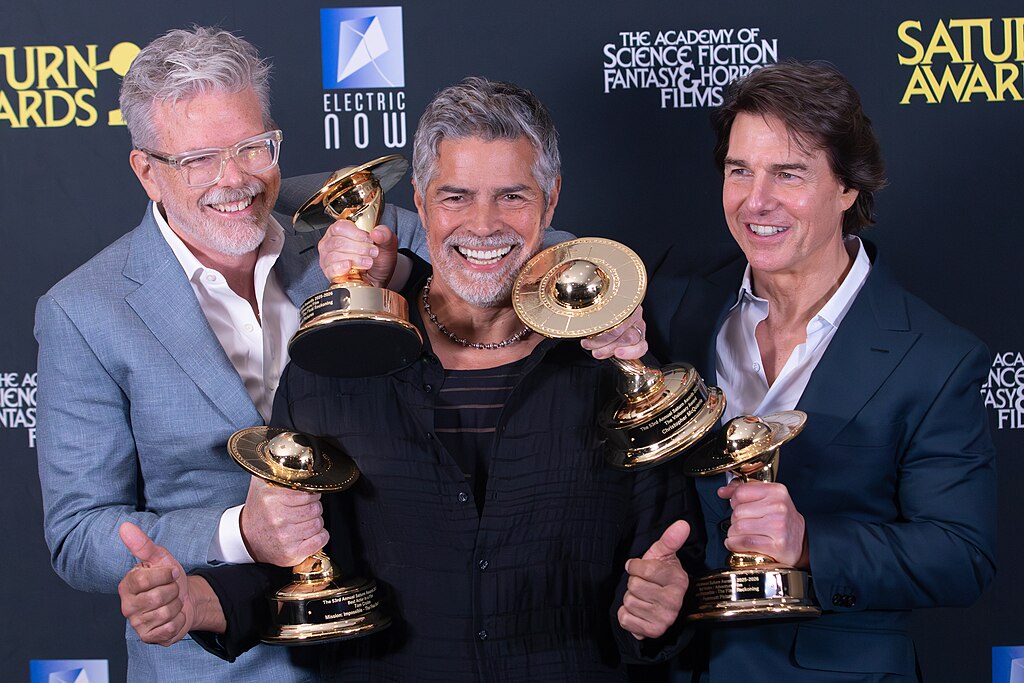
From there, he articulated a theory of cinema that borrows from James Cameron, Ridley Scott, Spielberg, and Coppola: the greatest works dare to be both art and entertainment, because those are the hardest films to make. They never let their thesis get between the audience and a good time.
Then came the line that drew the loudest response of the night.
"The greatest danger facing our industry is not streaming or AI or an unhealthy obsession with IP. It is a failure to put the general audience first."
He continued: "Cinema's next generation understands that in times of crisis, filmmakers create adventure. Not exclusively superheroes. Scale is not the primary measure of big screen worthiness. Style is no substitute for story. Joy is not a sin."
What McQuarrie Is Actually Saying
The speech is not anti-AI. It is not anti-streaming. It is a critique of an industry that has confused the instrument for the destination.
McQuarrie drew a line from Charlie Chaplin and Buster Keaton through Frank Capra, Michael Curtiz, Hitchcock, and Wilder to the present, arguing that each generation of filmmakers understood the same thing: cinema exists to challenge, titillate, shock, devastate, thrill, elate, amuse, and delight. The mechanism changes. The human on the other side of the screen does not.
The argument has direct implications for how studios and creators approach AI. If the primary measure of a production decision is cost efficiency or technological novelty, the audience drops out of the equation. If the measure is whether a story reaches and moves people, AI becomes one tool among many in service of that goal. That distinction is central to how serious filmmakers are currently thinking about integration. For a deeper look at what audiences actually accept and reject in AI assisted productions, see our analysis of 2026 audience data on AI in filmmaking.
Saturn Awards 2026 coverage
A Vision for What Comes Next
McQuarrie closed with a prediction, delivered more as conviction than speculation.
"Evolution being what it is, pendulums swinging as they do, I believe a new cinema is coming. One that eerily reflects its golden age, with a list of luminaries far more diverse. These visionaries recognize the greatest danger facing our industry is not streaming or AI or an unhealthy obsession with IP. It is a failure to put the general audience first."
He described filmmakers of the future as those encouraged to embrace, without shame, the power and artistry of true mass entertainment. Not at the expense of meaning or integrity, but in service of it.
The framing echoes what Christopher Nolan has argued in his DGA leadership role, where the goal is protecting director authority and creative vision, not opposing specific tools. Both filmmakers are making the same underlying point: the technology is not the variable. The commitment to the audience is.
Online Reactions: Praise and Pushback
The response online split along predictable lines.
Praise came from those who heard a filmmaker articulate what many industry veterans feel but rarely say on a podium: that a fixation on platform economics and franchise math has displaced attention to whether ordinary audiences actually want to watch the films being made.
Criticism came with an irony attached. McQuarrie has spent the better part of a decade making Mission: Impossible sequels. The same films he holds up as audience first spectacle are, by definition, IP franchise sequels. Several observers noted the tension between a speech championing original storytelling and a filmography that includes Mission: Impossible. Dead Reckoning Part One, Fallout, Rogue Nation, and The Final Reckoning.
McQuarrie addressed this indirectly in his speech. He described Aliens as a sequel that transcended its category, and implicitly positioned the Mission: Impossible films as entries in that tradition. The argument holds that franchise does not equal cynical. A sequel driven by craft, character, and audience service is different from a sequel manufactured to extract commercial value from a library asset.
Whether that argument resolves the tension depends on where you stand. What is harder to dispute is that McQuarrie has been among the few filmmakers consistently producing large scale genre entertainment that audiences actually attend and remember.
What This Means for AI Filmmaking
McQuarrie's speech arrives at a moment when the industry is still working out what AI means for production, authorship, and creative accountability. His framing offers a simple test: does this decision serve the audience or avoid the harder work of serving them?
That question applies whether the decision involves AI video generation, streaming distribution strategy, franchise sequencing, or production budget allocation. The technology is not the crisis. The abdication of the creative responsibility to reach people is.
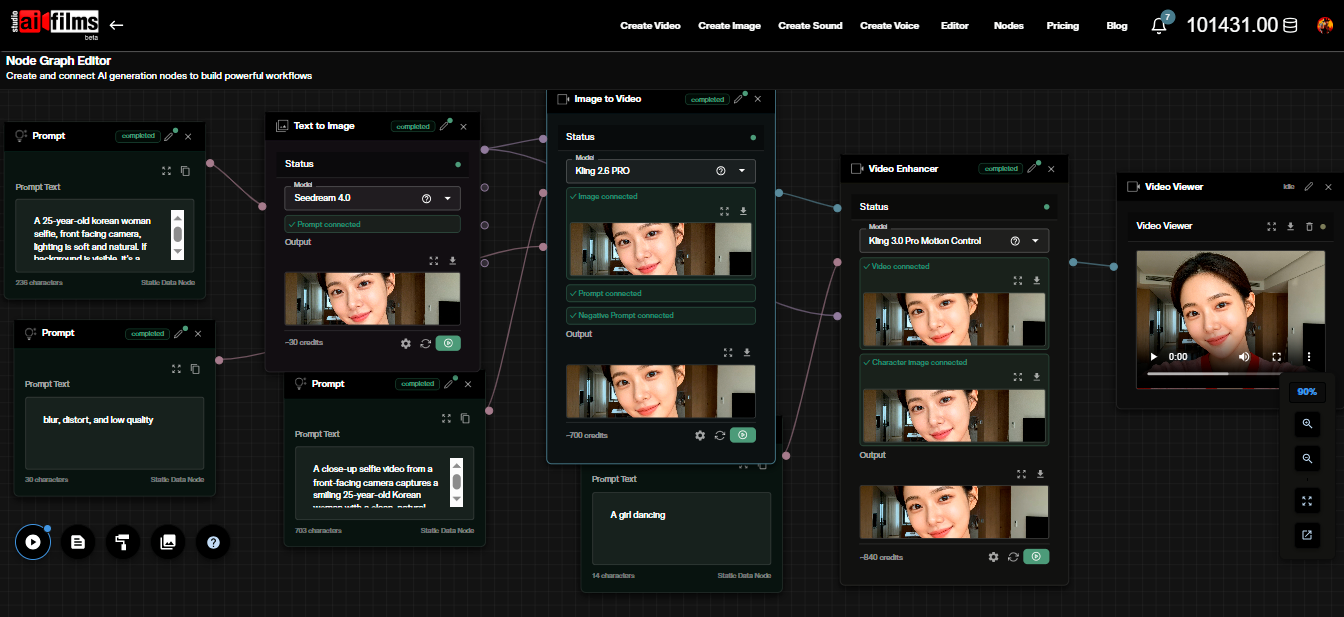
For filmmakers using AI tools, the implication is clarifying. Tools like AI FILMS Studio exist in service of stories, not as substitutes for them. The question McQuarrie raises, stripped of the ceremony context, is the oldest question in cinema: what are you making this for, and who are you making it for?
That question predates streaming, predates IP franchises, and predates AI. His answer, tonight at least, was simple: make it for the audience in the dark. The filmmakers who remember that, he suggested, are the ones who will build the next era of cinema.
For a broader view of how Hollywood's relationship with AI is reshaping the creative landscape in 2026, see our coverage of the pivotal year that will define AI filmmaking's future.
Sources
Deadline Hollywood | The Hollywood Reporter | Variety
Continue Reading


Video & LipSync
- Video Generator
- Text to Video
- Image to Video
- Start-End Frame to Video
- Draw to Video
- Motion Control
- Video Enhancer
- Video Upscaler
- Video Extend
- Video to Video LipSync
- Audio to Video LipSync
- Image to Video LipSync
- Video FaceSwap
- Seedance 2.5
- WAN 3.0
- Seedance 2
- FLUX 3
- Minimax H3
- Vidu Q3 Pro
- Grok Imagine Video 1.5
- Gemini Omni
- Google Veo 3.1
- Kling 3.0 Pro
- Luma Ray 3.2
- LTX 2.3
- Happy Horse 1.1
- Kling 3.0 Motion
- ByteDance Upscaler
- InfiniteTalk
- InsightFace
Image & Edit
- AI Character
- AI Actor
- Art Generator
- Text to Image
- Image to Image
- LoRA Image to Image
- Draw to Edit
- Image LoRA Training
- Remove Background
- Image Enhancer
- MidJourney 8.0
- Krea 2
- OpenAI GPT Image 2.0
- Nano Banana Pro Ultra
- Nano Banana 2 Lite
- Nano Banana Pro
- Minimax Image
- Clarity Pro
- Z-Image Turbo LoRA
- Krea 2 Turbo LoRA
- Z-Image LoRA Trainer
- Qwen Image LoRA Trainer
- Background Erase Network 2 (BEN2)