
Share this post:
XR Builds Hollywood's First Payment System for AI Performers
On April 23, 2026, Extreme Reach (XR) launched the first payment platform in the advertising industry built specifically for AI performers. The system handles two legally distinct categories under the 2025 SAG-AFTRA Commercials Contract: Digital Replicas of real actors and Synthetic Performers created entirely by AI. For brands and studios, it resolves a compliance gap that had no formal infrastructure before.
Two Categories of AI Performer
Digital Replicas are AI representations of real, identifiable people created from scans, recordings, or other source material tied to an actual performer. Under the 2025 contract, XR routes compensation directly to the performer or their estate. California's digital replica law, in effect since January 1, 2026, established the consent and compensation framework that the contract formalizes.

Val Kilmer's role in As Deep as the Grave (2026) is one of the first prominent cases where a Digital Replica was built with documented family authorization. Kilmer, who died in April 2025, had originally signed on to play Father Fintan in 2021 but could not film due to deteriorating health following throat cancer surgery. Director Coerte Voorhees chose to reconstruct the performance using AI, with the active backing of Kilmer's estate.
His children, Mercedes and Jack Kilmer, acted as consultants, supplying the personal archives: recordings, photographs, and footage used to train the generative models. Mercedes Kilmer described her father's approach: "He always looked at emerging technologies with optimism as a tool to expand the possibilities of storytelling". Voorhees confirmed the project reflected Kilmer's own wishes before his death, stating "this is what Val wanted". The production followed the 2023 SAG-AFTRA AI guidelines, which require clear consent from the performer or their estate and fair financial compensation.
The technical reconstruction was also tailored to the character. Voorhees designed the AI to reproduce Kilmer's voice as it sounded after his tracheotomy surgery, a quality that aligned precisely with Father Fintan's condition as a character suffering from tuberculosis. The family provided the archives specifically to enable that level of accuracy.
Synthetic Performers are a different legal category. These are AI invented characters with no human counterpart, built entirely by generative tools without being derived from any real person's likeness. Under the 2025 contract, their use in commercial advertising still triggers mandatory payments, despite the absence of any identifiable individual.
Tilly Norwood and the Synthetic Performer Market
The demand for fully synthetic characters in commercial projects predated any payment infrastructure. Directors were actively approaching Particle6 to cast Tilly Norwood in productions as early as February 2026, one week before SAG-AFTRA began negotiations. The market moved ahead of the legal system.

XR's platform now provides the operational backbone for brands that want to use Synthetic Performers inside SAG-AFTRA contract coverage. It tracks deployments, routes payments to the correct destination, and produces the compliance documentation studios need.
The SAG-AFTRA Framework
The 2025 SAG-AFTRA Commercials Contract, finalized in April 2025, established the legal basis for XR's system. The union's proposed taxation framework for AI performers, developed in the months before negotiations, laid the conceptual groundwork: AI performer usage is a "taxable event" generating contributions to pension and health funds.
For Digital Replicas, payments go to the performer or their estate. For Synthetic Performers, no such individual exists. The 2025 contract routes fees directly to the SAG-AFTRA Pension and Health funds, with the specific amount determined through negotiation on a per production basis.
A Question Without a Clear Answer
When a brand hires a human actor, the logic of union payments is straightforward. A person performed the work, and contributions flow to their benefit funds. When the performer is a Digital Replica, the same logic applies with one degree of separation: a real person's likeness was used, and compensation reaches them.
Synthetic Performers complicate that logic. A character invented entirely by AI, with no connection to any living or deceased person, generates no displaced labor in the conventional sense. No union member was passed over for a role that went to a fictional entity. Yet the 2025 contract still requires payment.
SAG-AFTRA's rationale is competitive equity. If brands can produce fully synthetic campaigns at substantially lower cost than hiring union actors, the financial pressure to employ human performers grows. The fee requirement is designed to narrow that gap by making AI performers carry a comparable cost burden.
Whether that framing holds is a question the industry has not resolved. Requiring fees for a character no union member played, trained for, or was replaced by treats the deployment of AI itself as the taxable event, regardless of whether any actual labor displacement occurred. The payment may prove essential as synthetic technology scales. It may also set a precedent that extends union jurisdiction into situations where no displacement took place.
Tracking the Invisible Performer
XR's platform integrates with production and media buying workflows to identify when a Digital Replica or Synthetic Performer appears in a commercial. Once the system logs a deployment, it calculates the applicable fee, routes payment to the correct destination, and generates a compliance record for the studio.
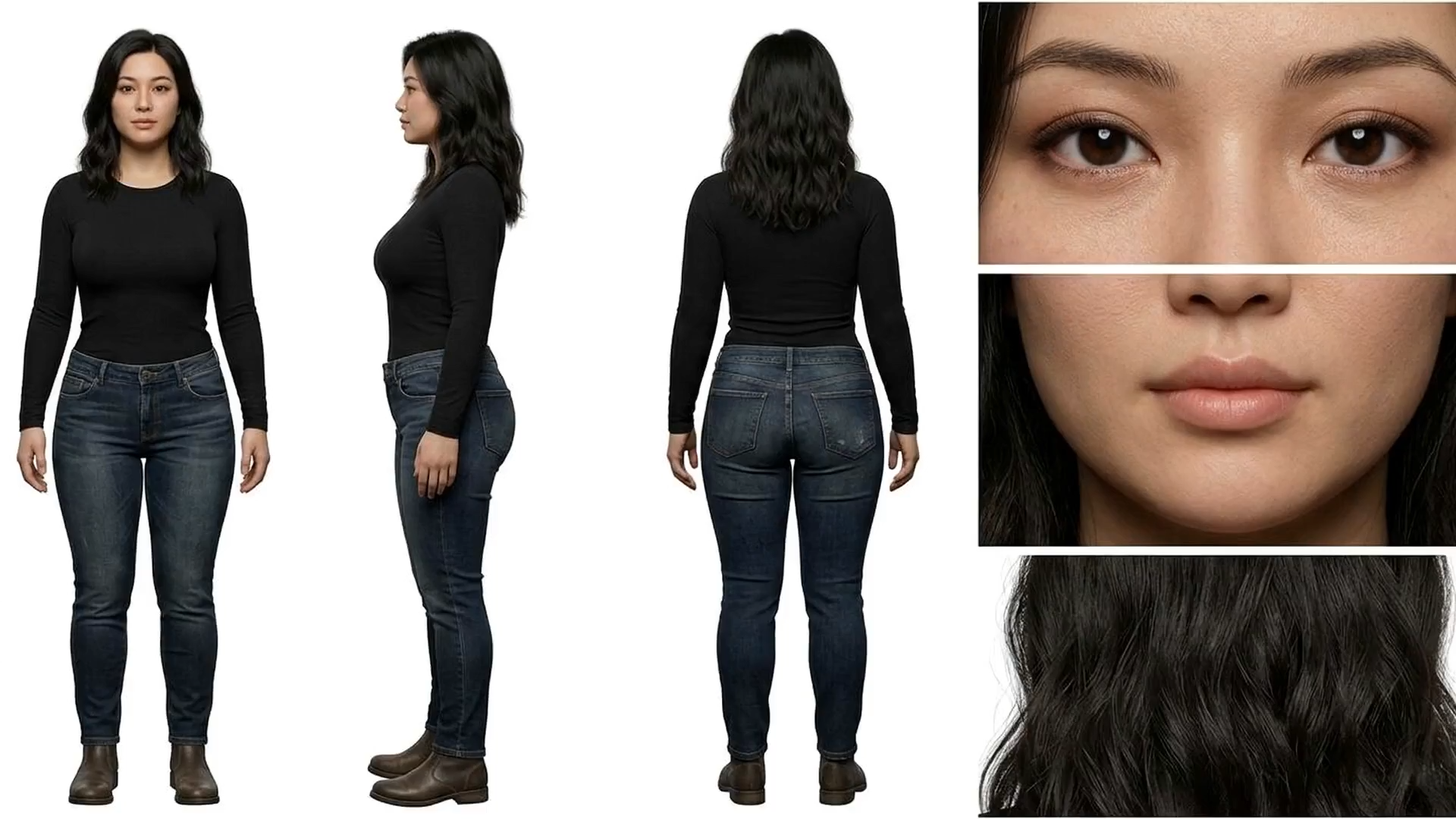
The operational challenge is real. AI performers can appear across dozens of campaign assets simultaneously: regional cuts, platform specific edits, and global versions. XR's existing infrastructure for tracking celebrity talent payments in advertising provided the foundation for the AI performer system.
What This Means for Production
The launch removes the largest practical barrier for brands working with AI performers. Until April 23, a brand wanting to use a Digital Replica in a commercial under SAG-AFTRA contract coverage had no formal way to process the required payment. That meant legal exposure and contract risk with no standardized tools to manage them.
The broader enforcement picture is still forming. YouTube's deepfake detection tool, extended to major talent agencies in April 2026, addresses unauthorized AI replicas at the distribution layer. XR addresses the payment layer at the production stage. Neither system covers every gap in the current framework.
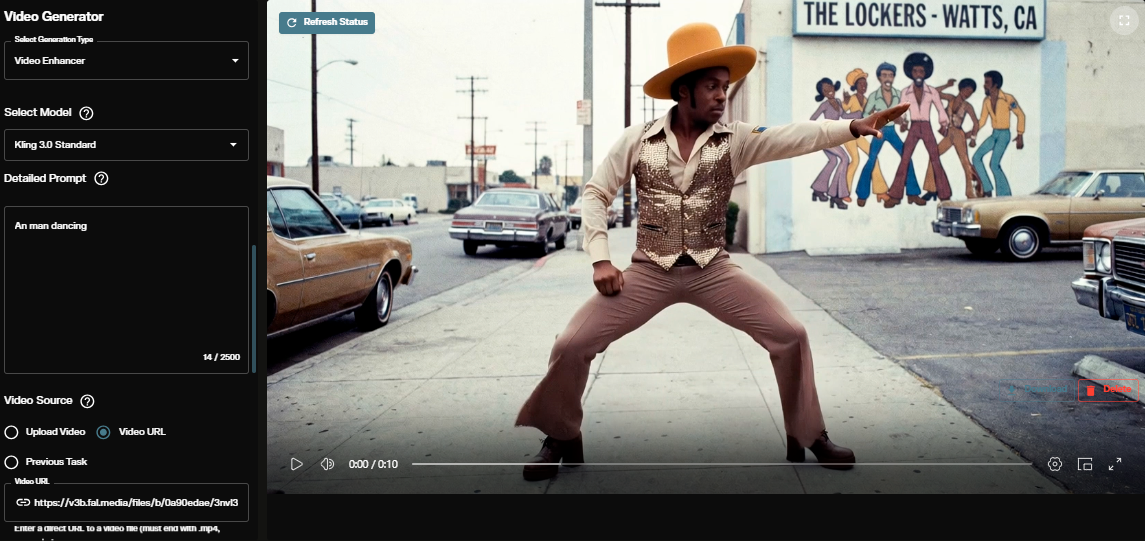
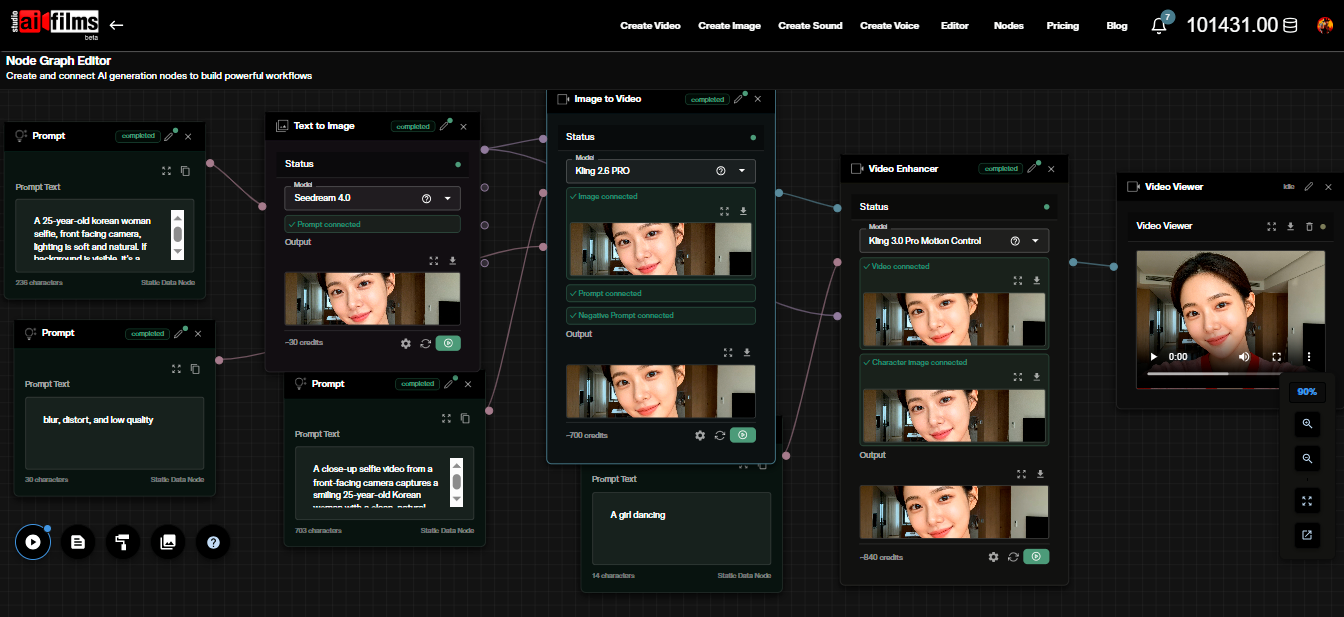
Studios and brands looking to work with AI performers can generate and test original characters in AI FILMS Studio, where the latest video models support character creation and consistent visual output across shots.

Sources
Advanced Television | TV Technology | The Measure | Davis+Gilbert LLP | SAG-AFTRA | The Guardian | Extra TV | Mashable
Continue Reading


Video & LipSync
- Video Generator
- Text to Video
- Image to Video
- Start-End Frame to Video
- Draw to Video
- Motion Control
- Video Enhancer
- Video Upscaler
- Video Extend
- Video to Video LipSync
- Audio to Video LipSync
- Image to Video LipSync
- Video FaceSwap
- Seedance 2.5
- WAN 3.0
- Seedance 2
- FLUX 3
- Minimax H3
- Vidu Q3 Pro
- Grok Imagine Video 1.5
- Gemini Omni
- Google Veo 3.1
- Kling 3.0 Pro
- Luma Ray 3.2
- LTX 2.3
- Happy Horse 1.1
- Kling 3.0 Motion
- ByteDance Upscaler
- InfiniteTalk
- InsightFace
Image & Edit
- AI Character
- AI Actor
- Art Generator
- Text to Image
- Image to Image
- LoRA Image to Image
- Draw to Edit
- Image LoRA Training
- Remove Background
- Image Enhancer
- MidJourney 8.0
- Krea 2
- OpenAI GPT Image 2.0
- Nano Banana Pro Ultra
- Nano Banana 2 Lite
- Nano Banana Pro
- Minimax Image
- Clarity Pro
- Z-Image Turbo LoRA
- Krea 2 Turbo LoRA
- Z-Image LoRA Trainer
- Qwen Image LoRA Trainer
- Background Erase Network 2 (BEN2)