
MiniMax Launches Hub at SIFF as AI Reshapes Chinese Film Production
.jpg?w=3840&q=90)
Share this post:
MiniMax Launches Hub at SIFF as AI Reshapes Chinese Film Production
The 28th Shanghai International Film Festival closed on June 22, 2026, with generative AI embedded deeper into its programming than any previous edition. MiniMax, the company behind Hailuo video generation, used the festival as the launchpad for Hub, a multimodal platform that consolidates image creation, video, voiceover, music, and editing into a single workflow. The design principle behind Hub is blunt: the tool pauses at key creative decision points rather than running from prompt to finished output, keeping the filmmaker in control at every stage.
MiniMax Hub Keeps the Filmmaker in the Loop
Hub combines five functions that previously required separate tools: image creation, video generation, voiceover, music composition, and an editing layer. Rather than generating a finished asset from a single text prompt, Hub interrupts the process at decision points and returns control to the filmmaker before continuing. The position MiniMax stated publicly was unambiguous: creative direction and aesthetic judgment must ultimately be left to humans.
That framing is a direct response to one of the most consistent complaints from working filmmakers about AI video tools. End to end generation produces outputs that are technically proficient but hard to steer with precision. Hub's approach accepts slower generation in exchange for more reliable alignment between the filmmaker's intent and the final output. MiniMax built Hailuo as an underlying generation capability. Hub is the interface that makes it a production instrument.
The SIFF launch made MiniMax an institutional collaborator of the festival, a designation that carries weight in China's state linked film industry calendar. It is also the company's clearest public statement to date about how it intends to compete with consumer facing AI video tools: not on raw output speed, but on how much creative control the filmmaker retains at each step.
Compute Power as the Defining Obstacle
At the SIFForum panel "Smart Tech, Immersive Worlds, The Next Film Revolution," industry leaders identified three core challenges holding back the next phase of AI filmmaking: compute power, distribution, and the ability to direct generative video AI with precision. Of the three, compute drew the most attention.
Yan Yijun, VP of AI foundational model development at MiniMax, called it the absolute core of the problem. "For a generative video model to achieve greater fidelity, what you really need is greater computing power to repeatedly refine and experiment," he said. The statement reframes the AI filmmaking bottleneck from a creative or ethical question to an infrastructure one. The tools exist. The training pipelines exist. What limits output quality is the compute available for iterative refinement during generation.
Panelists at the same session repeatedly framed AI as complementary to human filmmaking rather than a substitute for it. The audience response, as Variety reported from the room, suggested the industry is not yet convinced. The gap between the official position and the floor level anxiety reflects a real tension: AI is advancing fast enough that "complementary" may not describe what the technology looks like in five years, and everyone in the room knows it.
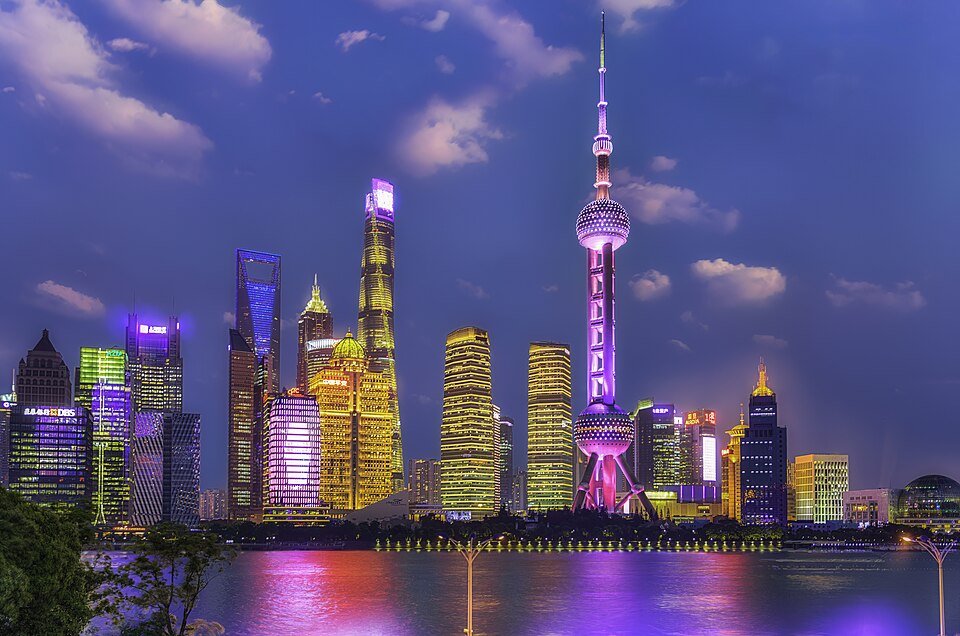
David Zhang from Canada, CC BY-SA 2.0, via Wikimedia Commons
A Period Epic in Seven Days
One detail from SIFF 2026 illustrated the current state of AI assisted production more concretely than any panel statement. An AI first company, which spoke with Variety at the festival but declined to be named, disclosed that it had completed a live action period epic running 120 minutes, finished in seven days. The production used AI for background replacements, relighting, and VFX work. Crew members stood in for the principal performances, which were later replaced entirely by AI generated actors.
The company's decision not to go public with its name or the film title is itself a data point. The Deadline analysis published the same day described how studios and production companies routinely keep AI use undisclosed, crediting the technology on only a fraction of the projects where it was used. The SIFF disclosure is an exception to a pattern, not a representative example.
What the seven day production does demonstrate is where compute bottlenecks and creative control trade off in practice. A production company with access to sufficient AI infrastructure and the willingness to replace human performers entirely can compress a feature's production schedule to less than two weeks. The question Yan Yijun and the SIFForum panelists were circling was how many productions will have that combination of resources, and how soon.
SIFF as a Live Lab for AI Filmmaking
The festival ran workshops across four AI related tracks this year: image creation, audio tuning, AI writing, and a legal tutoring session on AI and rights. That programming sits on top of the institutional infrastructure that SIFF launched at the festival's opening, including the Technology Creation and Fabrication Unit and five service platforms at Shanghai High-Tech Films and Televisions City in Songjiang.
The combination of government backed infrastructure and a company like MiniMax using the festival as a product launch stage is not accidental. China's approach to AI in film has consistently run through centralized institutional channels. The Songjiang platforms, the SIFForum panels, and the MiniMax institutional partnership are all operating at the same level. They are building the conditions for an AI capable film industry before individual productions start demanding those conditions exist.
That stands in contrast to the Hollywood pattern, where individual productions, studios, and guilds have been negotiating AI adoption one agreement at a time. Tony Leung's closing ceremony statement that "AI has no soul" reflects the anxieties that arrive in the absence of that kind of coordinated framing. MiniMax is not answering Leung's philosophical position. It is building the platform that the next wave of Chinese filmmakers will be trained to use before the philosophical debate is resolved.
MiniMax's Market Position in China
MiniMax is the company behind Hailuo Video and the Video-01 generation model, which positioned it among the leading Chinese AI video generation providers before SIFF 2026. Hub is not a standalone product but a production interface built on top of Hailuo's underlying generation capabilities. The distinction matters: Hub is what MiniMax is selling to the film industry, while Hailuo is what powers the generation underneath it.
The Hailuo line has moved on since SIFF. Its third generation model, Hailuo-03, is now available in the AI FILMS Studio video workspace as MiniMax H3, generating 2K clips of 5 to 15 seconds from either a text prompt or a starting frame. The MiniMax H3 tutorial covers both generation modes and the node setup for each.
The company's institutional partnership with SIFF gives it a credibility signal in China's state linked film industry that no amount of benchmarks or product demonstrations could produce independently. In China's film sector, formal festival partnerships carry weight with the studios and broadcasters that make purchasing decisions about production tools.
Yan Yijun and the Export Control Context
Yan Yijun's statement that compute power is "the absolute core" of the AI video quality problem lands differently in China than it does in the United States. US export controls have restricted Chinese companies from purchasing NVIDIA H100 and H800 chips at scale, the hardware that currently sets the ceiling for AI model training and inference quality.
MiniMax and its competitors are building and training on what compute they can access, which is a different and more constrained hardware environment than the one US AI labs operate in. The quality gap between Chinese and US AI video generation models in 2026 is partly a function of that hardware disparity. Yan's SIFForum statement names the constraint directly without naming the export controls that created it.
The Songjiang Infrastructure and What It Does
The five service platforms launched at Shanghai High-Tech Films and Televisions City in Songjiang during SIFF 28 cover AI assisted script development, visual generation, virtual production, post production processing, and distribution technology. The Songjiang district has been developed under the G60 Corridor industrial framework as a concentration zone for technology intensive film production.
Government backing for this infrastructure means the AI tools available at Songjiang are not dependent on private investment cycles. A Beijing supported industrial district has a different funding timeline and risk tolerance than a startup trying to generate revenue. That structural difference is part of why China's approach to building AI film infrastructure looks different from the project by project model that has driven adoption in Hollywood.
The US and China AI Film Infrastructure Divide
The structural difference between US and Chinese AI film production infrastructure is visible at SIFF 2026 in concrete terms. Amazon's AI production tools are in closed beta. Netflix's AI use is disclosed on a project by project basis. Guild agreements govern what tools can be used and under what conditions on covered productions. The entire US production structure is built on private investment and individual studio decisions.
China's SIFF 2026 programming shows a different model: state backed infrastructure built ahead of demand, institutional festival partnerships that certify tools for the industry, and government funded platforms in Songjiang that are available to productions regardless of their individual budgets. Neither model is clearly superior. Each reflects the governance structure of the film industry it operates within.
The Hub Functions for a Working Filmmaker
Hub organizes five capabilities that previously required separate tools. Image creation generates reference frames and concept stills from text or uploaded sketches. Video generation produces clips from those frames using Hailuo's underlying models. Voiceover attaches dialogue and narration to the video output. Music composition generates background tracks matched to the scene's tone and pacing. The editing layer assembles these elements into a cut that the filmmaker can review and iterate on before the final export.
Each step pauses before proceeding to the next, returning a preview for the filmmaker to approve, adjust, or reject. That checkpoint structure is the practical implementation of MiniMax's stated commitment to keeping creative judgment in human hands. A system that runs end to end from text prompt to finished video removes those decision points. Hub restores them deliberately.
Hailuo and the Technology Underneath
Hailuo Video, the generation model underlying Hub, is available as a standalone consumer product in China and internationally. It operates on the same model architecture that powers Hub's video generation step. What Hub adds is the production interface: the five function structure, the checkpoint approvals, and the editing layer that assembles outputs into a coherent sequence.
That separation matters for understanding MiniMax's market strategy. Hailuo is a consumer product competing on raw generation quality against other text-to-video tools. Hub is a production tool competing on workflow integration and filmmaker control. The two products address different users and different use cases, even though they share the same underlying model.
What SIFF's Institutional Partnership Means in China
An institutional partnership with SIFF is not a marketing designation in China's film industry. The festival operates under the China Film Administration, which sits within the National Film Bureau. SIFF's partners have access to the institutional credibility the festival provides, which carries weight with state affiliated studios, broadcasters, and production companies that make procurement decisions about production tools.
MiniMax secured that designation at the same time it launched Hub, pairing the product announcement with an institutional signal to the professional market. The strategy is different from how Western AI video companies have entered the market, where consumer adoption, media coverage, and viral demonstrations have been the primary mechanisms. In China's film sector, institutional alignment is the more direct path to professional adoption.
The Seven-Day Period Epic: What the Disclosure Revealed
The production company that disclosed completing a 120-minute period epic in seven days did so to Variety journalists at SIFF while declining to be named publicly. That pairing, willingness to disclose the fact but not the identity, is itself informative. The company has sufficient confidence in the production's quality to describe it to industry press. It does not have sufficient confidence in the industry's reception to attach its name to the disclosure.
Deadline's analysis of AI credit practices, published during the same SIFF period, documented that studios and production companies routinely use AI tools without public acknowledgment, crediting the technology on only a small fraction of productions where it was used. The anonymous SIFF disclosure fits that pattern precisely. The seven day completion time is a data point about where AI assisted period drama production currently sits technically. The anonymity is a data point about where the industry currently sits culturally.
The Chinese AI Video Generation Market Outside Hollywood Visibility
MiniMax, Kling AI, and Hailuo operate primarily within Chinese domestic distribution channels that are largely invisible to Western trade publications. Their combined user base and production output exceeds what most Western AI video tools have achieved, but the assessment of the global AI filmmaking market that appears in Hollywood trade press is based almost entirely on Western tools and Western productions.
SIFF 2026 offered a brief window into that parallel AI filmmaking market. The institutional scale, the seven day period epic, and the government backed Songjiang infrastructure are not exceptional developments in the Chinese context. They are representative. Western coverage of AI in filmmaking that does not account for the Chinese market is describing roughly half the relevant activity.
Tony Leung's "No Soul" Statement in Full Context
Tony Leung's closing ceremony statement at SIFF 28, that AI has no soul, received significant coverage in both Chinese and Western press. Leung is among the most respected actors in Chinese language cinema, and his willingness to state a position on AI at the festival's highest profile moment gave the critique a weight that technical objections from union representatives had not achieved.
His concern was not displacement but authenticity. A performance driven by human experience, physical presence, and emotional history produces something qualitatively different from a model that has never experienced anything. MiniMax's response at the same festival was not to argue against Leung's philosophical point but to announce a tool where the human filmmaker remains in the loop at every decision point. The two positions coexisted at SIFF 28 without resolving into a consensus.
Leung's statement and MiniMax's launch were not in dialogue with each other in any formal sense. They were parallel expressions of an industry at the same inflection point, where one of its most respected performers articulates what is at stake aesthetically and one of its most active technology companies demonstrates what creative control looks like in practice. SIFF 28 contained both without requiring them to reach agreement.
The Compute Infrastructure Question
The US export controls on advanced chips have created a practical ceiling on the performance of Chinese AI video models relative to what US companies with unrestricted access to NVIDIA H100 hardware can build. MiniMax and Kling operate within those constraints and have still produced tools that filmmakers are using on production scale projects.
That context matters for evaluating the seven day period epic and the SIFF Hub launch. Those achievements happened with compute access that is constrained relative to the leading US models.
If those constraints are addressed by future policy changes or alternative hardware, the gap between Chinese and US AI video quality could close faster than model architecture comparisons alone would suggest. SIFF 28 documented where the Chinese market is now. Where it goes depends partly on a factor outside any filmmaker's or studio's control.
Within months of SIFF, AI digital human dramas would claim 38% of China's top 100 streaming titles, with combined January viewership reaching 2.55 billion.
Filmmakers outside China who want to explore the latest AI video and image-to-video tools are able to try them directly through the AI FILMS Studio video workspace.
Sources
Variety | The Hollywood Reporter | Sixth Tone | Deadline
Continue Reading
.jpg?w=3840)


Video & LipSync
- Video Generator
- Text to Video
- Image to Video
- Start-End Frame to Video
- Draw to Video
- Motion Control
- Video Enhancer
- Video Upscaler
- Video Extend
- Video to Video LipSync
- Audio to Video LipSync
- Image to Video LipSync
- Video FaceSwap
- Seedance 2.5
- WAN 3.0
- Seedance 2
- FLUX 3
- Minimax H3
- Vidu Q3 Pro
- Grok Imagine Video 1.5
- Gemini Omni
- Google Veo 3.1
- Kling 3.0 Pro
- Luma Ray 3.2
- LTX 2.3
- Happy Horse 1.1
- Kling 3.0 Motion
- ByteDance Upscaler
- InfiniteTalk
- InsightFace
Image & Edit
- AI Character
- AI Actor
- Art Generator
- Text to Image
- Image to Image
- LoRA Image to Image
- Draw to Edit
- Image LoRA Training
- Remove Background
- Image Enhancer
- MidJourney 8.0
- Krea 2
- OpenAI GPT Image 2.0
- Nano Banana Pro Ultra
- Nano Banana 2 Lite
- Nano Banana Pro
- Minimax Image
- Clarity Pro
- Z-Image Turbo LoRA
- Krea 2 Turbo LoRA
- Z-Image LoRA Trainer
- Qwen Image LoRA Trainer
- Background Erase Network 2 (BEN2)