
Shanghai Film Festival 28 Launches AI Technology Unit and Five Service Platforms

Share this post:
Shanghai Film Festival 28 Launches AI Technology Unit and Five Service Platforms
The 28th Shanghai International Film Festival opened on June 12, 2026, with the launch of a Technology Creation and Fabrication Unit, a new institutional body dedicated to AI tools, digital imaging, and virtual production. More than 300 guests attended the opening ceremony, including officials from the Yangtze River Delta G60 Alliance and representatives of China's major film institutions.
Three Strategic Priorities for China's Film Industry
Fang Shizhong, Executive Vice Minister of the Publicity Department of the CPC Shanghai Municipal Committee and Director of the Shanghai Film Bureau, set out three priorities for the new unit. First, building a stronger industrial ecosystem using AI and ultra high definition tools. Second, nurturing new cinematic aesthetics through technology. Third, applying AI responsibly without overriding artistic judgment.
Wang Huajie, Secretary of the CPC Songjiang District Committee, and Cao Jun, Deputy Secretary-General of the China Film Association, also addressed the launch ceremony. Cao Jun cited the upcoming 15th Five-Year Plan as a "critical window" for the film industry's technology development and called for strengthening copyright protection alongside AI adoption.
The three priorities represent a specific policy position. The third priority, applying AI without overriding artistic judgment, mirrors concerns raised by filmmakers in Hollywood and at European festivals. Chinese industry leadership is publicly acknowledging the same tension between AI efficiency and creative control that defines the Western debate, even as the pace and scale of Chinese AI adoption outstrips what guild negotiations have produced elsewhere.
Five Service Platforms at Shanghai High-Tech Films and Televisions City
Runawaymo, CC BY-SA 4.0, via Wikimedia Commons
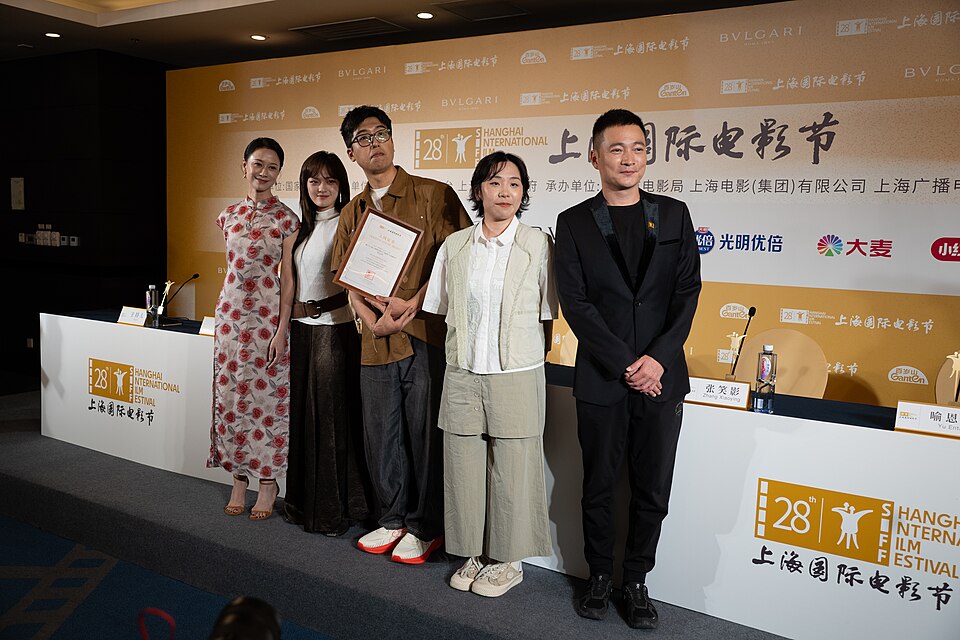
A parallel press conference announced the digital and intelligent ecological matrix for the Shanghai High-Tech Films and Televisions City in Songjiang district. The matrix includes five service platforms covering the full span of short drama production: from copyright trading through creative incubation, AI powered production, and content tourism integration.
The five platforms together form a vertically integrated AI film production infrastructure housed in a single district. The concentration in Songjiang reflects the G60 Science and Technology Innovation Corridor, which connects nine cities in the Yangtze River Delta and has become the primary geographic anchor for China's high-tech industrial development.
The five platforms are:
- Shanghai International Short Drama Copyright Exchange Center
- AI Interactive Short Drama Creation Public Service Platform
- Senyu SPACE MCN AI Full-chain Empowerment Platform
- AIGC All-in-One Integrated Creative Platform
- Huace Yangtze River Delta International Film and TV Center AIGC All-scenario Cultural Tourism and Film Empowerment Platform
Each platform addresses a different stage of the short drama production chain. The Copyright Exchange Center handles rights acquisition and licensing. The Creation Public Service Platform supports AI-assisted production. The MCN platform addresses distribution through content creator networks. The All-in-One Creative Platform targets the complete production pipeline. The Huace platform specifically integrates film production with cultural tourism, a growing sector in China's domestic content market.
Industry Partnerships and the Haowen Fund
SFC Haopu launched its AI+ Digital Content Industry Innovation Platform at the ceremony and announced the Haowen Film Technology Fund. It signed cooperation agreements with four partners: KPS, the Institute of Language Sciences at Shanghai International Studies University, AltStory, and Kuaizi. A separate deal was signed between SFC Haopu and Bund FTC, covering digital content production and AIGC technology.
Film Paradise Co., Ltd. and Anhui Film Group signed a strategic cooperation focused on 4K film restoration and IP exploitation.
The Haowen Film Technology Fund is a direct mechanism for converting the SIFF infrastructure into production capital. Announcing a dedicated technology fund at the same event as five new service platforms signals that the governance and finance structures are being built simultaneously, not sequentially.
China's Cinema Scale and the Five-Year Plan
The scale of the Chinese market gives government coordination a different kind of reach than comparable Hollywood initiatives. China has 93,187 cinemas, more than any other country on earth, according to The Hollywood Reporter. Domestic receipts totaled $7.45 billion in 2025, a 22 percent increase over the year before, with 1.238 billion admissions.
Where individual guild agreements define how US studios adopt AI tools, China's approach builds infrastructure for the entire industry through a single coordinated push tied to national planning cycles. The AI Technology Unit and its five platforms are not festival programs. They are the 2026 iteration of a building effort that has been advancing across major Chinese industry events this year.
The 15th Five-Year Plan, which begins in 2026, sets the national framework within which these platforms operate. Cao Jun's reference to the plan at the SIFF opening is not rhetorical. It places the five platforms inside a policy architecture that will govern their funding, their regulatory environment, and their evaluation criteria through 2030.
The Context Within Chinese AI Film Development
The 28th SIFF's infrastructure launch takes place within a wider year of Chinese AI film expansion. At the Cannes Marché in May, China's delegation presented the country's first two AIGC films and a projected $16.5 billion micro drama market. The Shanghai government's own earlier announcement of a 100 billion yuan five-year AI film forecast frames the SIFF platforms as part of that industrial build.
The AI Technology Unit at SIFF is not the only program the 28th edition runs on AI. A separate AI Backlot production program pairs traditional filmmakers with AI creators to produce short films live during the festival run. The two initiatives together show the festival operating at both the institutional infrastructure level and the production floor level simultaneously. At the festival's close, MiniMax launched Hub, its multimodal AI platform, designed to pause at key creative decision points and return control to the filmmaker at each step.
The 28th SIFF's concentration on AI infrastructure, from a government backed technology unit to five dedicated service platforms to a live production program, represents the most comprehensive institutional AI build at any single film festival in 2026. ## What the G60 Corridor Actually Is
The Yangtze River Delta G60 Science and Technology Innovation Corridor connects nine cities: Shanghai, Jiaxing, Suzhou, Jinhua, Hangzhou, Huzhou, Xuancheng, Wuhu, and Hefei. The corridor was formally established under central government policy to concentrate high-tech industrial development in a single geographic band across the delta.
Concentrating the five AI film platforms in Songjiang, where the G60 corridor originates, is not a coincidental location choice. It places the platforms inside the policy infrastructure, physical infrastructure, and administrative framework that has been built specifically to support technology-intensive industries. The studio district benefits from the same preferential treatment on land, utilities, tax, and regulatory approvals that other G60 industrial projects receive.
What "Short Drama" Means at Scale
The short drama format driving the five platform build is not a niche category in the Chinese market. Industry data from 2025 puts the short drama segment's domestic value at billions of dollars annually, with hundreds of platforms producing thousands of episodes. A single successful short drama series on a major platform can generate viewing figures equivalent to a prime-time television event.
The five Songjiang platforms are designed for a production category that already operates at industrial scale. The Copyright Exchange Center handles rights for a segment that produces more episodes per year than any other content category in China. The AI production platform targets a workflow where 50 to 100 episodes of content need to be produced in weeks. The infrastructure is sized for that volume, not for the smaller scale that Western observers associate with "short" format content.
International Implications of the SIFF Build
The 28th SIFF's AI Technology Unit and five service platforms represent the most concentrated government-backed AI film infrastructure launched at any single festival in 2026. The comparison with Annecy's MIFA 2026 is direct: MIFA launched a single ethical licensing deal as its headline AI development. SIFF launched a government unit, five industry platforms, a dedicated investment fund, and six corporate partnership agreements simultaneously.
The scale difference reflects the two countries' different regulatory and economic frameworks for cultural production. MIFA's approach builds market frameworks that individual companies can adopt voluntarily. SIFF's approach builds government-backed infrastructure that all participating companies use. Both are producing governance and production frameworks for the AI film industry. The mechanisms and the speed are entirely different.
China's Box Office Scale as Context
The market that the five platforms serve is the world's largest by screen count. China has 93,187 cinema screens, more than any other country on earth. Domestic box office receipts reached $7.45 billion in 2025, a 22 percent increase year over year. The AI film infrastructure launched at SIFF 28 is building into an already established and growing market, not a nascent one.
The short drama segment that the Songjiang platforms primarily address is separate from theatrical box office. Its $16.5 billion 2026 projection, if accurate, would make it more than twice the size of the theatrical market. The SIFF infrastructure serves both segments simultaneously.
The G60 Corridor's Industrial Logic
The Yangtze River Delta G60 Science and Technology Innovation Corridor connects nine cities: Shanghai, Jiaxing, Suzhou, Jinhua, Hangzhou, Huzhou, Xuancheng, Wuhu, and Hefei. It was established under central government policy to concentrate high-tech industrial development in a geographic band with shared transportation, energy, and data infrastructure.
Locating the five AI film platforms in Songjiang, where the G60 corridor originates, is not coincidental. Songjiang district receives preferential regulatory treatment, tax incentives, and infrastructure investment as a G60 anchor city. The platforms benefit from that treatment automatically by locating within the district rather than competing for it through separate applications.
What Short Drama Production Volume Looks Like
Chinese short drama production operates at a scale with no Western equivalent. Individual studios on major platforms deliver 50 to 100 episode series on four to six week production cycles. A studio producing two series simultaneously generates 100 to 200 episodes per month.
The five Songjiang platforms are sized for that production volume. The Copyright Exchange Center processes rights for a content category producing thousands of episodes weekly across hundreds of studios. The AI production platform targets workflows where episode turnaround must be measured in days. The infrastructure is industrial, not artisanal.
The Six Partnership Agreements at SIFF 28
The cooperation agreements signed at the SIFF 28 ceremony each serve a specific function in the platform ecosystem. The Institute of Language Sciences at Shanghai International Studies University supports dubbing, localization, and multilingual voice work. KPS, AltStory, and Kuaizi each address different production pipeline stages. SFC Haopu's agreement with Bund FTC covers digital content production and AIGC technology infrastructure.
The partnership structure indicates that the five platforms are not standalone tools. They are nodes in a production network where each partner contributes specific capabilities. The government unit provides coordination and regulatory support. The private partners provide specialized services. The capital from the Haowen Film Technology Fund connects both to production.
The International Festival Comparison
The Annecy MIFA 2026 launched a single ethical licensing deal between Banijay and Toon Boom as its headline AI governance development in June 2026. SIFF 28 launched a government technology unit, five service platforms, a film technology fund, and six corporate partnerships simultaneously.
The difference in scale reflects the difference in institutional framework. MIFA is a private market event. SIFF operates within a government-aligned cultural institution with access to policy infrastructure, regulatory support, and direct capital allocation. MIFA's governance approach is voluntary and industry-driven. SIFF's is government-coordinated and reinforced by the 15th Five-Year Plan.
The 15th Five-Year Plan as Governance Framework
The 15th Five-Year Plan, which begins in 2026, sets the national planning framework within which the SIFF platforms operate. Under China's planning system, projects aligned with Five-Year Plan objectives receive priority access to capital, regulatory approvals, and supportive policy through 2030.
Cao Jun's reference to the plan at the SIFF 28 opening placed the five platforms inside that architecture explicitly. The platforms will have sustained government support for at least five years not because of an annual budget decision but because of their alignment with a national planning objective.
What "AIGC" Means as a Category Label
AIGC is the Chinese industry shorthand for AI Generated Content, and its use as a category label reflects how the Chinese film industry classifies a production segment that Western markets have no equivalent term for. Films described as AIGC in the Chinese market are productions where generative AI tools played a central role in the visual content creation process.
The terminology distinction matters for international market discussions. When Wing Sight presented "China's first two AIGC films" at Cannes in May 2026, the label communicated a production category familiar to Chinese industry participants but novel to European and American buyers. AIGC is China's market vocabulary for what Western markets are still naming.
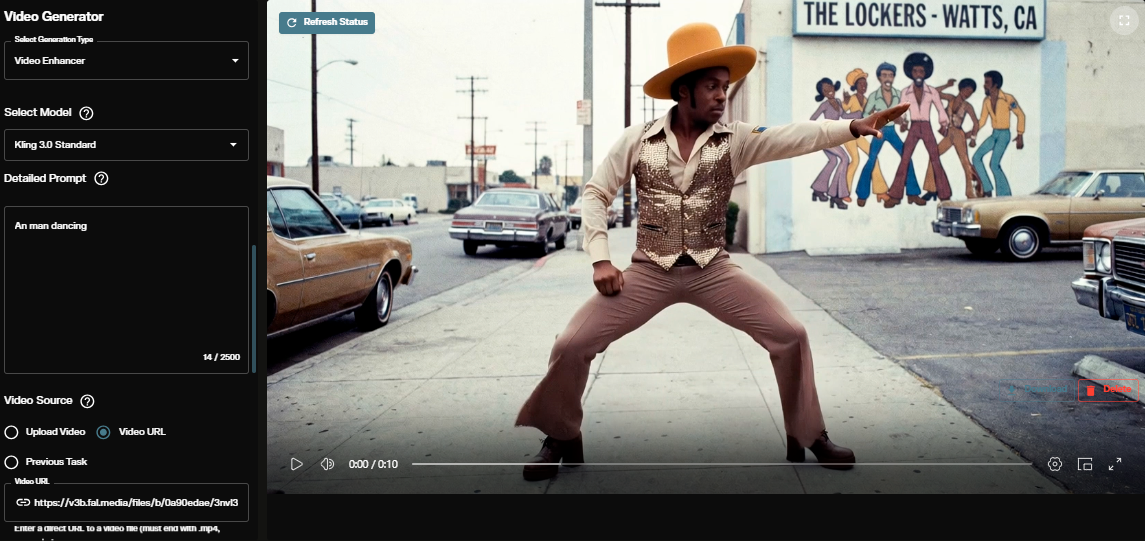
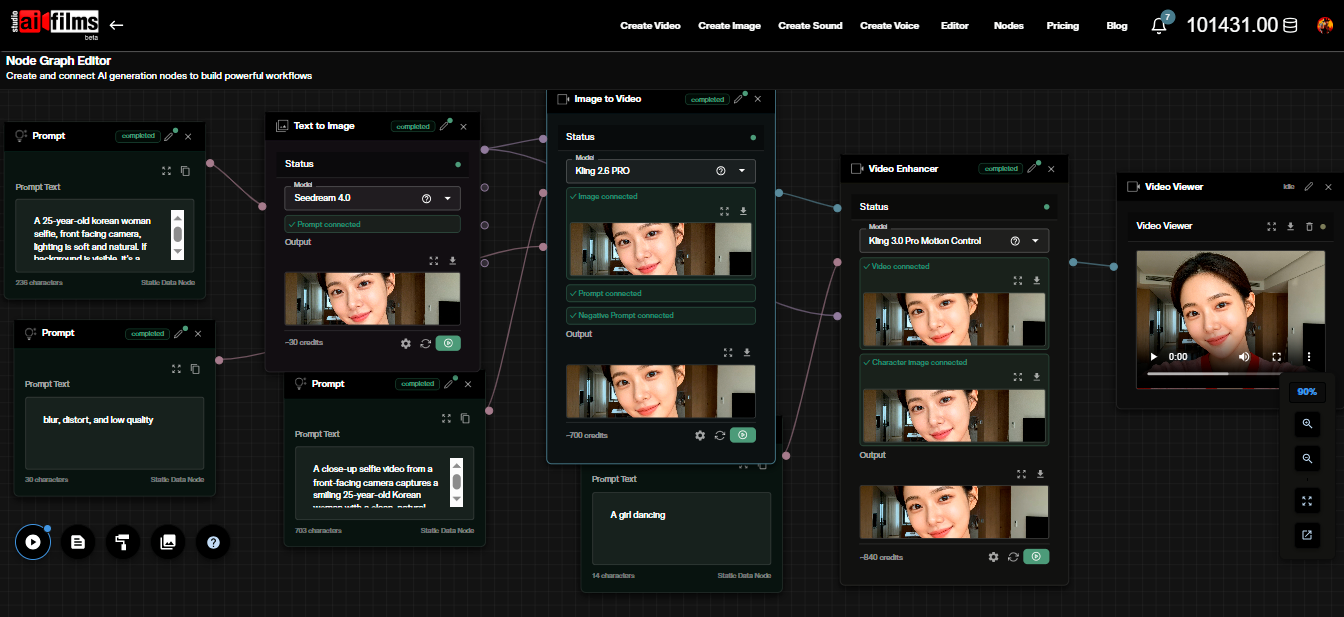
AI filmmaking tools for international independent filmmakers are available through the AI FILMS Studio video workspace.
Sources
Variety | The Hollywood Reporter
Continue Reading


Video & LipSync
- Video Generator
- Text to Video
- Image to Video
- Start-End Frame to Video
- Draw to Video
- Motion Control
- Video Enhancer
- Video Upscaler
- Video Extend
- Video to Video LipSync
- Audio to Video LipSync
- Image to Video LipSync
- Video FaceSwap
- Seedance 2.5
- WAN 3.0
- Seedance 2
- FLUX 3
- Minimax H3
- Vidu Q3 Pro
- Grok Imagine Video 1.5
- Gemini Omni
- Google Veo 3.1
- Kling 3.0 Pro
- Luma Ray 3.2
- LTX 2.3
- Happy Horse 1.1
- Kling 3.0 Motion
- ByteDance Upscaler
- InfiniteTalk
- InsightFace
Image & Edit
- AI Character
- AI Actor
- Art Generator
- Text to Image
- Image to Image
- LoRA Image to Image
- Draw to Edit
- Image LoRA Training
- Remove Background
- Image Enhancer
- MidJourney 8.0
- Krea 2
- OpenAI GPT Image 2.0
- Nano Banana Pro Ultra
- Nano Banana 2 Lite
- Nano Banana Pro
- Minimax Image
- Clarity Pro
- Z-Image Turbo LoRA
- Krea 2 Turbo LoRA
- Z-Image LoRA Trainer
- Qwen Image LoRA Trainer
- Background Erase Network 2 (BEN2)