
Tony Leung at SIFF: "AI Has No Soul." Hong Kong Star Closes Shanghai Festival With a Verdict on AI

Share this post:
Tony Leung at SIFF: "AI Has No Soul." Hong Kong Star Closes Shanghai Festival With a Verdict on AI
Tony Leung Chiu-wai served as jury head for the Golden Goblet competition at the 28th Shanghai International Film Festival, which ran June 12 to 21, 2026. In remarks at the festival, the Hong Kong cinema legend, whose credits include In the Mood for Love, Hero, and Shang-Chi and the Legend of the Ten Rings, delivered one of the clearest verdicts on AI creativity from any actor of his standing.
The Shanghai International Film Festival is the largest film event in Asia by attendance. Its Golden Goblet competition draws submissions from over a hundred countries. Leung's remarks as jury head reached an audience for which the AI production question is not theoretical. Chinese cinema operates inside the world's fastest growing AI sector.
His judgment came not from distance, but from daily use.
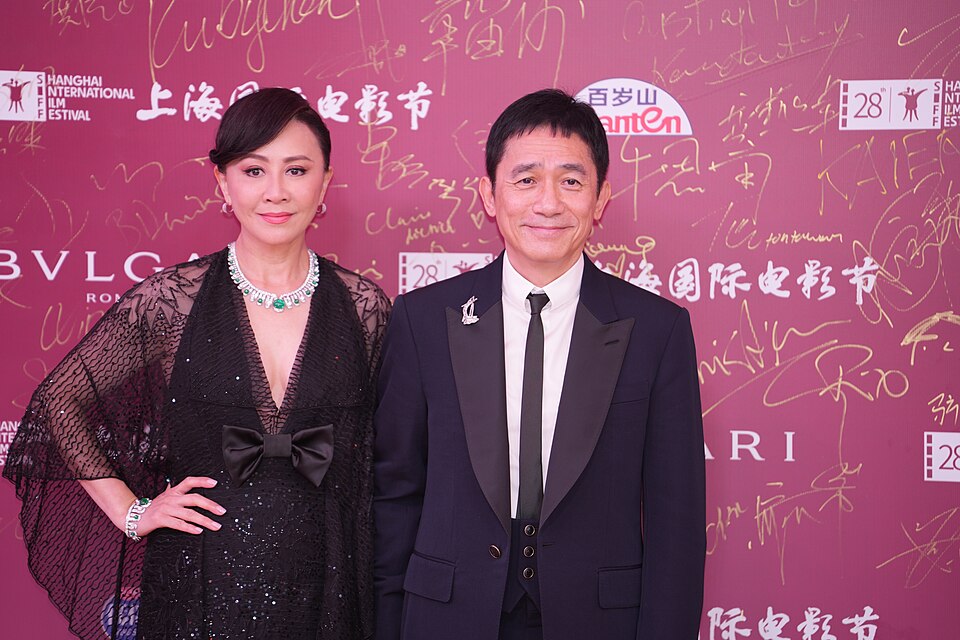
"There's No Soul"
In remarks during the festival, Leung offered a precise account of what he sees AI doing to cinema. "I think AI is a double-edged sword," he said. "It saves us a lot of time on pre-production and post-production. It saves a lot of money but this will go to mainstream movies, the popcorn ones — because [AI filmmaking] is easier and saves money. But at the same time, a lot of people have lost their jobs. You don't need to think. There's no creativity. It's just calculations … there's no soul."
The statement drew a line between two categories of film. Mainstream production, in Leung's view, can absorb AI without loss. Cost and speed define it, and AI delivers both. The kind of filmmaking he cares about cannot, because what it produces depends on irreducible human feeling.
He illustrated the distinction with a single image: "Looking at an original painting by Van Gogh gives a completely different feeling than a Van Gogh style generated by AI."
Leung did not qualify the verdict. He acknowledged using AI himself, which distinguishes the statement from a blanket rejection by someone who has never touched the tools. He drew a line between what the tool handles and what it cannot. Research and time saving belong to the tool. The part that produces what he calls soul stays with the person doing the work.
Harvey Keitel made a structurally identical argument at the 60th Karlovy Vary International Film Festival two weeks later. Keitel described AI voice cloning as a 'danger' that failed to reproduce Michael Caine's 'beauty' or any actor's emotional life, citing the ElevenLabs Odyssey audiobook as his specific example. Two legends of world cinema, at different festivals, arrived at the same position from different angles.
The Van Gogh Comparison and What It Claims
The Van Gogh analogy is worth examining closely. AI can now generate images that are stylistically indistinguishable from Van Gogh's technique by viewers who are not art historians. The brushwork, the color palette, the impasto application, all of these can be approximated with high fidelity. What the generated image cannot contain is the specific biographical context that made Van Gogh produce the work he did.
Leung is not claiming audiences can tell the difference between Van Gogh and AI Van Gogh in a blind test. He is claiming that the experience of knowing a work came from a specific human life, with specific suffering and specific perception, produces a different kind of feeling than the experience of knowing a work came from a model trained on that human's output.
The counterargument would hold that a generated Van Gogh image can move an audience that knows nothing about the painter's biography. Leung's implicit response is that the object changes when the origin is known. A viewer looking at an AI Van Gogh who knows it is AI has a different experience from one looking at the original. The knowledge of origin is part of what the work is, not a footnote to it.
That is a claim about what art is for rather than what it looks like. And it is a claim that places Leung on the same side of the question as Keitel at Karlovy Vary, as Jesse Eisenberg on 16mm film, and as the German Dogma 25 directors at Cannes: the soul of a work is not in its surface, and the surface is all that AI can reproduce.
What Leung's Career Demonstrates
Leung's work in "In the Mood for Love" (2000) is the clearest exhibition of what he is describing. Wong Kar-wai's film contains almost no dialogue about what the two central characters feel. The entirety of the emotional communication happens through posture, timing, movement, and the specific quality of attention that Leung and Maggie Cheung bring to every scene. An AI trained on descriptions of the film could not produce the film, because the film is not the description. It is what happened in front of a camera between two actors and a director across a period of time.
That quality of presence is also what Leung is describing when he talks about soul. Not a metaphysical claim about human consciousness. A description of something specific that is present in his work and that is visible to audiences who do not speak Cantonese, have never lived in 1960s Hong Kong, and have no particular interest in melodrama as a form. Whatever is communicated across those distances is not something a model can extract from a dataset.
The Wong Kar-wai collaborations that defined Leung's reputation were also productions notable for their unusual methods. "In the Mood for Love" was shot over fifteen months. "2046" was in production for five years. These are not the production conditions that AI efficiency advocates are addressing when they describe tools that reduce budget and accelerate timelines. They are the conditions that produce the kind of work Leung's career is built on.
Leung's perspective also carries weight because his films communicate across languages and cultures without relying on words. "In the Mood for Love" is understood by audiences who share nothing with its characters except the capacity for feeling. What crosses those distances is exactly the quality he is describing when he invokes soul. That reach is an argument by itself.
That cross-cultural reach also makes his remarks difficult to dismiss as generational preference or conservatism about technology. Leung's work is studied in film programs globally. His specific claim about what a performance requires is grounded in a body of work that has been tested against audiences who had no prior reason to find it meaningful.
The SIFF Context: Betting Both Ways
The Shanghai International Film Festival's institutional position in 2026 was deliberately split. The AI Backlot program in partnership with Hailuo AI ran alongside traditional competition programming. The festival's AI Technology Unit positioned Shanghai as a center for production that embraces AI integration.
Leung's remarks as jury head placed the festival's main competition on the side of his distinction. Human feeling, not calculations. The AI industry programming sat in the building next door. The festival was organized to hold both conversations simultaneously, which is a different institutional stance from taking a position.
That simultaneity reflects the Chinese film industry's broader relationship to AI in 2026. The industry is one of the largest in the world by screen count, with an AI sector valued at approximately $174 billion. Production efficiency arguments for AI tools have significant commercial weight in that context. Leung's verdict that mainstream popcorn cinema can absorb AI while serious work cannot is not a rejection of the industry's commercial priorities. It is a distinction between two kinds of film that the same industry produces.
The divide was visible inside Leung's own jury. Actress Xin Zhilei, one of his six jurors at the Golden Goblet competition, disclosed during the festival that she had consulted the Chinese AI app Doubao for advice during her SIFF appearance. The admission drew laughs. It illustrated how casually AI tools have entered professional creative life, even among the jurors sitting alongside a man who had just declared them soulless.
What "No Creativity" Actually Means
Leung's phrase "you don't need to think" is precise in a way that "no creativity" is not. He is describing a specific condition. A filmmaker using AI to generate content no longer needs to make the choices that define what the content means.
The calculation produces the output. The filmmaker selects from outputs. The selecting is different from the thinking that would have produced only one possible image.
That distinction between selection and creation is the practical ground of his argument. A photographer who adjusts the aperture, chooses the moment, and accepts the consequences is making choices with costs. A filmmaker who generates twenty variations and picks one is making a different kind of choice. Leung's position is that the second kind is less demanding in the way that matters.
The practical implication for working filmmakers is not that they should never use AI. Leung uses AI every day for research. The implication is that when the tool can make the decision, the filmmaker who lets it is giving up the part of the work that constitutes the artistic act.
This pattern appears consistently across how actors and directors described AI tools during the 2026 festival season. Practitioners who use AI for research or preparation tend to affirm it for that purpose while rejecting its application to the decisions that define performance. Leung's framing is unusually precise in naming exactly what the tool handles and what it cannot.
Three Projects and a Career at 62
Leung's three projects in development suggest that his engagement with cinema is far from retrospective. A new film with Johnnie To would be the continuation of a collaboration that has produced some of the most formally inventive Hong Kong genre cinema of the past thirty years. To's work with Leung on "Election" (2005) and "Exiled" (2006) represents exactly the kind of working relationship between director and performer that produces the kind of work Leung is describing.
The India project is the most unexpected. A first production outside Greater China for a 62 year old actor at this stage of a career built on the specificity of Cantonese cinema is a choice that runs counter to career consolidation. It is the kind of choice that requires exactly the human judgment Leung is describing. The willingness to make a decision without knowing what the outcome will look like is not a condition any model can simulate.
The serial killer drama series rounds out a portfolio that covers three different formats, three different registers, and three different kinds of creative challenge. For a filmmaker who just delivered a verdict on AI creativity, the range of projects under development is itself an argument. He is finding more to do with a camera and a collaborator than a model could propose.
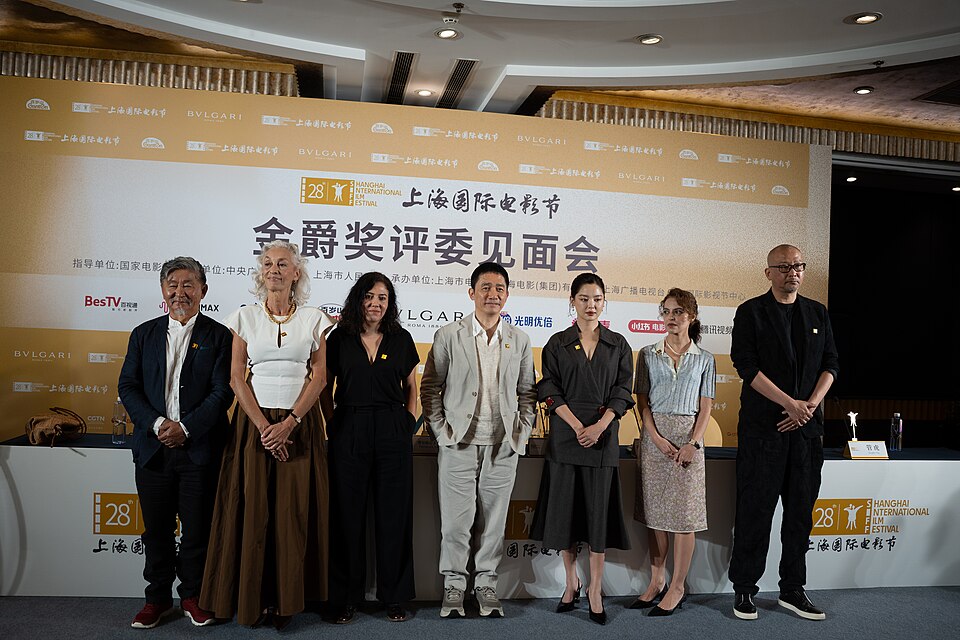
The jury Leung led at the Golden Goblet competition included directors Guan Hu and Aktan Arym Kubat, filmmakers Déa Kulumbegashvili and Fernanda Valadez, producer Dora Bouchoucha, and actress Xin Zhilei, representing work from China, Central Asia, Georgia, Mexico, and Tunisia. Leung had said before the festival that he would work to persuade his fellow jurors toward his taste rather than defer to consensus. On the festival's final day, MiniMax launched Hub, a multimodal platform built on the premise that creative judgment must stay with the filmmaker. The two announcements described opposite relationships to the same question.
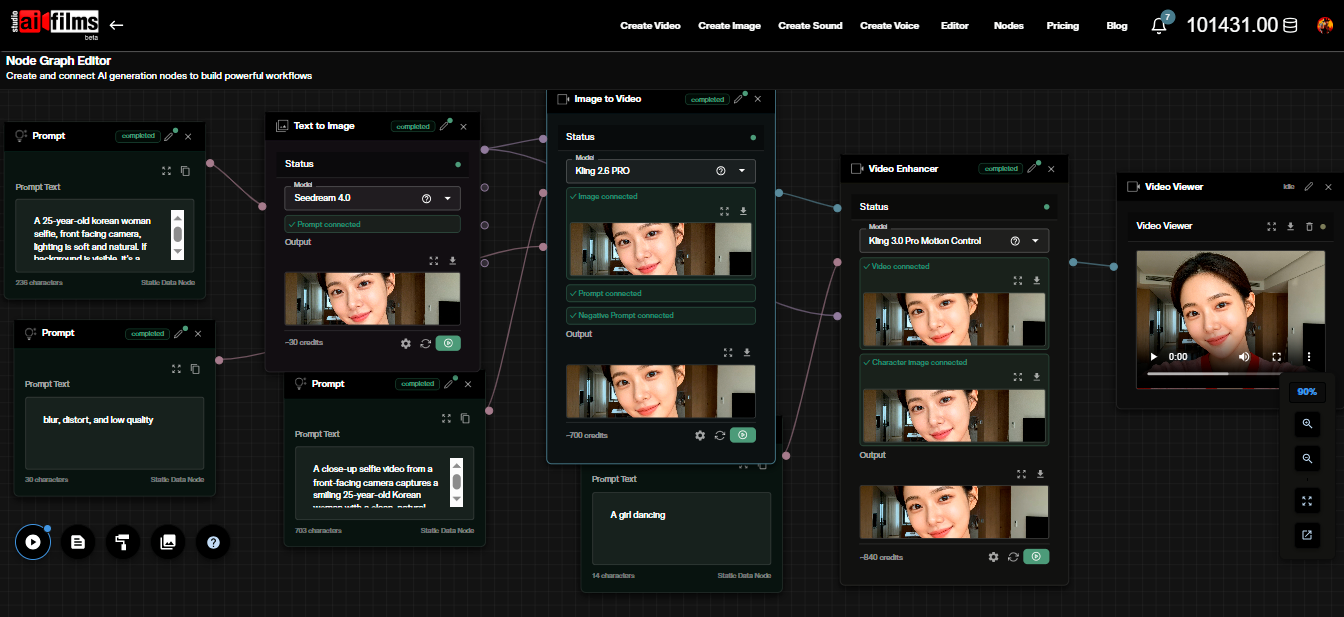
Creators generating work in formats he described as "calculations" can start in AI FILMS Studio's video workspace and explore China's broader AI filmmaking landscape that SIFF 2026 so directly reflected.
The AI He Uses Every Day
The verdict came from a filmmaker who uses AI himself. Leung told THR that he turns to AI tools "almost every day" for research, as a way to have terms explained and to gather materials on abstract concepts he wants to understand for his work. He described it as a practical part of his preparation process.
The distinction he drew is between AI as an information tool and AI as a replacement for artistic judgment. Retrieving knowledge, in his view, is a function AI performs well. Making the choices that transform knowledge into feeling is where the calculation stops and the soul begins.
SAG-AFTRA's AI provisions from 2024 address digital replicas and likeness rights, but they do not address how performers integrate AI into their personal preparation. Leung's daily use is a practitioner's answer to a question the guild frameworks have not yet formally resolved. He has drawn the line himself, between the tool that helps him understand and the judgment that determines what he does with that understanding.
What the Festival Position Reveals
Leung's remarks as jury head placed them inside the festival's official programming, not on its margins. He was not a dissenting voice from outside the AI conversation. He was the leader of the festival's principal competition jury, and his statement about soul and calculation was reported the same week that the festival's own AI Backlot program was producing short films in a building nearby.
That combination produced an institutional contrast no press release could have planned. A jury head declaring AI has no soul while an AI production program runs concurrently is not a contradiction. It reflects the actual state of the industry in 2026: cinema's most celebrated practitioners and its most aggressive new tools operating in the same spaces, at the same time, without a settled consensus on what that means.
The 2026 festival season produced a concentrated window for these positions to reach the record. SIFF in June, Karlovy Vary in July, Cannes in May with German Dogma 25 and its counter AI filmmaking manifesto. Each event drew statements from significant figures. Together they constitute the first full festival season in which the major global events treated AI and filmmaking as a central program question rather than a niche track.
What Leung and Keitel said at their respective festivals was also what the best parts of the festival programs demonstrated implicitly. Films made from specific access to difficult material, films that require a particular actor in a particular condition, do not come from calculations. They come from the conditions that no efficiency argument can reach.
Leung's position, as someone who uses AI daily and still insists it cannot replace the soul of a performance, is the most precise form the argument can take. He is not describing what AI tools lack based on speculation. He is describing what they lack based on using them and knowing what they return.
That specificity matters when the broader debate often turns on speculation about tools the speaker has not tried. Practitioners who use the tools and still locate their limits carry a different weight than those who resist without engagement. Leung belongs to the first category, and that is what his verdict means.
Sources
The Hollywood Reporter | Variety | Deadline
Continue Reading
.jpg?w=3840)


Video & LipSync
- Video Generator
- Text to Video
- Image to Video
- Start-End Frame to Video
- Draw to Video
- Motion Control
- Video Enhancer
- Video Upscaler
- Video to Video LipSync
- Audio to Video LipSync
- Image to Video LipSync
- Video FaceSwap
- Seedance 2.5
- WAN 3.0
- Seedance 2
- FLUX 3
- Minimax H3
- Vidu Q3 Pro
- Grok Imagine Video 1.5
- Gemini Omni
- Google Veo 3.1
- Kling 3.0 Pro
- Luma Ray 3.2
- LTX 2.3
- Happy Horse 1.1
- Kling 3.0 Motion
- ByteDance Upscaler
- InfiniteTalk
- InsightFace
Image & Edit
- AI Character
- AI Actor
- Art Generator
- Text to Image
- Image to Image
- LoRA Image to Image
- Draw to Edit
- Image LoRA Training
- Remove Background
- Image Enhancer
- MidJourney 8.0
- Krea 2
- OpenAI GPT Image 2.0
- Nano Banana Pro Ultra
- Nano Banana 2 Lite
- Nano Banana Pro
- Minimax Image
- Clarity Pro
- Z-Image Turbo LoRA
- Krea 2 Turbo LoRA
- Z-Image LoRA Trainer
- Qwen Image LoRA Trainer
- Background Erase Network 2 (BEN2)