
Venice Reply AI Film Festival 2026: 2,181 Submissions, Muccino as Jury Chair

Share this post:
Venice Reply AI Film Festival 2026: 2,181 Submissions, Muccino as Jury Chair
The Reply AI Film Festival received 2,181 submissions for its 2026 edition, the largest intake in the competition's history. The festival runs alongside the Venice Film Festival each September at the Hotel Excelsior on the Lido, organized by European technology company Reply.
Reply and the Festival's Origin
Reply SpA is an Italian technology and digital services company founded in Turin in 1996, with offices across Europe and the Americas. It runs a broad portfolio of technology challenge programs under the Reply Challenges brand, covering coding, cybersecurity, and data science.
The AI Film Festival is Reply's entry into creative technology programs. The company's rationale is that AI filmmaking sits at the intersection of its core competency in digital systems and the cultural visibility that film provides. Running the competition at Venice positions it inside the world's oldest film festival rather than inside a technology conference, which is a deliberate choice about where AI creative work should be evaluated.
Muccino Chairs the Jury
Director Gabriele Muccino, whose credits include The Pursuit of Happyness (2006) and Seven Pounds (2008), chairs the jury for the 2026 edition. Rob Minkoff, director of The Lion King, also serves on the jury.
Muccino assessed the submissions directly: "What stands out in all the short films from this second edition is a significant leap in quality, not only in the use of AI technologies, but in the ability to apply them to craft engaging, original, and emotionally resonant narratives". His framing of the moment is equally plain: "The AI Revolution Is Just Beginning".
Rob Minkoff as Juror
Rob Minkoff directed The Lion King with Roger Allers in 1994 and directed Stuart Little in 1999 and its 2002 sequel. His career spans both traditional animation and digital effects heavy family films. His presence on the jury alongside Muccino signals that the festival is drawing established Hollywood figures rather than digital media personalities.
Minkoff's background in animation is particularly relevant for an AI film competition. Animated and AI generated work share a production dynamic: both require extensive post production decision making that would not exist on a live action set. A juror who has spent his career making decisions about what animators produced can apply the same evaluative framework to what AI generation produces.
The Lion King was, at the time of its release, one of the most technically complex animated films ever made. Minkoff's understanding of where technical achievement ends and narrative craft begins is precisely the judgment a jury evaluating AI short films needs. A submission that demonstrates impressive generation but no story is not a finalist, and Minkoff has the production experience to apply that distinction accurately.
Four Prizes, Including One With UN Backing
The festival awards four prizes:
- Best Use of AI in Filmmaking
- Production Excellence Award
- Lexus Visionary Award, for technological and narrative foresight
- AI for Good Award, developed in partnership with the International Telecommunication Union (ITU)
The AI for Good Award was developed in collaboration with the ITU, the United Nations agency for information and communication technologies. Winning films must demonstrate alignment with the UN Sustainable Development Goals. No other major film festival competition has structured a prize category around UN development criteria.
The ITU Partnership and What AI for Good Requires
The International Telecommunication Union is the UN agency responsible for global ICT standards and development. Its AI for Good initiative promotes beneficial applications of AI across the SDG framework: health, climate, education, equality, and economic development.
Partnering with the ITU gives the Venice Reply festival a prize category that no other AI film competition has. Filmmakers competing for the AI for Good Award cannot enter with a technically impressive film that ignores humanitarian or social impact. The prize requires alignment with the SDGs as a condition of consideration.
That requirement filters the entrant pool in a specific direction: it rewards AI productions that use the technology to address real world problems or illuminate human conditions relevant to development goals. Whether the films that win that category are also the most technically or cinematically sophisticated is a separate question, but the prize exists as an explicit counter to AI filmmaking that prioritizes aesthetic novelty over purpose.
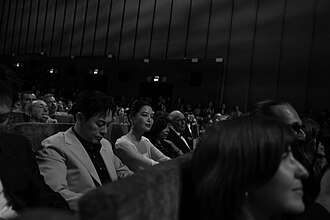
Colleen Sturtevant, CC BY-SA 4.0, via Wikimedia Commons
The Venice Lido hosts both the main Venice Film Festival and the Reply AI Film Festival's awards ceremony. Holding the AI competition at the Hotel Excelsior on the Lido places it physically adjacent to the competition venue where Xin Zhilei won Best Actress at the 82nd Venice Film Festival in 2025.
That proximity is not incidental. AI short films are evaluated inside the same cultural calendar as the world's oldest major film festival. The geography makes a statement about where AI cinema belongs in the institutional film landscape.
Ten Finalists Selected
Ten short films advanced to the official Première selection from the 2,181 entries. The finalists include work from the USA, Portugal, Italy, the UK, Chile, and Germany. The awards ceremony takes place September 4 at the Hotel Excelsior, Venice Lido.
The timing alongside Venice Film Festival is deliberate. AI short films are being evaluated within the same cultural calendar as the world's oldest major film festival, not in a separate digital circuit.
A 10 finalist selection from 2,181 entries is a 0.46 percent selection rate. That selectivity is higher than most short film competitions regardless of medium. It signals that the festival treats AI filmmaking as requiring the same curatorial discipline as any other competition format, not as a category where the novelty of the medium lowers the threshold for what counts as finished work.
The Six Countries of Finalists
Finalists came from the USA, Portugal, Italy, the UK, Chile, and Germany. Six countries across three continents from 2,181 entries suggests that technically and creatively competitive AI filmmaking is now distributed globally, not concentrated in a single production hub.
Chile's presence is notable. South American film production has not been a major center of AI filmmaking tool adoption, but the inclusion of a Chilean finalist indicates that the tools required to compete at this level are accessible outside the US and European markets where generative AI companies are headquartered.
Italy and Portugal reaching the finals also reflects a European dimension that is consistent with the festival's Italian sponsor and European orientation. The EU AI Act, which came into force in stages from 2024, has shaped how European filmmakers approach AI disclosure and consent in productions. European finalists at a competition with ITU partnership with SDG criteria are working within a regulatory context that reinforces the festival's own values around transparency and purpose.
How 2,181 Submissions Compare
The World AI Film Festival at Cannes in 2026 drew over 5,000 entries from 80 countries. Venice Reply's 2,181 came through a more structured submission process with specific prize categories that filtered for purpose and craft alignment, not just technical output.
The gap between 5,000 and 2,181 reflects two different models for AI film competition. The Cannes event functions as a broad survey of AI creative production. The Venice Reply event functions as a curated competition with specific criteria, including the SDG alignment requirement, that narrows the entrant pool.
Both serve a different function in the AI film festival circuit that has emerged in 2025 and 2026. The Tribeca 2026 AI programming used a third model: integrating AI films into general programming rather than running a separate AI track. Each model reveals something different about the current AI filmmaking community. The Cannes volume reflects how many people are using AI tools to make short films. The Venice Reply selection reflects how many of those people can make work that satisfies a specific narrative and purpose criteria when required to.
India's Bengaluru International Short Film Festival launched a dedicated AI film category at its 16th edition in August 2026, drawing 118 entries into its new Machine Made Movies section. BISFF is another Oscar qualifying short film festival that has now established a formal AI competition track, extending the festival circuit into South Asian markets.
Quality as the New Baseline
Muccino's "significant leap in quality" is a direct challenge to the assumption that AI films trade craft for novelty. The festival's growth from its first edition to 2,181 submissions suggests that assumption is becoming harder to maintain.
At Tribeca 2026, the first fully AI generated feature entered the official lineup, made for $2,000 with no sets, actors, or cameras. At Cannes, Darren Aronofsky described his AI project's improvement from January to April as "mind blowing". What was once a niche category now spans competitive festival selections across three of the world's major film events. In Tokyo, SSFF & ASIA 2026 reported AI submissions doubling to 368 at the Academy accredited festival.
The baseline Muccino describes is not a ceiling. It is the floor that now separates entries worth considering from those that are not. Filmmakers entering Venice Reply's third edition will need to meet or exceed the quality standard of the second edition's finalists to advance. That iterative pressure is how competition formats drive craft improvement over time, and it applies to AI filmmaking the same way it applies to any other production discipline.
Whether the quality improvement Muccino observed translates to commercial viability outside festival contexts is the open question. Short AI films winning festival prizes are not yet generating the distribution deals and audience numbers that would confirm a market. Venice Reply's 2026 edition demonstrates that AI films can satisfy jury criteria at a major film event. Demonstrating that they satisfy audiences at scale is the next threshold.
The Venice Lido Setting
The September 4 ceremony takes place at the Hotel Excelsior on the Venice Lido, the same strip of barrier island that hosts the Venice Film Festival's main competition screenings at the Sala Grande. The two events share geography deliberately.
AI short films presenting their awards at the Excelsior are doing so while the Venice Film Festival is active, meaning the international press, buyers, and industry observers attending Venice's main competition are physically present and accessible to Reply AI Film Festival participants. The placement converts proximity into visibility. A winner at the Reply competition can be in conversation with buyers at the Venice Film Market the same week.
That logistical alignment is what distinguishes Venice Reply from other AI film festivals that run independently of major industry events. The ITU prize and the Lido location together give the festival two distinct claims: SDG relevance and institutional proximity to the world's oldest film festival.
What Muccino Meant by "A Significant Leap in Quality"
Muccino's remark describes a change he observed firsthand across 2,181 submissions. "A significant leap in quality, not only in the use of AI technologies, but in the ability to apply them to craft engaging, original, and emotionally resonant narratives" is a specific claim: the narrative craft has improved, not just the technical output.
In the festival's first edition, the technical novelty of AI generation was itself the primary interest. By the second edition, Muccino is saying that filmmakers are now using the tools in service of stories, not just to demonstrate what the tools can do. That transition from demonstration to craft is the change that makes a competition meaningful over time.
Whether that observation reflects the full 2,181 submissions or the top ten finalists is an important distinction. Quality improvements at the selection level may not reflect the broader field. What it does reflect is that the submissions worth evaluating have advanced, which is the relevant signal for filmmakers deciding whether to enter and for buyers deciding whether to attend.
Lexus and the Commercial Partner Tier
The Lexus Visionary Award, given for technological and narrative foresight, represents a commercial partnership tier that AI film festivals increasingly rely on to sustain operations. Lexus's involvement positions the brand within the conversation about where visual technology and storytelling intersect, a positioning choice that serves the automaker's ongoing investment in design and innovation messaging.
Festival partnerships with luxury automotive brands are common at Venice and Cannes. Their presence at the Reply AI Film Festival signals that the AI short film space is now commercially attractive to the same category of sponsors that support major film events, not just to technology companies with product placement goals.
The circuit serves filmmakers differently depending on what they are trying to accomplish. Venice Reply's institutional position and SDG criteria make it the strongest entry on a portfolio for filmmakers interested in international coproduction, foundation funding, or documentary work. Its Lido location makes it the most directly visible to the buyers attending Venice's main competition.
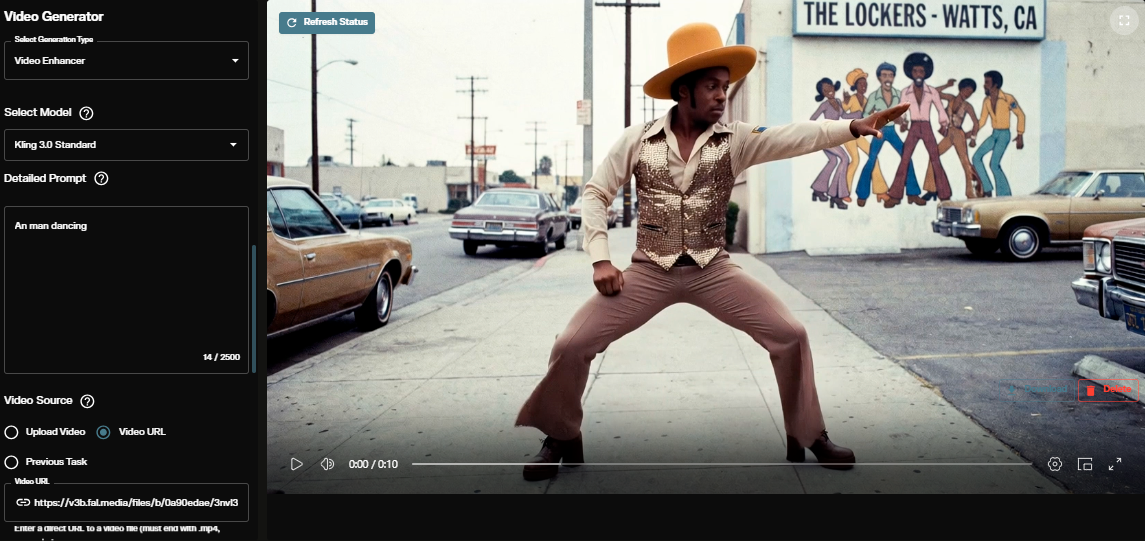
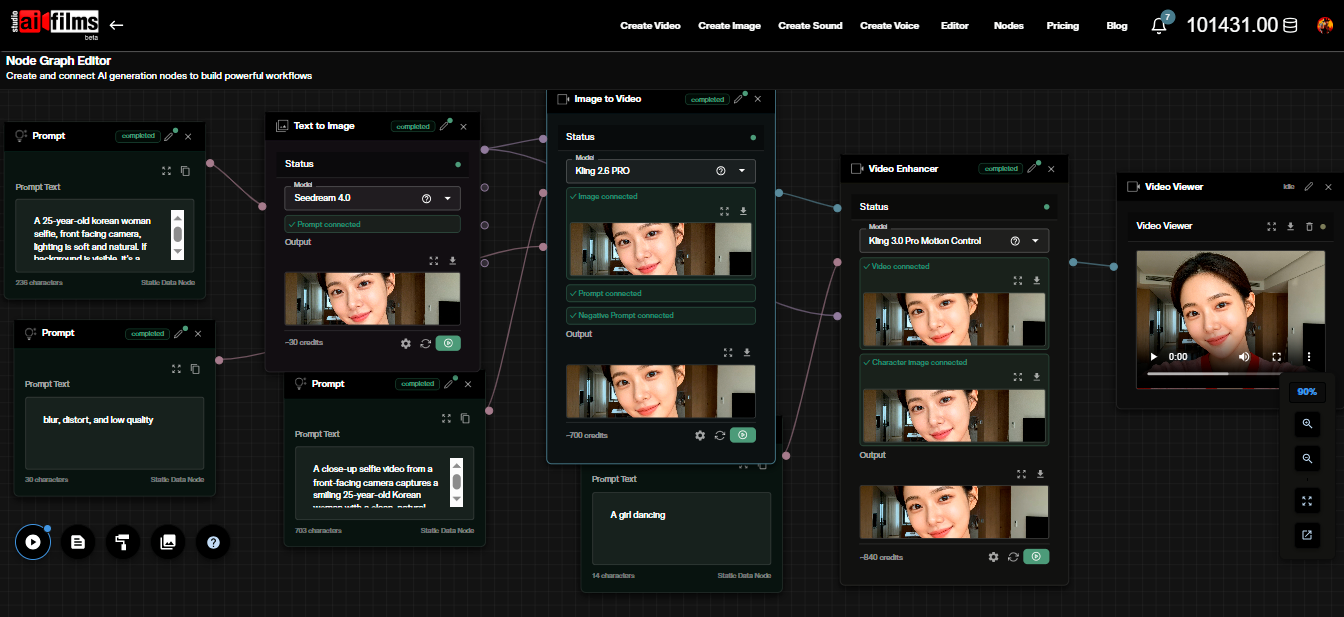
Filmmakers building work for competitions like this can access the latest AI video generation tools through the AI FILMS Studio video workspace.
The September 2026 ceremony will be the clearest test yet of whether the quality trajectory Muccino described has continued into a third edition. The third edition named Oscar winner Gabriele Salvatores as jury president and selected 10 finalists from 3,000 entries across 76 countries, with the ceremony set for September 6 at the Match Point Arena on the Venice Lido.
Sources
Deadline | Yahoo Finance | IMDB | Reply Challenges | aiff.reply.com | ITU
Continue Reading
.jpg?w=3840)


Video & LipSync
- Video Generator
- Text to Video
- Image to Video
- Start-End Frame to Video
- Draw to Video
- Motion Control
- Video Enhancer
- Video Upscaler
- Video Extend
- Video to Video LipSync
- Audio to Video LipSync
- Image to Video LipSync
- Video FaceSwap
- Seedance 2.5
- WAN 3.0
- Seedance 2
- FLUX 3
- Minimax H3
- Vidu Q3 Pro
- Grok Imagine Video 1.5
- Gemini Omni
- Google Veo 3.1
- Kling 3.0 Pro
- Luma Ray 3.2
- LTX 2.3
- Happy Horse 1.1
- Kling 3.0 Motion
- ByteDance Upscaler
- InfiniteTalk
- InsightFace
Image & Edit
- AI Character
- AI Actor
- Art Generator
- Text to Image
- Image to Image
- LoRA Image to Image
- Draw to Edit
- Image LoRA Training
- Remove Background
- Image Enhancer
- MidJourney 8.0
- Krea 2
- OpenAI GPT Image 2.0
- Nano Banana Pro Ultra
- Nano Banana 2 Lite
- Nano Banana Pro
- Minimax Image
- Clarity Pro
- Z-Image Turbo LoRA
- Krea 2 Turbo LoRA
- Z-Image LoRA Trainer
- Qwen Image LoRA Trainer
- Background Erase Network 2 (BEN2)