
Roger Avary Brings 'Paradise Lost' to Life With AI at Ex Machina Studios

Share this post:
Roger Avary Brings 'Paradise Lost' to Life With AI at Ex Machina Studios
Oscar winning screenwriter Roger Avary will direct a cinematic adaptation of John Milton's Paradise Lost at Ex Machina Studios, using generative AI to build the scale the 17th century epic demands. Deadline reported the announcement on April 29, 2026, describing the production as using "cutting-edge generative AI to bring Milton's vision to life in ways unimaginable just a few years ago".
Avary won the Academy Award for Best Original Screenplay for Pulp Fiction in 1995 and wrote the screenplay for Robert Zemeckis's Beowulf in 2007, which carried a $150 million production budget. Paradise Lost is positioned to match that scale at a fraction of the cost.
Paradise Lost's History of Failed Adaptations
Milton's epic poem has drawn major filmmakers for decades without reaching production. Ridley Scott announced a Paradise Lost adaptation in 2011, with Bradley Cooper attached to play Lucifer. The project collapsed during pre-production over budget concerns. The visual requirements of depicting Heaven, Hell, and the War in Heaven at a convincing scale defeated the economics of the project even at the height of Scott's commercial standing.
Alex Proyas, the director of Dark City and The Crow, announced a Paradise Lost adaptation in 2011 as well, with a cast that included Casey Affleck and Camilla Belle. That project also did not reach production. The pattern across failed attempts is consistent: the visual ambition of the source material exceeds what traditional production economics can support at any budget level that would make the film commercially viable.
A Literary Epic Traditional Financing Could Not Touch
Milton's poem follows Satan's rebellion in Heaven and the fall of Adam and Eve. As a cinematic subject, it sits in the category of projects that major studios have circled and abandoned for decades: the scale is immense, the source material is in the public domain, and the theology makes studio marketing departments nervous. No major adaptation has made it to production.
AI changes the cost equation. Ex Machina Studios' producers described the production as "preserving the primacy of real actors, human-authored narratives, and guild-aligned production practices" while using AI for world building. The distinction matters. The AI is building the environments, not replacing the cast.
What AI World Building Means for This Story
The visual requirements of Paradise Lost are specific and extreme. The War in Heaven involves angelic armies fighting across celestial environments with no earthly equivalent. Satan's fall to Hell requires depicting a being of immense power traversing cosmological scales. Eden must be rendered in a way that conveys the perfection the source text attributes to it. Each of these requirements has historically been the point at which adaptation projects stall.
AI world building, as used in the Ex Machina model, addresses these requirements by generating environments rather than constructing them physically. The studio's AI platform, which the production describes as proprietary, takes directorial input about the visual character of an environment and generates imagery that the production can use as the basis for rendered scenes. Real actors perform within those environments using the same principles as studio production, with the AI generated world composited around them rather than built on location or stage.
Avary's Beowulf as Technical Reference Point
Avary's work on Beowulf with Robert Zemeckis is the clearest precedent for what he is attempting with Paradise Lost. Beowulf was a performance capture production: actors performed the film in motion capture suits, and their performances were translated into digitally animated characters in a fully synthetic environment. The approach allowed Zemeckis to realize a Bronze Age world at a scale impossible with location shooting.
The Beowulf experience gave Avary firsthand knowledge of what fully digital world building requires in production terms and where the technical and creative constraints lie. Paradise Lost uses generative AI rather than performance capture animation, but the fundamental challenge is the same: how to give actors a real performance to deliver while surrounding them with environments that cannot be photographed. Avary's time on a production that solved that problem through an earlier technology informs how he is approaching the current one.
Avary's Argument for AI Production
Avary addressed the financing logic directly in a Variety interview that ran alongside coverage of his earlier AI work. He had said it was "almost impossible" to get films made through traditional studio routes for the better part of two decades. Repositioning his projects at the intersection of creative storytelling and AI technology attracted investor capital that had eluded him through conventional channels.
"Powerful storytelling doesn't require blockbuster budgets, but the right tools and team", he said in the Deadline announcement. The statement doubles as an argument to the industry: creative ambition does not scale down with the budget when AI is handling the production design.
The Investor Capital Argument
Avary's statement about AI attracting investor capital is a claim about the industry's financing structure, not just about his own projects. Traditional literary epics have failed to attract financing because the cost of realizing them at cinematic scale exceeds what their box office potential justifies. That calculation has held for decades.
AI world building changes the denominator. If a production can achieve visual scale comparable to a $150 million traditional production at $30 million, the film's required box office performance to generate a return drops to a level that literary epics can plausibly achieve. Investors who would not back a $150 million Paradise Lost might back a $30 million one with the same visual ambition. That is the argument Avary is making, and it is the argument that Ex Machina Studios was built to validate.
The production is described as guild aligned, meaning it intends to comply with SAG-AFTRA and WGA contract terms as it applies AI tools to the world building process. The specific contractual requirements depend on how Ex Machina's AI platform is used: if it generates environments only, the relevant provisions concern visual effects workers rather than performers or writers. The production's public statements have been explicit that real actors will perform all character roles, which limits the AI provisions most directly applicable to the project.
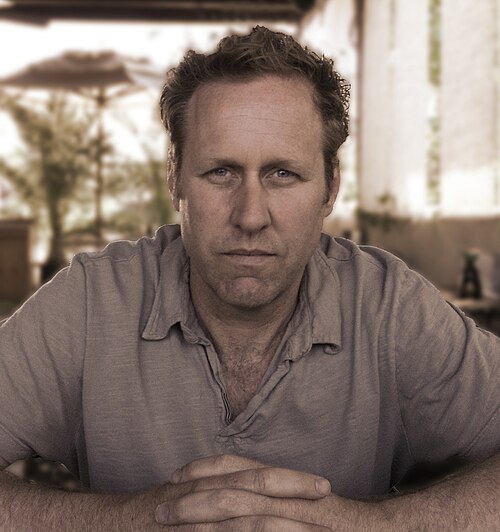
AVARYdotcom, CC BY-SA 3.0, via Wikimedia Commons
The Ex Machina Studios Model
This project is separate from Avary's earlier AI pivot through General Cinema Dynamics, where he announced three unnamed films in active production in February 2026. Paradise Lost at Ex Machina Studios is a named, prestige literary project with a public announcement and a specific creative framework. The specific AI platform Ex Machina uses was described as proprietary and was not named in the Deadline or Variety coverage.
No release date, cast, or director of photography has been announced.
The General Cinema Dynamics Separation
The distinction between Paradise Lost at Ex Machina Studios and Avary's work at General Cinema Dynamics reflects different production and financing structures rather than different creative approaches. General Cinema Dynamics was described in February 2026 as a company Avary is working with on three unnamed productions. Ex Machina Studios is where Paradise Lost is being developed and produced.
The two entities may share infrastructure or personnel, or they may be entirely distinct. The public record does not clarify the relationship. What is clear is that Avary is operating across multiple AI production contexts simultaneously, which suggests that his shift to AI-integrated filmmaking is a general strategic direction rather than a single project experiment.
What the Announcement Did Not Include
The April 29, 2026 Deadline announcement was a statement of intent rather than a production commencement notice. No cast was named. No director of photography was named. No specific AI platform was identified by name. No release date was given. No completion guarantee or financing close was announced.
Those absences are not necessarily signs of early-stage development. They may reflect deliberate decision about what to announce at Cannes and what to hold for a later announcement with more attached. Avary and Ex Machina Studios may have chosen to establish the project's existence and creative direction publicly before attaching names to it. The pattern in AI film announcements over 2025 and 2026 has been partial disclosure rather than full production reveals.
Guild Alignment at Ex Machina
Ex Machina Studios' public framing of Paradise Lost emphasizes guild alignment as a feature of the production, not a constraint it is navigating around. The description of the production as "preserving the primacy of real actors, human-authored narratives, and guild-aligned production practices" is a response to the concerns that AI productions typically generate among guild members and their representatives.
The SAG-AFTRA 2026 deal, which ratified in June 2026 with 78.5 percent member support, requires specific consent and compensation for synthetic performer use. Since Paradise Lost uses real actors rather than AI generated performers, its SAG-AFTRA compliance is primarily a matter of complying with the standard consent documentation requirements rather than the digital replica provisions. WGA compliance depends on whether the screenplay was generated by AI tools or written by human writers. Ex Machina's description of the production implies human authored narrative, which places it within WGA jurisdiction.
The Announcement's Industry Reception
The April 29 announcement generated attention from the trades primarily because of Avary's profile rather than the project's production status. Deadline and Variety both covered the announcement, which gave it more visibility than a typical unattached project reveal. That coverage reflects the film industry's interest in whether AI production tools can actually enable projects that traditional economics prevent, not just reduce costs on projects that would have been made anyway.
The announcement positioned Ex Machina Studios as a facility committed to prestige literary material at the high end of AI production ambition. That positioning is distinct from companies announcing AI tools for generic commercial production. Paradise Lost as a flagship project claims a specific category of unfilmable literary property as the test case for what AI world building can do, which attracts a different kind of investor and a different kind of press attention.
Avary's Track Record With Ambitious Projects
Avary's career outside Pulp Fiction and Beowulf includes projects that have faced financing and completion challenges. Rules of Attraction (2002), his adaptation of Bret Easton Ellis's novel, was made for approximately $4 million and earned critical respect but limited commercial performance. His subsequent projects before Paradise Lost at Ex Machina demonstrate a director who has consistently worked on ambitious material with limited institutional support.
The pattern is relevant to how investors should evaluate his AI pivot. Avary has said AI attracted investor capital that conventional routes did not provide. That statement is credible in context: a director with his profile and track record on difficult material has not been able to consistently access major studio backing. AI production economics change the risk calculus in a way that may genuinely expand what he can get financed.
The legal complications that have marked Avary's personal history since a 2008 incident have added to the institutional distance between him and major studios. His return to public creative work through AI productions, starting with General Cinema Dynamics and continuing with Paradise Lost at Ex Machina, is part of a deliberate repositioning. AI productions give him a path back to ambitious work on his own terms, with investors who are evaluating the technology opportunity rather than conventional industry risk factors.
Milton's Text as the Test Case
The choice of Paradise Lost specifically, rather than another literary epic, carries its own logic. Milton's poem is among the most recognized works in the English literary canon, which means it carries instant name recognition for investors and press. It is in the public domain, which eliminates rights costs. Its visual requirements are so extreme that no traditional production has succeeded in mounting it, which means Avary's AI production claim is not competing with an existing successful adaptation.
Those three characteristics, name recognition, no rights cost, and no existing successful adaptation to compare against, make Paradise Lost a strategically sound choice for a director trying to establish what AI production can achieve. If the film is made and released, every comparison will be to the poem itself rather than to a prior film version, which is an advantageous critical position for an AI production attempting to establish its own visual language.
Literary Epics This Model Could Enable
Paradise Lost is not the only canonical work of Western literature that has failed to reach production because of cost. Dante's Inferno has drawn adaptation attempts from major directors without reaching production. Homer's Odyssey has been adapted in smaller formats but never at the visual scale the source demands. John Bunyan's The Pilgrim's Progress is another public domain text with extraordinary visual requirements.
If Paradise Lost demonstrates that AI world building can make a cosmological-scale literary adaptation commercially viable, other properties in this category will immediately become attractive to producers and investors. The relevant question is whether the film can be made and whether it can find an audience. Avary is making the first bet; the audience question remains open.
What Sets This Apart
The combination of elements here has no direct precedent. An Academy Award winner adapting a canonical work of Western literature at blockbuster scale, using AI for the actual production mechanism of building Heaven, Hell, and the War in Heaven on screen. No other filmmaker at Avary's level has publicly committed to a project of this scope with this dependency on AI world building.
Milton's Paradise Lost has drawn directors from Fritz Lang to Ridley Scott over the decades, none of whom reached production on an adaptation. The reason was always the same: the cost of realizing it on screen. Avary is making a specific claim that AI has retired that objection.
Whether the project closes financing and reaches production will depend on guild negotiations around the specific methodology and investor appetite for a prestige literary subject. For now, it is the clearest signal yet of where AI in filmmaking is heading: not short films or visual effects cleanup, but literary epics that traditional production economics made impossible.
The public domain status of Milton's text and the decades of failed adaptation attempts give Paradise Lost a clear market position: there is no competing adaptation for audiences who want to see the story on screen. Whether that unfulfilled demand is large enough to support a commercial theatrical release, and whether AI world building can produce the visual scale Milton's story requires, are the two unknowns that will determine the project's eventual significance to the industry.
Filmmakers testing what AI world building looks like in practice can explore the tools at AI FILMS Studio.
The April 2026 announcement places Paradise Lost among the most specific public commitments by a named director to a named prestige project built around AI world building. The combination of Avary's writing credentials, Milton's source text, and Ex Machina Studios' stated AI infrastructure makes it the clearest current test of whether literary epics that traditional financing could not support have found a path to production.
No precedent yet exists for this kind of production completing, distributing, and performing at box office. Avary's bet is that the audience for an unfilmed literary epic is large enough, and the AI cost reduction significant enough, that both conditions can be satisfied simultaneously. The film's production progress over the next twelve months will be the first real answer to whether that calculation holds.
Sources
Deadline | Variety
Continue Reading
.jpg?w=3840)


Video & LipSync
- Video Generator
- Text to Video
- Image to Video
- Start-End Frame to Video
- Draw to Video
- Motion Control
- Video Enhancer
- Video Upscaler
- Video Extend
- Video to Video LipSync
- Audio to Video LipSync
- Image to Video LipSync
- Video FaceSwap
- Seedance 2.5
- WAN 3.0
- Seedance 2
- FLUX 3
- Minimax H3
- Vidu Q3 Pro
- Grok Imagine Video 1.5
- Gemini Omni
- Google Veo 3.1
- Kling 3.0 Pro
- Luma Ray 3.2
- LTX 2.3
- Happy Horse 1.1
- Kling 3.0 Motion
- ByteDance Upscaler
- InfiniteTalk
- InsightFace
Image & Edit
- AI Character
- AI Actor
- Art Generator
- Text to Image
- Image to Image
- LoRA Image to Image
- Draw to Edit
- Image LoRA Training
- Remove Background
- Image Enhancer
- MidJourney 8.0
- Krea 2
- OpenAI GPT Image 2.0
- Nano Banana Pro Ultra
- Nano Banana 2 Lite
- Nano Banana Pro
- Minimax Image
- Clarity Pro
- Z-Image Turbo LoRA
- Krea 2 Turbo LoRA
- Z-Image LoRA Trainer
- Qwen Image LoRA Trainer
- Background Erase Network 2 (BEN2)