
Adam Shankman Denies AI VFX Use in 'Stop! That! Train!'

Share this post:
Adam Shankman Denies AI VFX Use in 'Stop! That! Train!'
Director Adam Shankman issued a public statement on June 2, 2026 calling social media claims that his RuPaul Charles comedy used generative AI in its visual effects "patently not true". The film opens June 12 via Neon. It was accused of AI use based on a critic's Letterboxd review and the presence of an AI company in its end credits.
Where the Accusation Started
Filmmaker and VFX artist Gloria Cook posted a Letterboxd review on May 28, 2026 following an advance screening of "Stop! That! Train!" Cook wrote that the film featured "one of the most conspicuous uses of AI I've seen in a film, with a lot of VFX looking like gen AI". She also flagged Acme AI, listed as a VFX and AI partner in the end credits.
Cook's professional background in VFX and filmmaking gave the claim traction. The review spread widely online before the film's opening.
Shankman's Statement
Shankman responded on Instagram the same day the story broke. "This is patently not true. Every shot in Stop! That! Train! was made by human hands. There are a sum total of ZERO shots conceived by AI in the movie".
He went further: "We employed hundreds of VFX artists who all killed themselves getting this out for release and not one job was taken out of human hands". Shankman described the project as "Fully Human Made" and called on audiences to "get out there and support all these magnificent talented and PAID artists" when the film opens.
Photo by Louis Hansel on Unsplash
Shankman's Instagram post named a specific number: zero. That precision matters in a media environment where most director statements on AI use are qualified or handled through publicists. A statement asserting zero AI shots creates a verifiable record that follows the film into distribution.
His call to audiences to support the crew linked the AI disclosure question directly to labor. For the hundreds of VFX artists credited on the production, the accusation was not an aesthetic dispute. It was a claim that their work might not exist.
What Acme AI's Role Actually Was
A source familiar with the production told Variety that Acme AI was contracted exclusively for visual effects work, and that any AI use was confined to background workflow processes and did not appear on screen. The company's presence in the end titles, standard for production service vendors, was the sole trigger for the public accusation.
That distinction, between an AI vendor supporting your pipeline and generative AI appearing in your frames, has no formal definition in any widely adopted credit standard. That ambiguity is what the controversy hinged on.
The New Standard of Disclosure Hollywood Needs
The Shankman case is an inversion of the pattern studios have maintained for years. Productions that used AI for voice cloning, background VFX, or title sequences typically disclosed it only after journalists asked, or not at all. Shankman was in the opposite position: defending human work against an accusation of AI use that he says was never there. But the public had no way to verify either claim from the credits alone.
That is precisely the gap the Human Provenance in Film standard, launched at the Cannes Film Market in May 2026, was built to close. The initiative defines three tiers of AI involvement: No AI Used, Assistive AI, and Generative AI. A production using an AI vendor for background VFX pipeline work would fall under Tier 2, Assistive AI, not Tier 3. Had that label traveled with "Stop! That! Train!" through distribution and marketing, Cook's review would have had accurate context from the first frame, and Shankman would not have needed to defend his crew on Instagram.
The underlying technical problem is harder to solve. Current AI detection methods are unreliable enough that audiences cannot use them to make credible judgments on their own. The C2PA Content Credentials standard would embed cryptographic provenance data at the shot level, recording exactly which tools touched each frame. But C2PA is not yet standard in theatrical production workflows. Until it is, end credits remain the only public signal, and as this case shows, a vendor credit and an on-screen credit look identical on paper.
Shankman's statement is unusually direct by industry standards. Most directors facing AI accusations have answered more obliquely, or left their publicists to handle it. That he named the number of VFX artists, described the film explicitly as human made, and tied his defense to their labor signals how much the accountability expectation has shifted. Directors now defend their crews before the film opens.
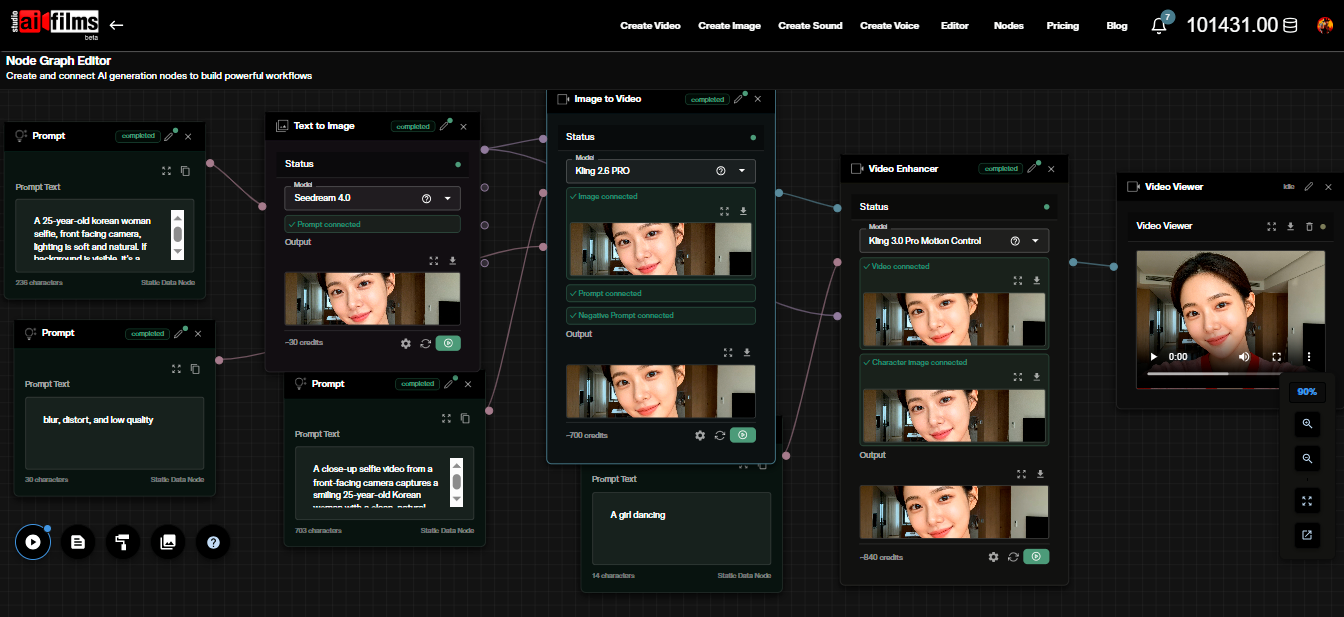
Productions that generate AI content as part of their creative workflow can work with the latest text-to-video and image-to-video models through AI FILMS Studio.
What Acme AI's Vendor Category Means
Acme AI is listed in the end credits as a VFX and AI partner. VFX vendor credits of this type appear alongside dozens of other service providers who contribute to a film's production without placing branded work on screen. The credit format is identical whether the vendor provided equipment rental, supervised a department, or supplied a software pipeline.
That format was designed for an era when the distinction between an on screen result and an off screen process was obvious. AI tools have collapsed that distinction. A company credited as a "VFX and AI partner" could have trained an upscaling model, generated backgrounds, refined lighting passes, or contributed nothing visible at all.
The credit communicates involvement without specifying scope. Until a formal standard requires credits to specify whether AI vendor work appeared on screen, end credits will remain ambiguous in exactly the way the "Stop! That! Train!" case demonstrated.
Gloria Cook's Professional Standing
Cook's Letterboxd review carried weight because she wrote as a working VFX artist with production credits, not as a casual viewer making an aesthetic judgment. Her professional background meant her assessment of specific shots as AI generated carried different credibility than the same claim from a non technical audience member.
Cook's review appeared before the film's public release. Advance screening audiences for wide release films typically include critics, journalists, and industry professionals. Her assessment reached an informed readership before most viewers had seen a frame.
The combination of professional authority and early circulation is what made a single Letterboxd review the origin point of a national press story. Cook's background did not make her assessment verifiable. It made it credible enough to spread.
The Detection Problem That Undercuts Both Sides
The methods currently available for identifying AI generated imagery in film produce results that are not reliable enough to support confident public accusations. Compression artifacts, compositing techniques, and digital color grading all produce visual characteristics that overlap with AI generation signatures.
A VFX artist reading visual anomalies as AI generated is making an expert inference, not a measurement. That unreliability cuts both ways. Cook's identification could have been accurate but untestable. Shankman's denial could be true but similarly unprovable to an outside observer.
The public has no method for independently verifying either claim from finished footage. The C2PA Content Credentials standard would address this by embedding cryptographic provenance data at the shot level, recording which tools touched each frame. But C2PA is not yet standard in theatrical production workflows.
What a Three Tier Credit Would Have Changed
The Human Provenance in Film standard's three tiers, No AI Used, Assistive AI, and Generative AI, were designed to resolve exactly the ambiguity at the center of the Shankman case. Tier 2, Assistive AI, covers productions where AI contributed to workflow without appearing on screen.
A Tier 2 label on "Stop! That! Train!" would have communicated to Cook and other viewers that AI touched the production pipeline but did not generate visible content. That disclosure would not have prevented all interpretation of the credits, but it would have given Shankman a documented standard to reference rather than a personal Instagram post as his only recourse.
How Shankman's Statement Differs From Industry Norms
Most directors facing AI accusations in 2025 and 2026 responded through publicists, offered brief qualifications, or declined to comment. Shankman posted on Instagram the same day the story broke. He named a specific number: zero AI generated shots. He identified the artists who made the film and called on audiences to support them.
That specificity is unusual. A statement asserting zero shots creates a verifiable record that travels with the film. If any AI generated image later surfaced in the footage, the statement would constitute a documented misrepresentation. The precision reflects either absolute certainty about the production or a deliberate choice to accept that risk in defense of his crew.
The Film's Opening Context
"Stop! That! Train!" opened June 12, 2026 via Neon. The AI controversy was active before the opening weekend, making it an unusual case where a pre release accusation about production methods entered mainstream press alongside the reviews.
The film stars RuPaul Charles, whose long-running creative brand is associated with high visual production value and deliberate visual artifice. The stylized aesthetic of the film's marketing, which contributed to some viewers' AI associations, is consistent with the production's creative identity rather than evidence of generation.
What Comes Next for Credit Standards
The Shankman case gave the Human Provenance in Film standard a high-profile test case within weeks of its Cannes launch. A production that denied on-screen AI use but had an AI vendor credit is precisely the ambiguous scenario the standard was designed to address.
Whether major distributors adopt formal three tier disclosure for wide releases in the 2026 fall season will determine whether the next controversy of this kind unfolds differently. The standard exists. The adoption timeline remains open.
The industry already has a model for mandatory credit disclosure that changed audience understanding of how films are made. The AI disclosure debate is following that same pattern at faster pace.
RuPaul Charles and the Visual Brand Context
The film's visual style is associated with RuPaul Charles's long-running creative brand, which is built on deliberate artifice and high production value as intentional aesthetic choices rather than incidental results. That visual context contributed to some viewers' initial AI associations.
Highly processed and stylized images have been central to the RuPaul brand across decades of television production, including "RuPaul's Drag Race." The aesthetic choices in "Stop! That! Train!" that prompted Cook's review are consistent with that production history. Cook interpreted stylization as generation. Shankman argued it was craft.
Neon's Distribution Context
Neon has distributed films with complex cultural reception histories, including "Parasite" and several theatrically challenging titles. The distributor's track record includes works where press controversy surrounding the film outlasted the theatrical run in terms of cultural conversation.
The AI disclosure controversy arrived in the press before the opening weekend. Neon's experience handling pre release controversy as a distribution challenge rather than a crisis suggests the company was prepared to manage the story's arc without pulling marketing or adjusting release strategy.
The Accountability Shift This Case Documents
Before the Shankman case, the primary direction of AI film accountability ran from producers toward audiences: a studio concealed AI use, and audiences or journalists eventually found out. Shankman's situation ran the opposite direction: his crew's human work was accused of being AI generated, and he had to defend it publicly.
Both failures of accountability are consequences of the same missing standard. Without a formal, verifiable credit system that distinguishes on screen AI generation from AI assisted pipeline tools, neither concealment nor false accusation has a clear mechanism for public correction.
The Shankman case is now the most visible example of the second problem. It gives the Human Provenance in Film initiative a concrete case study to point to when arguing for adoption among distributors who have not yet committed to the standard.
A director who had to defend his crew on Instagram two weeks before opening should not have been in that position. The standard exists to ensure the next director in that situation has a different option.
Sources
Variety | The Hollywood Reporter | Deadline | The Wrap | AV Club | BroadwayWorld
Continue Reading


Video & LipSync
- Video Generator
- Text to Video
- Image to Video
- Start-End Frame to Video
- Draw to Video
- Motion Control
- Video Enhancer
- Video Upscaler
- Video Extend
- Video to Video LipSync
- Audio to Video LipSync
- Image to Video LipSync
- Video FaceSwap
- Seedance 2.5
- WAN 3.0
- Seedance 2
- FLUX 3
- Minimax H3
- Vidu Q3 Pro
- Grok Imagine Video 1.5
- Gemini Omni
- Google Veo 3.1
- Kling 3.0 Pro
- Luma Ray 3.2
- LTX 2.3
- Happy Horse 1.1
- Kling 3.0 Motion
- ByteDance Upscaler
- InfiniteTalk
- InsightFace
Image & Edit
- AI Character
- AI Actor
- Art Generator
- Text to Image
- Image to Image
- LoRA Image to Image
- Draw to Edit
- Image LoRA Training
- Remove Background
- Image Enhancer
- MidJourney 8.0
- Krea 2
- OpenAI GPT Image 2.0
- Nano Banana Pro Ultra
- Nano Banana 2 Lite
- Nano Banana Pro
- Minimax Image
- Clarity Pro
- Z-Image Turbo LoRA
- Krea 2 Turbo LoRA
- Z-Image LoRA Trainer
- Qwen Image LoRA Trainer
- Background Erase Network 2 (BEN2)