
Storyverse AI Studio Makes Cannes Market Debut With Five Day Production Pipeline
_en_période_de_CANNESERIES_(avril_2023).jpg?w=3840&q=90)
Benoît Prieur, CC0, via Wikimedia Commons
Share this post:
Storyverse AI Studio Makes Cannes Market Debut With Five Day Production Pipeline
Storyverse, an AI native studio, made its debut at the Cannes Marché du Film with a production pipeline its founder says can take a project from script to screen in as few as five days. The company arrived with a multi genre slate and a fantasy franchise positioned as the flagship property.
Jesse Z. and the Founding Team
Jesse Z. founded Storyverse with credits across documentary and narrative film. His producing work includes "Hidden Letters", which was Oscar shortlisted, and "Wuhan Wuhan", an Emmy nominated documentary that premiered at Hot Docs. He also produced "Maika", which had its premiere at Sundance.
Those three credits represent meaningful institutional validation. Oscar shortlist consideration, an Emmy nomination, and a Sundance premiere are distinct markers of industry standing in three different sectors of the independent film market. Buyers at the Cannes Marché who might be skeptical of AI studio pitches generally were still looking at a producer with documented festival and awards credentials.
The track record also spans genre. "Hidden Letters" is a documentary about women's labor and literacy in China; "Wuhan Wuhan" covers the early days of the COVID pandemic; "Maika" is a narrative fantasy. That range indicates production capability across documentary, event journalism, and narrative fiction, which is relevant for a studio claiming to produce across crime, fantasy, and science fiction with an AI pipeline.
Jesse Z. is scheduled to appear on a panel at Cannes Next on May 16. Cannes Next is the Marché du Film's dedicated innovation track, running May 12 to 20, where AI production tools and studios claimed a significant share of the 2026 program.
For industry observers, the choice of Cannes Next specifically over the main Marché program or a side event is relevant. Cannes Next is attended primarily by people who are actively looking at new production technology and deal structures. It is not a venue for finishing a mainstream deal; it is a venue for introducing a methodology to buyers who are building their understanding of the AI production space. That audience is the right first audience for a studio making its debut.
Dora Wu as Head of Production
Dora Wu heads production at Storyverse. Her credits include the Emmy Award winning Netflix series "Big Vape", as well as "The Brothers Sun" and Apple TV+'s "Best Foot Forward". Wu's streaming background positions Storyverse to pitch both theatrical and series properties at the market.
"Big Vape" is a notable credit in particular because it is a nonfiction series that required extensive archival research, legal clearance across multiple jurisdictions, and production coordination across several countries. The production discipline required for that kind of project differs significantly from the workflow demands of an AI generated narrative feature.
Wu's involvement addresses a specific credibility concern that buyers raise about AI studios. The concern is whether the production management infrastructure exists to bring a project to a deliverable standard once it has been generated. A head of production with Emmy level streaming credits signals that Storyverse has built its team around delivery as much as around generation.
Her streaming credits also mean Wu has worked with platform compliance requirements, technical delivery specifications, and the QC process that streaming platforms run on all acquisitions. An AI generated project that fails technical QC is not deliverable regardless of how quickly it was produced. A head of production who has already navigated that process for conventional productions knows where the failure points are and can build checks into the AI pipeline accordingly.
The Five Day Pipeline
The core claim Storyverse is bringing to buyers is speed. The studio says its proprietary AI system can complete a project from script to finished film in as few as five days. No technical details about the underlying models or workflow components were disclosed alongside the announcement.
The five day claim requires unpacking for buyers who are evaluating it seriously. A short film with minimal visual complexity and no performance capture can plausibly be generated, edited, and finished in five days with current AI tools. A feature film with multiple characters, varied environments, complex choreography, and polished audio would not reach a deliverable standard in that timeframe under any current AI pipeline.
The relevant question is what kind of project Storyverse is describing when it cites five days. If the pipeline produces a proof of concept reel, an extended pitch piece, or a stylized short, five days is plausible. If it produces a complete 90 minute feature ready for theatrical distribution, that claim requires substantially more evidence than an announcement at a market.
Speed claims are also subject to the quality standard being applied. A five day pipeline that produces output at the quality level of a student project and a five day pipeline that produces output at a streaming broadcast standard are not the same thing. Buyers evaluating the claim need the reference quality samples to accompany the timeline claim before they can assess whether the pipeline is relevant to their acquisition or co production interests.
The strategic value of a fast pipeline, whatever its actual duration, is real. A production company that can generate a pilot episode or a feature prototype in days rather than months has a material advantage when it comes to testing audience response and greenlight decisions. The pipeline's value is in the speed of iteration, not only the speed of the first finished product.
Fast iteration means that a project that does not land with buyers at one market can be reworked and presented differently at the next market six months later. For studios with longer development cycles, reworking a pilot presentation is a months-long process. If Storyverse's five day claim reflects iteration speed rather than only initial generation speed, the practical implication is the ability to test multiple versions of a pitch across market cycles and converge on what buyers respond to.
That iteration advantage compounds over time. A studio that has been through three or four development cycles with the same AI pipeline knows its edge cases, its failure modes, and its most reliable outputs. A studio in its first year is still mapping those parameters. Storyverse's Cannes debut is the starting point for that learning curve, not the proof of its endpoint.
Solis Ark Academy and the Franchise Strategy
The flagship property is "Solis Ark Academy", a fantasy franchise Variety described as "Harry Potter meets MBTI". It was created alongside animation director Lance F., whose full surname has not been made public. The broader slate spans crime, fantasy, and science fiction.
The "Harry Potter meets MBTI" description is a Cannes Marché pitch formula. The structure combines a known IP comparison with a concept hook. The Myers-Briggs personality framework has a documented following online, particularly in certain East Asian markets, which suggests the property may be targeting international co production or streaming licensing outside the traditional Hollywood buyer set.
Positioning an AI studio's debut around a franchise property rather than a standalone film is a deliberate market strategy. Buyers at the Marché are primarily interested in slate deals and library potential rather than single title acquisitions. A franchise with multiple planned entries, consistent visual style, and a modular production system based on AI generation is a more compelling acquisition conversation than a single film with an AI production backstory.
The animation angle in Lance F.'s involvement is also relevant. Animated content is where AI generation has proven most commercially viable to date, because the aesthetic distance between AI generated imagery and conventional animation is smaller than the gap between AI video and live action. A fantasy franchise with animation as part of its visual vocabulary plays to the current strengths of AI production tools.
The multi genre slate spanning crime, fantasy, and science fiction is a standard market strategy for a new studio. It signals capacity to produce across buyer demand rather than commitment to a single category. Whether the AI pipeline that generates a fantasy sequence and a crime thriller delivers consistent output quality across those genres is a production question that matters when footage is shown, not when the slate is described.
Cannes Market Context for AI Studios
Storyverse is entering a market where AI studio formation has accelerated sharply over the past year. The Hollywood AI studio and venture capital investment wave has put new companies in front of distributors and buyers well ahead of any institutional consensus on how AI produced content should be categorized or valued.
The Cannes Marché du Film is where studio and distributor relationships are built and where international rights deals close. For an AI native studio, a market presence at Cannes serves a different function than a festival premiere. The goal is business development and rights conversation, not critical reception. Buyers at the Marché are evaluating commercial potential, not artistic merit in the festival sense.
The 2026 Marché saw a significant number of AI production companies present across the Cannes Next and broader market programs. Storyverse's market position among those companies depends partly on the content of its slate and partly on the credibility of its team. The Jesse Z. and Dora Wu credentials address the team question directly. The content question depends on what buyers saw when they reviewed the actual footage.
For AI studios making their first appearance at a major market, the primary outcome is not a signed deal but a set of buyer relationships. Deals that close at a first market appearance are rare because the due diligence cycle takes longer than a market week. The more valuable outcome is a list of buyers who have seen the footage and agreed to follow up, which is what drives deal flow in subsequent months.
The Cannes Marché also functions as a competitive intelligence gathering exercise. AI studio founders who walk the market without pressing for immediate deals learn which buyers are actively acquiring AI generated content, what their specific delivery requirements are, and which competing studios are pitching similar material. That information shapes how Storyverse develops its slate and presentation in the months between market appearances.
What Buyers at the Marché Are Evaluating
A buyer at the Cannes Marché evaluating an AI studio pitch is running a different analysis than a critic or a festival programmer would. The questions center on rights clarity, delivery confidence, and commercial fit.
Rights clarity for AI generated content is still developing across most major markets. Buyers need to confirm that the content they acquire has a defensible rights position before they can distribute it through licensed channels. Storyverse, like other AI studios presenting at the market, needs to be able to answer specific questions about ownership of the generated output and any third party content included in production.
The rights question for an AI studio covers several distinct layers. Generated video and audio need clean ownership chains. Reference images or footage used as inputs to generation need their own clearance. Music and any performance elements need rights confirmation separate from the generation pipeline. A buyer's legal team will run this analysis before any acquisition closes, and an AI studio that cannot produce that documentation promptly loses the deal to a more organized competitor.
Delivery confidence means demonstrating that a completed project will reach broadcast or distribution standard by an agreed date. Speed claims are interesting but secondary to delivery assurance. A buyer who acquires a five day film and then waits eighteen months for a version they can actually air has not benefited from the speed claim.
Commercial fit for "Solis Ark Academy" depends on whether the Harry Potter comparison is backed by pilot footage that demonstrates the visual and narrative ambition of the premise. A well executed pilot reel is the conversion point for franchise deals. The Cannes Next panel appearance on May 16 was likely the venue where that footage, if it existed, would have been presented publicly for the first time.
For buyers evaluating the MBTI angle specifically, the franchise is betting that an audience already familiar with personality typing will see their own type represented in the Solis Ark Academy characters. That is a specific audience engagement strategy, and whether it holds up in practice depends on execution. The concept alone is a pitch hook rather than a proven audience response.
The AI Studio Formation Pattern
The emergence of Storyverse fits a pattern that has been visible across the film industry since late 2024. Established producers with festival and awards credentials are building AI native studios rather than integrating AI tools into existing production companies. The distinction matters for how they pitch at markets.
An established production company that adds AI tools to its workflow is still primarily selling its relationships, track record, and project development capacity. An AI native studio is selling a production methodology as well as the content it generates. That methodology claim changes the pitch and changes the buyer conversation.
For buyers, the AI native studio pitch raises a due diligence question that the established company pitch does not. The question is what specifically the AI pipeline does and whether it can be verified independently of the founder's claims. At the Cannes Marché, where relationship trust is central to how business gets done, that question is answered gradually over multiple market cycles rather than immediately. Storyverse's first appearance established the founders' presence and positioned the brand. Subsequent markets will test whether the content delivers.
The speed of AI studio formation across the industry has outpaced the development of standard acquisition frameworks for AI generated content. Buyers and their legal teams are building those frameworks while also fielding pitches from studios like Storyverse. The deals that close in this period will establish the contract terms and delivery standards that become the baseline for subsequent acquisitions.
For filmmakers watching how AI studio formation proceeds, the Storyverse model represents one path. Assemble a credentialed team, announce a flagship franchise, demonstrate market presence before production is complete, and use the market cycle to develop buyer relationships in parallel with content development.
What This Model Requires From Filmmakers
The Storyverse market presence illustrates what AI native studio positioning requires beyond the generation tools themselves. A compelling pitch to buyers at the Marché du Film depends on team credentials, rights clarity, and content that demonstrates the pipeline's capability rather than only describing it.
The generation pipeline itself is necessary but not sufficient. "Solis Ark Academy" needs to show footage that demonstrates what the pipeline produces rather than relying on the speed claim alone. At any market, the footage carries the conversation further than the methodology description.
For independent filmmakers building toward a similar model at smaller scale, the lesson from the Storyverse Cannes debut is that market positioning as an AI studio requires the same business infrastructure as any other studio model: production management, rights documentation, delivery capacity, and clear answers to the buyer's standard due diligence questions. The AI tools accelerate the creative production side. The business side still takes time.
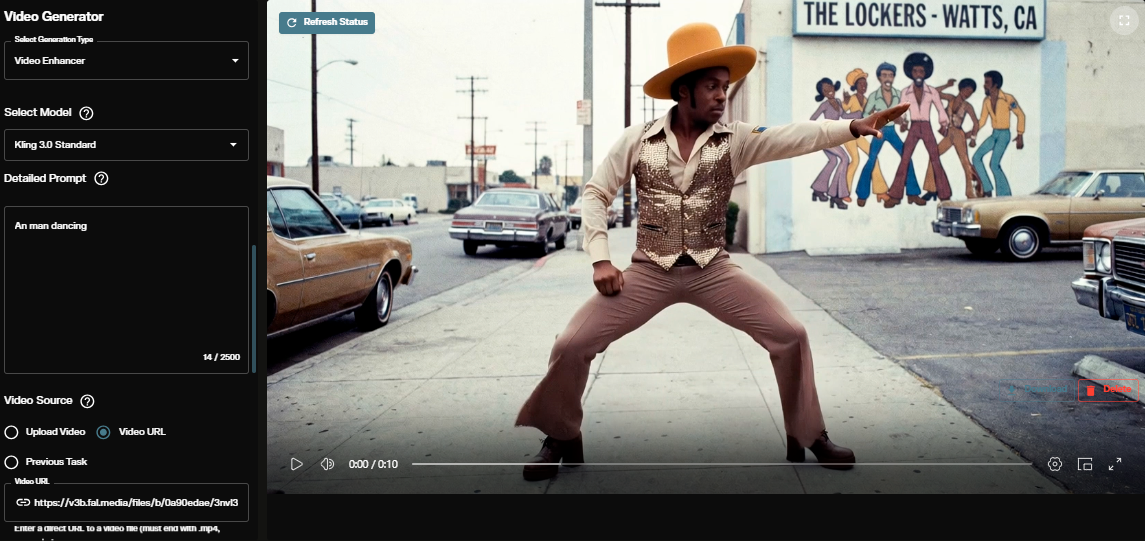
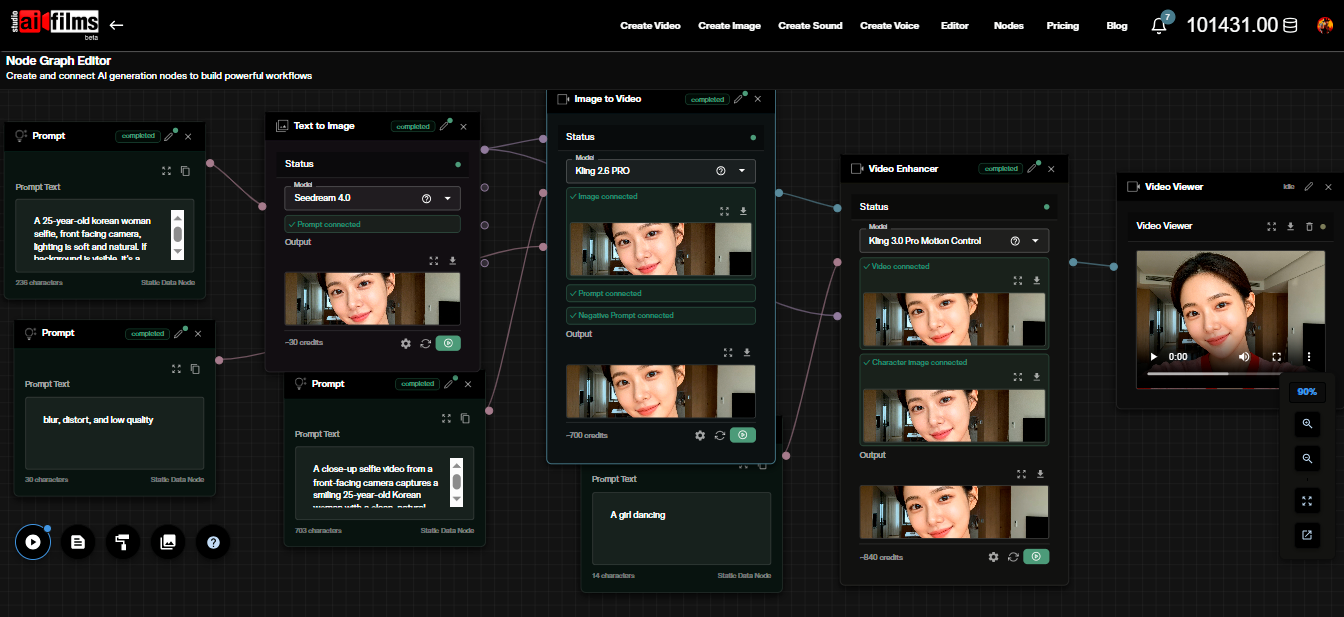
The AI FILMS Studio video workspace supports the generation work that underlies this kind of production, from text-to-video for initial concept footage to image-to-video for extending developed visual assets into a slate presentation or market reel.
For independent filmmakers building toward a similar model at smaller scale, the Storyverse Cannes debut is a practical benchmark. The team's credentials, the franchise positioning, and the market week presence represent the investment required to be taken seriously at a major international market as an AI native studio. That investment is primarily in track record and team rather than in capital, which is a different calculus than conventional studio formation.
Building a track record requires producing work, which requires access to the generation tools that AI studio production depends on. The AI FILMS Studio video workspace provides access to the latest text-to-video and image-to-video models for concept development, pitch footage, and initial production without the infrastructure overhead of managing local compute.
Sources
Variety | Storyverse AI | Screen Daily | Deadline
Continue Reading
.jpg?w=3840)


Video & LipSync
- Video Generator
- Text to Video
- Image to Video
- Start-End Frame to Video
- Draw to Video
- Motion Control
- Video Enhancer
- Video Upscaler
- Video Extend
- Video to Video LipSync
- Audio to Video LipSync
- Image to Video LipSync
- Video FaceSwap
- Seedance 2.5
- WAN 3.0
- Seedance 2
- FLUX 3
- Minimax H3
- Vidu Q3 Pro
- Grok Imagine Video 1.5
- Gemini Omni
- Google Veo 3.1
- Kling 3.0 Pro
- Luma Ray 3.2
- LTX 2.3
- Happy Horse 1.1
- Kling 3.0 Motion
- ByteDance Upscaler
- InfiniteTalk
- InsightFace
Image & Edit
- AI Character
- AI Actor
- Art Generator
- Text to Image
- Image to Image
- LoRA Image to Image
- Draw to Edit
- Image LoRA Training
- Remove Background
- Image Enhancer
- MidJourney 8.0
- Krea 2
- OpenAI GPT Image 2.0
- Nano Banana Pro Ultra
- Nano Banana 2 Lite
- Nano Banana Pro
- Minimax Image
- Clarity Pro
- Z-Image Turbo LoRA
- Krea 2 Turbo LoRA
- Z-Image LoRA Trainer
- Qwen Image LoRA Trainer
- Background Erase Network 2 (BEN2)