
TIFF 2026: Danny Boyle and Almodóvar Lead First Galas as Innovation Hub Launches Eight XR World Premieres

Share this post:
TIFF 2026: Danny Boyle and Almodóvar Lead First Galas as Innovation Hub Launches Eight XR World Premieres
The Toronto International Film Festival released its first Gala and Special Presentation selections for TIFF 51, running September 10–20, 2026, in late July. The announced Gala lineup includes films from Danny Boyle, Pedro Almodóvar, Hirokazu Koreeda, and Chris Rock. The festival confirmed at the same time that TIFF: The Market will open an Innovation Hub with eight world premiere XR and VR projects from nine countries.
The Innovation Hub is the first time TIFF has built a dedicated showcase for immersive and experiential technology projects directly into its official market structure. It runs across the same September 10–16 window as TIFF: The Market, placing XR acquisition conversations inside the same infrastructure that handles conventional feature film deals.
A third element arrived alongside the lineup reveal: Encode, the London organization focused on the creative industries and technology, is partnering with TIFF on a roundtable titled "The World Through the 'Eye' of the Robot Camera: AI, (Post-)Humans & Cinema." The session is the first formally branded AI and cinema roundtable in TIFF's official market history.
All three elements, the Gala lineup, the Innovation Hub, and the Encode roundtable, were announced in the same release cycle. The decision reflects a communications strategy that positions the market's technology programming alongside the main competition's headline talent as a single institutional statement about what TIFF 51 is.
The First Gala Selections
TIFF's Gala program is the festival's highest profile track. Opening night Galas and weekend Gala screenings attract the most concentrated press attention and buyer conversations in the opening days. Films in the Gala program screen in front of large invited audiences and receive priority coverage from trade and consumer press.
The July selections include new work from directors with substantial TIFF histories. Pedro Almodóvar and Hirokazu Koreeda have both appeared at the festival across decades of output. Danny Boyle's selection continues a pattern of major British directors returning to TIFF for significant auteur works. Chris Rock's entry adds a performer turned filmmaker to the Gala roster.
Gala selections carry particular weight in awards season because of when and how they are reviewed. Reviews published in the opening days of TIFF set the critical framing that Oscar campaigns and international distribution conversations rely on through the end of the year. A Gala placement in September is an awards positioning decision as much as a programming one.
Special Presentations at TIFF run alongside the Gala program with a wider range of premiere types, from festival debuts of smaller independent titles to platform releases using TIFF as a launch point for fall campaigns. Additional program sections, including Platform, Discovery, and Midnight Madness, will be announced through August.
The scale of the late July announcement, covering Galas, the Innovation Hub, and the Encode roundtable in the same release cycle, reflects how TIFF's communications approach has grown alongside its market ambitions. Announcing market innovation programming alongside the Gala lineup positions the Hub as part of the same institutional identity rather than a separate specialist event.
Innovation Hub: Eight XR and VR World Premieres
The Innovation Hub at TIFF: The Market programs eight XR and VR projects with world premiere status. All eight are having their first public showing at the September market. Projects submitted to the Hub were evaluated not just for selection but for exclusivity. A world premiere in a market context is a stronger commercial position than a market premiere after festival exposure elsewhere.
The eight Hub projects come from nine countries. That geographic distribution indicates a production pipeline that is not concentrated in the major centers of the technology industry. A single cohort sourcing from nine countries suggests that XR and VR production has become sufficiently international that a well resourced curation effort can build a representative lineup without stretching to fill slots.
The Hub runs inside TIFF: The Market rather than as a standalone showcase. Buyers reviewing market titles will encounter Hub projects under the same conditions as feature films. TIFF has positioned immersive and experiential content as acquisition inventory, not a novelty addition to a conventional program.
TIFF draws large public crowds to the downtown Toronto core throughout the ten day festival, turning King Street West and the TIFF Bell Lightbox into a public event as much as an industry gathering. The fall programming cycle is one of the few moments when trade acquisitions, press screenings, and public audiences occupy the same physical space in the same week.
The Innovation Hub's placement inside the market rather than in a dedicated public venue reflects that professional focus. Market buyers, press, and industry delegates are the primary Hub audience in the first year. The commercial evaluation of XR content happens within the market's professional infrastructure, while the broader festival energy surrounds those conversations.
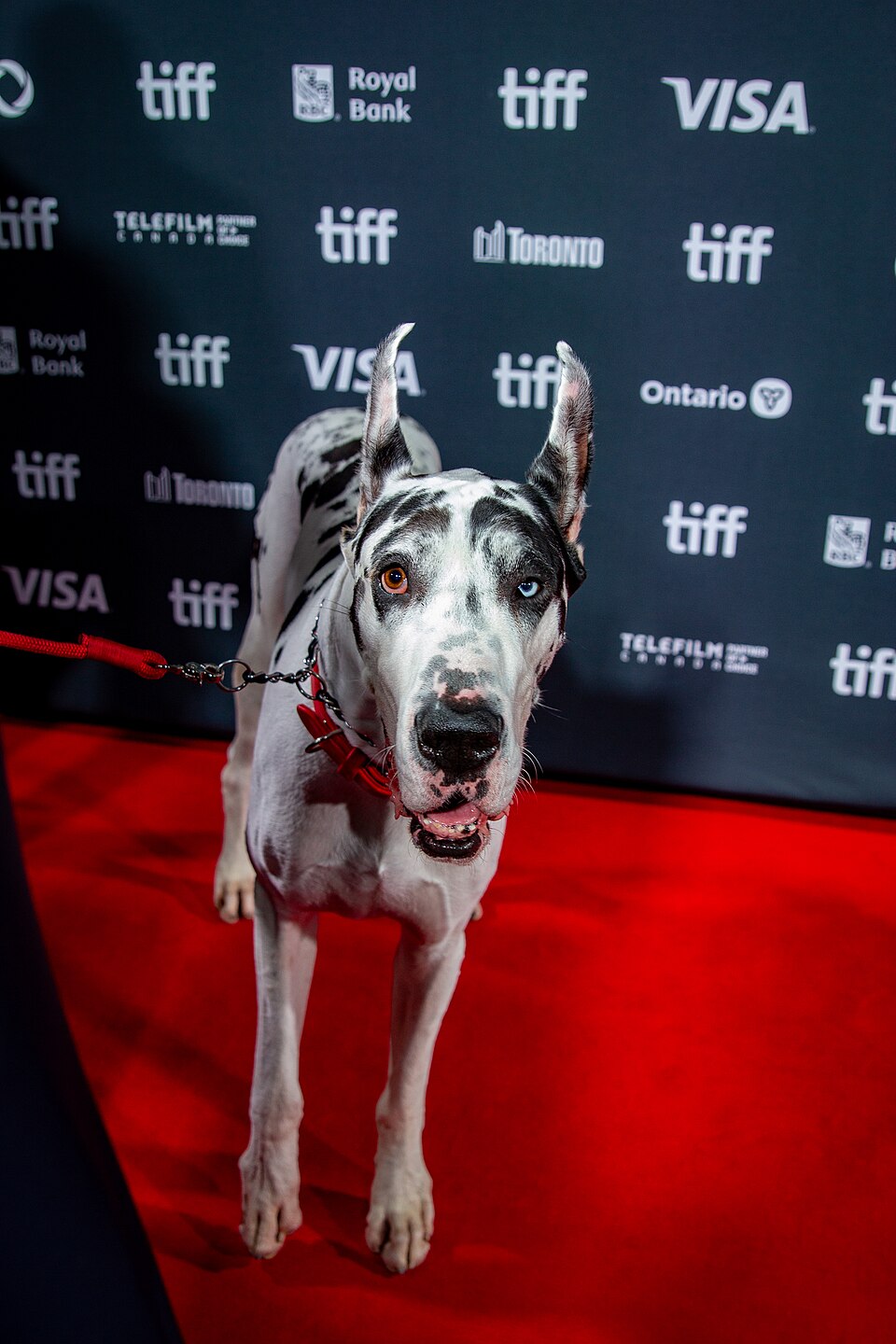
Adam Chitayat, CC BY-SA 4.0, via Wikimedia Commons
The First Dedicated Immersive Space in TIFF's Market
Prior TIFF programming has included individual XR titles in various categories, but the Innovation Hub is the first time the market has built a dedicated organizational structure around immersive and experiential content. A project in a dedicated hub signals that the market is treating immersive content as a coherent acquisition category, not a specialty placement.
The prior TIFF: The Market announcement from May 2026 described the Hub's mandate broadly, covering innovations from immersive storytelling to frontier technology. Eight world premiere projects from nine countries in the inaugural year is the first concrete programming evidence of what the Hub actually looks like. The announcement shifted the Hub from a stated intention to a confirmed lineup.
The American Film Market launched AFM House for November 2026, a dedicated 15,000 sq ft venue for AI and tech companies at the world's largest independent film market, marking an evolution from prior AI sessions which were positioned as educational programming rather than market inventory. Sundance's New Frontier program includes experimental technology projects but is oriented toward artistic presentation rather than commercial acquisition. TIFF's Hub is the first major North American market structure to position XR content explicitly as inventory that buyers can consider purchasing alongside feature films.
What XR Acquisition in a Market Context Means
XR and VR acquisition works differently from feature film acquisition in several respects. Rights structures for immersive content typically include distribution rights for specific platforms and devices, experience rights for live venue installation, and in some cases licensing rights for educational or enterprise deployment. Feature film acquisition assumes theatrical, streaming, and broadcast windows as the primary rights categories.
A market hub that presents XR content as inventory forces buyers to work through those rights distinctions in real time. Whether TIFF: The Market has built acquisition infrastructure specific to XR, including documentation templates and rights frameworks for immersive content, is not yet confirmed in the July announcement. The Hub's practical success will depend partly on whether the surrounding market machinery handles the category correctly.
World premiere status for the eight Hub projects also affects the rights calculation. An immersive work holding world premiere status has no prior audience or press exposure, which is both a marketing advantage and an evaluation challenge. Buyers cannot rely on prior festival reaction or reviews. They evaluate the work directly in the Hub, which requires different engagement from buyers than reviewing a feature film with six months of critical momentum behind it.
The geographic origin of the eight projects across nine countries creates another dimension. Distribution rights for immersive content often have geographic components. A Hub cohort from nine countries means buyers will need to navigate rights territories that do not follow the same boundaries as feature film distribution. A project from a country without established immersive distribution infrastructure may require custom deal structures that a conventional film market is not equipped to process quickly.
The Venice Immersive Comparison
The September calendar places TIFF's Innovation Hub in the same month as Venice Immersive 2026, which runs alongside Venice 83 from September 2–12, 2026. Venice Immersive is programming 68 projects from 26 countries under a competitive structure, with prizes awarded at the end of the festival.
Venice Immersive runs as a competitive section. Projects are evaluated by a jury and prizes are awarded. The competitive framing provides credibility signals that help projects secure distribution and press attention after the festival closes. A Venice Immersive prize carries commercial weight that has grown over the section's ten years of programming.
TIFF's Hub runs as market inventory. No prizes have been announced for the inaugural year. The measure of the Hub's first year is commercial engagement from buyers, not artistic judgment from a jury. A successful Hub in September produces acquisition conversations that close into deals. The two models serve different functions for XR content at the same point in the calendar.
Buyers and press who attend both festivals in September will move from Venice Immersive's competition directly into TIFF's Hub. The comparison is immediate: the same category of work evaluated under two different institutional frameworks in the same two week span. Venice provides the festival validation frame. TIFF provides the commercial transaction frame. Both are operating simultaneously for the first time with this depth of programming in 2026.
Encode × TIFF: "The World Through the 'Eye' of the Robot Camera"
The Encode × TIFF roundtable title is the most editorially specific element in the July announcements. "The World Through the 'Eye' of the Robot Camera: AI, (Post-)Humans & Cinema" places AI inside the filmmaking process rather than outside it. The "eye" framing positions AI as an imaging instrument in service of a cinematic vision, a tool with a perspective rather than a replacement for the human behind the camera.
Encode is based in London and works at the intersection of creative industries and technology. Its partnership with TIFF on a named roundtable in the official market program is the first of its kind in TIFF's market history. The session title's use of "(Post-)Humans" signals that the roundtable will address both what AI does within filmmaking and the question of what AI generated human images and performances mean for how cinema represents human subjects.
The 2025 TIFF programming did not include a formally branded session addressing AI and cinema from a creative standpoint. The 2026 market's roundtable frames AI as a creative "eye" rather than a labor market question or a technology demonstration subject. That framing is an editorial position embedded in the session title rather than a neutral description of an open ended discussion.
The "(Post-)Humans" parenthetical opens the session's scope in a specific direction. The question of whether "human" remains a stable category in cinematic representation is distinct from the question of what AI does to employment in the film industry. The roundtable title signals intent to address both, but the "(Post-)Humans" construction places the philosophical question alongside the industrial one from the outset.
How TIFF's Framing Differs From Cannes
The Encode × TIFF session title stands in contrast to Cannes 2026, where the main competition announced restrictions on generative AI tools in Palme d'Or eligibility while the Marché ran more than 20 AI focused sessions for buyers and distributors. The split at Cannes placed a competition restriction and a market enthusiasm in the same institutional framework.
TIFF is not splitting the question. The September programming applies the same framing, AI as a creative instrument, to both the Innovation Hub's acquisition inventory and the Encode roundtable's critical conversation. TIFF does not have a main competition section comparable to Cannes's Palme d'Or, which removes the structural pressure that created the Cannes split.
That absence of competitive pressure on the AI question may make TIFF's market a more useful venue for the commercial dimension of the AI filmmaking conversation in 2026 than Cannes was. Buyers and sellers who want to evaluate AI content acquisition without a competition restriction in the institutional background are working in a different environment at TIFF.
The September Calendar Window
TIFF 51 opens September 10, eight days after Venice 83 begins and two days before Venice closes. The overlap between TIFF and Venice is a structural feature of the fall festival calendar. Both festivals are designed to operate simultaneously, drawing different portions of the international industry to each city.
For AI and XR programming specifically, the 2026 September window is unusually concentrated. Venice 83 is programming an AI documentary out of competition alongside Venice Immersive's lineup of 68 projects. TIFF is opening with the Innovation Hub and the Encode roundtable in the same week. Three major festivals in September are handling AI and XR content as substantive programming categories rather than specialty additions.
The seven day speaker summit running alongside TIFF: The Market overlaps with the Innovation Hub programming. Summit content and Hub content will be available in the same building during the same days, which means the Encode roundtable participants will be speaking in close proximity to the Hub projects they may be discussing. That physical proximity of critical conversation and commercial inventory does not replicate what Cannes, Venice, or Berlin offer in their AI programming.
What the Roundtable Will Produce
Roundtable outputs from major festivals are among the more reliable sources of on the record industry thinking about AI and filmmaking. The sessions are not press conferences, so participants tend to be less guarded than in formal announcement contexts. The "eye of the robot camera" framing gives participants a conceptual anchor for addressing AI as a creative question rather than a legal or labor one.
The Encode × TIFF session will run during a week when the Innovation Hub's first buyer responses are emerging and the Gala programs are generating press coverage. Participants will be speaking into a live market rather than an abstract industry conversation. Whatever public statements the session produces will land in a news cycle where acquisition activity, press reviews, and festival energy are all simultaneously present.
The session's outputs will also arrive while Venice Immersive's results are still being processed. Critics and buyers who attended Venice will have reference points for comparing the festival competitive model and the market inventory model for XR content. The Encode roundtable happens at the moment when those two frameworks can be compared directly, with real data from both contexts available in the same week.
What the Hub Needs to Prove
By September 2026, the question facing TIFF's Innovation Hub is concrete: will buyers at a major North American film market pay to acquire XR and VR projects, and under what conditions? That question has been asked at smaller markets and lab contexts but not yet answered definitively at a market with TIFF's buyer concentration.
Eight world premiere projects from nine countries is a cohort large enough to generate useful commercial evidence. If several of the eight attract serious acquisition interest, the Hub will have demonstrated that XR content can move commercially in the same market environment as feature films. If the eight projects generate conversations but not deals, the result will inform how TIFF structures the Hub in future editions.
The first year of any new market category produces the data that determines whether the category gets a second year. TIFF's decision to launch with world premiere exclusivity, wide international representation, and formal market infrastructure rather than a showcase is a bet that XR content is ready for that test. September will provide the answer.
Canada's AI and immersive production community has a specific stake in the Hub's outcome. Toronto, Vancouver, and Montreal all have active XR production communities supported by provincial tax incentives. A successful Hub in September means Canadian immersive producers have a home market within their own country's largest film festival, reaching international buyers without traveling to Cannes or Berlin.
The broader pattern across 2026 is that the commercial and curatorial conversation about AI and XR cinema is no longer happening at a single venue or in a single format. Venice Immersive provides the competitive festival frame. TIFF's Hub provides the market inventory frame. Together, in the same September window, they will generate more concrete commercial data about immersive and AI content than any prior festival season has produced.
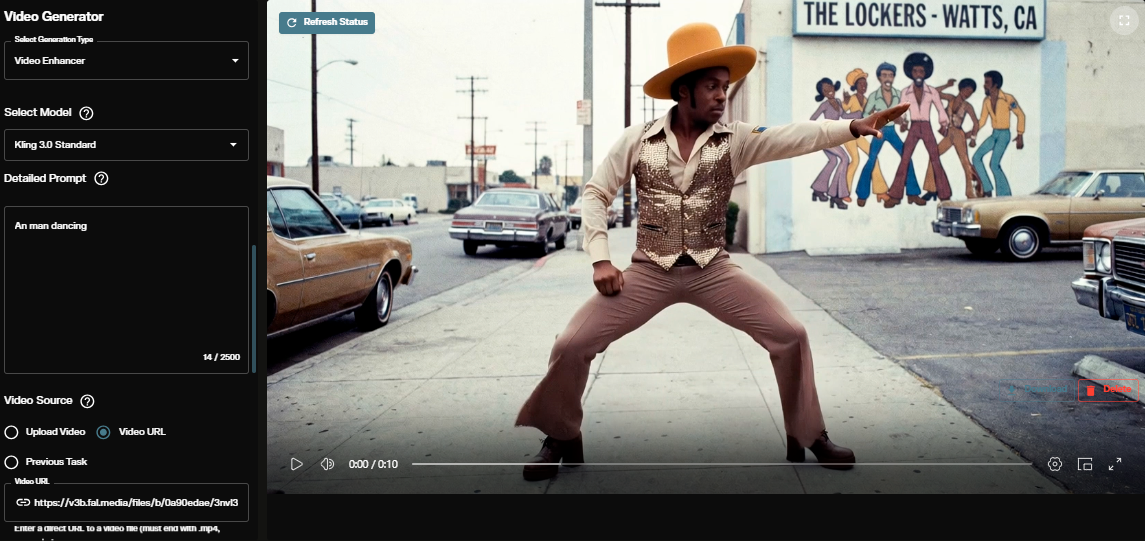
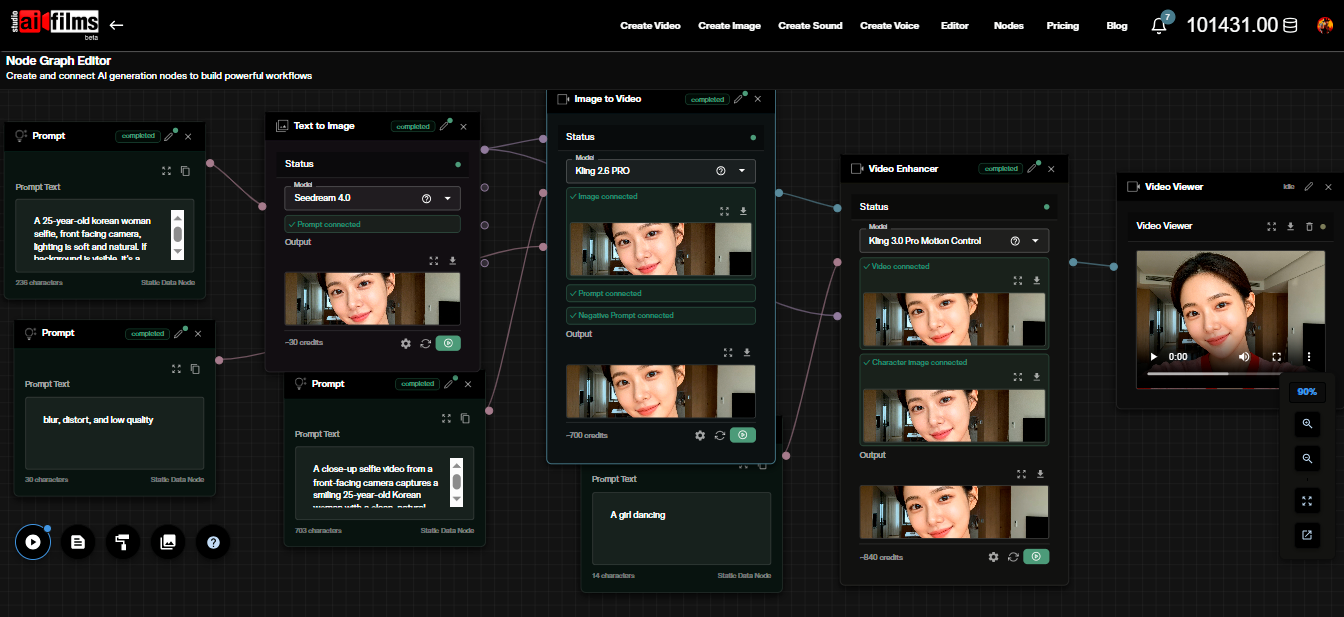
Filmmakers building XR and immersive content can generate source material and visual prototypes through the AI FILMS Studio video workspace.
Sources
Deadline | Variety | Hollywood Reporter | Screen Daily
Continue Reading


Video & LipSync
- Video Generator
- Text to Video
- Image to Video
- Start-End Frame to Video
- Draw to Video
- Motion Control
- Video Enhancer
- Video Upscaler
- Video Extend
- Video to Video LipSync
- Audio to Video LipSync
- Image to Video LipSync
- Video FaceSwap
- Seedance 2.5
- WAN 3.0
- Seedance 2
- FLUX 3
- Minimax H3
- Vidu Q3 Pro
- Grok Imagine Video 1.5
- Gemini Omni
- Google Veo 3.1
- Kling 3.0 Pro
- Luma Ray 3.2
- LTX 2.3
- Happy Horse 1.1
- Kling 3.0 Motion
- ByteDance Upscaler
- InfiniteTalk
- InsightFace
Image & Edit
- AI Character
- AI Actor
- Art Generator
- Text to Image
- Image to Image
- LoRA Image to Image
- Draw to Edit
- Image LoRA Training
- Remove Background
- Image Enhancer
- MidJourney 8.0
- Krea 2
- OpenAI GPT Image 2.0
- Nano Banana Pro Ultra
- Nano Banana 2 Lite
- Nano Banana Pro
- Minimax Image
- Clarity Pro
- Z-Image Turbo LoRA
- Krea 2 Turbo LoRA
- Z-Image LoRA Trainer
- Qwen Image LoRA Trainer
- Background Erase Network 2 (BEN2)