
MPA and ByteDance Sign an AI Agreement on Seedance and Seedream

Photo by Hossein Nasr on Unsplash
Share this post:
MPA and ByteDance Sign an AI Agreement on Seedance and Seedream
The Motion Picture Association and ByteDance announced a memorandum of understanding on Monday, August 17, 2026. It sets a framework for how ByteDance's generative video and image models handle film and television property, and it covers TikTok, the TikTok U.S. joint venture, CapCut and Dreamina.
Six months earlier the same two parties were exchanging legal letters. The MPA sent ByteDance a cease and desist on February 20, 2026, over Seedance 2.0 and Seedream 5.0 Lite. That dispute has now produced the association's first signed AI agreement with a major model developer.
What the Agreement Covers
The memorandum names two models. Seedance is ByteDance's video generation model and Seedream is its image model. Both reach users through TikTok, the TikTok U.S. joint venture, CapCut and Dreamina, and the framework applies across all four surfaces.
MPA Chairman and CEO Charles Rivkin tied the agreement to the association's core position. "Today's agreement illustrates our belief that copyright is a cornerstone of the film and television industry, and reinforces our commitment to protect creative content", he said in a statement. He described the preceding months as "constructive engagement with ByteDance to implement meaningful guardrails on Seedance and Seedream".
ByteDance General Counsel John Rogovin answered in matching terms. "ByteDance respects the intellectual property rights that underpin creative industries around the world, and we believe responsible innovation in AI goes hand in hand with meaningful protections for rightsholders", he said. Rogovin held the same title at Warner Bros. until 2022. He is the executive who received the Warner Bros. Discovery cease and desist in February, sent by the studio's current legal chief.
_(53844975870).jpg)
ajay_suresh, CC BY 2.0, via Wikimedia Commons
The MPA is the trade body for the major Hollywood studios. It described its February letter to ByteDance as the first cease and desist it had ever sent to a major generative AI company.
ByteDance founded TikTok and holds 19.9 percent of the U.S. business. The agreement therefore reaches a distribution platform as well as two models.
Six Months From a Letter to a Signature
The blog followed each step of this dispute as it happened. The sequence is short and it moved quickly.
| Date | What happened |
|---|---|
| February 11, 2026 | Director Ruairi Robinson posts a Seedance 2.0 clip of Tom Cruise and Brad Pitt fighting on a rooftop, made from a two line prompt |
| February 2026 | ByteDance suspends the Seedance 2.0 voice cloning feature after privacy complaints |
| February 20, 2026 | The MPA sends its cease and desist over Seedance 2.0 and Seedream 5.0 Lite |
| March 15, 2026 | ByteDance halts the global rollout of Seedance 2.0 after letters from five studios |
| April 14, 2026 | Rivkin tells CinemaCon that AI can "bolster the art of storytelling" inside enforced copyright |
| August 17, 2026 | The MPA and ByteDance sign the memorandum of understanding |
The February clip is the event that started it. Robinson, an Oscar nominee for his 2002 short film, posted it to X and it drew millions of views within a day. The MPA condemnation landed in the same week, and the global launch halt followed a month later.
Rivkin's April remarks at CinemaCon read differently now. He argued then that AI belongs in filmmaking as a tool inside a working copyright framework. The full CinemaCon address set out the position the August memorandum puts on paper.
Why a Two Line Prompt Started This
The clip that triggered the dispute was not a studio release or a leaked asset. Robinson typed two lines and posted the result, and the quality of what came back is what moved the MPA to act within 24 hours of the model going public.
Screenwriter Rhett Reese, who wrote Deadpool and Wolverine, answered Robinson's post directly. "I hate to say it. It's likely over for us", he wrote. That reaction, from a working writer with major credits, is why the story stopped being a copyright matter and became an industry one.
The MPA's own language at the time was blunt. It said Seedance 2.0 had "engaged in unauthorized use of U.S. copyrighted works on a massive scale" and demanded ByteDance "immediately cease its infringing activity". Six months later the same association is describing the same company as a partner in building guardrails.
That reversal is the interesting part. Neither side won outright. The model kept shipping, the studios got limits written down, and no court decided anything.
The Two Models Named Are Already on AI FILMS Studio
TheWrap reported that Seedream 5.0 Pro and Seedance 2.5 carry the improved protections, and that both are the successors to the versions named in the February letter. Filmmakers reading this can use both models today.
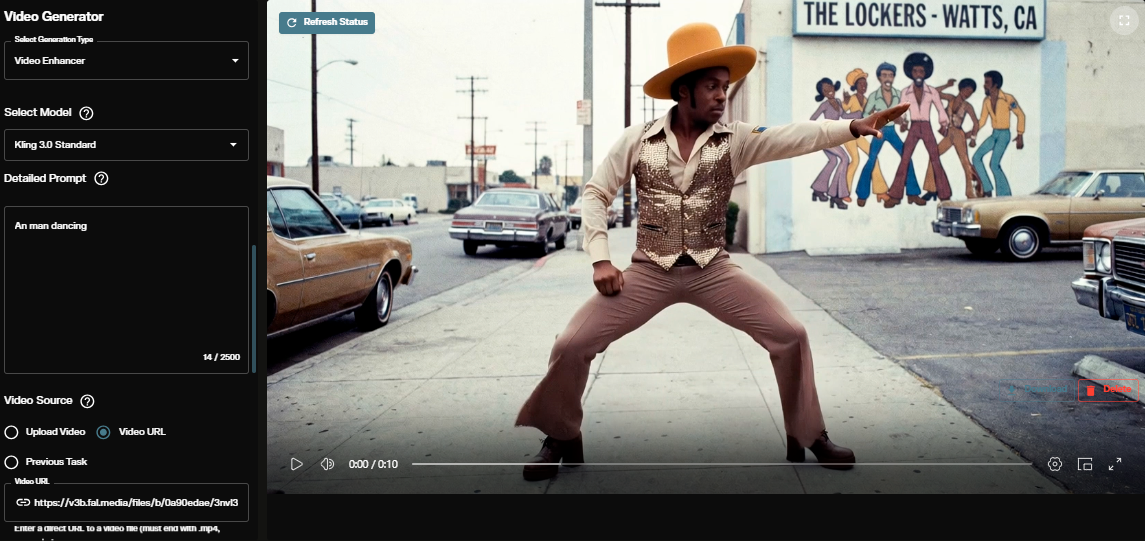
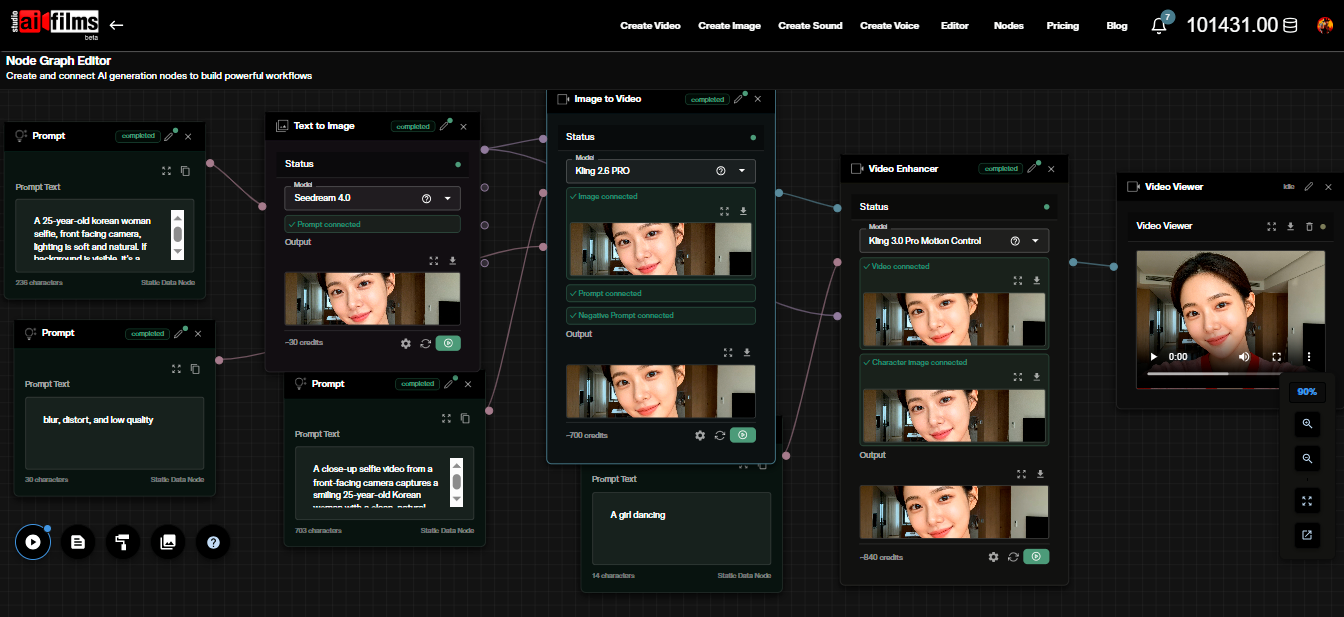
Seedance 2.5 handles text-to-video and image-to-video work in the video workspace, and our Seedance 2.5 tutorial walks through the controls. Seedream 5.0 Pro covers text-to-image and image-to-image in the image workspace, and the Seedream 5.0 Pro tutorial covers its safety checker and generation settings.
That timing matters for anyone planning a production. The two model versions singled out in the February dispute are behind you, and the two that replaced them are the ones the MPA describes as carrying stronger safeguards.
What the Agreement Does Not Do
Neither company published the technical measures. Reporting on August 19 noted that the parties "have not disclosed the specific safeguards included in the agreement", which leaves the central question open. How well the protections stop copyrighted characters and performer likenesses from appearing in generated output is still unmeasured.
The memorandum is also voluntary and carries no licensing component. Studios receive no payment for their catalogues under it, so it settles a fight rather than opening a revenue stream. Coverage on August 18 reported that training data liability remains a matter for the courts, which the memorandum does not touch.
ByteDance took a different route from OpenAI here. When the MPA raised the same objection to Sora, OpenAI negotiated a licensing deal with Disney covering more than 200 characters. ByteDance has announced no equivalent arrangement, and this agreement is about guardrails rather than licences.
Three Routes Through the Same Objection
The MPA has now raised the same complaint against two model developers and reached two different endings. A third route runs through legislation rather than negotiation.
| Route | Example | What the studios get | What the developer gets |
|---|---|---|---|
| Licensing deal | OpenAI and Disney on Sora | Payment and control over named characters | Legal use of a named catalogue |
| Guardrail framework | The August 2026 MPA and ByteDance memorandum | Technical limits across four platforms | An end to the letters, with no licence fee |
| Legislation | The NO FAKES Act and California AB 1836 | Statutory rights that apply to every developer | Nothing, and compliance is mandatory |
Each route answers a different question. A licence says what a developer may use. A guardrail framework says what a model will refuse to produce. A statute says what anyone may do with a person's likeness, whether or not a company signed anything.
The August memorandum is the middle row. It arrived faster than legislation and cost ByteDance less than a licence would have. Whether it holds is the part nobody can measure yet, because the technical terms are unpublished.
Questions the Memorandum Leaves Open
Five things the announcement did not answer. Each one matters to a production planning around these tools.
- What the safeguards actually are. No watermarking method, filter list or refusal policy was published.
- Who audits compliance. The announcement named no third party and no reporting schedule.
- What happens on a breach. No penalty, no termination clause and no dispute process were described.
- Which territories it binds. The parties called it global, and neither published a territory list.
- Whether training data is covered. Reporting on August 18 indicated that training liability remains with the courts.
An unpublished framework still changes behaviour. Two companies that spent February exchanging legal threats now have a written channel, and that alone lowers the chance of another sudden product withdrawal.
What This Means for Filmmakers
Two model families that were legally uncertain in March are now covered by a signed framework with the trade body for the major Hollywood studios. For an independent production choosing tools, that is the practical change. Legal uncertainty around a model is a real production risk, and this removes some of it.
Three habits are worth keeping regardless of what the two companies signed. Generate original characters and environments rather than recognisable ones. Keep the prompt, the model version and the generation date for every delivered shot. Read the terms of the tool you are actually using, because a trade body agreement does not replace the licence you accepted.
The Legal Ground Keeps Moving Underneath
Voluntary frameworks are only one layer. The statutory layer is moving at the same time, and it binds every developer rather than the ones who choose to sign.
The European Parliament voted in March 2026 to require AI companies to disclose training data and compensate rights holders, covered in our EU copyright vote breakdown. In the United States the NO FAKES Act cleared the Senate Judiciary Committee in June 2026, and California's digital replica law has been enforceable since January 2026.
A production working across territories now deals with three overlapping regimes and one voluntary framework. Keeping a record of which model produced which shot is the cheapest defence against all four.
The August memorandum will not be the last of its kind. The MPA has a template now, and every other model developer shipping video and image generation is a candidate for the same conversation.
Provenance work continues alongside the agreement. Content credentials and other verification methods let a production show where a shot came from, and our C2PA verification guide explains how the standard works on a delivered file. A signed framework and a verifiable file answer different questions, and a careful production wants both.
The voice cloning suspension in February showed how quickly a feature can be pulled when the legal position is unclear. That voice feature suspension cost users a capability with no notice. A published framework makes that kind of sudden withdrawal less likely, which is worth something to anyone scheduling a shoot around a tool.
Sources
Deadline | The Hollywood Reporter | TheWrap | NBC News | Variety | Box Office Pro | TV Technology | VideoAge International | eWeek
Continue Reading
.jpg?w=3840)


_(53844975870).jpg)
Video & LipSync
- Video Generator
- Text to Video
- Image to Video
- Start-End Frame to Video
- Draw to Video
- Motion Control
- Video Enhancer
- Video Upscaler
- Video Extend
- Video to Video LipSync
- Audio to Video LipSync
- Image to Video LipSync
- Video FaceSwap
- Seedance 2.5
- WAN 3.0
- Seedance 2
- FLUX 3
- Minimax H3
- Vidu Q3 Pro
- Grok Imagine Video 1.5
- Gemini Omni
- Google Veo 3.1
- Kling 3.0 Pro
- Luma Ray 3.2
- LTX 2.3
- Happy Horse 1.1
- Kling 3.0 Motion
- ByteDance Upscaler
- InfiniteTalk
- InsightFace
Image & Edit
- AI Character
- AI Actor
- Art Generator
- Text to Image
- Image to Image
- LoRA Image to Image
- Draw to Edit
- Image LoRA Training
- Remove Background
- Image Enhancer
- MidJourney 8.0
- Krea 2
- OpenAI GPT Image 2.0
- Nano Banana Pro Ultra
- Nano Banana 2 Lite
- Nano Banana Pro
- Minimax Image
- Clarity Pro
- Z-Image Turbo LoRA
- Krea 2 Turbo LoRA
- Z-Image LoRA Trainer
- Qwen Image LoRA Trainer
- Background Erase Network 2 (BEN2)