

Harald Krichel, CC BY-SA 4.0, via Wikimedia Commons
Share this post:
Brad Pitt Says AI Can Get $40M to $90M Films Made Again
Brad Pitt named a budget band. Speaking to Esquire for its September 2026 issue, published on August 10, he argued that AI can bring back the films that studios stopped greenlighting.
"There's a lot of pushback against AI, but AI is going to be the very thing that, if used as a tool, is going to help these mid budget films, $40 to $90 million budgeted films, get made", Pitt said.
He was talking about visual effects. The argument is narrow and it is about cost. Effects work is the line item that pushes a script out of that band and into either a blockbuster budget or no budget at all.
The Band He Named Is the One That Disappeared
The $40 million to $90 million film is the category Hollywood has spent a decade shedding. Studios kept the tentpoles and the cheap horror, and the middle emptied out.
Pitt has standing to make the argument. Plan B, the production company he helped found, built its reputation on exactly those films. He is speaking as a producer who has watched that band close, and not only as an actor commenting on a technology.
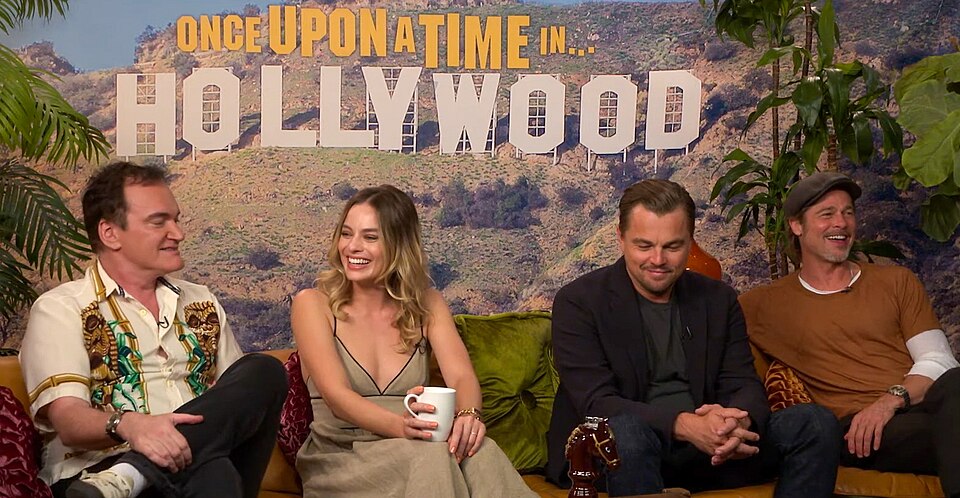
Que Tal Um Cineminha?, CC BY 3.0, via Wikimedia Commons
Pitt is promoting Heart of the Beast, which he stars in and produces. It reaches theatres on September 25, 2026, and he plays a Special Forces officer stranded in the Alaskan wilderness with his combat dog.
The Esquire interview ran as part of the magazine's Mavericks of Hollywood portfolio for its September issue.
A $70 Million Film Already Tested the Argument
Pitt did not name an example. One sits inside his band already, and this blog reported it from the Cannes market in May 2026.
Doug Liman's Bitcoin: Killing Satoshi cost $70 million. Its producers said a conventional location shoot of the same scope would have cost roughly $300 million, and the saving came from replacing every practical location with AI generated environments.
The production numbers are specific. Principal photography ran 20 days instead of the 80 to 100 days a film of that scope would normally take, because the stage needed no set dressing and no location logistics. Post production ran 30 weeks with 55 AI artists building the visual world.
| Bitcoin: Killing Satoshi | |
|---|---|
| Final budget | $70 million |
| Conventional equivalent, per producers | About $300 million |
| Principal photography | 20 days |
| Post production | 30 weeks |
| AI artists on the film | 55 |
That is Pitt's thesis with a receipt attached. The full Cannes market report covers how the film was structured and what happened when it went looking for distribution.
The same report carries the caution. No US or major market distribution deal closed during the two week Cannes run, despite the cast and the Liman name. A production can reach the band and still fail to sell.
He Has Been Destroying His Own Scans for 20 Years
The sharper fact in the interview had nothing to do with budgets. Pitt described a contract clause he has used since long before any digital replica law existed.
"I've been scanned for the last 20 years, and I've always put in my contract: 'I own them and I destroy them.' I should have kept them!", he said, adding that he is a "paranoid Ozark boy".
Twenty years puts that clause around 2006. California's AB 2602, which requires informed consent before a studio can create an AI replica of a living performer, became enforceable in January 2026. The digital replica law explainer covers what it actually requires.
A private contract got there first, and by two decades. The 2026 SAG-AFTRA agreement now carries twelve AI provisions covering digital replicas, replica security and notice when a studio licenses performer data. Pitt's clause did the same job for one actor with enough standing to ask for it.
The joke at the end of his answer carries the real point. Scans he insisted on destroying would now be an asset he controlled, and performers signing today are making that call without knowing which way it breaks.
Where He Draws the Line
Asked whether AI could replicate his performances, Pitt did not say no.
"Well, it depends on who's creating it, you know? Who's behind it, who's telling the story", he said. "They could, but the final product might not be my choices and what I found and discovered in the thing."
The distinction he draws is between output and authorship. A model can produce a performance. What it cannot produce is the set of decisions a specific actor made on a specific day, which is what he means by his choices.
He gave a live example of the limit. Pitt described a concert where Thom Yorke joined Flea's jazz band, and said AI could not have made that. The thing he is protecting is the unrepeatable event rather than the finished frame.
Hollywood Is Still Split, and the Split Is Not New
Pitt lands in the middle of a debate this blog has tracked all year. Four positions are already on record.
| Filmmaker | Position | Coverage |
|---|---|---|
| Peter Jackson | AI is a tool like any special effect | Cannes 2026 |
| Ron Howard | A filmmaking tool, not a replacement | On AI tools |
| Seth Rogen | Writing with AI disqualifies you as a writer | Cannes 2026 |
| Guillermo del Toro | Refuses generative AI outright | SDCC 2026 |
Pitt's version is narrower than Jackson's and more specific than Howard's. He is not defending AI in general. He named one line item, effects, and one budget band, and argued that the first can rescue the second.
The split follows a pattern worth noticing. The filmmakers who accept AI describe it in the effects and environment department. The ones who reject it are talking about writing and performance. Rogen drew his line at scripts, and Pitt drew his at authorship of a performance, so the two are closer than the headlines suggest.
Department is the variable, and it explains why the debate keeps producing contradictory headlines from people who broadly agree.
The AV Club pushed back on the cost premise, pointing out that Pitt gave no figures for how much AI actually saves. That criticism is fair. The Liman production is the closest thing to an answer, and one film is not a trend.
What Pitt Did Not Say
The interview left the harder questions untouched. Four of them matter to anyone who works in that band.
- Whose jobs the saving comes from. Effects work is labour, and a cheaper line item usually means fewer people on it.
- What the actual saving is. He named no percentage, no figure and no film.
- Whether the money returns to production. A cheaper effects budget can fund more films or simply raise a margin.
- Who owns the generated material. Rights in AI produced environments were not discussed at all.
None of that makes the argument wrong. It makes it an opening position from a producer with a film to sell, which is how it should be read.
What This Means for Filmmakers
The band Pitt named is not where most independent productions live. The reason his comment matters lower down the scale is the mechanism, because the same substitution works at every budget.
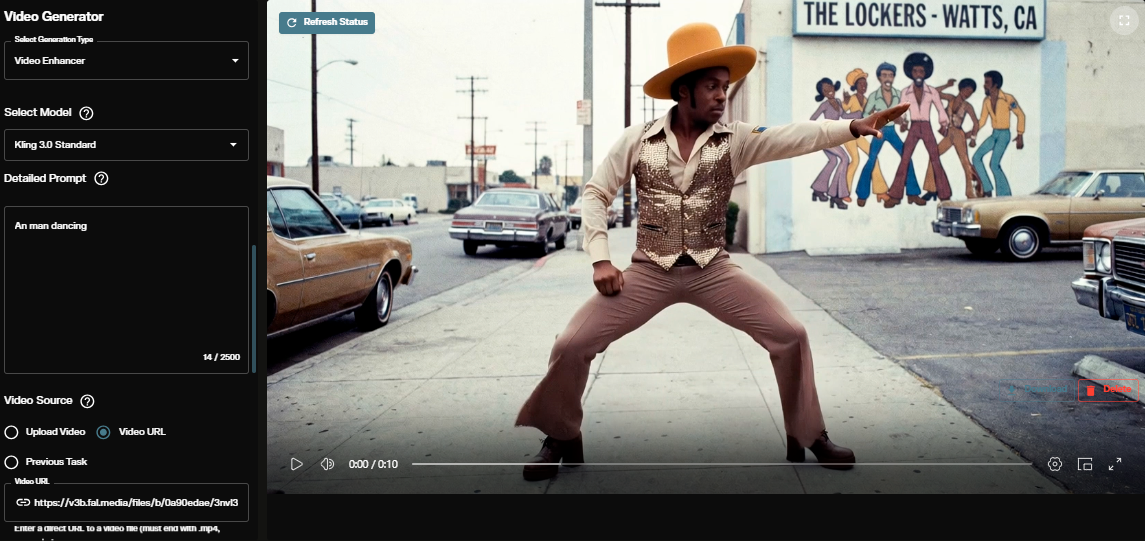
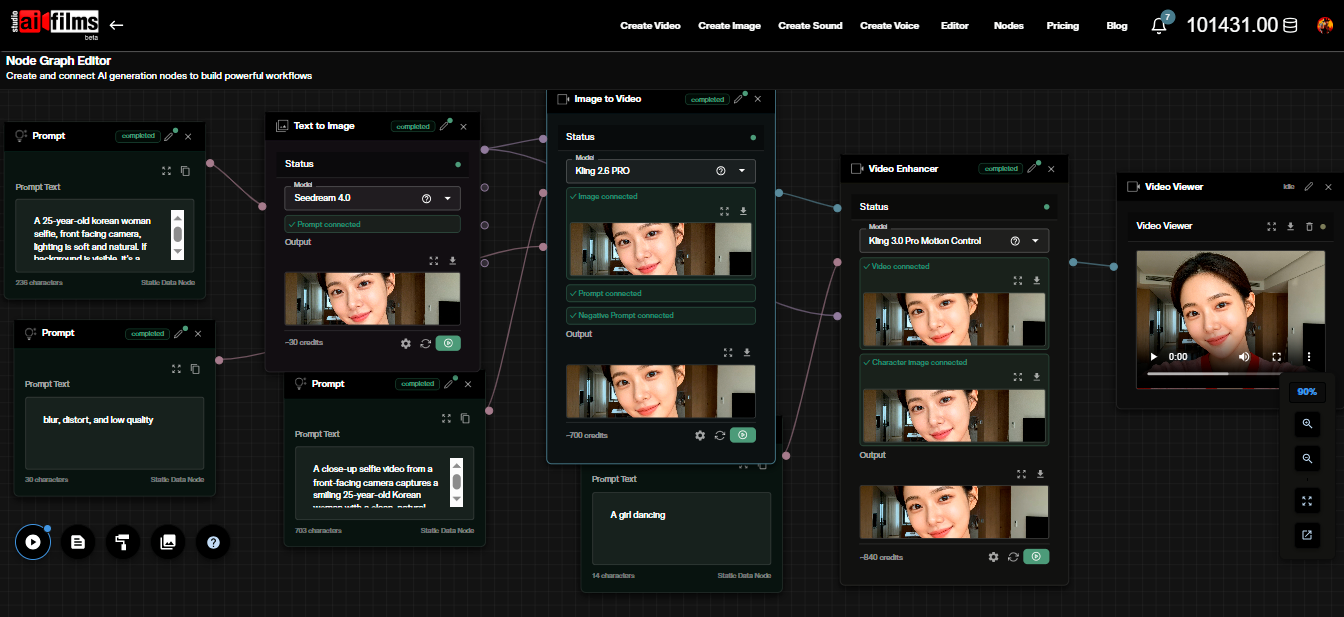
Effects and environment work is where AI removes the most cost per hour of labour. A film that cannot afford a location can generate one. The video workspace covers text-to-video and image-to-video generation for exactly that kind of shot, and the image workspace handles concept frames and environment plates before anything moves.
Two things are worth taking from the scans answer rather than the budget one. Read what your contract says about capture of your likeness, and keep a record of what was captured and when. Pitt had the standing to demand destruction in 2006. Most performers do not, which is why the statutory layer matters.
The Test Is the Next Greenlight
An argument about budgets gets settled by what actually gets financed. Pitt made a prediction, and it has a measurable outcome attached to it.
If AI is doing what he says, the $40 million to $90 million band starts filling again over the next two years, with effects heavy scripts that would previously have needed twice the money. If it is not, the saving shows up as margin somewhere else and the band stays empty.
Bitcoin: Killing Satoshi is the first serious data point and it is ambiguous. The production hit the number. It left Cannes without a major distribution deal, which says the finance side of the argument works and the sales side is unproven.
Pitt calls it "a very interesting experiment". That is the right description, and the result is not in yet.
Sources
Esquire | Variety | TheWrap | The A.V. Club | Euronews | World of Reel
Continue Reading
.jpg?w=3840)


Video & LipSync
- Video Generator
- Text to Video
- Image to Video
- Start-End Frame to Video
- Draw to Video
- Motion Control
- Video Enhancer
- Video Upscaler
- Video Extend
- Video to Video LipSync
- Audio to Video LipSync
- Image to Video LipSync
- Video FaceSwap
- Seedance 2.5
- WAN 3.0
- Seedance 2
- FLUX 3
- Minimax H3
- Vidu Q3 Pro
- Grok Imagine Video 1.5
- Gemini Omni
- Google Veo 3.1
- Kling 3.0 Pro
- Luma Ray 3.2
- LTX 2.3
- Happy Horse 1.1
- Kling 3.0 Motion
- ByteDance Upscaler
- InfiniteTalk
- InsightFace
Image & Edit
- AI Character
- AI Actor
- Art Generator
- Text to Image
- Image to Image
- LoRA Image to Image
- Draw to Edit
- Image LoRA Training
- Remove Background
- Image Enhancer
- MidJourney 8.0
- Krea 2
- OpenAI GPT Image 2.0
- Nano Banana Pro Ultra
- Nano Banana 2 Lite
- Nano Banana Pro
- Minimax Image
- Clarity Pro
- Z-Image Turbo LoRA
- Krea 2 Turbo LoRA
- Z-Image LoRA Trainer
- Qwen Image LoRA Trainer
- Background Erase Network 2 (BEN2)