

Still from As Deep as the Grave, courtesy of First Line Films
Share this post:
As Deep as the Grave Releases Seven Minutes of Val Kilmer AI
First Line Films posted a 6 minute 56 second clip from As Deep as the Grave on August 19, 2026. It is the first extended look at Val Kilmer's AI performance, and it runs long enough to judge the work rather than a trailer cut of it.
The scene shows a young Father Fintan in 1904. He is wrestling with the moral question of founding a new church while respecting the spiritual history of the Navajo people, guided by a Navajo elder played by former Navajo Nation President Jonathan Nez.
Why Seven Minutes Changes the Conversation
Every previous release from this production was a teaser. A first look premiered at CinemaCon in April 2026 and went up on the First Line Films channel shortly after, and it was cut the way a trailer is cut.
A single sustained scene is a different test. Short cuts hide the moments where a synthetic performance usually breaks, which are the long holds, the reaction shots and the pauses between lines.
The clip is released in 4K. That decision is deliberate, because resolution is where facial reconstruction work tends to show.
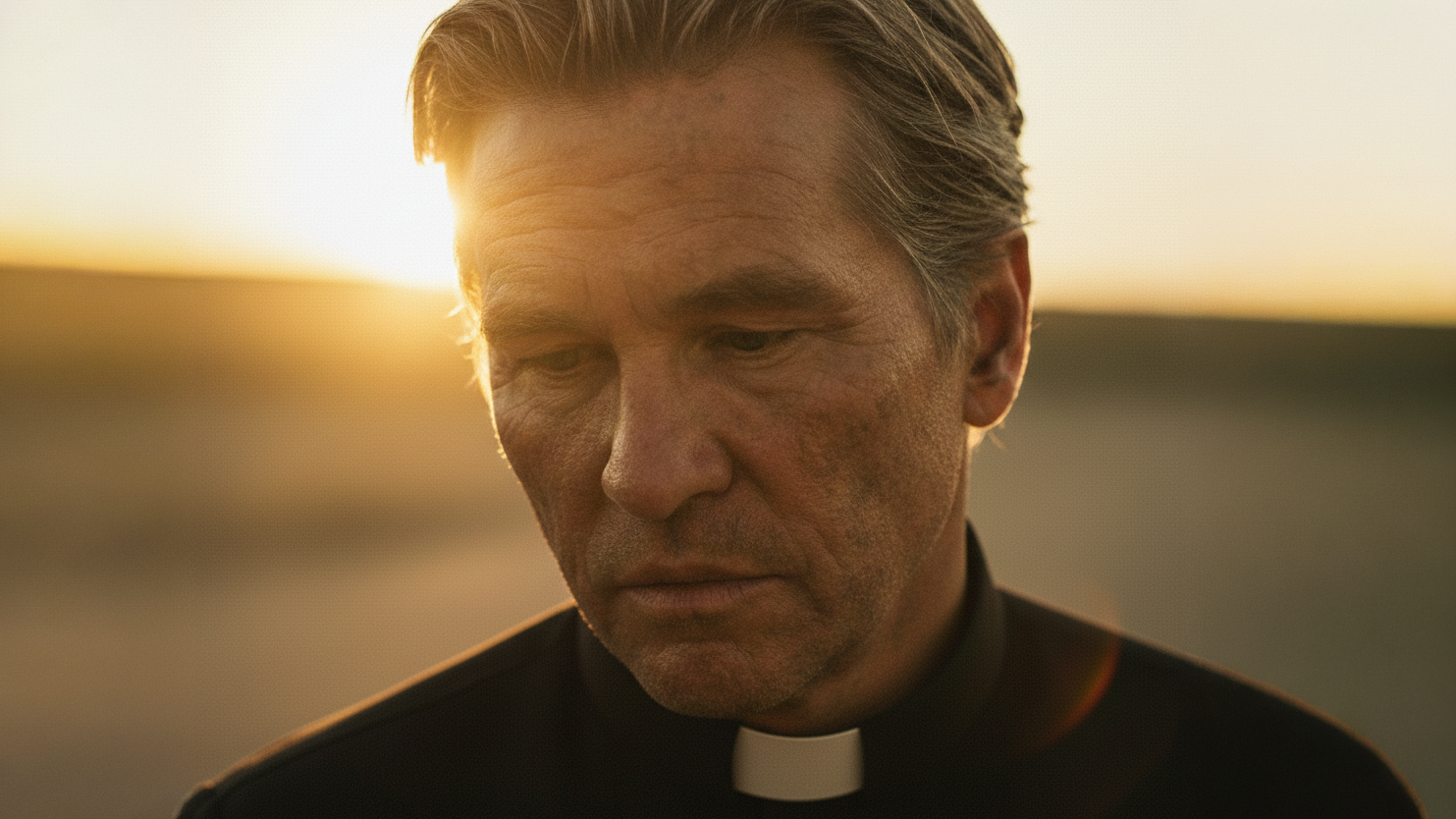
Still from As Deep as the Grave, courtesy of First Line Films
The footage covers Father Fintan at more than one age. The clip released on August 19 is the 1904 section, showing him as a young priest.
Kilmer was cast five years before he died. He identified with the character immediately, according to director Coerte Voorhees, and the role was written around him.
The Film Behind the Clip
As Deep as the Grave tells the true story of Ann and Earl Morris and their excavations at Canyon de Chelly in Arizona. Ann Morris was the first female archaeologist in North America.
Abigail Lawrie plays Ann Morris and Tom Felton plays Earl Morris. The supporting cast includes Wes Studi, Abigail Breslin as the aviator and author Anne Morrow Lindbergh, Hanako Footman, Ewen Bremner, Tatanka Means, Finn Jones and Jacob Fortune-Lloyd.
Coerte Voorhees wrote, directed and produced the film through First Line Films, the New Mexico company he founded in 2016 with his brother John. The company works on true stories about women lost to history.
How the Performance Was Built
Kilmer died on April 1, 2025 at the age of 65, from pneumonia. He had signed on years earlier and his health prevented him from reaching set.
The production spent three years finishing the film after he died. The AI performance was built from family archives, with the team studying his work in Heat and Batman Forever to match the way he moved and held a scene.
Every step was done with his estate. His daughter Mercedes Kilmer worked directly with the production, and she is a filmmaker herself.
"He always looked at emerging technologies with optimism as a tool to expand the possibilities of storytelling", Mercedes Kilmer said when the casting was announced. "This spirit is something that we are all honoring within this specific film, of which he was an integral part."
The original casting announcement covers how the production described the work in March 2026, and the estate's public defence covers what Mercedes Kilmer argued in May when the criticism arrived.
Consent Is the Whole Difference
California's AB 1836 took effect on January 1, 2026. It requires estate consent before a production creates an AI likeness of a deceased performer, and this film was built inside that requirement rather than around it.
That matters more in August than it did in March. The same month this clip appeared, the children of Robin Williams reactivated their father's Instagram to fight AI recreations of him that nobody asked permission for.
| As Deep as the Grave | Unauthorised AI recreations | |
|---|---|---|
| Estate involvement | Direct, throughout production | None |
| Legal basis | AB 1836 consent obtained | No consent |
| Source material | Family archives, with permission | Public footage scraped |
| Who controls the result | The estate and the production | Whoever generated it |
Two uses of the same technology, separated only by whether anyone asked. The digital replica law explainer covers what AB 1836 actually requires of a production.
Three Years of Post Production
The schedule is the part most coverage skips. Kilmer died in April 2025 and the production spent three years completing the film after that.
That number sets a realistic expectation. A posthumous performance built from archives is not a render job. It is a multi year post production track running alongside everything else the film needed.
It also explains the release pattern. A first look at CinemaCon in April 2026, then a full scene in August 2026, is the cadence of a production releasing material as sections of the work finish.
| Date | What was released |
|---|---|
| March 18, 2026 | Casting announced, film presented to buyers at the European Film Market |
| April 15, 2026 | First look premieres at CinemaCon, then posted to the First Line Films channel |
| August 19, 2026 | A 6 minute 56 second scene in 4K, the young Father Fintan in 1904 |
What Filmmakers Should Watch For in the Clip
Three things are worth studying if you work with generated performance.
Watch the sustained holds. A face that reconstructs well in motion often drifts when the camera stays on it and the actor is listening rather than speaking.
Watch the eyeline in the two shots with Jonathan Nez. Matching a generated performer to a live actor across a cut is the hardest part of this work, and a seven minute scene cannot avoid it.
Watch the skin under 4K. Resolution is where compositing and reconstruction artefacts appear first, which is why releasing at 4K reads as a statement of confidence.
What This Means for Filmmakers
Posthumous performance is a narrow use with a wide precedent behind it. What this production establishes is a working method, and the method is consent first and archive based rather than scrape based.
For a production considering any likeness work, the sequence is the takeaway. Secure written estate agreement, source the material you are permitted to use, involve the family in the creative decisions, and be able to show all three.
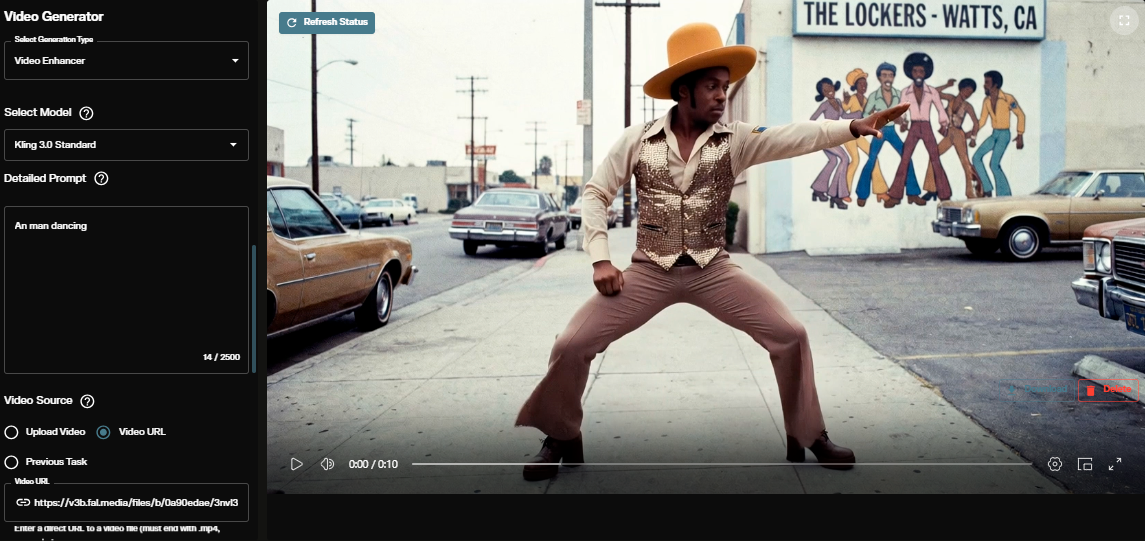
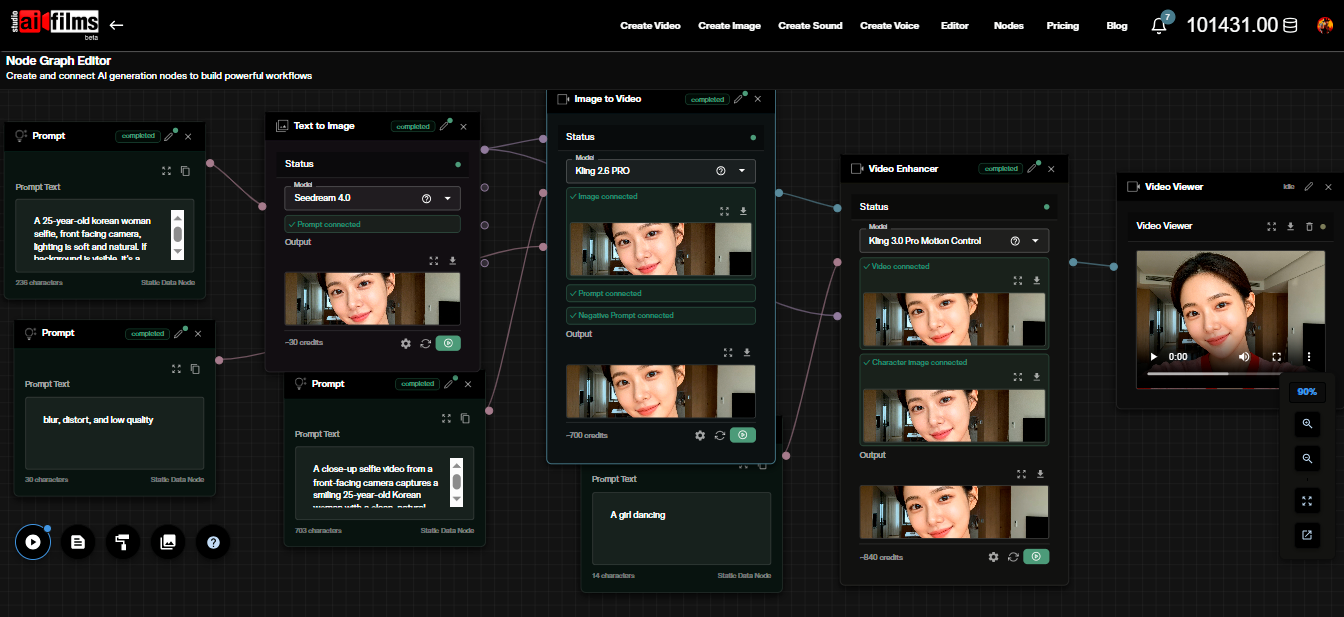
The generation work itself is the ordinary part now. Character and performance tools in the video workspace cover consistent character work for original productions, and the image workspace handles reference frames and look development before anything moves.
The Case This Production Is Making
First Line Films is arguing something specific with this release, and the length of the clip is the argument.
A trailer asks you to accept the performance. Seven uninterrupted minutes asks you to examine it, which is a harder position to take and only available to a production confident in the result.
The film still has to work as a film. A performance that survives scrutiny is a technical result, and Ann Morris's story is what the production says drew Kilmer to it in the first place.
Voorhees put the reason plainly when the casting was announced. Kilmer identified with the character immediately and understood the point of raising awareness of Ann Morris as the first female archaeologist in North America.
That is a useful frame for the whole debate. The technology answered a scheduling problem created by illness and death. The story is why anyone bothered.
Sources
IndieWire | The Hollywood Reporter | Variety | ABC News | Dark Horizons | Extra | First Line Films
Continue Reading
.jpg?w=3840)


Video & LipSync
- Video Generator
- Text to Video
- Image to Video
- Start-End Frame to Video
- Draw to Video
- Motion Control
- Video Enhancer
- Video Upscaler
- Video Extend
- Video to Video LipSync
- Audio to Video LipSync
- Image to Video LipSync
- Video FaceSwap
- Seedance 2.5
- WAN 3.0
- Seedance 2
- FLUX 3
- Minimax H3
- Vidu Q3 Pro
- Grok Imagine Video 1.5
- Gemini Omni
- Google Veo 3.1
- Kling 3.0 Pro
- Luma Ray 3.2
- LTX 2.3
- Happy Horse 1.1
- Kling 3.0 Motion
- ByteDance Upscaler
- InfiniteTalk
- InsightFace
Image & Edit
- AI Character
- AI Actor
- Art Generator
- Text to Image
- Image to Image
- LoRA Image to Image
- Draw to Edit
- Image LoRA Training
- Remove Background
- Image Enhancer
- MidJourney 8.0
- Krea 2
- OpenAI GPT Image 2.0
- Nano Banana Pro Ultra
- Nano Banana 2 Lite
- Nano Banana Pro
- Minimax Image
- Clarity Pro
- Z-Image Turbo LoRA
- Krea 2 Turbo LoRA
- Z-Image LoRA Trainer
- Qwen Image LoRA Trainer
- Background Erase Network 2 (BEN2)