AI-Free Logos: The New Signal for Human Craftsmanship in Film

David James Henry, CC BY-SA 4.0, via Wikimedia Commons
Share this post:
AI-Free Logos: The New Signal for Human Craftsmanship in Film
A new certification movement is turning "AI-Free" into a verified label that filmmakers and studios can attach to human made work. As AI generated content spreads across creative industries, several platforms have launched logos and standards designed to tell audiences: this was made by people.
The Certification Landscape
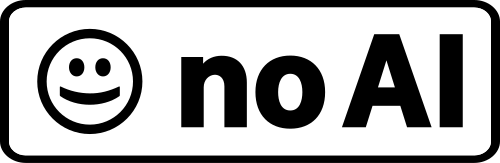
AI Free Cert runs the MindStar Standard, a blockchain backed verification system that certifies work as "produced by human hands and minds, without artificial intelligence tools." No AI Icon distributes free downloadable badges, including a "100% Human Created" mark, with explicit usage terms. Not By AI requires project approval and proof of a human creative process before granting its badge.
Michael Kolesidis, CC BY-SA 4.0, via Wikimedia Commons
Mise En Scene Company, a film production company, has promoted a "No AI Used" label for its releases, framing it as an audience trust tool in an era where AI generated visuals are increasingly difficult to distinguish from traditional production.
What AI Free Actually Means
Most certification boards draw the line at the source of the creative decision, not the presence of technology. A film loses AI free status when synthetic content is generated from a text prompt using tools like OpenAI Sora or Midjourney, when faces are swapped or voices cloned via deepfake systems, or when a large language model generates significant portions of a script.
Tools that assist rather than replace human judgment occupy a different tier. Upscaling and denoising in software like DaVinci Resolve or Topaz, subject tracking for colorists, and camera autofocus are generally acceptable. These use machine learning, but the creative decision originates with a human operator.
Where the Line Gets Contested
The gray area sits with tools that modify original footage rather than generating it. Ben Affleck's InterPositive platform, acquired by Netflix, applies AI to existing film material rather than creating content from prompts. Adobe Firefly used on original footage occupies similar ground. Certification boards are moving toward a "human intent" standard. AI assistance on a technical task qualifies; AI replacing a human creative choice does not.
This "human intent" framing mirrors how the [Academy defined AI eligibility ahead of the 2026 Oscars](/blog/academy-ceo-oscars-ai-eligibility-2026). Academy CEO Bill Kramer told The Guardian that AI is a tool, not a creator. The same principle now underpins third party certification.
Own work, Public Domain, via Wikimedia Commons
How Verification Actually Works
Not By AI's verification process requires applicants to submit their project and describe their creative workflow before a badge is granted. Reviewers look for evidence of human decision making at each stage: script development, visual development, voice casting, and editorial choices. A project that uses AI for color grading but relied entirely on human judgment for every creative decision can qualify. The review takes several business days and grants the badge for a specific version of the work.
AI Free Cert's MindStar Standard takes a blockchain approach. Each certified work receives a cryptographic hash that can be verified on chain, creating a tamper evident record tied to the specific version of the file submitted. That record does not prevent someone from using AI on a subsequent version of the file, but it does establish an auditable baseline for when the certification was valid.
The IP Stakes for Studios
Managing IP magazine reports that studios are increasingly concerned that AI generated content devalues brand libraries. IP strategists frame this risk as AI slop, low quality, synthetic material that undermines the perceived value of a studio's catalog. AI free certification offers a legal and reputational buffer, attaching third party verified provenance to human crafted work.
European Parliament voted in March 2026 to require AI companies to disclose and compensate rightsholders for content used in AI training. That regulatory pressure is pushing studios to document creative provenance from production day one. AI free certification platforms require exactly that documentation as a baseline condition.
Questions about how much AI studios actually use have raised disclosure concerns across Hollywood. Studies show audiences are more forgiving of AI use when disclosed upfront. AI free labels offer a clear, third party alternative to studio self-reporting.
Who Is Already Requiring Labels
Several brands have inserted AI disclosure requirements into their production agreements since mid-2025. Publishing companies in the United Kingdom have added clauses requiring contractors to disclose AI use in submitted manuscripts. Advertising agencies in Germany have begun asking production companies to certify the origin of still images used in campaigns. These requirements come from procurement and legal departments rather than creative teams, and they reflect liability concerns rather than artistic commitments.
The film industry equivalent is emerging more slowly, partly because the guild framework already addresses performer and writer AI protections through labor agreements rather than procurement clauses. Studios are not yet requiring AI free certification as a condition of distribution, but insurance underwriters for productions involving AI generated content are creating their own provenance documentation requirements.
The Audience Data Question
Studies testing audience reactions to AI disclosure have produced results the certification movement can cite in its favor. Audiences consistently report greater willingness to watch AI generated content when it is disclosed upfront compared to equivalent content revealed as AI made after viewing. That reaction holds across age groups and genres in research conducted in 2025.
The mechanism appears to be trust rather than taste. Audiences who discover undisclosed AI use tend to report retroactive dissatisfaction with work they had initially rated positively. Disclosed AI use, even when the content is identical, does not trigger the same reappraisal. The AI free label operates within the same psychological territory, establishing trust at the point of encounter rather than managing a reaction after the fact.
Provenance and What Comes Next
AI free certification operates at the declaration level. Technical provenance systems go a step further, embedding verified content metadata directly into files. Our complete guide to verifying AI generated content with C2PA covers the tools filmmakers can use to attach and verify content credentials from production through distribution.
The "AI-Free" label functions like an organic food certification: not a claim that zero technology was used, but that the core creative work came from human labor and craft, without synthetic generation at its source. Whether the label persists depends on whether audiences continue to care about production origin as AI generation improves and the visible markers of AI work become harder to detect.
The WGA Strike Sign as Provenance
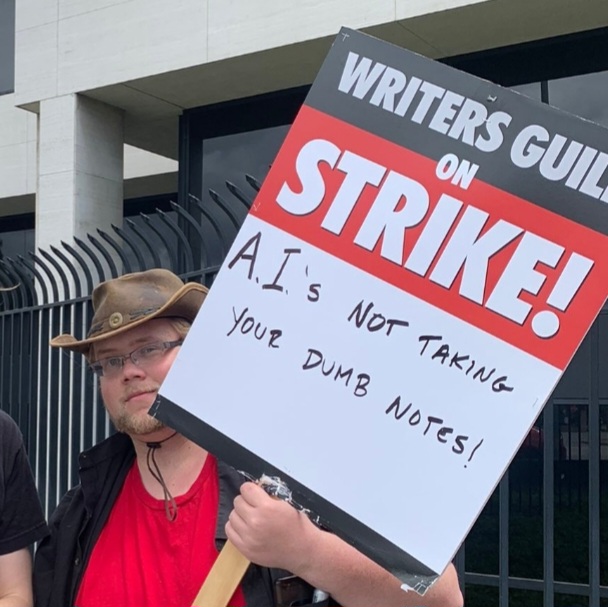
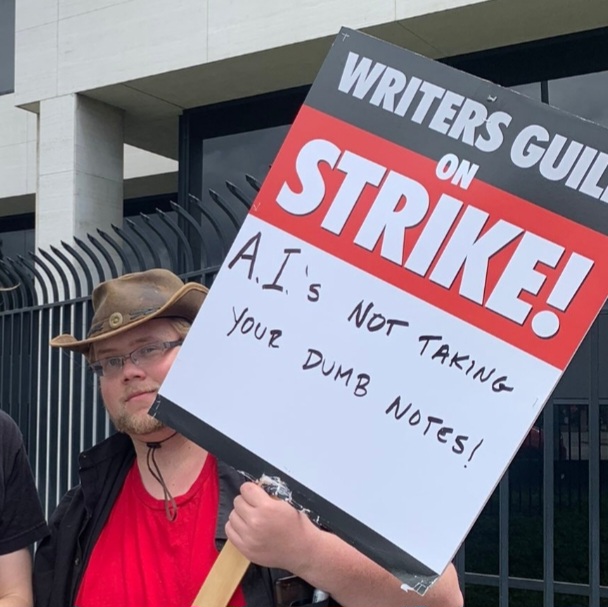
The 2023 WGA strike produced what has become the most widely reproduced image associated with AI resistance in Hollywood: a protestor holding a sign reading "No AI." That sign has appeared in coverage of AI debates in entertainment contexts hundreds of times since the strike ended. The image exists in multiple versions, from different days and locations, with different signholders.
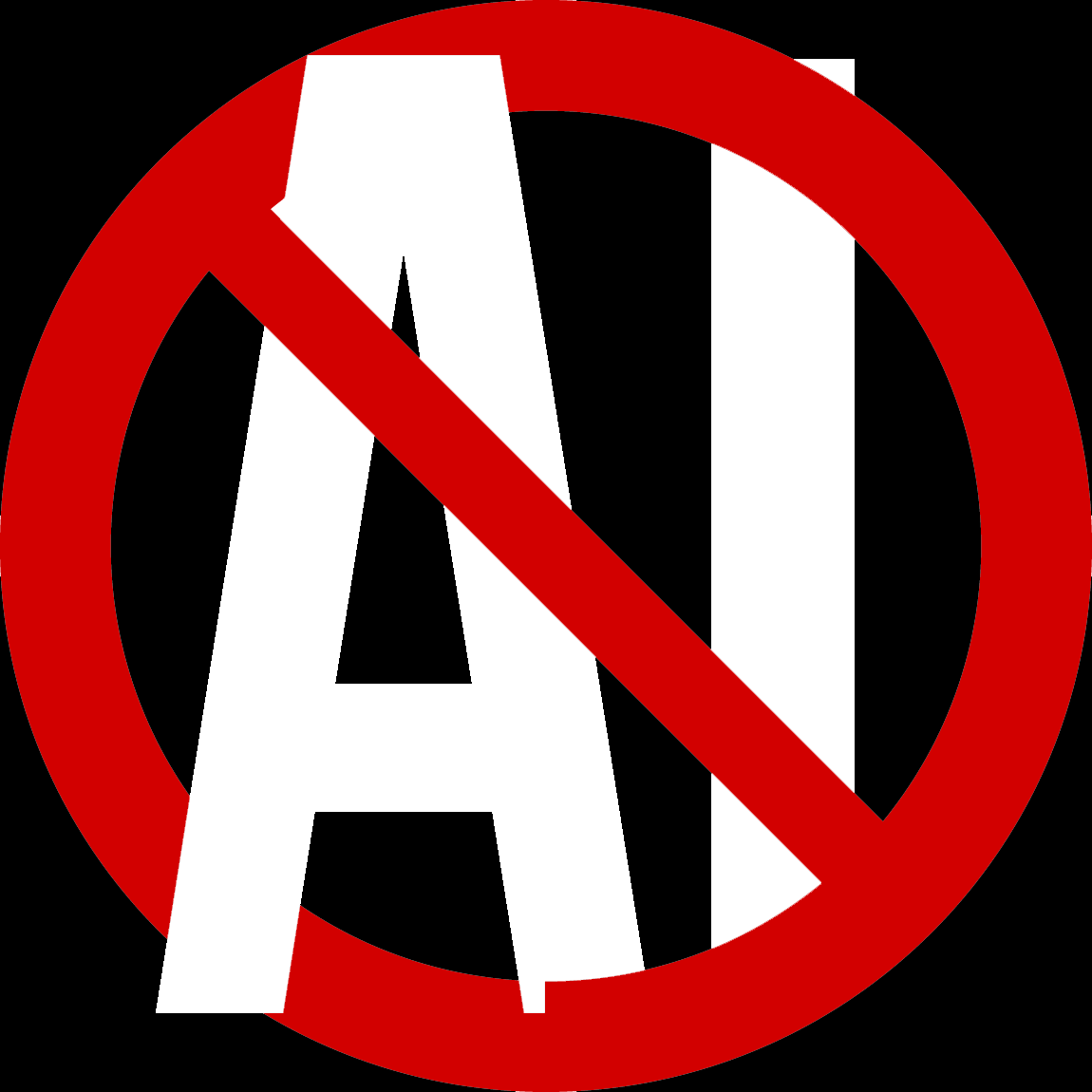
The AI free certification movement adopted identical iconography: a prohibition symbol over the letters AI, a design so directly derived from the strike imagery that the association is clearly intentional. That visual link anchors the certification movement to a specific moment in Hollywood labor history, positioning AI free labels as successors to the strike's demands rather than as a separate consumer marketing category.
Whether that association helps or hurts the certification movement depends on the audience. For entertainment industry workers who supported the 2023 strikes, the visual genealogy is a credibility signal. For corporate brand teams evaluating whether to use AI free certification as a marketing tool, the association with labor actions may be a complication.
Guild and Union Positions on Certification
SAG-AFTRA has not endorsed any specific AI free certification platform, but the guild's 2026 contract provisions are structurally aligned with the "human intent" standard the certifiers are developing. The consent and compensation framework in the SAG-AFTRA 2026 deal requires documentation of each synthetic use, which mirrors the provenance tracking that certification boards require as a baseline condition.
WGA's 2026 contract similarly requires disclosure when AI is used in script development. A production that discloses AI script assistance to WGA has already generated documentation that overlaps with what AI free certification boards require to deny a badge. The labor framework and the certification framework are converging on the same documentation requirements from different directions.
The Screen Actors Guild and Writers Guild have not taken formal positions for or against AI free labels. Their focus has been on protecting members from AI displacement rather than on validating work that avoids AI entirely. The certification market operates in parallel with the guild framework rather than as an extension of it.
The Label in the Marketplace
Documentary distributors and art house theatrical buyers have been among the earliest adopters of AI free framing in their acquisition criteria. Several acquisition executives at Sundance 2026 described asking filmmakers directly whether AI was used in production, with answers affecting the terms of distribution discussions. The concern was not primarily aesthetic but legal: unclear rights provenance in AI training data creates downstream licensing risk that distributors want to identify early.
Music clearance provides the closest analogy from existing distribution practice. A film with uncleared music can be distributed with the uncleared tracks removed, but the cost and delay of that remediation affects acquisition value. AI free certification is beginning to function similarly as a provenance signal, giving buyers a baseline for rights evaluation before the question is raised in post-production or during distribution.
Regulatory Momentum
The European Parliament's March 2026 vote on AI training data disclosure created direct pressure on certification systems. The EU's emerging AI content regulation framework distinguishes between AI assisted content and AI generated content, with different disclosure requirements for each. AI free certification platforms are positioning their standards to align with the AI assisted boundary, giving certified works a clear regulatory status in the EU market.
In the United States, no equivalent federal regulation has passed as of mid-2026. The NO FAKES Act, which cleared the Senate Judiciary Committee in June 2026, addresses performer likenesses specifically. Broader AI content disclosure requirements remain at the proposal stage. The certification market is therefore filling a regulatory gap in the US market that European producers already operate within.
How Consumers Actually Encounter These Labels
AI free labels reach audiences in one of three contexts: on-screen at the start or end of a film, in theatrical press and distribution materials, and on the packaging or digital storefront listing for a release. Theatrical presentations in art house circuits have used the labels most consistently. Streaming platforms have been more reluctant, partly because they do not currently distinguish AI generated from human made content in their interfaces and adding such a distinction would require disclosing absence of AI as well as presence.
The consumer recognition problem is significant. Studies from 2025 testing audience awareness of AI free labels found recognition rates below 20% among general film audiences, compared to above 60% for organic food certification labels in the consumer packaged goods market. The gap suggests the certification movement is currently addressing an industry and critic audience rather than a general public audience. Building broader recognition requires media coverage and studio participation at a scale the current certification platforms have not yet achieved.
What Certification Does Not Cover
AI free certification addresses what is in the final product. It does not address what tools were used in development, research, or business processes around a production. A certified film can be marketed, budgeted, and distributed using AI tools without losing its certification status, as long as the AI use does not extend into the content itself.
That scope is a deliberate choice by the certification boards, not an oversight. Extending certification requirements into business processes would make compliance practically impossible for any commercial production. The focus on content origin keeps the certification meaningful and auditable while acknowledging that AI use in production infrastructure is both widespread and beyond the scope of what audiences care about when they see a human made label.
Filmmakers who want to explore where AI tools assist rather than replace their own creative vision can start at AI FILMS Studio.
Sources
Managing IP | Yahoo Entertainment | Mise En Scene Company
AI Free Cert (MindStar Standard): aifreecert.com/standards No AI Icon: no-ai-icon.com Not By AI: notbyai.fyi
Continue Reading
Video & LipSync
- Video Generator
- Text to Video
- Image to Video
- Start-End Frame to Video
- Draw to Video
- Motion Control
- Video Enhancer
- Video Upscaler
- Video to Video LipSync
- Audio to Video LipSync
- Image to Video LipSync
- Video FaceSwap
- Seedance 2
- Vidu Q3 Pro
- Gemini Omni
- Google Veo 3.1
- Kling 3.0 Pro
- Luma Ray 3.2
- LTX 2.3
- Happy Horse 1.1
- Kling 3.0 Motion
- ByteDance Upscaler
- InfiniteTalk
- InsightFace


