
Share this post:
Academy CEO Clarifies AI Eligibility for the 2026 Oscars
Three days before the 98th Academy Awards ceremony, the head of the institution that runs it went on record about the technology reshaping the industry it honors. In an interview published by The Guardian on March 12, 2026, Academy CEO Bill Kramer laid out the official position with unusual directness: AI is a tool, not a creator, and human authorship remains the standard by which the Academy evaluates creative work.
Kramer's Position: AI as a Tool
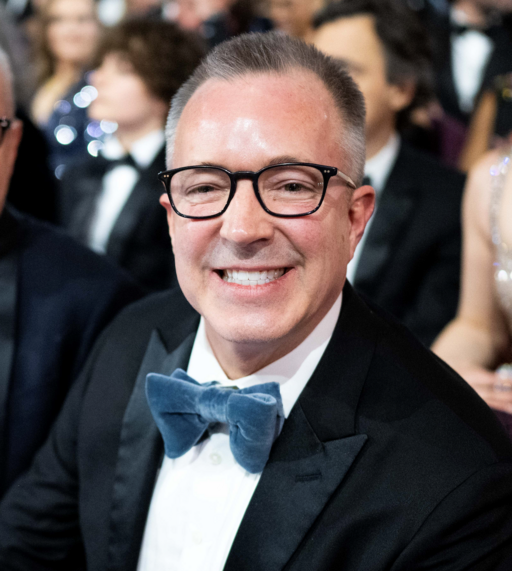
Speaking to The Guardian, Kramer framed AI in terms that the Academy has used in its formal rules since April 2025 but rarely stated this plainly in public. His language was deliberate: the Academy considers AI a tool that filmmakers may employ, not an independent creative agent that can share authorship credit with humans.
That framing carries regulatory weight. Under the Academy's current eligibility guidelines for the 98th Oscars, films that used generative AI in their production pipeline remain eligible for all categories. The decisive criterion is whether human creative contribution remained dominant throughout the filmmaking process. The guidelines state that AI tools "neither help nor harm" a film's chances at nomination, placing the evaluative burden on Academy branch members to weigh the degree of human authorship in each submission.
The same "human intent" standard is now driving a private certification market. Platforms like the MindStar Standard and Not By AI are issuing AI free logos to verify human authorship outside the awards context, offering filmmakers a consumer facing signal that mirrors the Academy's own evaluative principle.
A House Divided: VFX Embraces AI, Writers and Actors Push Back
Kramer did not present a unified institutional front in the interview. He acknowledged directly that the Academy's 17 branches hold divergent opinions on AI, describing the situation as a "lack of consensus." That candor points to a structural tension building since the 2023 strikes.
The Visual Effects branch has moved toward acceptance. Its members work with machine learning tools regularly in production pipelines, from crowd simulation and rendering optimization to background generation and style transfer. For many VFX artists, generative AI represents an extension of existing computational techniques rather than a categorical break from them. That argument gained new force after Guillermo del Toro's Frankenstein won Best Visual Effects at the same ceremony, despite del Toro's own public opposition to AI.
The Writers and Actors branches see the situation differently. The 2023 WGA and SAG-AFTRA strikes centered in part on AI provisions covering script generation and digital likeness replication. Writers secured language restricting studios from using AI to generate scripts or rewrite human work without consent. Actors obtained consent and compensation requirements for digital replicas. Both groups remain wary of a technology that threatens to displace their contributions entirely, not merely supplement them.
That divide runs through Kramer's statement. He offered no forecast for when consensus might emerge or how Academy governance might evolve to reflect it.
What "Human Creative Authorship" Requires
The rule framework offers principles rather than bright lines. Academy members in each branch apply the human authorship standard to nominations within their discipline. A Visual Effects branch member weighing AI generated crowd sequences operates from a different baseline than a Writers branch member assessing whether a screenplay shows evidence of AI assisted drafting.
Filmmakers whose work used AI during the 2026 eligibility cycle were not required to disclose that use during submission. The Academy declined to mandate transparency, a deliberate choice that reflects the definitional challenges involved. AI appears at multiple stages of production, from camera tracking to dialogue polish to color grading, and drawing a consistent disclosure threshold across all of those applications proved difficult enough that the Academy opted not to try.
The voluntary approach has produced varied behavior. Some productions that used AI prominently chose to disclose it proactively. Others that used AI in narrower post production applications said little about it. The pattern aligns with what Janice Min described as a "don't ask, don't tell" dynamic across the industry, one where even Best Picture nominees were using AI somewhere without it becoming part of their public campaign.
The 98th Ceremony in Context
%20(1).jpg)
The March 15 ceremony takes place against a backdrop of accelerating AI adoption across the industry. This cycle marked the first time filmmakers openly campaigned to Oscar voters using AI generated work, with animated shorts built on Runway, Google Veo, and custom generative adversarial networks qualifying for consideration alongside traditionally produced films.
Matthew McConaughey and Timothée Chalamet addressed the same moment at a CNN and Variety town hall in February, with McConaughey predicting that AI will eventually infiltrate Oscar acting categories directly. His forecast sits against Kramer's present-tense position. The Academy CEO is describing the rules that govern this ceremony. McConaughey is describing where those rules may prove insufficient within a few award cycles.
Meanwhile, the DGA enters its own contract renegotiation in June 2026, with Christopher Nolan leading the guild as president. Nolan has positioned AI protections as a central priority, framing the talks around preserving director authority rather than restricting the tools available to them. How those negotiations conclude will shape the working conditions that underpin what the Academy ultimately evaluates.
What the Rules Mean for Filmmakers Now
Kramer's interview does not change the eligibility framework. What it does is clarify the institutional tone heading into a ceremony that will include AI assisted work across multiple categories, whether or not those credits appear in the program.
For independent filmmakers working with generative AI tools, the current position offers useful clarity. Human authorship at the heart of the creative process. Per branch evaluation by Academy members in the relevant discipline. No disclosure requirement, though voluntary transparency has become a practical norm for AI forward campaigns.
The tools available through AI FILMS Studio operate within that framework. Filmmakers retain authorship over concept, direction, and curation. AI accelerates execution. That division is precisely the model Kramer's language describes as the qualifying standard for the 98th Oscars and beyond.
Sources
The Guardian
Oscars.org: 98th Oscars Rules and Eligibility
press.oscars.org: Awards Rules and Campaign Regulations, 98th Oscars
Continue Reading
.jpg?w=3840)


.jpg)
Video & LipSync
- Video Generator
- Text to Video
- Image to Video
- Start-End Frame to Video
- Draw to Video
- Motion Control
- Video Enhancer
- Video Upscaler
- Video to Video LipSync
- Audio to Video LipSync
- Image to Video LipSync
- Video FaceSwap
- Seedance 2.5
- WAN 3.0
- Seedance 2
- FLUX 3
- Minimax H3
- Vidu Q3 Pro
- Grok Imagine Video 1.5
- Gemini Omni
- Google Veo 3.1
- Kling 3.0 Pro
- Luma Ray 3.2
- LTX 2.3
- Happy Horse 1.1
- Kling 3.0 Motion
- ByteDance Upscaler
- InfiniteTalk
- InsightFace
Image & Edit
- AI Character
- AI Actor
- Art Generator
- Text to Image
- Image to Image
- LoRA Image to Image
- Draw to Edit
- Image LoRA Training
- Remove Background
- Image Enhancer
- MidJourney 8.0
- Krea 2
- OpenAI GPT Image 2.0
- Nano Banana Pro Ultra
- Nano Banana 2 Lite
- Nano Banana Pro
- Minimax Image
- Clarity Pro
- Z-Image Turbo LoRA
- Krea 2 Turbo LoRA
- Z-Image LoRA Trainer
- Qwen Image LoRA Trainer
- Background Erase Network 2 (BEN2)