
"Artificial" Loses Netflix, A24, and Focus: MUBI and Neon Circle Guadagnino's Film

Share this post:
"Artificial" Loses Netflix, A24, and Focus: MUBI and Neon Circle Guadagnino's Film
Netflix, Focus Features, A24, and Warner Bros.' Clockwork have all screened and passed on Artificial, Luca Guadagnino's $40 million dramatization of the 2023 OpenAI leadership crisis. MUBI is now the leading potential buyer, with Neon also in the picture.
The film has been in circulation since Amazon MGM dropped the project after its $50 billion OpenAI partnership closed in February 2026. Studio screenings began the day Amazon exited, and the rejections have accumulated steadily since.
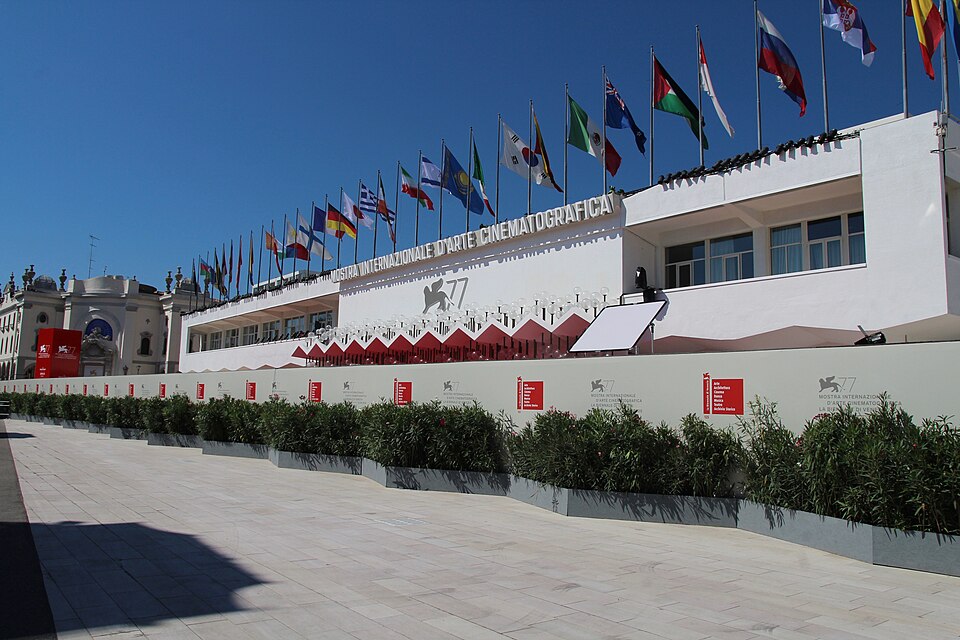
Studio After Studio Passes
The rejections now span four major distributors. Netflix and Focus Features were the first to pass, with Focus declining despite Universal's specialty label having a strong track record with prestige international cinema. Warner Bros.' Clockwork, the studio's specialty acquisitions arm, also screened the film without making an offer.
A24 followed. The studio stayed publicly silent on its reasons, but it screened Artificial in the same window as the others and did not move forward. Each rejection came individually, not as a coordinated response. The pattern emerged one decision at a time.
The A24 Question
One thread connects A24's decision to the wider story. Josh Kushner, who has backed A24 as an investor, runs Thrive Capital, the venture firm that holds a board seat at OpenAI. The film reportedly depicts Sam Altman as "a pathological liar", according to people familiar with the script.
A24 declined to comment. Whether Kushner's financial relationship with OpenAI influenced the acquisition decision is not confirmed by anyone on the record. The connection between Thrive Capital and OpenAI's board is documented; the line from that connection to this particular pass is a matter of inference, not stated fact.
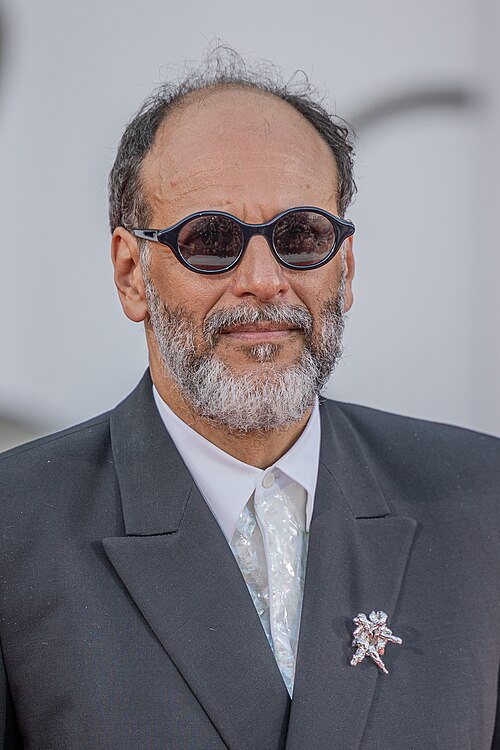
MUBI and Neon Circle the Film
MUBI is now the most active buyer. The streaming and theatrical platform released Guadagnino's Queer internationally and has a track record of acquiring films that major studios find commercially complicated. Its rescue of Coralie Fargeat's The Substance, after Universal dropped it, resulted in one of 2024's most talked about releases. MUBI operates across Europe, North America, and key markets in Asia and Latin America, giving it the reach to handle a title of this profile.
Neon is also tracking Artificial. The distributor, whose catalog includes Parasite, Triangle of Sadness, and Titane, has built its library out of films that court controversy and carry serious director credentials. Artificial has both.
The film's commercial case is strong on paper. It arrived from test screenings with positive audience responses. Guadagnino's commercial track record has never been higher: Challengers became his biggest commercial hit to date, and Queer premiered at Venice to strong critical reception before MUBI carried it internationally.
The positive test screenings are the clearest available signal of the film's commercial potential. Test audience responses are among the most reliable early indicators of awards season performance for prestige films, because they measure how a film plays for people who came to see a movie, not critics or industry professionals with specific prior relationships to the material. The Artificial test results are the strongest argument any distributor could make for taking the film on.
Neon and MUBI's mutual interest also suggests that two of the most acquisitions-active independent platforms in the industry independently concluded the film was a viable acquisition. That consensus, from two platforms that approach their catalogs differently, reinforces the commercial case that the studio passes obscure.
Venice and the Stakes for the Film
A MUBI acquisition would likely point toward a Venice Film Festival premiere. Guadagnino premiered Queer in Venice in 2024 and has a long relationship with the festival going back to I Am Love and A Bigger Splash. Venice's main competition opens in late August. A deal signed in the coming weeks could slot Artificial directly into that program.
The Venice timeline would give any distributor a full awards season runway from September through March. That window is precisely what a film competing for Best Picture, Best Director, and Best Actor nominations needs to build guild screening momentum.
The film dramatizes the November 2023 week when OpenAI's board dismissed Sam Altman, an employee revolt followed, and Altman was reinstated five days later. Andrew Garfield plays Altman. Monica Barbaro plays Mira Murati, the former chief technology officer who served as interim CEO during the crisis. Yura Borisov plays Ilya Sutskever. Ike Barinholtz plays Elon Musk.
OpenAI's cultivation of major Hollywood partnerships and Disney's $1 billion investment in OpenAI alongside Sora access show how deep these financial entanglements now run across the industry. Artificial has become the clearest test case yet for how those ties affect which films major distributors will touch. Independent creators generating work through AI FILMS Studio's video workspace operate without those institutional constraints entirely.
Why Each Studio's Pass Has a Different Logic
The rejections from Netflix, Focus Features, Warner Bros.' Clockwork, and A24 each carry different underlying reasoning, even if none of the studios stated their reasons publicly.
Each studio's pass arrived individually, not as a coordinated response. The pattern emerged one decision at a time, which makes the collective picture more striking than if a group of studios had agreed informally to avoid the film. These were separate commercial decisions, taken by separate acquisitions teams, arriving at the same conclusion independently.
Netflix's position involves a large and active AI research and production program within the company. The streamer has been integrating AI tools into its production pipeline and has made public statements about AI's role in its future operations. A film that depicts OpenAI's leadership in a critical light sits differently for a company actively developing AI capabilities than for a studio with no AI investment to protect.
Focus Features' pass is the most straightforwardly commercial. Focus, as Universal's specialty label, tends to acquire films with clear awards potential and strong European critical positioning. Artificial has both. The pass suggests that whatever cultural complications the film carries outweighed Focus's standard acquisition criteria, which is unusual for a Guadagnino film in post production with positive test screenings.
Warner Bros.' Clockwork and A24's decisions are harder to read without public statements. Clockwork handles a narrow category of specialty and prestige acquisitions for Warner. A24 has distributed films with controversial biographical subjects before, including The Disaster Artist and several films examining living political figures. The Kushner/Thrive Capital angle in A24's case is documented even if the connection to the specific acquisition decision is not confirmed.
MUBI's Track Record With Rejected Films
MUBI's involvement as a leading buyer is consistent with its recent acquisition history. The platform released Coralie Fargeat's The Substance internationally after the film's US distributor dropped it under commercial pressure. The Substance went on to win Best Screenplay at Cannes 2024 and became one of the most discussed releases of its year. The MUBI acquisition of a rejected prestige film is now a recognizable pattern.
MUBI also distributed Guadagnino's Queer internationally after producing the film as a co-production. That existing relationship with the director makes MUBI's interest in Artificial structurally consistent rather than opportunistic. The platform has a track record with Guadagnino specifically, not just with the category of film Artificial represents.
The platform operates across more than 190 countries, which gives it the theatrical and streaming reach to handle a title that requires international distribution infrastructure. Artificial is not a small art film that MUBI can screen in select cities. It is a $40 million production with a major star cast that needs broad theatrical release to generate the awards season momentum that Neon has committed to. MUBI's scale in 2026 gives it that capability in a way it did not have five years ago.
MUBI's interest also reflects its positioning as a platform for films that have a specific kind of cultural seriousness. The platform curates its catalog around the argument that cinema is an art form, and its subscriber base is built around people who take that argument seriously. A Guadagnino film about the OpenAI crisis fits that positioning precisely, regardless of the political complications that drove the major studios away.
The competition between MUBI and Neon for Artificial came down to the specifics of the deal, not to fundamental differences in either platform's ability to handle the film. Both were genuine buyers. The fact that Neon ultimately closed is an outcome, not a verdict on MUBI's suitability.
What the Film's Distribution Window Revealed About Hollywood
The period during which Artificial circulated without a distributor, from Amazon's exit in June 2026 through Neon's acquisition, produced a concentrated illustration of how AI financial relationships now shape what studios will handle.
Five major distributors, each with strong credentials in prestige and awards cinema, declined to take a finished film from one of the most prominent directors in contemporary cinema. The commercial case for the film was not in question. The test screenings were positive. The cast is strong across every department. Each rejection turned on something other than the film's quality or commercial prospects.
The window also revealed which independent distributors remain willing to operate outside those constraints. MUBI and Neon both circled the film. Both have built their catalogs on the premise that commercial and critical quality matter more than the institutional sensitivities that govern major studio acquisitions. That positioning, cultivated over years of acquisitions, made both of them credible buyers for Artificial when the majors stepped back.
The distribution gap also created an unusual market situation. A finished prestige film with no distributor attached, circulating with positive test screening results, would typically generate a competitive bidding environment driven by commercial interest. The bids that did materialize came from the two platforms least subject to the specific institutional pressure that drove the majors away. The market for the film was not small. It was segmented, with the larger distributors effectively removed from consideration by their own AI investment positions.
The Artificial situation also produced an unusually public record of why studios passed. Reporting from Variety, Deadline, and The Hollywood Reporter during the distribution process documented the A24/Kushner/OpenAI connection, the conflict of interest logic at Amazon, and the general pattern of studio AI relationships driving acquisition decisions. That level of public documentation during an active distribution process is unusual and will make Artificial a case study in future industry discussions about AI investment and creative conflict of interest.
Guadagnino's Venice Relationship and Why It Matters Here
The distribution process unfolding in June 2026 has a natural endpoint in the fall festival circuit. Guadagnino has premiered major films at Venice more consistently than at any other festival. Bones and All won the Silver Lion in 2022. Queer opened the 2024 competition. Suspiria, A Bigger Splash, and I Am Love all debuted on the Lido. His track record there is the strongest case for where Artificial will premiere.
A Venice 2026 main competition slot would give the film a global press launch in early September. That timing fits Neon's Oscar campaign structure. The distributor would have from Venice's September premiere through November's guild nominating ballots to build momentum, a standard awards season runway for prestige acquisitions.
The Venice 2026 jury, announced in late June, is led by director Maggie Gyllenhaal and draws primarily from outside the Hollywood guild framework. A jury without direct stake in Hollywood's AI investment debates would evaluate Artificial on its cinematic merits. For a film whose distribution journey was shaped entirely by institutional AI politics, that framing represents a genuinely different context at the first major public screening.
The Neon Resolution
Neon closed the deal for worldwide distribution rights in late June 2026, ending the period of uncertainty and committing to an Oscar campaign. The acquisition was announced publicly with a statement from Neon confirming its intention to compete the film for this year's Academy Awards. In late July 2026, Garfield addressed the distribution saga publicly for the first time, calling Neon "a daring studio doing daring films" and telling Variety he was "and wasn't surprised" by Amazon's exit.
The conclusion of Artificial's distribution journey, from Amazon's exit through five passes to Neon's acquisition, is covered in full in our reporting on the Neon deal and Oscar campaign. The arc of the story, three major articles covering three stages of the same film's path to release, maps the specific way AI investment relationships now shape film distribution in practice.
The speed of Neon's confirmation of an Oscar campaign is significant. Neon did not acquire the film and then decide to enter it for awards. The Oscar commitment was announced as part of the acquisition itself, signaling that the awards strategy was central to the terms of the deal rather than an afterthought. That kind of commitment at the point of acquisition is the clearest possible signal about how Neon intends to position the film commercially.
The film's path from Amazon to Neon is also a useful record for producers navigating similar situations. A finished film, with strong audience testing and a major director attached, found its distributor despite five rejections from the largest specialty distributors in the industry. The market for controversial biographical films about AI company founders exists. It is just not located at the studios that are simultaneously building financial relationships with those AI companies.
Neon's acquisition of Artificial also demonstrates that the Oscar campaign strategy Guadagnino's team was pursuing was achievable without the major studio infrastructure the film initially expected to have. The distributor that ultimately ran Parasite to a Best Picture win and The Apprentice to a Best Actor nomination is not a backup option. Neon has a track record that the studios that passed cannot match in this specific category of film.
The film that Amazon, Netflix, A24, Focus Features, and Warner Bros.' Clockwork all found too complicated to distribute is heading into awards season with a distributor that has done exactly this before and a director whose Venice relationship gives it the most prestigious platform in European cinema for its debut. The distribution chapter, however complicated, ended where a Guadagnino film at Neon ought to end: on the path toward a fall premiere and an Oscar campaign that will be watched across the industry as much for what it reveals about Hollywood's AI relationships as for what it says about the film itself.
Sources
Variety | The Hollywood Reporter | Deadline | The Wrap | IndieWire
Continue Reading
.jpg?w=3840)


Video & LipSync
- Video Generator
- Text to Video
- Image to Video
- Start-End Frame to Video
- Draw to Video
- Motion Control
- Video Enhancer
- Video Upscaler
- Video to Video LipSync
- Audio to Video LipSync
- Image to Video LipSync
- Video FaceSwap
- Seedance 2.5
- WAN 3.0
- Seedance 2
- FLUX 3
- Minimax H3
- Vidu Q3 Pro
- Grok Imagine Video 1.5
- Gemini Omni
- Google Veo 3.1
- Kling 3.0 Pro
- Luma Ray 3.2
- LTX 2.3
- Happy Horse 1.1
- Kling 3.0 Motion
- ByteDance Upscaler
- InfiniteTalk
- InsightFace
Image & Edit
- AI Character
- AI Actor
- Art Generator
- Text to Image
- Image to Image
- LoRA Image to Image
- Draw to Edit
- Image LoRA Training
- Remove Background
- Image Enhancer
- MidJourney 8.0
- Krea 2
- OpenAI GPT Image 2.0
- Nano Banana Pro Ultra
- Nano Banana 2 Lite
- Nano Banana Pro
- Minimax Image
- Clarity Pro
- Z-Image Turbo LoRA
- Krea 2 Turbo LoRA
- Z-Image LoRA Trainer
- Qwen Image LoRA Trainer
- Background Erase Network 2 (BEN2)