
Annecy 2026: AI Takes Center Stage at Animation's Biggest Festival

Share this post:
Annecy 2026: AI Takes Center Stage at Animation's Biggest Festival
The Annecy International Animation Film Festival opens June 21 for an edition that holds two distinctions: it is the first year Annecy carries FIAPF Class A festival status, and AI is the central subject of the MIFA industry market running June 23 through 26. The combination makes this the most significant gathering for animation's AI conversation to date.
The festival runs through June 27. At MIFA, a new licensing deal between Banijay Group and Toon Boom Harmony has drawn industry attention as a possible template for how animation software vendors and content owners can engage with AI without entering the training data dispute.
Animation's First Class A Festival
Annecy's Class A designation from the International Federation of Film Producers Associations formally places it alongside Cannes, Venice, Berlin, and Locarno as the world's elite tier of film festivals. For an animation specific event, this is a first: no festival in the field had previously reached that classification. The designation governs how awards and competition sections are recognized internationally and changes how coproductions negotiated at MIFA are formally classified.
The 64th edition runs June 21 through 27. MIFA, the Marché International du Film d'Animation, opens June 23 and runs through June 26. Buyers, commissioning editors, coproduction executives, and representatives from Netflix, Disney, Universal, Warner Bros., and Pixar attend as the primary deal making event for animation's global trade.
Annecy Festival, Public domain, via Wikimedia Commons
The Class A recognition raises the formal standing of deals negotiated at MIFA within international treaty frameworks. A coproduction that previously derived its treaty status from the host country's bilateral agreements now has a Class A festival endorsement alongside it, which matters in territories where festival classification affects tax credits and funding eligibility.
Annecy has historically been the animation industry's primary trade event regardless of formal classification. The Class A status formalizes what practitioners already treated as true, placing the festival in the same regulatory tier as the events that have always received that recognition.
AI Moves to the Center of MIFA
MIFA 2026 has built AI programming into its official agenda. Closed door workshops on AI tools and production pipelines run through the market, offering demonstrations and working sessions that give attendees direct exposure to tools at varying stages of studio integration. Previous editions treated AI as a side conversation. This year it is on the main program.
The major studios presenting include Pixar, Disney, Warner Bros., Universal, and Netflix. All five have active internal AI programs, and presentations are expected to address how those tools are being applied to animation pipelines: coloring, in-betweening, background generation, and voice work. The pressures driving adoption mirror what the Japanese anime industry has confronted directly, where studios have deployed AI specifically to address a workforce shortage that human hiring cannot solve.
The shift from side conversation to main program represents a year of practical change in the studios. Closed door workshops at an official market are not research sessions. They are production pipeline reviews, where attendees bring active projects and evaluate tools against real production requirements. The studios presenting at MIFA 2026 are sharing what they have already built, not what they are considering building.
A New Template for Ethical AI Licensing
The deal between Banijay Group and Toon Boom Harmony is the most discussed partnership heading into MIFA. Banijay, one of the world's largest independent content producers, has granted Toon Boom access to its content library for testing and developing AI features within Harmony, the 2D animation software used across most major studios. The access does not extend to training AI models on Banijay content.
The distinction is substantive. Testing rights allow a software vendor to verify that its AI tools perform correctly on real production material. Training rights would allow that content to become part of the underlying model's learned knowledge, permanently and without ongoing attribution. Banijay agreed to the first and explicitly withheld the second.
As a structural model, this kind of deal offers a resolution to the impasse that has stalled many AI tool partnerships: content companies that want to support tool development without granting training data access now have a commercial framework to point to. Whether other studios and software vendors adopt the same structure at MIFA 2026 will be closely watched. It resolves the most contentious part of the AI licensing debate in animation without requiring either side to concede the core of its position.
Toon Boom Harmony's relevance here extends beyond a single deal. The software runs 2D animation pipelines at studios across North America, Europe, and Asia. A licensing framework that Toon Boom normalizes at MIFA reaches into production pipelines globally, because Toon Boom is already in most of them.
From Protests to Engagement
Annecy 2025 included visible protests from animators and illustrators concerned about AI displacing their work. The tone at MIFA 2026 is measurably different. Industry reporting has described the shift as "begrudging acceptance": AI tools are present in production pipelines at scale, and the conversation has moved from whether to use them to how to do so within limits that protect creators.
That pattern has appeared at every major festival market this year. Cannes 2026 was the first major film festival where filmmakers openly admitted using AI, with Variety describing the moment as AI "coming out of the closet." TIFF: The Market 2026 launches in September with a dedicated AI innovation hub built into its inaugural market structure. Annecy's MIFA is the animation industry's equivalent: the point where AI stops being a political question and starts being an operational one.
CITIA formalized that shift on June 22 with the AI4Animation Think Tank, a closed door practitioner session with studio executives, directors, and union representatives. The process runs across multiple MIFA editions through 2029, when a white paper on AI governance in animation is expected.
The Think Tank's multi-year timeline signals that CITIA is not treating this as a one-off discussion. A white paper due in 2029 requires sustained engagement across multiple Annecy editions, meaning the governance conversation will be ongoing and tied to the festival's annual cycle through the end of the decade.
The Competitive Selection at the 64th Edition
Annecy's main competition runs alongside MIFA and draws international entries across feature, short, television, VR, and commissioned film categories. The festival maintains its own separate AI Works selection track, which has grown in submissions each year since its launch in 2023.
The 2026 AI Works selection includes entries from studios and independent filmmakers across Europe, North America, and Asia. The track's third year represents the first time Annecy has had enough AI entries to run a meaningful competition rather than a survey program. Three years of growth in one specialist category is enough to establish patterns in quality, technique, and thematic approach.
Studios Showing at MIFA 2026
Netflix, Disney, Universal, Warner Bros., and Pixar are among the studios presenting at MIFA's 2026 AI sessions. The specific content of those presentations has not been made fully public in advance of the market, but industry reporting has confirmed that the sessions address production pipeline integration rather than research previews.
The difference matters commercially. A research preview at a market invites discussion about potential future adoption. A production pipeline session describes current practice. MIFA 2026 is running the second category, which signals that the studios presenting are past the evaluation phase and sharing what they have already built.
The Toon Boom Harmony Market Position
Toon Boom Harmony's centrality to the Banijay partnership reflects the software's actual market position. Harmony runs the production pipeline at studios including Cartoon Network, Nickelodeon, Warner Bros. Animation, and dozens of European and Asian studios. A software vendor that controls this much of the 2D animation industry's toolchain occupies a unique position in any licensing negotiation.
The Banijay deal gives Toon Boom what it needs to develop AI features that work on real production material. It gives Banijay a formal agreement that withholds training data rights while supporting technical development. Whether the deal creates a revenue share for Banijay's testing contribution is not public, but the structure itself, testing access without training rights, is the template other studios will evaluate at MIFA 2026 against their own legal and commercial needs.
What CITIA's Think Tank Timeline Signals
The AI4Animation Think Tank's target date of 2029 for a governance white paper is not slow. It reflects the pace at which governance frameworks for novel technologies actually move through the consultation, drafting, review, and publication cycle when multiple stakeholder groups are involved.
CITIA is working with studio executives, directors, and union representatives simultaneously. Those groups have different interests, different legal frameworks governing their work, and different timelines for when governance decisions become urgent. A three-year process that produces a document all three groups can work with is more valuable than a faster document that one group rejects. The 2029 timeline signals that CITIA is building for agreement rather than speed.
How MIFA Functions as a Market
MIFA is the animation industry's primary deal-making event. The four-day market run includes rights sales, coproduction pitches, commissioning editor meetings, and format licensing negotiations. Studios from 80+ countries send buyers and sellers to MIFA annually, making it the largest concentration of animation industry decision-makers in the world.
The market's scale makes it the natural venue for announcing partnerships and deals that need industry-wide visibility. The Banijay-Toon Boom Harmony deal was announced at MIFA because the animation industry's other studios, software vendors, and rights holders are in the same building for four days. A deal intended to set a governance template needs to reach those audiences quickly, and MIFA does that.
European Animation and AI Funding Questions
European animation studios are more dependent on subsidized production through national film funds and broadcaster commissions than their American counterparts. Those funding bodies have begun asking about AI tool use in funded productions, creating a regulatory context that does not exist for commercially financed American studio animation.
French, German, and UK animation studios attending MIFA 2026 are navigating two pressures simultaneously: commercial adoption of AI tools that reduce production costs, and regulatory disclosure requirements from funders still developing AI policies. The Banijay-Toon Boom deal's distinction between testing rights and training rights is specifically relevant for studios trying to adopt AI tools while maintaining clean compliance positions with their public funders.
What CITIA's Role Actually Is
CITIA is the organization that runs both the Annecy International Animation Film Festival and MIFA. It is a public-private body with membership from animation industry companies, the Annecy municipal government, and French national cultural institutions.
CITIA's governance of both the artistic festival and the industry market gives it a structural position no other animation body holds. The decision to launch the AI4Animation Think Tank through MIFA rather than through the festival's artistic program reflects CITIA's reading of where governance conversations need to happen: in the commercial context where production decisions are made, not the artistic context where finished films are evaluated.
The 2029 White Paper Timeline
CITIA has committed to running AI4Animation Think Tank sessions at MIFA 2027 and 2028 before the white paper is due in 2029. The content of those sessions is not predetermined. The process is designed to incorporate developments in AI capability, guild contract negotiations, regulatory changes, and studio adoption experience that will happen between now and 2029.
A white paper written based only on 2026 knowledge would be outdated before it was published. The multi-year process is designed to capture ongoing change. The governance framework that emerges in 2029 will reflect what the animation industry has actually learned across three more years of AI production experience.
Annecy Versus Cannes on AI
Cannes banned AI generated work from its main competition during the same month MIFA opened its first dedicated AI production workshops. The two festivals represent opposite responses to AI within the same industry: the competition function sets artistic criteria that restrict AI, while the market function sets commercial criteria that integrate it.
The comparison illustrates a structural pattern that has appeared at every major festival in 2026: the artistic programming and the commercial programming at the same institution can operate on opposite premises about AI without one canceling the other. Cannes accepted Meta as an official partner while banning AI films from competition. MIFA ran AI governance workshops while the festival hosted competition films made without generative tools.
Who MIFA's Audience Actually Is
MIFA's attendees are commissioning editors from broadcasters, acquisition executives from streaming platforms, coproduction coordinators, and rights sales agents. The closed door AI workshops at MIFA 2026 were attended by people who make budget allocation and production greenlight decisions.
That distinction explains why MIFA's AI sessions carry more commercial weight than festival AI discussions. A commissioning editor who hears about an AI production tool at MIFA can require it in the productions they fund. The pipeline from MIFA conversation to industry adoption is shorter and more direct than any other animation industry event.
What the AI Works Track Signals
Annecy's AI Works selection track, launched in 2023, has grown in submissions each year. By its third year in 2026, it has enough entries to run a meaningful competition rather than a survey program. Three years of growth in one specialist category establishes patterns in quality, technique, and thematic approach that single-year programs cannot.
The track's growth rate is the signal that matters for what MIFA AI governance produces: the industry is producing enough AI animation to require organized market infrastructure. The Banijay-Toon Boom deal and the AI4Animation Think Tank are responses to a production volume that already exists, not preparation for a volume that might come.
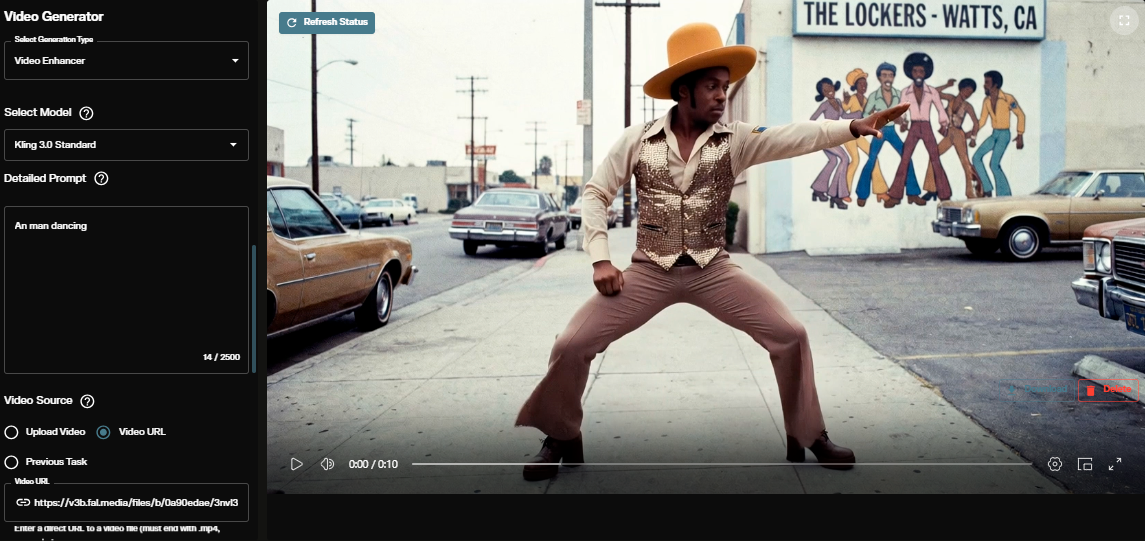
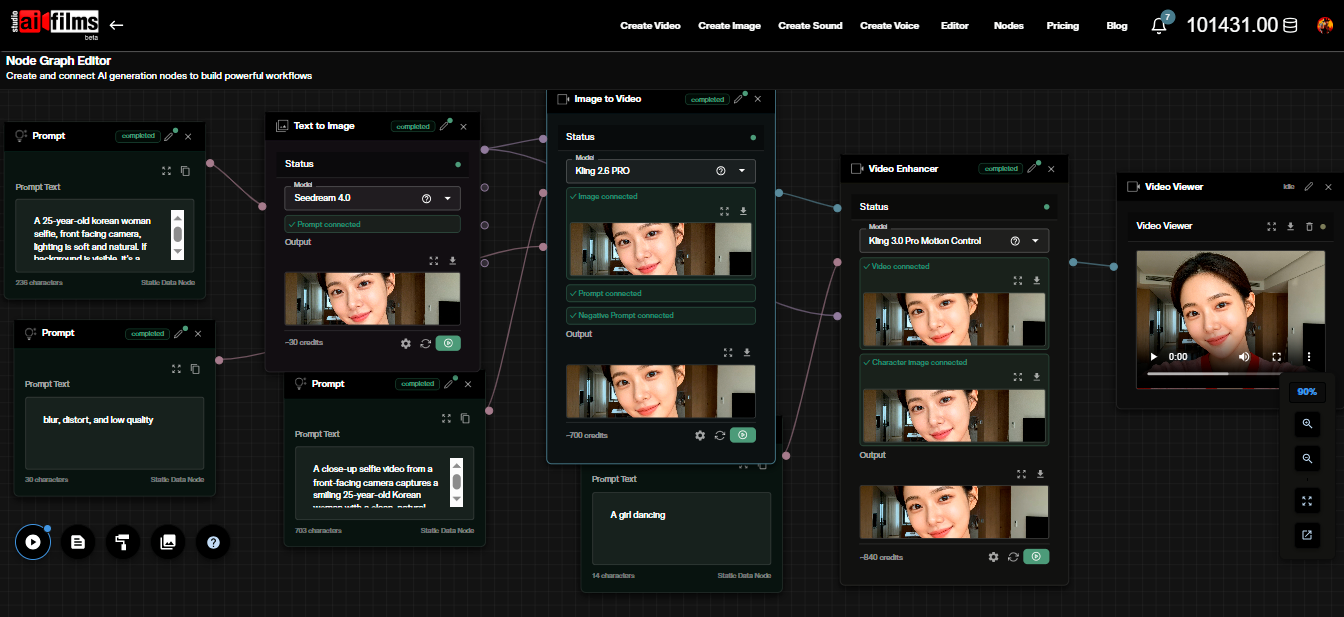
Filmmakers and animators building their own AI production workflows can access text-to-video, image-to-video, and visual development tools through AI FILMS Studio's video workspace, without the institutional overhead that characterizes the deals being negotiated at MIFA.
Sources
Variety | Deadline | Screen Daily | The Hollywood Reporter
Continue Reading
.jpg?w=3840)


Video & LipSync
- Video Generator
- Text to Video
- Image to Video
- Start-End Frame to Video
- Draw to Video
- Motion Control
- Video Enhancer
- Video Upscaler
- Video to Video LipSync
- Audio to Video LipSync
- Image to Video LipSync
- Video FaceSwap
- Seedance 2.5
- WAN 3.0
- Seedance 2
- FLUX 3
- Minimax H3
- Vidu Q3 Pro
- Grok Imagine Video 1.5
- Gemini Omni
- Google Veo 3.1
- Kling 3.0 Pro
- Luma Ray 3.2
- LTX 2.3
- Happy Horse 1.1
- Kling 3.0 Motion
- ByteDance Upscaler
- InfiniteTalk
- InsightFace
Image & Edit
- AI Character
- AI Actor
- Art Generator
- Text to Image
- Image to Image
- LoRA Image to Image
- Draw to Edit
- Image LoRA Training
- Remove Background
- Image Enhancer
- MidJourney 8.0
- Krea 2
- OpenAI GPT Image 2.0
- Nano Banana Pro Ultra
- Nano Banana 2 Lite
- Nano Banana Pro
- Minimax Image
- Clarity Pro
- Z-Image Turbo LoRA
- Krea 2 Turbo LoRA
- Z-Image LoRA Trainer
- Qwen Image LoRA Trainer
- Background Erase Network 2 (BEN2)