
Annecy Launches AI4Animation Think Tank to Build Industry's First White Paper on AI

Share this post:
Annecy Launches AI4Animation Think Tank to Build Industry's First White Paper on AI
Annecy's MIFA market launched AI4Animation on June 22, a dedicated industry think tank for animation professionals to address AI's role in the field. The session is the first step in a three year process that CITIA, the public body behind the Annecy festival, intends to conclude with a white paper on AI governance in animation, published in 2029.
The think tank is a distinct event from the broader MIFA programming. For context on the festival opening, Class A FIAPF status, and the Banijay/Toon Boom licensing model, see the Annecy 2026 MIFA overview.
A Closed Room by Design
CITIA made a deliberate choice to keep press and media out of the June 22 session. The rationale was that studios and individual professionals may not speak freely about AI adoption, concerns, or internal use if their remarks can be attributed and reported publicly. MIFA will publish a summary of the day, but the discussions themselves are confidential.
The format calls for a small group of industry volunteers, including studio executives, directors, technical leads, and union representatives, gathered to survey what is actually happening with AI across the animation sector. The initial framing is diagnostic, not prescriptive. The session asked what the issues are, what the trends look like, and how professionals feel about the technology.
Technological, Creative, Ethical, and Environmental Topics
The agenda addresses four categories: technological implications of AI in animation pipelines, creative implications for authorship and style, ethical questions around consent and compensation, and environmental considerations around the energy cost of AI generation.
Workflow automation is also on the table. AI tools are being adopted by animation studios not as a statement of principle but as a response to the financing pressures that have compressed animation budgets across Europe and Asia in 2025 and 2026. MIFA noted that AI is increasingly "economic reality" for production companies navigating a difficult market.
Three Years Toward a White Paper
Annecy Festival, Public domain, via Wikimedia Commons
The 2029 publication date is the most significant detail of the AI4Animation structure. Most AI governance efforts in the entertainment industry operate on a 12 month or deal cycle timeline: a SAG-AFTRA contract, a legislative calendar, a festival policy for a single edition. CITIA is building a multi year institutional process.
That timeline signals that Annecy is treating AI governance as a structural problem requiring sustained inquiry, not a statement to be issued in response to current events. Sessions are planned to recur across MIFA editions between now and 2029, accumulating research before the white paper is finalized.
From Protest to Structured Dialogue
The tone at Annecy has shifted considerably since 2024. That edition saw visible protests from animation workers over AI, particularly around concerns that generative tools would displace production artists. The 2025 MIFA continued to feature those tensions.
The 2026 edition channels that energy into institutional structures. The AI4Animation Think Tank, the European Animation Summit at MIFA, and the trade union programming running concurrently all represent a shift from reactive opposition to deliberate engagement. The question is no longer whether to discuss AI but how to shape the discussion.
This approach differs from the corporate led model seen in the ARIAM coalition launched by Disney, BBC, and the New York Times in June 2026. ARIAM is a cross-sector alliance of content owners. The AI4Animation Think Tank is a practitioner facing process organized by a public cultural institution. Both aim at governance, but they represent different centers of gravity.
What It Means for Animation Workflows
The animation sector faces pressures that make AI adoption a near certainty for many studios regardless of policy outcomes. Production budgets have contracted, schedules have compressed, and output expectations from streaming platforms remain high. For studios in Europe, Japan, and South Korea that have already begun integrating AI tools, the question is governance on their own terms rather than a binary choice. For a look at how Japanese anime studios are navigating this, the adoption patterns emerging from that market offer relevant context.
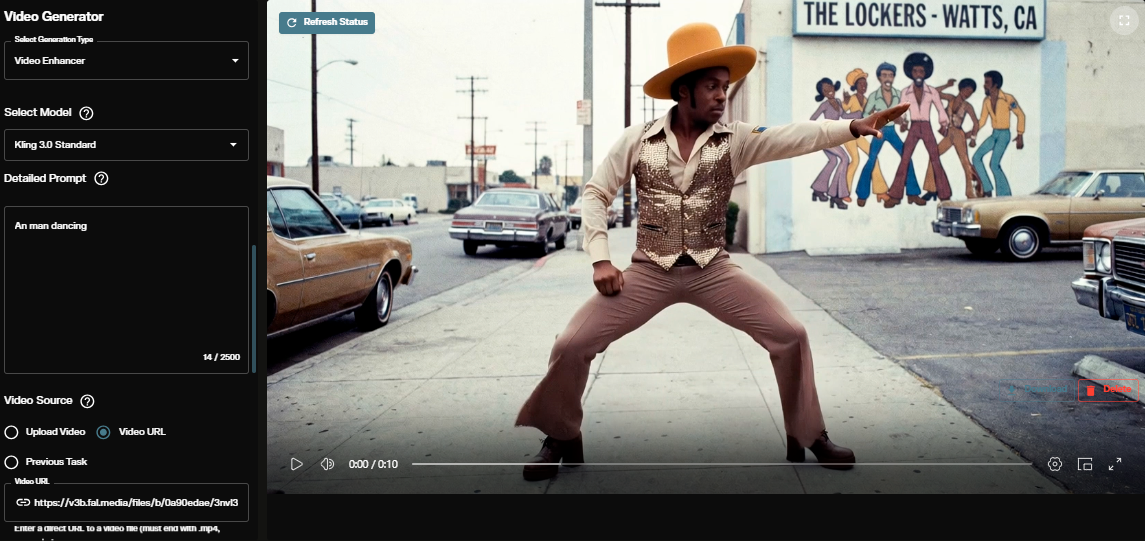
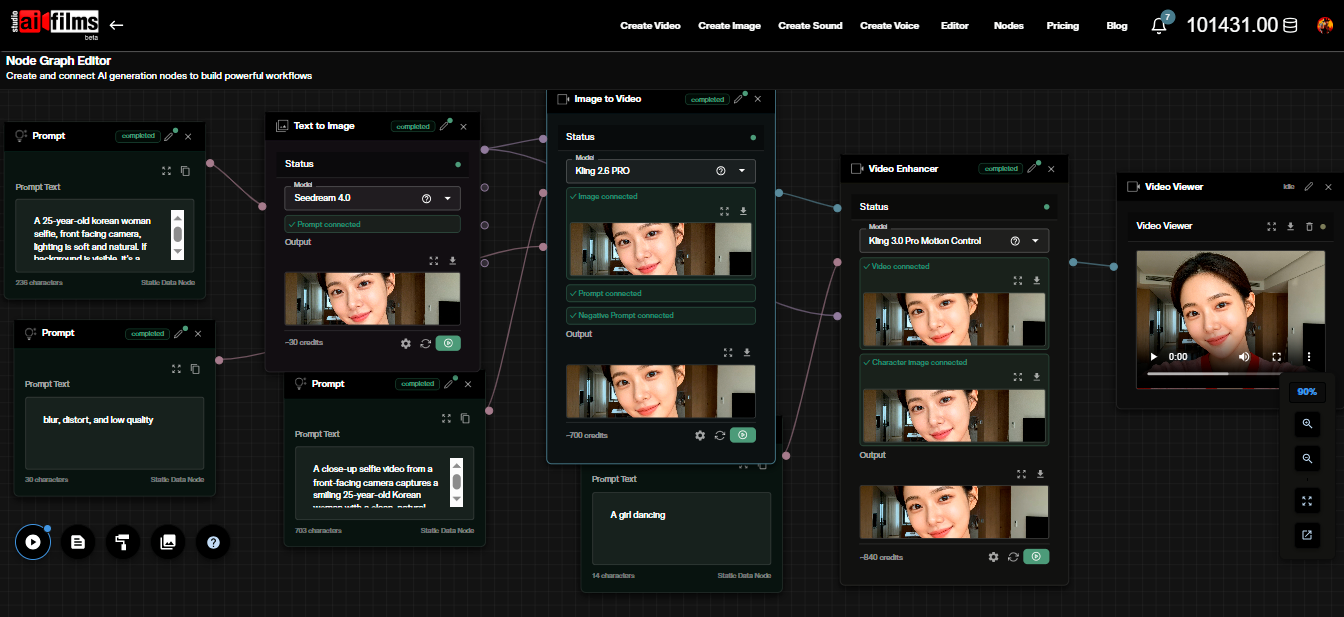
AI assisted animation workflows can be explored in AI FILMS Studio's video workspace, which supports text-to-video and image-to-video generation from the latest models.
Who Was in the Room
CITIA selected participants for the June 22 session to represent the full range of stakeholders in AI's impact on animation. Studio executives from European and international animation companies attended alongside independent directors, technical directors, and representatives from animation workers' unions including SAPIE in France.
The closed format was designed to allow studio representatives to speak openly about AI tools they are actually using, which many have not disclosed publicly. Independent directors were included to provide a counterweight to studio interests. Union representatives brought the labor perspective that has driven protest at previous Annecy editions. The mix was deliberate: governance documents produced without that range of perspectives tend to reflect the interests of whoever organized the process.
What the MIFA Published Summary Covered
CITIA released a public summary of the AI4Animation session following the closed meeting. The summary identified four areas of broad agreement among participants: the need for transparent disclosure of AI use in production credits, the importance of performer and artist consent before AI tools incorporate their work or style, the scale of the environmental cost question as a governance issue, and the value of the multiyear white paper process over a single declaration.
The summary's language on environmental costs was specific enough to be notable. Animation studios using cloud based AI generation tools are consuming compute resources at a scale that intersects with sustainability commitments many European studios have made to public funders. EU film funding bodies have begun asking applicants to account for AI related energy use, and several participants at the think tank raised this as an emerging compliance issue rather than a theoretical concern.
CITIA's Institutional Role
CITIA is the public body that manages both the Annecy International Animation Film Festival and the MIFA market. It receives funding from France's Centre National du Cinéma and the Haute-Savoie regional government, which gives it both the resources and the mandate to undertake multiyear policy work that a private organization could not sustain.
The festival's Class A FIAPF status places it in the same tier as Cannes, Venice, and Berlin in the international film festival ranking system. That status gives CITIA's governance work credibility beyond France's borders. A white paper published by CITIA in 2029 will carry weight with animation funders, studios, and regulators across Europe and beyond.
How the White Paper Will Be Used
The white paper's target audience includes European public film funders, national broadcasting regulators, studio associations, and union federations. CITIA has not committed to a binding framework, but advisory documents from institutions with its level of credibility have shaped industry practice in animation before.
The most relevant precedent is the Annecy Declaration on Animation authored in the 1990s, which established principles around co-production and cultural diversity that influenced European animation funding policy for decades. CITIA is not promising that outcome for the AI white paper, but the institutional infrastructure is similar.
The ARIAM Comparison and the Difference in Approach
ARIAM, launched by Disney, BBC, and the New York Times in June 2026, is a cross-sector alliance of content owners building AI governance from an intellectual property and distribution perspective. Its membership is institutional. Its focus is on how AI is trained, deployed, and licensed at the corporate level.
AI4Animation starts from the practitioner side. The process asks what working animators, directors, and studios are actually doing with AI, what their concerns are, and what governance framework would reflect their reality rather than their owners' interests. The two processes are not in opposition. They are producing governance inputs from different directions, and the 2029 white paper from CITIA will carry the weight of having asked the people who do the work.
The Energy Cost Question Participants Raised
Several participants at the AI4Animation Think Tank identified energy consumption as an emerging compliance problem rather than a hypothetical concern. EU film funding bodies, including the Centre National du Cinéma, have begun requiring applicants to account for carbon emissions in production planning. AI generation tools that run on cloud compute draw significant power, and the emissions from that compute are not yet standardized into the environmental accounting frameworks most European studios use.
Animation studios in France, Germany, and the Netherlands have made sustainability commitments to public funders that predate the current wave of cloud based AI generation tools. Those commitments did not anticipate the energy demands of generating 30 seconds of AI video dozens of times per day during production. The AI4Animation process is the first industry forum to formally include this mismatch in its governance scope.
Annecy's Class A FIAPF Status and Why It Matters for Policy
Annecy holds Class A FIAPF status, placing it in the same tier as Cannes, Venice, and Berlin. That designation is not honorary. It imposes standards on competition organization, jury selection, and institutional conduct that other festivals are not subject to. It also grants CITIA credibility with international film institutions that accept FIAPF standards as a proxy for institutional quality.
A governance document produced by a Class A FIAPF festival carries weight with the European Film Academy, MEDIA programme administrators, and national film commissions across the EU. When CITIA publishes the AI4Animation white paper in 2029, it arrives with that institutional backing, not as a position paper from an industry association. That distinction affects how regulators and funders treat its recommendations.
What Happens Between Now and 2029
CITIA's plan calls for the think tank to reconvene at each MIFA edition between 2026 and 2029. Each annual session will add new research, track how the previous year's concerns evolved, and incorporate developments that were not anticipated when the process began. The 2026 session established the scope and methodology. The 2027 session will assess whether the four concern categories from 2026 remain the primary issues or whether new ones have emerged.
That iterative structure is what distinguishes this process from a single declaration or resolution. Single declarations reflect the consensus available on a particular day. An iterative process can absorb the rapid pace of AI development between sessions and still produce a document in 2029 that reflects where the technology and the industry actually are rather than where they were three years earlier.
How Animation Budgets Created the AI Pressure
European animation production budgets contracted significantly between 2022 and 2025 as streaming platforms reduced their original animation commitments. Netflix, which was the largest single buyer of original European animation in 2021 and 2022, cut its animation orders substantially beginning in 2023. The production companies that had scaled up to meet that demand faced immediate budget pressure with no equivalent buyer to replace Netflix's volume.
Studios under that kind of budget pressure are not evaluating AI tools as philosophical statements. They are evaluating them as survival tools. An AI assisted pipeline that reduces the number of animators needed per episode-hour, or that allows a smaller team to produce the same output as a larger one, is not a choice between values. It is a response to a changed financing environment. AI4Animation's diagnostic approach, starting with what is actually happening before prescribing what should happen, reflects that reality.
What the 2024 Protest Generation Is Asking For in 2026
The visible protests at Annecy 2024 came primarily from animation workers concerned about job displacement. Many of the same workers and organizations are participating in the AI4Animation process in 2026 rather than protesting outside it. That shift from protest to participation reflects two years of negotiation experience across Europe's animation sector.
Workers who spent 2023 and 2024 learning how to argue about AI in guild negotiations and national labor contexts arrived at MIFA 2026 with more specific demands. Transparent disclosure requirements, consent frameworks for style and likeness training, and energy cost accountability are the specific provisions that emerged from the AI4Animation session summary. Those are governance provisions, not bans. The 2024 protest generation is asking for governance, not prohibition.
The Annecy 2026 Edition in Numbers
The 50th anniversary Annecy festival drew over 16,000 accredited participants from more than 100 countries, making it the largest edition in the festival's history. The MIFA market ran alongside the festival with over 3,000 market participants. That attendance makes AI4Animation's closed format even more deliberate: a session designed for 30 to 50 practitioners at a market attended by thousands is explicitly choosing depth over breadth.
The scale of the broader festival also contextualizes the governance ambition. Annecy does not represent only European animation. It brings together professionals from Asia, North America, and Latin America who work in animation studios operating under very different regulatory environments. A white paper that CITIA publishes in 2029 will be evaluated by an international community that includes those different contexts. The think tank's composition reflects the need to build that breadth into the governance process from the beginning.
That international dimension distinguishes AI4Animation from purely national policy processes. The French national debate about AI in culture, which has a specific legal and funding context, is only one input into a festival with global participation. CITIA's governance process is positioned to produce recommendations that can travel across borders in a way that national legislation cannot.
The three year timeline between the June 2026 session and the 2029 white paper is long enough to absorb multiple rounds of AI model advancement, new guild agreements in France and Europe, and the outcomes of legislative processes that are still in early stages. That durability is what makes CITIA's institutional approach distinct from the shorter cycle declarations that most entertainment industry organizations have produced on AI governance since 2023.
Sources
Screen Daily | Variety | Animation World Network | 3dvf.com | Animation Journal
Continue Reading
.jpg?w=3840)


Video & LipSync
- Video Generator
- Text to Video
- Image to Video
- Start-End Frame to Video
- Draw to Video
- Motion Control
- Video Enhancer
- Video Upscaler
- Video Extend
- Video to Video LipSync
- Audio to Video LipSync
- Image to Video LipSync
- Video FaceSwap
- Seedance 2.5
- WAN 3.0
- Seedance 2
- FLUX 3
- Minimax H3
- Vidu Q3 Pro
- Grok Imagine Video 1.5
- Gemini Omni
- Google Veo 3.1
- Kling 3.0 Pro
- Luma Ray 3.2
- LTX 2.3
- Happy Horse 1.1
- Kling 3.0 Motion
- ByteDance Upscaler
- InfiniteTalk
- InsightFace
Image & Edit
- AI Character
- AI Actor
- Art Generator
- Text to Image
- Image to Image
- LoRA Image to Image
- Draw to Edit
- Image LoRA Training
- Remove Background
- Image Enhancer
- MidJourney 8.0
- Krea 2
- OpenAI GPT Image 2.0
- Nano Banana Pro Ultra
- Nano Banana 2 Lite
- Nano Banana Pro
- Minimax Image
- Clarity Pro
- Z-Image Turbo LoRA
- Krea 2 Turbo LoRA
- Z-Image LoRA Trainer
- Qwen Image LoRA Trainer
- Background Erase Network 2 (BEN2)