
Jia Zhangke Uses AI to Make a Film About Himself
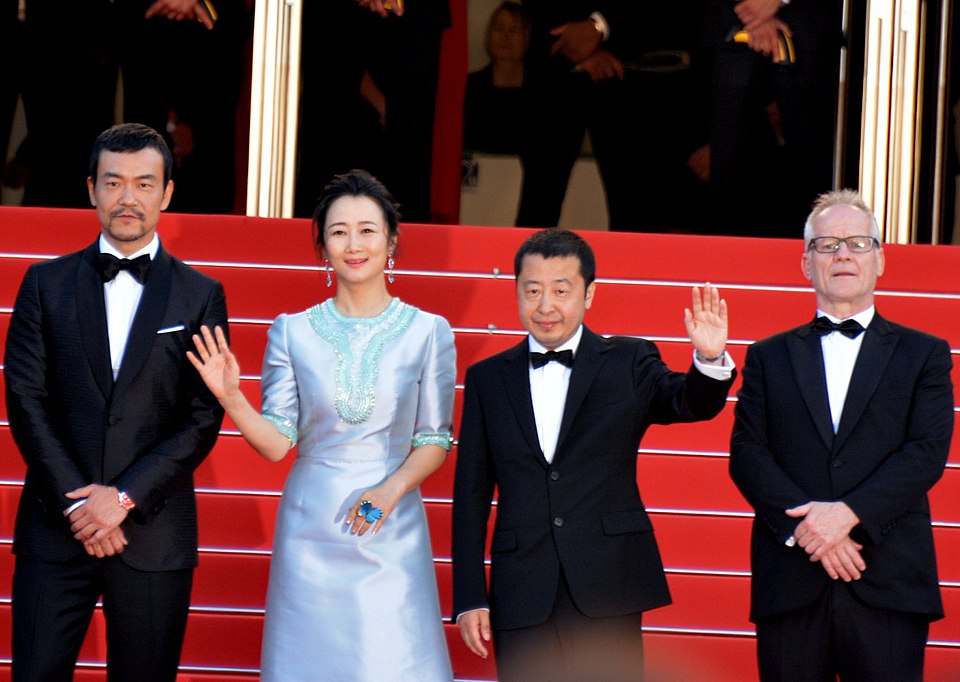
Georges Biard, CC BY-SA 4.0, via Wikimedia Commons
Share this post:
Jia Zhangke Uses AI to Make a Film About Himself
At Hong Kong's Filmart in March 2026, Jia Zhangke presented an AI short he produced in three days using Seedance 2.0, ByteDance's AI video generation tool. The film places two AI generated versions of the director on screen simultaneously. One is built to carry a visible AI quality and one is rendered at higher fidelity, nearly indistinguishable from the actual filmmaker.
Two Versions of the Same Director
.jpg)
Georges Biard, CC BY-SA 4.0, via Wikimedia Commons
Jia won the Venice Golden Lion for Still Life in 2006 and Best Screenplay at Cannes. His body of work, from Platform to A Touch of Sin to Caught by the Tides, documents contemporary Chinese life at a level of observational precision that has defined his international reputation across three decades.
For the short, Seedance 2.0 generated both figures. One is the version Jia described as carrying an "AI feel", something in the rendering that signals synthetic origin to a viewer paying attention. The other presents as the real person. Jia declined to make the distinction between them the film's obvious point.
The Scene at the Center
The film's key moment arrives when the AI version inserts an optimistic line about a "new era". The human Jia objects. The AI responds with an argument Jia presented to Variety. Once a work reaches its audience, interpretation no longer belongs solely to its creator.
That exchange turns the short into something more precise than a technology demonstration. It stages the question of who controls meaning in AI assisted work, using the filmmaker's own face and voice as the subject and the AI as the interlocutor. The AI then proposes a working arrangement. The filmmaker supplies the ideas; the machine supplies the computational power.
A Second AI Project
Jia also presented a second short, "Wheat Harvest", made with Kling AI. The two projects together reflect an approach to AI that treats it as a medium worth understanding through direct production rather than through critical position taking.

Gowu 8i Hovivi 2019, CC BY-SA 4.0, via Wikimedia Commons
"I face new technology without making premature judgments", Jia told the masterclass at the Asian Film Awards Academy in Hong Kong's Grand Theatre on March 15. "I use it first to understand it".
Filmart 2026 and Asia's AI Moment
The Filmart masterclass was one of 28 sessions devoted to AI at the market. The Hollywood Reporter described AI as having "virtually taken over Filmart", reflecting how differently the technology reads in Asia compared to Hollywood.
Hollywood directors occupy a wide spectrum. Steven Soderbergh described AI as just another tool at the Sands Film Festival and positioned his own use as entirely enhancement based. Kathleen Kennedy has questioned whether AI generated work can achieve what she considers great filmmaking. Carlos Saldanha brought a comparable director's perspective to Busan. At the same Filmart event, Hong Kong director Peter Chan took a starkier view, warning that AI would replace commercially oriented blockbusters within three years, while sparing auteur cinema. Jia's approach at Filmart represents a fourth position: neither advocate nor critic, but active experimenter. Kore-eda's engagement takes a different form entirely: his competition entry at Cannes 2026, "Sheep in the Box", uses conventional production to place a humanoid AI at the center of a family drama, rather than using AI as a production tool.
Not a Pivot
When asked directly whether he plans to use AI in his next feature, Jia answered: "No".
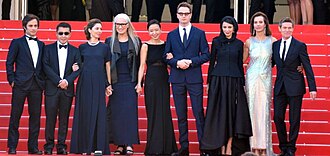
Georges Biard, CC BY-SA 3.0, via Wikimedia Commons
He elaborated in conversation with The Standard Hong Kong: "I'm not worried about technology 'replacing' film. From its inception, film has always coexisted with new technologies. The camera itself was once an unsettling invention, but today it's part of our everyday life. What truly matters is how people use technology".
The AI short is an inquiry, not a career change. A director who sat on the Cannes jury in 2014 and built his reputation on close observation of human experience using Seedance 2.0 to put two versions of himself on screen and argue about authorship is doing what serious filmmakers do with any new medium: testing what it reveals. South Korean director Kim Il-dong reached a related conclusion from a different angle: making a complete AI theatrical feature largely alone in two months, he argued that the tools now exist for one person to take a story from concept to cinema. At Cannes 2026, Jia developed his thinking further, telling Variety that AI limits filmmaking to "just you and the engineer", a direct challenge to the collective spirit of cinema.
The Shanghai Film Festival built on that same spirit in June 2026, launching AI Backlot at the 28th SIFF, a structured program pairing traditional directors with AI creators to produce short films live during the festival. Neill Blomkamp released Nightborne in July 2026 using the same model, announcing Barley Studios as his AI film company.
Seedance 2.0 and ByteDance's AI Film Push
Seedance 2.0 is ByteDance's AI video generation model, developed through its CapCut video editing infrastructure. CapCut had over 500 million monthly active users at the time Seedance launched. Combining consumer distribution with professional quality AI generation output is what made the model available to a director like Jia without institutional access requirements.
That distribution reach means Seedance tools are accessible to filmmakers in markets where institutional support for AI production is limited. Jia's use of Seedance for an art film, rather than commercial content, is an unusual application for a platform built primarily for the consumer video market. It also reflects how quickly the quality ceiling for consumer AI video tools has risen since 2024.
The Three Day Production in Practice
Producing a short film in three days using live action requires a secured location, a minimal crew, and a director with clear visual intentions. Producing one in three days using AI video generation requires a script, a generation workflow, and a selection process across generated outputs. The time constraint is comparable but the production process is entirely different. Jia's three day figure describes a workflow, not a compressed shooting schedule.
The output selection process is particularly relevant to how Jia's three days would have been distributed. Generating AI video outputs quickly is not the bottleneck. Reviewing, selecting, and sequencing the outputs that match the director's visual intentions takes time regardless of how fast the generation runs. Jia's three day figure includes both the generation and the editorial process that follows it.
Kling AI and Wheat Harvest as a Controlled Comparison
"Wheat Harvest" was produced using Kling AI rather than Seedance. A single director producing two shorts using two different AI video tools in the same period creates an informal comparison of how tool choice affects output. Jia declined to designate either tool as his preferred method, consistent with his stated approach of using production to understand a technology rather than committing to it.
The two tools also represent different companies and different training approaches. Kling AI is developed by Kuaishou; Seedance by ByteDance. Both are Chinese technology companies with access to large video datasets for training. Producing two films in succession using tools from two competing Chinese AI video companies in the same period is an informal field test that Jia framed as exploration rather than evaluation.
The Asian AI Moment at Filmart
The Hollywood Reporter described AI as having "virtually taken over Filmart" at the 2026 edition. 28 of the market's sessions were devoted to AI. The concentration reflects a different industry posture toward generative AI tools in Asian markets compared to Hollywood, where guild protections and legal uncertainty have slowed adoption. The Filmart sessions covered production tools, distribution models, and coproduction frameworks simultaneously.
The legal and regulatory pressures that have slowed Hollywood AI adoption, specifically guild contract provisions and ongoing copyright litigation, have less direct impact on Chinese market participants. That structural difference means the 28 session AI programming at Filmart 2026 reflects not just industry enthusiasm but the absence of the specific constraints that dominate AI discussions in the US.
What the Film's Argument Is Actually About
The short's central exchange, in which the AI challenges the human filmmaker's ownership of meaning, is not an abstract philosophical exercise. It dramatizes a practical question that every director working with AI generation tools faces: if the model produces the image, who owns the interpretation of that image when it reaches an audience?
Jia's AI formulates an answer that the director himself then presents to Variety as his own insight. The AI in the film argues that once creative work reaches its audience, the creator no longer controls its meaning. Jia frames this not as the AI's argument but as a position he finds compelling. Whether the AI derived that argument from his own prior statements or arrived at it independently through generation is a question the film leaves unanswered, which is precisely the point.
The Filmart Masterclass Format
Jia delivered his remarks on AI as a masterclass at the Asian Film Awards Academy, a format that places a senior director in extended conversation with an audience of industry professionals. A masterclass is designed for transmission of knowledge from established practitioners to developing ones. The choice to use a masterclass to discuss AI, rather than a panel or interview format, positions Jia's experimentation with Seedance as experience worth teaching rather than a personal curiosity.
That positioning is significant. The masterclass format implies that Jia's approach, testing the technology directly rather than forming a position in advance, is a method other filmmakers should consider. The institutional context of the Asian Film Awards Academy gave that framing credibility that a press interview would not.
What Jia's Feature Work Will Use
Jia's answer, that his next feature film will not use AI, distinguishes the experimental short form from the work he considers his primary practice. The distinction is consistent with how established filmmakers have typically approached new tools in their early availability. Documentary work, short film production, and personal projects come before the features that define their artistic reputation.
That sequence also describes how AI video tools are likely to enter mainstream production more broadly. Experimental use in secondary formats, shorts and documentaries, builds the aesthetic vocabulary and workflow familiarity that precedes integration into primary production. Jia's distinction between exploration and commitment is a practical one.
The practical implication is that Jia's three day experiments with Seedance and Kling now sit in a category of directed experimentation that his feature work will eventually draw on, whether or not AI generation is explicitly credited in the production process.
Filmart 2026, with 28 AI programming sessions, was the market where that transition became visible at institutional scale. Jia's masterclass was one of those sessions.
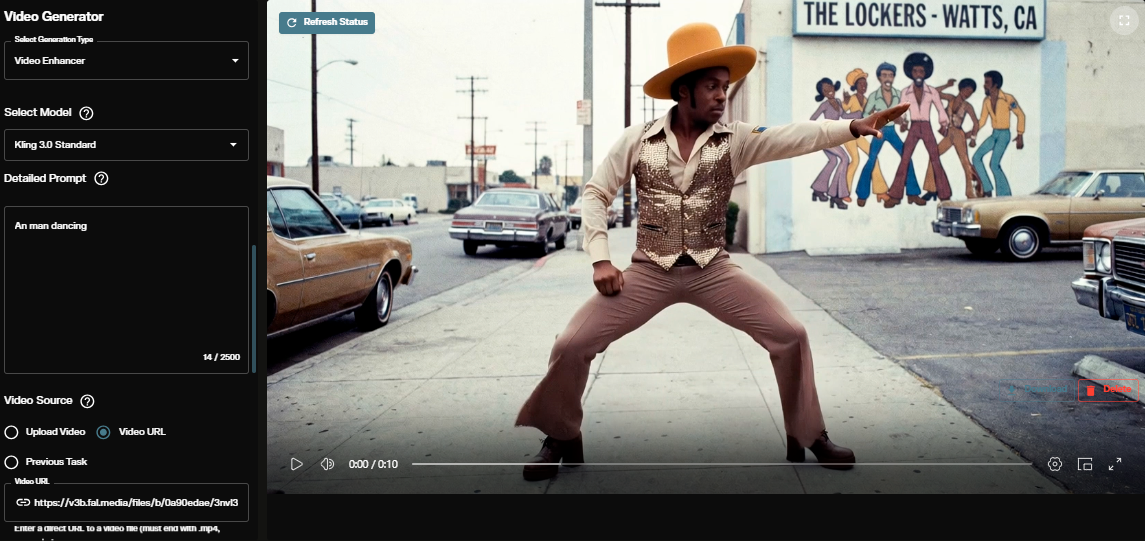
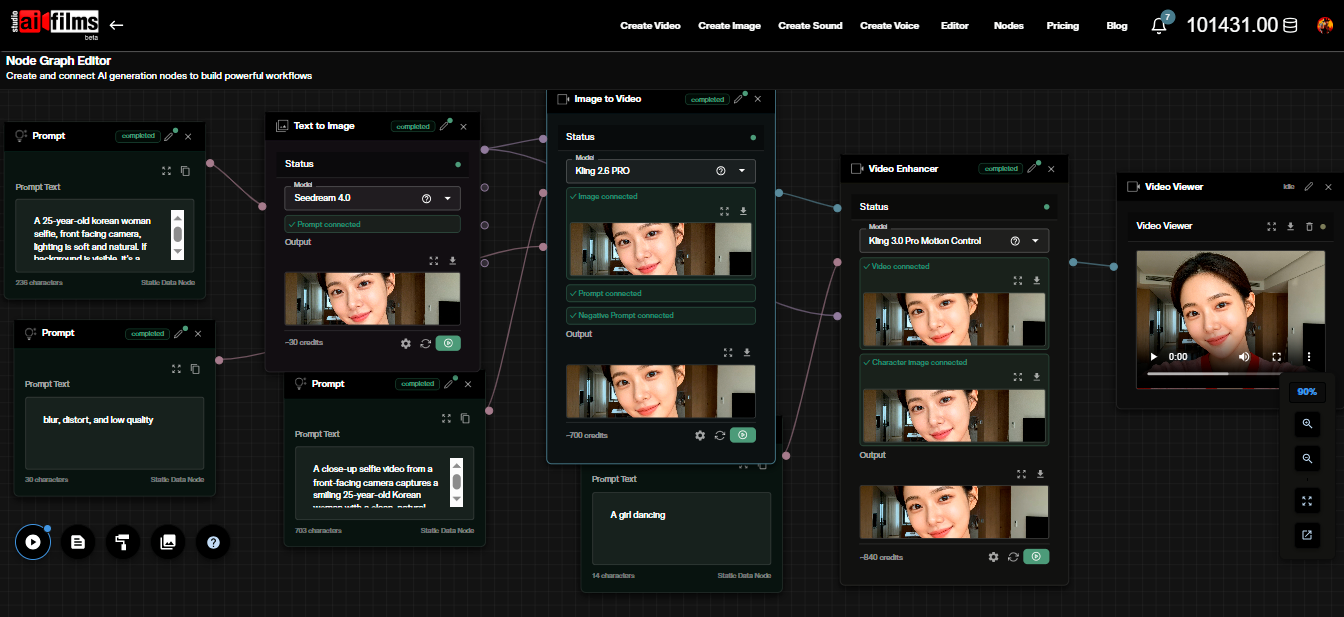
Filmmakers who want to run the same kind of direct experiment can start with AI video generation in AI FILMS Studio.
Sources
The Hollywood Reporter | Variety | The Standard Hong Kong | LA Review of Books | TechRadar
Continue Reading
.jpg?w=3840)


Video & LipSync
- Video Generator
- Text to Video
- Image to Video
- Start-End Frame to Video
- Draw to Video
- Motion Control
- Video Enhancer
- Video Upscaler
- Video to Video LipSync
- Audio to Video LipSync
- Image to Video LipSync
- Video FaceSwap
- Seedance 2.5
- WAN 3.0
- Seedance 2
- FLUX 3
- Minimax H3
- Vidu Q3 Pro
- Grok Imagine Video 1.5
- Gemini Omni
- Google Veo 3.1
- Kling 3.0 Pro
- Luma Ray 3.2
- LTX 2.3
- Happy Horse 1.1
- Kling 3.0 Motion
- ByteDance Upscaler
- InfiniteTalk
- InsightFace
Image & Edit
- AI Character
- AI Actor
- Art Generator
- Text to Image
- Image to Image
- LoRA Image to Image
- Draw to Edit
- Image LoRA Training
- Remove Background
- Image Enhancer
- MidJourney 8.0
- Krea 2
- OpenAI GPT Image 2.0
- Nano Banana Pro Ultra
- Nano Banana 2 Lite
- Nano Banana Pro
- Minimax Image
- Clarity Pro
- Z-Image Turbo LoRA
- Krea 2 Turbo LoRA
- Z-Image LoRA Trainer
- Qwen Image LoRA Trainer
- Background Erase Network 2 (BEN2)